[pageLogInLogOut]

#Techtextil 2019

Automatic control and mill-proven benefits for quality and profit

Technical textiles is the most quality-sensitive sector of the entire industry, and many products for specialized and performance end-uses are at the highest level of this requirement. For ultimate control and security of quality, fabric manufacturers need a top technology solution which takes the guesswork out of producing the quality their customers need. That’s where the USTER® EVS automated fabric inspection systems offer enormous benefits, proven in numerous installations worldwide – and presented at upcoming Techtextil.

Technical textile producers report practical gains with USTER® EVS fabric inspection systems

Automated visual fabric inspection is an essential asset in optimizing quality for a wide range of technical textiles and performance apparel. Applications in architecture, automotive, construction, hazard protection, medicine, aviation and aerospace have some of the most stringent quality criteria. But fabrics for furnishings, sports and functional clothing must also meet the perfect standards that major brands need to uphold their reputation and satisfy customer expectations.

All fabric producers aim to deliver the quality their customers specify, while also minimizing scrap and seconds to protect their own efficiency and profitability. The different fabric production and finishing processes contain plenty of opportunities for fabric faults to arise. USTER’s automated fabric inspection system bring quality under control, regardless of the complexities of the manufacturing stages. Fallible human judgment and varying levels of operative ability and experience are no longer critical to the production of consistent, reliable quality. Accurate automatic quality control becomes an integral part of manufacturing.

Early-stage control with USTER® EVS Q-BAR eliminates the need for manual inspection after production. USTER® EVS FABRIQ VISION ensures reliable monitoring, using automated control during intermediate and final inspection. The system’s ability to capture any visible faults – with a proven and consistently high rate of defect detection – and its optimized fabric grading protect the producer from the risk of damaging claims.

Dyed fabrics present the particular extra challenge of color uniformity. USTER® EVS FABRIQ SHADE has the solution, monitoring in-line shade variation in virtually any process where color is critical, without the need to cut fabric swatches for laboratory tests.


Optimizing profit

Automatic fabric inspection is the way to achieve optimum quality, to reduce below-par and scrap fabrics and to maximize fabric yield. The cut optimization software module of USTER® EVS FABRIQ VISION and USTER® EVS FABRIQ SHADE optimizes fabric yield per class, according to the settings. The system works by marking any defects in the fabric during inspection. The position of each defect is synchronized with Optimized Cut Control (OCC), which stops the cutting table at precisely the right place, guaranteeing error-free cutting. OCC can also identify and highlight defects which require operator action, making the process more efficient.
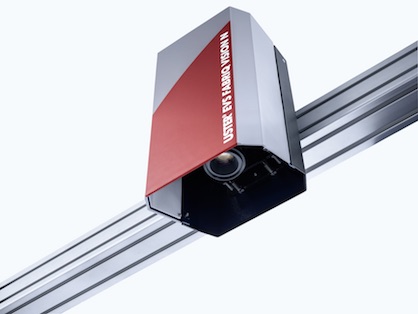
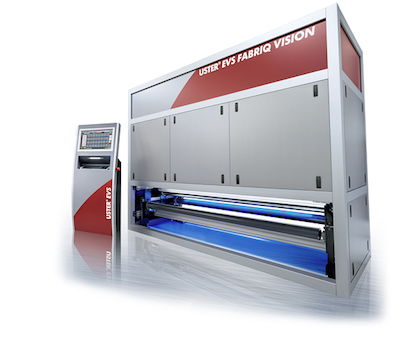
Automatic fabric inspection done by USTER® EVS FABRIQ VISION (c) 2019 USTER


USTER® EVS FABRIQ VISION (c) 2019 USTER


Only one operator is needed to oversee the entire production, reviewing defects and rejecting or accepting them. The system is self-learning, reducing unnecessary alarms over time. The operator sends the fabric roll, with its defect report, to the cutting station, where faults can be marked, mended or removed as required. This saves time, as the operator has only to manage roll processing, rather than actually inspecting the fabric.

Proven results

USTER® EVS automatic fabric inspection technology is founded on more than 25 years of pioneering development in the field. Today, more than 1,000 installations in wide-ranging textile segments worldwide acknowledge it as the key to cost savings and enhanced market competitiveness.

USTER® EVS customers currently inspect over 60 million meters of fabric per day. Many companies which installed EVS lines in the mid-Nineties have recently upgraded their automatic fabric inspection systems with USTER® EVS FABRIQ VISION and USTER® EVS FABRIQ SHADE.

Some users have provided valuable feedback on major benefits of the systems. A German fabric finisher reports that in the first six months after installation of USTER® EVS FABRIQ VISION, it was able to produce 1.2 million meters of fabric without a single customer claim. Another firm, a European leader in protective clothing, purchased two systems of USTER® EVS FABRIQ VISION and USTER® EVS FABRIQ SHADE in 2017. As well as reducing claims, the company also managed to decrease labor costs by saving 14 operators.

An Italian customer installed USTER® EVS FABRIQ VISION and USTER® EVS FABRIQ SHADE alongside automatic cutting and packaging machines, replacing manual inspection. Within three years, off-quality and scrap decreased by more than 3%.

For more details and to discuss individual requirements, interested parties are recommended to meet the experts at Techtextil. Fabric producers and finishers are welcome to present booth staff with any challenges regarding automatic fabric inspection at the forthcoming event, in Frankfurt, Germany, from May 14 to 17. The USTER® EVS Q-BAR, as well as other members of the USTER® EVS fabric inspection family, will be presented. Visit USTER at booth D05 in Hall 3.0, together with German agent Elmatex.

More News from Uster Technologies AG

#Spinning

Measure and control the fiber – optimize yarn quality

Producing consistent yarn quality is an everyday challenge – and a very difficult one. Detailed knowledge and understanding of the fiber raw material is absolutely critical to achieving the best possible quality in the yarn. To help spinners, Uster experts have put together guidelines for avoiding yarn irregularity claims, in a special edition of the Uster News Bulletin.

#ITMA Asia + CITME Singapore 2025

Uster presents novelties at ITMA Asia + CITME 2025

There’s news from Uster Technologies to be announced for the industry’s upcoming event in Singapore. The Uster 360Q universe is growing with new products, solutions and services. Innovation developments can also be recorded in the fields of man-made fiber testing and fabric inspection. Uster innovations address the industry’s trending topics as mill management and process control, optimization of delivered fabric quality and yield.

#Spinning

Uster Technologies marks 150 years of empowering quality excellence

Uster Technologies marks 150 years of excellence – a milestone that reflects continuous adaptation to customer needs and industry change. Over the decades, Uster has evolved from manufacturing quality testing instruments into a trusted partner shaping the future of textile production.

#Recycling / Circular Economy

Challenges of making yarn from recycled fibers

What does it take to spin quality yarn from recycled fibers? Uster Technologies brought textile industry leaders together to discuss the role of technology, data and automation – as well as the current challenges in using recycled raw material. Experts from Rieter, Säntis Textiles, Otto Yarns, and TVU commented on the current situation and looked into the future of spinning in a panel discussion organized at Uster headquarters.

More News on Techtextil 2019

Latest News

#Techtextil 2026

DIENES at Techtextil 2026: Flexible pilot lines for bio-based fiber development

The growing relevance of bio-based materials in technical textiles is accompanied by increasing demands for reproducibility, high-quality data, and scalable process routes. Especially when working with cellulose and its derivatives, chitosan, lignin-based approaches, or bio-based PAN as a carbon-fiber precursor, R&D teams face variable feedstock quality, tighter process windows, and the need for reliable comparability across trials. This calls for flexible, data-driven experimental setups that can be reconfigured efficiently when recipes, solvents, and raw-material batches change.

#Texprocess 2026

Gunold showcases embroidery product range and services at Texprocess

At Texprocess 2026, GUNOLD will present numerous hands-on examples related to embroidery in Hall 8, Booth E20. The focus is on creative embroidery designs as well as the extensive product range of threads, nonwovens, and accessories for embroidery and embellishment. “Trade visitors can once again look forward to many new and creative embroidery designs. Of course, we will also showcase the matching products required to bring these ideas to life,” announces Marketing Manager Stephan Gunold.

#Nonwovens

EDANA and more than 70 industry organisations call for consistent exemptions in EU packaging regulation

EDANA, together with more than 70 industry associations and organisations, has issued a joint statement commenting on the European Commission’s Delegated Act under Article 29 of the Packaging and Packaging Waste Regulation (PPWR).

#Raw Materials

A Powerful Opening: Global thought leaders launch the International Cotton Conference Bremen

The International Cotton Conference Bremen will open on 25 March 2026 in the Parliament building of the Free Hanseatic City of Bremen with a keynote session of exceptional calibre. Distinguished international experts will set the stage for the conference by offering incisive perspectives on the most pressing challenges and the defining trends shaping the future of the global cotton trade. Their insights will span a broad spectrum — from geopolitically driven disruptions affecting global supply chains to the opportunities emerging from innovation-led agriculture capable of supporting a growing world population. Together, these opening keynotes will frame the dialogue of the conference, highlighting both the complexity of today’s market environment and the pathways toward a resilient and forward-looking cotton sector.

TOP