[pageLogInLogOut]

#Technical Textiles

Technical textiles for more and new business

KARL MAYER Technical Textiles presents innovative textile solutions for construction and filtration at ITMA ASIA + CITME
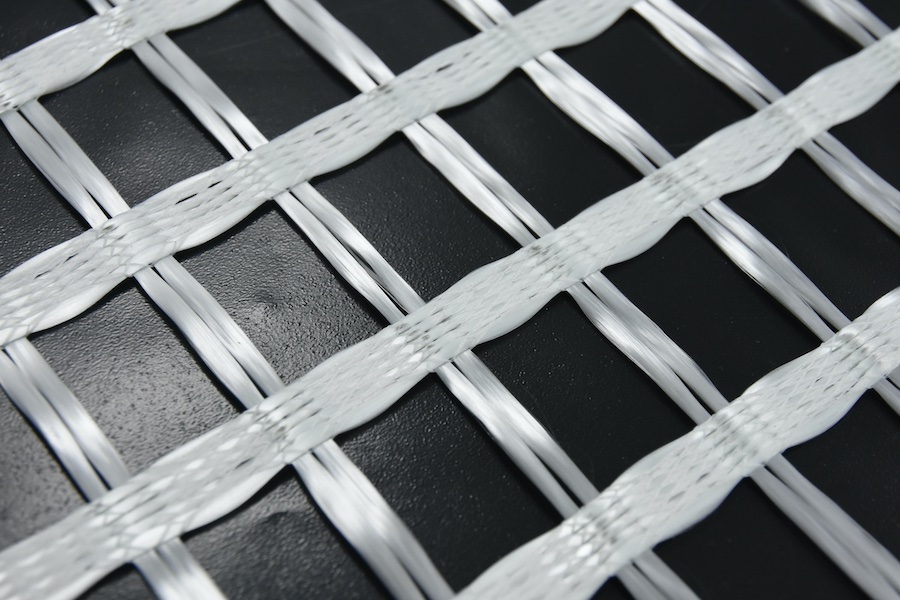
Road reinforcement © 2025 KARL MAYER
KARL MAYER's composite machines and warp knitting machines with weft insertion produce technical textiles offering an impressive variety of properties and textures. The range of tasks these textiles can perform is as broad as the spectrum of their possible fields of application. Both newcomers with the right textile solution and already established players can trust their business will flourish, as demonstrated by the examples from KARL MAYER's Technical Textiles division at ITMA ASIA + CITME 2025. The exhibition at stand A 301 in Hall 5 of the Singapore EXPO focuses on two areas: filtration and construction.

Clean solutions for filtration

The filtration solutions ensure purity, efficiency and taste and are based on the membrane principle. Hollow fibre mats with porous outer surfaces are used. Gases and impurities are transported across these surfaces while the feed medium flows through the fibres. This principle can be used to enrich the preliminary product with oxygen and carbon dioxide during beer brewing, to degas ink for printer cartridges, to decarbonise ultrapure water, and to enrich blood with oxygen or purify it by means of dialysis, to name just a few of the many applications of hollow fibre membranes in industry, beverage production and medicine.

The mats are manufactured to strict specifications for their demanding applications. The hollow fibres must not be crushed, constricted or stretched and must be arranged evenly at a high density – a task tailor-made for the WEFTTRONIC® II RSP WEFT. The sophisticated technical solutions of this Raschel machine with weft insertion ensure high stitch densities of up to 25 M/cm with low knitting yarn tension. This is important for the loose binding of the hollow fibres. The highly sensitive yarn material is processed as a yarn for weft insertion and handled with extreme care: with low yarn tension and deflection points, avoiding any relative speed and thus any stretching. The knitting thread fixes the hollow fibre, keeps it at a distance, prevents it from lying flat in a linear manner and thus guarantees optimum filtration conditions. The filter quality and flow rate of the warp knitted hollow fibre mats simply cannot be beaten – a performance that ensures maximum reliability and efficiency in filtration.
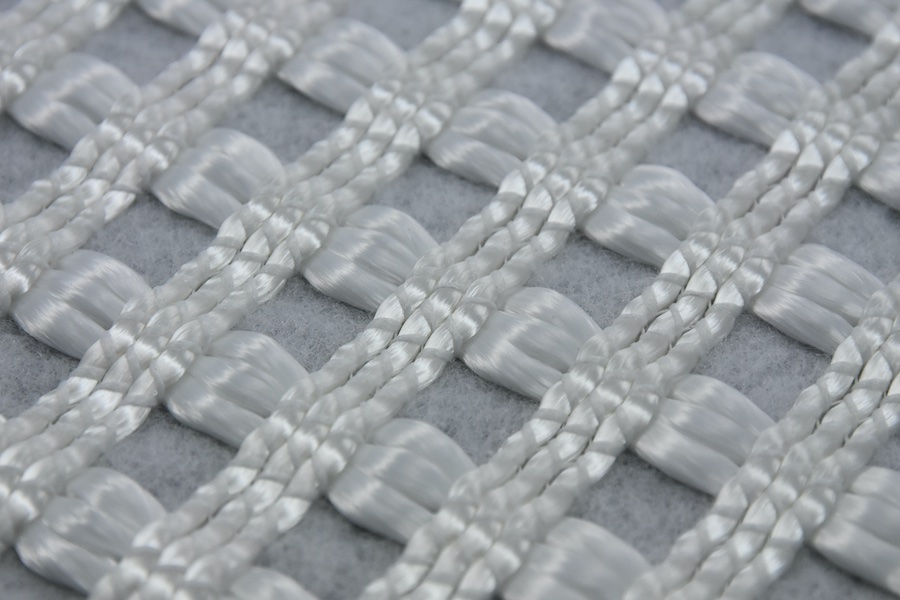
Slope Reinforcement © 2025 KARL MAYER


Saving costs and resources in construction

The construction industry requires more robust yet equally versatile solutions. Road construction has long relied on coarse, high-performance geogrids made of glass fibre material and other high-performance fibres, which are manufactured on warp knitting machines with weft insertion – including the WEFTTRONIC® II G – and used in a wide range of applications. In existing roads, they act as reinforcement grids to prevent cracking and rut formation and to distribute the load from traffic horizontally. When constructing new roadways, the power textiles reinforce the subsurface, separate its individual layers and provide filtration effects. In addition, in sloping terrain the high structural performance of warp knits made on weft insertion machines protects the surroundings from landslides. Unlike steel slope reinforcements, these textiles do not corrode and the textile solution can be easily installed in the landscape with minimum intervention.

Textiles also offer new ways of thinking about the construction and renovation of buildings. Reinforcements made of non-crimp fabrics and warp knits made on weft insertion machines eliminate the need for steel reinforcement in concrete construction, thereby reducing the CO2 footprint and environmental impact of this industry. Warp knitted plaster grids prevent the emergence and spreading of cracks, distribute the force optimally and ensure a long-lasting facade cladding. They can be produced extremely efficiently and in the highest quality on the WEFT GRID ECO. This warp knitting machine with weft insertion protects the functional but brittle fibre material, usually glass, produces very little yarn waste and is highly efficient. Its output of mesh fabric is up to 12 times higher than that of weaving machines for dense variants and up to 17 times higher for open structures.

When it comes to cost-effective roofing solutions, warp knitted coating carriers from WEFTTRONIC® II RS are right on target. The textiles produced by this reliable, high-performance Raschel machine with weft insertion can be processed into flexible, stable material systems characterised by high weather resistance. They are UV-resistant and reflect the sun's rays, thereby reducing the energy required for cooling.
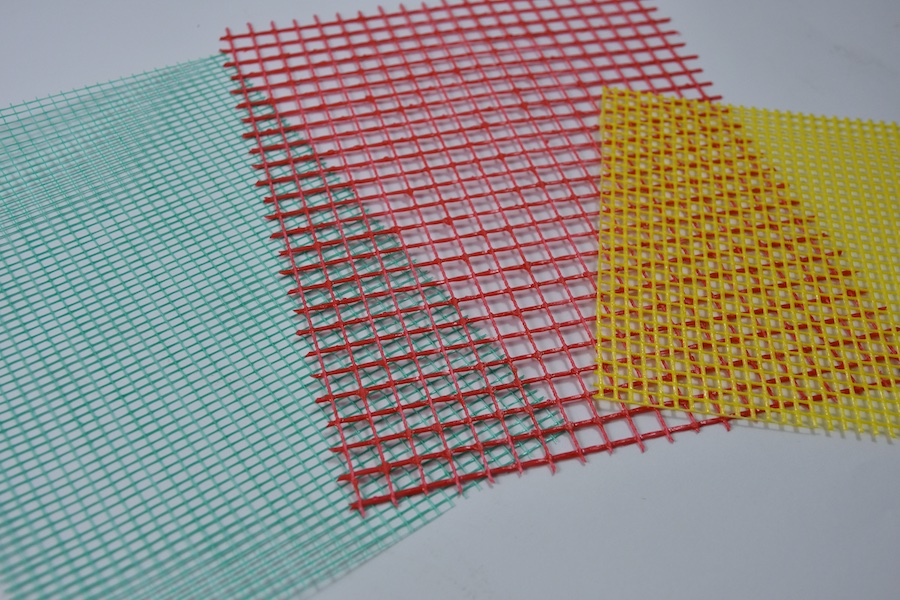
Plaster Grid © 2025 KARL MAYER


More News from

#Techtextil 2026

Knowledge that drives progress: Techtextil and Texprocess forums strengthen the global textile industry with a future-oriented programme

From AI-supported production optimisation and digital manufacturing solutions to circular technologies and bio-based high-performance materials: the Techtextil and Texprocess forums provide answers to the key challenges of the global textile industry with a curated content programme. As hubs for innovation and knowledge, they enhance competitiveness and offer orientation in changing markets. From 21 to 24 April 2026, Frankfurt is once again the global meeting point for thought leaders from industry, research and business.

#Techtextil 2026

Enhanced protection without added weight: Innovative technology for flame-retardant textiles doubles reaction time and ensures high wearing comfort

Flame-retardant textiles have long faced the same dilemma: the higher the level of protection, the greater the compromise in comfort, weight and breathability. This is especially important for workwear and protective clothing worn for long hours, where comfort is crucial to wearer acceptance and satisfaction. At Techtextil 2026 in Frankfurt, Swiss company Textilcolor AG will unveil pyroshell™, an innovative flame-retardant technology designed to tackle this challenge. Protection is provided by a graphite-based functional layer integrated into the textile structure, which doubles the reaction time before burns occur while significantly enhancing comfort. The material does not release any toxic fumes and offers textile manufacturers entirely new opportunities to design and produce protective and functional garments. It is also durable enough to withstand up to 50 industrial washes.

#Composites

JEC WORLD 2026 opens: Paris becomes the World Capital of composites

JEC World 2026 opens tomorrow, March 10, at Paris Nord Villepinte, bringing together the entire composites ecosystem for three days of exhibitions, conferences, technical sessions, strategic industry gatherings, and business meetings. As the “festival of composites”, JEC World is also a destination for a broad spectrum of other professional visitors, eager to discover how these advanced materials can offer sustainable solutions to their industries.

#Spinning

Barmag presents the next generation of POY production – energy-efficient and partial-automated

With POY 2.0, Barmag is introducing a completely redesigned spinning concept that takes the production of partially oriented yarn (POY) to a new level in terms of technology and economy. The solution, which was presented to a selected audience of experts for the first time at ITMA Asia + CITME 2025, was met with great enthusiasm: several yarn producers worldwide immediately expressed their interest in a pilot plant.

More News on Technical Textiles

Latest News

#Composites

More affordable, environmentally friendly hydrogen pressure tanks at ITA-JEC booth

As a highlight of the JEC, the Institut für Textiltechnik (ITA) of RWTH Aachen University will be presenting hydrogen pressure tanks manufactured using multifilament winding processes at the NRW joint booth in Hall 5, Stand G65.

#Textile chemistry

DyStar Group Announces Board Transition to Drive Innovation

DyStar, a leading specialty chemical company with a heritage of more than a century in product development and innovation, announced today the appointment of Ruan Cunfan to its Board of Directors, effective 20 February 2026.

#Recycling / Circular Economy

Textile‑to‑textile recycling leader Circulose joins Spinnova’s ecosystem to accelerate technology scale‑up

Textile‑to‑textile recycling leader Circulose joins Spinnova’s ecosystem (consortium) to help advance the scale‑up of Spinnova’s technology. Spinnova has actively sought partners to accelerate commercial scale‑up, and Circulose, as a key player in textile recycling, strengthens the ecosystem by providing a raw material that is in high demand across the industry.

#Yarns

UNIFI® introduces Luxel™: A Linen-inspired, easy-care performance yarn

Unifi, Inc. (NYSE: UFI), the makers of REPREVE® and one of the world’s leading innovators in recycled and synthetic yarns, today announced the launch of Luxel™, a groundbreaking yarn technology that combines the luxurious look and feel of linen with high-performance, easy-care, and textile-to-textile recycled materials.

TOP