[pageLogInLogOut]

#Sustainability

BASF adopts bluesign® system for safety and environmental protection in textile chemicals
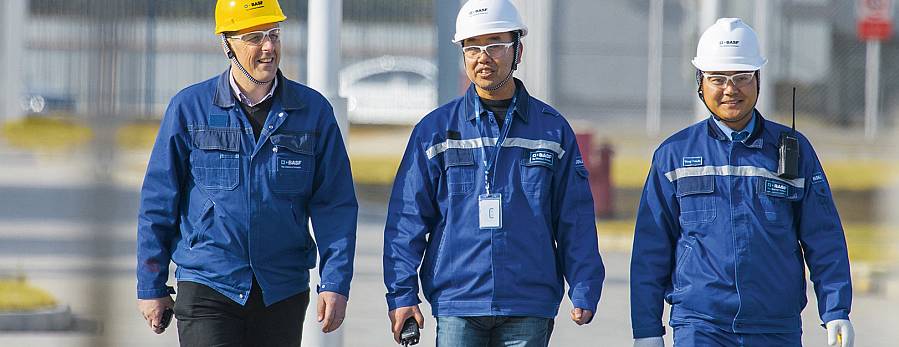
(c) BASF 2013
BASF, the world’s leading chemical company, has adopted the stringent requirements of the bluesign® system for improved environmental protection and consumer safety in the textile value chain.

The bluesign® system, developed by bluesign technologies ag, is an independent stringent standard applied in five key areas of textile processing: resource productivity, air emission, occupational health and safety, water emission and consumer safety.

“This cooperation with bluesign technologies is aligned with our commitment to ‘Putting FUTURE into Textiles’, through high standards in environment and safety,” said Lütfü Okman, Vice President of Global Business Management, Textile Chemicals, BASF South East Asia.

“BASF has been a pioneer and role model for many years for the entire textile industry with the consequent elimination of critical substances from its extensive range of textile chemicals. This policy is perfectly in line with the approach of the bluesign® system and bluesign technologies ag is looking forward to an inspiring cooperation to further strengthen a responsibly acting textile industry,” says Peter Waeber, CEO, bluesign technologies ag.

The textile chemicals product portfolio of BASF is fully compliant with strict consumer safety requirements, for example, the Oeko-Tex Standard 100, and the Restricted Substances List of major retail brands, which are based on stringent global regulations. In addition,

BASF takes this one step further by incorporating several voluntary restrictions on substances. With the adoption of the bluesign ® system, BASF provides additional assurance to textile mills, brand owners, and other members of the textile value chain.

At the third bluesign® conference in St. Gallen, Switzerland, July 9-10, 2013, Dr. Juergen Reichert, Head of Application Laboratories, EMEA, Textile Chemicals, BASF SE, will share insights from BASF’s extensive experience in the textile industry and present a paper on “The new (expected) changes in the classification of formaldehyde and the impact on the textile industry”.

BASF Textile Chemicals offers solutions for the entire textile value chain, which includes pre-treatment, dyeing, printing, finishing and coating, providing customers with competitive advantages derived from significantly lower water consumption, shorter processing time, reductions in emissions and cost savings while maintaining strict self-imposed ecological and consumer safety standards.

Production processes that are designed around maximum resource productivity with a view to environmental protection, health and safety, represent an assurance for manufacturers and retailers that today's quality criteria are fulfilled and that applicable regulations and limits are complied with. This independent bluesign® system can be applied to the entire production chain and delivers certainty at all levels, from raw materials to final product, from chemical supplier to consumer. This in turn means measurable economic success for industry and trade while at the same time offering maximum consumer and environmental protection. bluesign® system partners, consisting of brands, textile mills and textile chemicals suppliers, share this common objective.

For more information on textile chemical solutions offered by BASF, please visit: www.basf.com/textile
More News from BASF Aktiengesellschaft
Performance Chemicals for Textiles

More News on Sustainability

#Natural Fibers

Global Standard gGmbH launches second public consultation for GRTS Draft 2 for the textile industry (1–30 April 2026)

Global Standard gGmbH is pleased to announce the release of Draft 2 of the Global Responsible Textile Standard (GRTS) for its second public consultation. The consultation will be open from 1 April 2026 to 30 April 2026, inviting stakeholders across the textile and apparel value chain to provide input and contribute to the further development of this new Standard.

#Sustainability

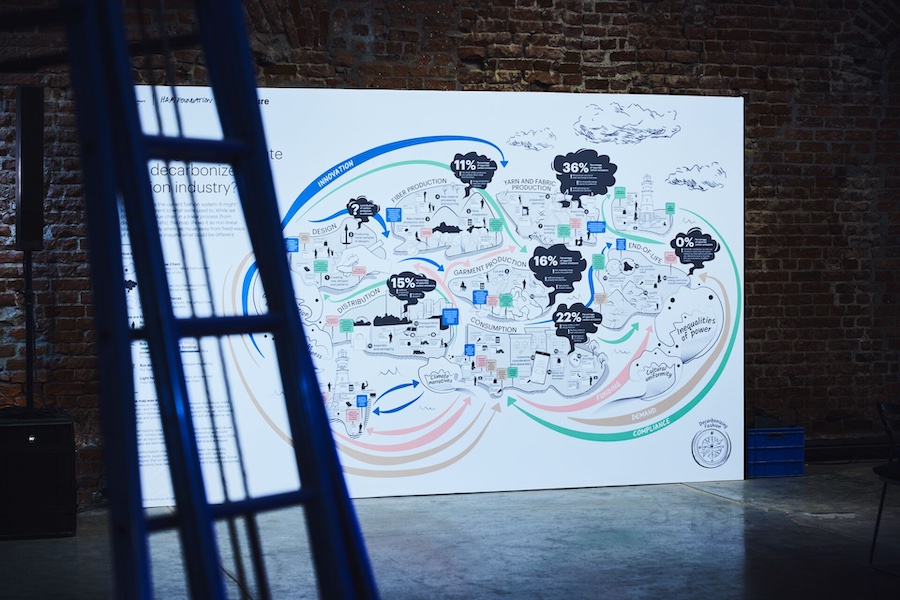
Practical toolkit to drive coordinated climate action launched

An open-access workshop toolkit enables brands, suppliers, policymakers and investors across the textile industry to apply the System Map in their own work, identifying leverage points to halve emissions and enable a just transition.

#Raw Materials

Textile Exchange publishes cotton Life Cycle Assessment study to strengthen impact data

Textile Exchange has published the first in a series of seven Life Cycle Assessment (LCA) studies designed to improve the quality and robustness of environmental impact data for raw material production across the fashion, textile, and apparel industry. The first LCA study focuses on cotton and addresses critical data gaps and methodology variability through new high-quality data across key producing countries. The study includes organic, regenerative, recycled, and country averages for conventional cotton production systems, providing a clearer picture of the associated environmental impact.

#Sustainability

Experts publish APAC policy priorities

Cascale today announced the publication of its APAC Policy Priorities Paper, developed by the Asia-Pacific (APAC) Policy Member Expert Team (MET) to identify key regional sustainability challenges and provide practical, aligned recommendations for policymakers and industry stakeholders across Asia-Pacific.

Latest News

#Raw Materials

New study shows low environmental impact by Cotton made in Africa Organic Cotton from Tanzania

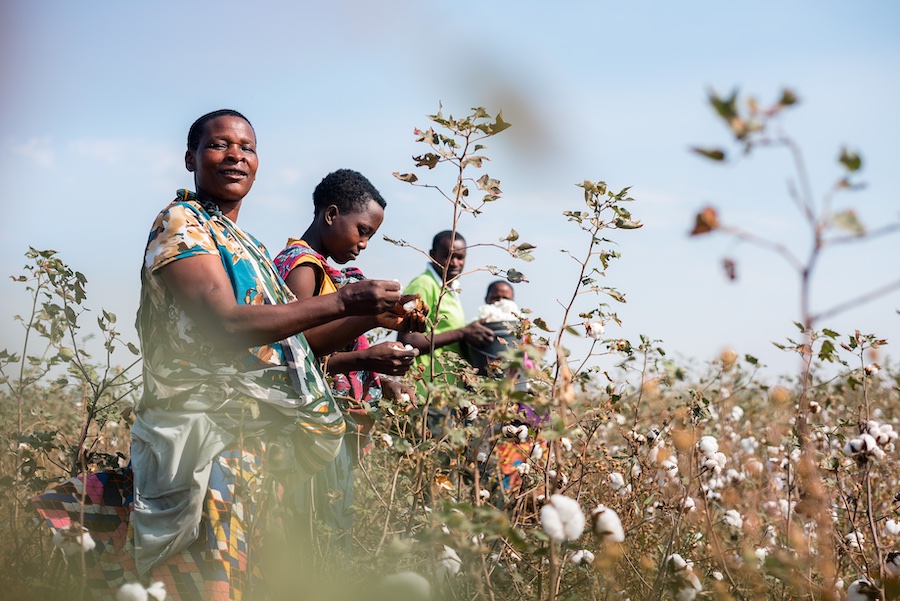
Today, the Aid by Trade Foundation (AbTF) is announcing the results of a comprehensive life-cycle analysis (LCA) for cotton produced in Tanzania under the Cotton made in Africa Organic (CmiA Organic) standard. The study emphasises the small ecological footprint of CmiA Organic verified cotton. This can largely be traced back to the absence of synthetic pesticides, artificial fertilisers, and artificial irrigation. Consequently, CmiA Organic cotton can help the textile industry meet regulatory requirements as well as science-based targets. The results also show that the consequences of climate change threaten the livelihoods of these cotton farmers, even though the type of agriculture they practise barely contributes to climate change.

#Raw Materials

Better Cotton Initiative strengthens regenerative focus in standard update

The Better Cotton Initiative (BCI) has strengthened the regenerative focus of its field-level standard with the launch of a new version of its Principles & Criteria (P&C), which marks the next step in the organisation’s journey to becoming a regenerative standards system.

#Man-Made Fibers

Selenis and Kintra Fibers partner to scale 100% bio-based synthetic fiber technology

Selenis, a leading global specialty polyester manufacturer, today announced a strategic manufacturing partnership with materials science company Kintra Fibers to scale Kintra’s patented fiber-grade PBS resin - a 100% bio-based and biodegradable material designed for textile applications.

#Functional Fabrics

PERFORMANCE DAYS proves its relevance as the industry’s key meeting point

Held on March 18–19, 2026, PERFORMANCE DAYS once again confirmed its position as a leading international platform for functional textiles. A total of 3.366 trade visitors and around 560 exhibitors gathered in Munich, with the event already kicking off successfully on DAY 0, which received highly positive feedback for its interactive format. Despite challenging conditions caused by the public transport strike in Munich, the event saw strong attendance and a consistently high level of activity across both exhibition days.

TOP