[pageLogInLogOut]

#Sustainability

Global Standards announce launch of a new textile processing standard
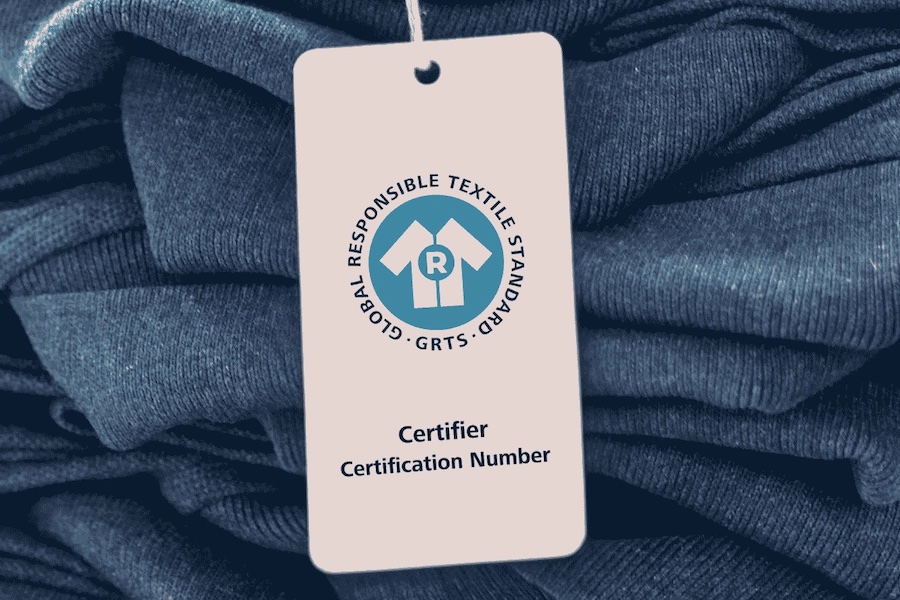
Tag for the Global Responsible Textile Standard (GRTS) © 2026 Global Standards
The 14th September 2026 marks the public launch of the Global Responsible Textile Standard (GRTS), a new standard for the processing of textiles made from fibres certified to third-party standards recognised by GRTS and covering a broad range of plant, animal, synthetic, man-made cellulosic and recycled fibres.


GRTS has been developed based on decades of experience from the established Global Organic Textile Standard (GOTS). Until now, products outside GOTS’ organic fibre eligibility criteria had no equivalent certification route within the Global Standards system. GRTS meets a growing industry demand for a textile processing standard that defines environmental and human rights criteria for the processing and physical traceability of a broader range of fibres.

Claudia Kersten, Managing Director of Global Standards, said: “Following our mission as a non-profit Voluntary Sustainability Standard setter, we aim to ensure the highest level of social and environmental impact in textile value chains. GRTS is a strategic and exciting step for us. By offering a standard that covers fibres beyond organic and building it on the same system as GOTS, we support the industry's business case for sustainability and enable more positive impact together."

Independent third-party certification and physical traceability

GRTS sets defined environmental, chemical, human rights, business conduct, due diligence and traceability requirements. For fibres to enter the GRTS system, they must be certified to third-party fibre standards recognised by GRTS and meet social, ecological and traceability criteria, including the prohibition of highly hazardous chemicals and GMOs, chain of custody with identity preservation and the inclusion of social norms in fibre production, among others.

Certification is carried out by accredited independent third-party bodies and is required at every stage of processing and trading. Chain-of-custody requirements, transaction certificates and volume reconciliation support the verification of certified fibre content throughout the supply chain.

To qualify for GRTS certification, goods must contain at least 90% fibres certified to fibre standards recognised by GRTS. For companies already certified to GOTS, existing systems and procedures may make it easy for them to apply for and receive certification to GRTS.

GRTS is fully operational, with 27 independent certification bodies accredited to certify against the standard.


The new GRTS standard 


More News from Global Standard (GOTS)

#Sustainability

GOTS releases Version 8.1 with clarifications and editorial updates

Global Standard has released Version 8.1 of the Global Organic Textile Standard (GOTS), following the publication of Version 8.0 in March 2026.

#Sustainability

Global Standards establishes new non-profit foundation to strengthen governance

Global Standards gGmbH, the nonprofit organisation behind the globally recognised Global Organic Textile Standard (GOTS), announced a new governance structure designed to support its long-term mission and reinforce organisational autonomy of its Voluntary Sustainability Standards and programmes.

#Sustainability

Number of GOTS-certified facilities grow 15% globally as demand for credible sustainability standards continues to strengthen

Global Organic Textile Standard (GOTS) certification continued to grow in 2025, with nearly 18,000 certified facilities worldwide, despite ongoing geopolitical uncertainty and rapidly evolving regulatory requirements across global textile supply chains.

#Natural Fibers

Global Standard gGmbH launches second public consultation for GRTS Draft 2 for the textile industry (1–30 April 2026)

Global Standard gGmbH is pleased to announce the release of Draft 2 of the Global Responsible Textile Standard (GRTS) for its second public consultation. The consultation will be open from 1 April 2026 to 30 April 2026, inviting stakeholders across the textile and apparel value chain to provide input and contribute to the further development of this new Standard.

More News on Sustainability

#Recycling / Circular Economy

NEUMÜHLE launches mono-material hoodie designed for textile recycling

With the Circular Mono Hoodie, Zurich-based label NEUMÜHLE introduces a new essential designed around a single-material principle. The textile construction is cotton throughout, right down to the sewing thread. Entirely free from elastane, the hoodie launches as a Limited Drop for CHF 139. Take-back, collection and existing recycling partnerships complement its circular design.

#Industry 4.0 / Digitalization

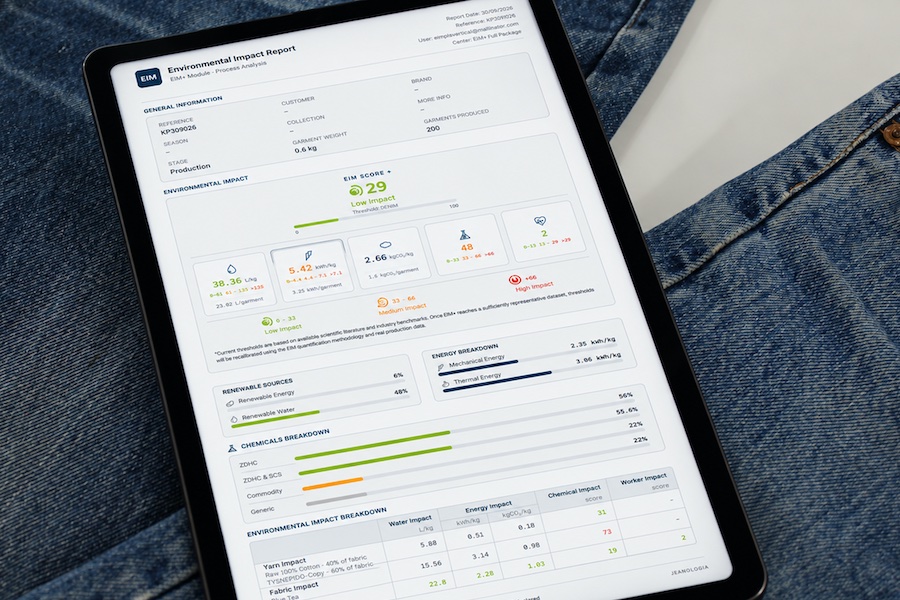
EIM evolves into a new Environmental Intelligence to measure the impact of textile production

¿Do we really know the environmental impact behind a garment? Answering this question remains one of the textile industry’s major challenges. Garment production involves multiple stages, from yarn and fabric to final finishing, carried out by different players across the supply chain. Accesing reliable data from each process, connecting it and establishing a common language are essential to understanding a product’s true impact.

#Associations

ITMF names three winners of the Sustainability & Innovation Award 2026

Three projects from the UK, Korea and China have been selected as winners of the ITMF Sustainability & Innovation Award 2026. The projects address textile-to-textile recycling, chemical recycling for automotive textiles and a regenerative approach combining silk production with ecological restoration.

#Europe

Textile ETP launches bioeconomy strategy for Europe’s textile industry

On 22 September 2026, Textile ETP's Circular & Biobased Textiles Innovation Hub published its strategy for the biobased and circular transformation of Europe's textile and apparel industry.

Latest News

#Recycling / Circular Economy

Fashion for Good launches Cotton Reloop Matrix Project to unlock commercial scale for recycled cotton

Fashion for Good today announces the launch of the Cotton Reloop Matrix Project, a cross-industry initiative that will map and physically validate the quality of commercially available recycled cotton yarns against brand specifications, giving the industry a data-backed overview of how quality, price, and recycled content intersect. The project is convened with Fashion for Good partners Arvind, BESTSELLER, C&A, Interloop, Reformation, and Shahi, together with ecosystem partner Uster.

#Digital Printing

Italian textile finishing specialist injects digital agility into luxury textile manufacturing with Kornit Digital

1st October 2026 – Kornit Digital, a global pioneer in sustainable, on-demand digital fashion and textile production technologies, shares the news that Tintoria Finissaggio 2000, one of Italy's leading textile dyeing and finishing specialists, has integrated the Kornit Presto MAX into its production environment to expand its premium textile offering to improve manufacturing efficiency and support growing demand for sustainable, agile fabric production.

#Recycling / Circular Economy

ReHubs names Béatrice Moureaux CEO to advance textile recycling in Europe

ReHubs has appointed Béatrice Moureaux as Chief Executive Officer, marking a new chapter for the European alliance as it continues to strengthen its work to scale textile-to-textile recycling across Europe. Béatrice has served as Board Advisor to ReHubs since December 2025, working closely with its Board, team and members on the organisation’s strategy and projects. She brings more than 25 years of experience across technical textiles, advanced fibres, nonwovens and circular innovation.

#Textiles & Apparel / Garment

YKK subsidiary Golden Hill Tower Limited marks 25 years of operations in Myanmar

Golden Hill Tower Limited, a subsidiary of YKK Corporation, celebrated its 25th anniversary with a ceremony in Myanmar on September 21, 2026. The event brought together approximately 230 guests, including senior executives from the YKK Group, to commemorate the company's development since the launch of its serviced apartment business in November 2000.

TOP