[pageLogInLogOut]

#Sustainability

Global Standards establishes new non-profit foundation to strengthen governance

Governing Council © 2026 GOTS
Global Standards gGmbH, the nonprofit organisation behind the globally recognised Global Organic Textile Standard (GOTS), announced a new governance structure designed to support its long-term mission and reinforce organisational autonomy of its Voluntary Sustainability Standards and programmes.


The newly established Global Standards Foundation is the sole shareholder of the operating organisation, which was renamed Global Standards gGmbH. The new structure will ensure that strategic decisions are guided by independent expertise, to support a more sustainable textile sector, in line with the Sustainable Development Goals (SDGs).

A key feature of the new model is the establishment of a Governing Council as the organisation's strategic governing body. The inaugural Governing Council brings together four new outstanding independent experts alongside nominees from each of the four founding organisations and an independent chair, showcasing a global range of experience and expertise. All serve in a personal capacity, collectively extending Global Standards’ expertise across sustainability, governance, finance, certification and public policy:

Prof. Dr. Christian Berg, Member of the GLS Bank Investment Committee and of the German Association of the Club of Rome and former Chief Sustainability Architect, SAP

Pietro Bertazzi, Chief Policy, Projects and Interim Growth Officer at Carbon Disclosure Project (CDP)

James Cashmore, former Managing Director, Soil Association

Tom Chapman, co-CEO, Organic Trade Association

Herbert Ladwig (Governing Council Founding Chair), Policy & Legal Advisor, Global Standards gGmbH

Tsuyoshi Maeda, Founder and CEO, Team O-Three Co., Ltd., and Chair, Japan Organic Cotton Association

Nicole Pälicke, Director, People Wear Organic and Board Member, Internationaler Verband der Naturtextilwirtschaft (IVN)

Georg Schürmann, Chair, UmweltBank Supervisory Board, Member of Supervisory Board, Oikocredit and former Managing Director, Triodos Bank Germany

Laurence Tanty, former Chair of Fairtrade International Board

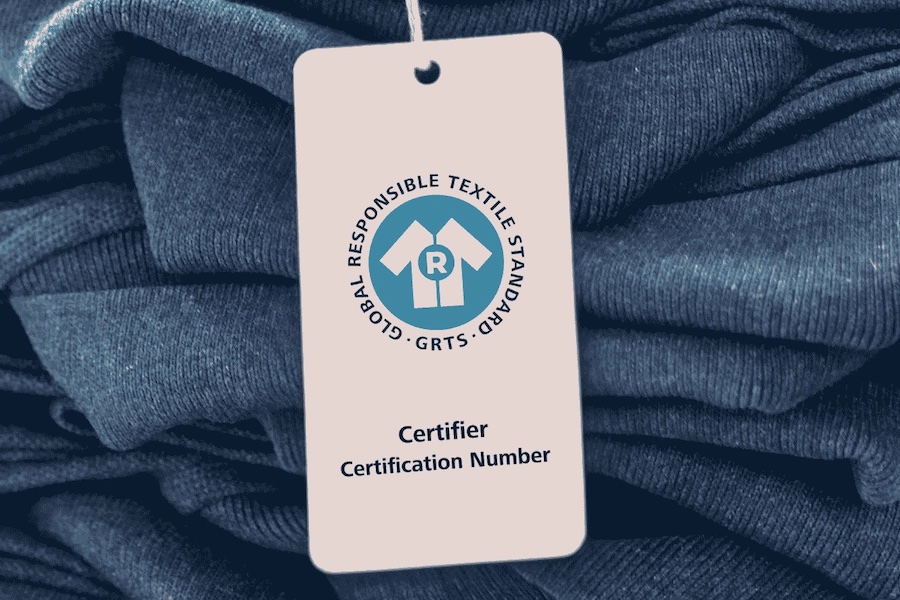
The new governance structure draws from more than 20 years of industry leadership and will support Global Standards' evolution to a multi-standard Voluntary Sustainability Standards organisation. Its portfolio today includes the worldwide recognised GOTS and the new Global Responsible Textile Standard (GRTS), which expands to fibres beyond organic.

As expectations for Voluntary Sustainability Standards and regulatory requirements continue to intensify, the new foundation structure provides an independent governance model designed to meet those expectations while strengthening Global Standards’ ability to serve the textile sector over the long term.

Today, Global Standards is a team of around 50 professionals working around the world with a clear mission: “To ensure the highest level of social and environmental impact in textile value chains through voluntary sustainability standards and related activities.”

This new structure is designed to serve that mission better — giving Global Standards the independence, stability, and accountability it needs to keep delivering meaningful impact across global textile value chains.


More News from Global Standard (GOTS)

#Sustainability

GOTS releases Version 8.1 with clarifications and editorial updates

Global Standard has released Version 8.1 of the Global Organic Textile Standard (GOTS), following the publication of Version 8.0 in March 2026.

#Sustainability

Number of GOTS-certified facilities grow 15% globally as demand for credible sustainability standards continues to strengthen

Global Organic Textile Standard (GOTS) certification continued to grow in 2025, with nearly 18,000 certified facilities worldwide, despite ongoing geopolitical uncertainty and rapidly evolving regulatory requirements across global textile supply chains.

#Natural Fibers

Global Standard gGmbH launches second public consultation for GRTS Draft 2 for the textile industry (1–30 April 2026)

Global Standard gGmbH is pleased to announce the release of Draft 2 of the Global Responsible Textile Standard (GRTS) for its second public consultation. The consultation will be open from 1 April 2026 to 30 April 2026, inviting stakeholders across the textile and apparel value chain to provide input and contribute to the further development of this new Standard.

#Sustainability

GOTS version 8.0 released: advanced supply chain accountability, from fibre to finished product

Global Standard is pleased to announce the release of GOTS Version 8.0, the latest update to the world's leading processing standard for organic textiles. The updated Standard strengthens requirements for air emissions and waste management, as well as criteria for product safety. It introduces new provisions on circularity, microfibre management and updates in residue testing. Version 8.0 also elevates due diligence obligations and formalises governance requirements, including ESG disclosure, anti-corruption policies and conflict-of-interest safeguards, to support credible, responsible business conduct.

More News on Sustainability

#Composites

WHILL selects Teijin’s tough, lightweight Carbon Fiber Composite for new last-mile mobility

Teijin Limited announced today that WHILL Inc., a global leader in inclusive mobility technology, has selected Sereebo® P CFP series, a carbon fiber-reinforced thermoplastic (CFRTP) material, for key structural components of the upcoming WHILL Model C Lite. Sereebo® P CFP series provides high strength, light weight, design flexibility and system cost advantages to the Model C Lite, which is a battery powered, single-seat, last-mile device. This new model combines maneuverability with light weight and one-handed folding to ensure ease of handling and operation.

#Sustainability

New guidance to help organizations deliver the Material Matter Standard’s human rights commitments

Textile Exchange has published new guidance and tools to help organizations better understand and implement the human rights and livelihoods requirements of the forthcoming Materials Matter Standard.

#Sustainability

Execs help steer Cascale’s consumer goods agenda in Athens

The 2026 Cascale Annual Meeting, taking place September 15–17 in Athens, Greece, will convene leaders from across the global consumer goods value chain to tackle one of the industry’s defining questions: how to accelerate meaningful, system-wide transformation. Guiding those conversations as this year’s co-chairs are Sean Cady, vice president, global sustainability, responsibility, trade, and government affairs at VF Corporation, and Dr. Delman Lee, vice chair at TAL Apparel Limited.

#Textiles & Apparel / Garment

SAITEX reports efficiency gains and greater transparency in 2025 Impact Report

Vietnam-based denim manufacturer SAITEX has published its 2025 Impact Report, documenting progress in resource efficiency, chemical management, digital traceability and knowledge sharing across its manufacturing operations in Vietnam and the United States. Rather than focusing on sustainability ambitions, the report presents operational data, manufacturing developments and lessons learned from the past year.

Latest News

#Recycled Fibers

RE&UP’s Next-Gen Cotton fibers power Zalando private label t-shirt collection crafted from innovative recycled textiles

RE&UP Recycling Technologies’ Next-Gen Cotton powers a new collection from Zalando’s private labels, marking a step forward in bringing textile-to-textile recycled fibers into commercial fashion production. Launching on Zalando in August, the collection comprises five t-shirts across YOURTURN by Zalando and Even&Odd by Zalando, made from a circular-knit fabric blending 80% organic cotton with 20% RE&UP Next-Gen Cotton — textile-to-textile recycled fiber produced from textile waste. This is the first time RE&UP's recycled fibers feature in Zalando's private label assortment.

#Heimtextil 2027

Heimtextil Trends 27/28: ‘Home-Maxxing’ between performance and respite

Sleep better, recover faster, live more efficiently: the desire for optimisation has long since reached our homes. Under the title ‘Home-Maxxing – The Performance of Everyday Living’, Heimtextil Trends 27/28 show how our relationship with efficiency-driven thinking and technology is influencing the design of spaces and textiles. The more sleep, wellness, routines, materials and spaces are optimised, the stronger the desire for a home that does not demand even more of us.

#Recycled Fibers

Driving circularity with Uster Recycled Fiber Matrix

The textile industry’s commitment to circularity continues to accelerate, and mechanical recycling is viewed as a targeted approach to cutting textile waste and its environmental impact. At the forefront of this drive, Uster has developed the Recycled Fiber Matrix, a two-dimensional assessment of mechanically recycled fibers to guide optimum processing and end-uses.

#Digital Printing

Mimaki advances DTF productivity and stability with new TxF330-800

Mimaki Europe, a leading manufacturer of industrial inkjet printers and cutting plotters, announces the TxF330-800, its new direct-to-film (DTF) printer. Designed to support stable, high-quality garment decoration in demanding print environments, the system combines automated maintenance, expanded white ink capacity and advanced production capabilities to streamline workflow.

TOP