[pageLogInLogOut]

#Sustainability

GTB - Shaping a more transparent, data-driven future together

The Global Trace-Base (GTB) is more than just a centralised data system — it’s a powerful tool designed to deliver unmatched traceability, transparency, and integrity. Developed by Global Standard gGmbH, GTB will collect and manage data on certified entities and certified products, as well as carry “value added” data for the products being tracked through the supply chain.

At Global Standard gGmbH, a mission-driven non-profit organization, the goal isn’t profit — it’s impact. The Global Trace-Base (GTB) is being developed to provide greater traceability, transparency, and integrity, helping you drive meaningful change through smarter data capture, analysis, and reporting. By adding GTB as a powerful data system to GOTS and future Standards of Global Standard, they are jointly increasing their effort to create more transparent and impactful supply chains.

Global Standard gGmbH is fully committed to operating GTB solely on a cost-recovery principle. While it may be inevitable that fees adjust over time to reflect evolving operational needs, they are strictly aligned with the actual costs of running and maintaining the system — with no profit element involved. Fees shall be reviewed regularly to ensure that users continue to receive maximum value.

The GTB fees have been determined as follows: 

Fee             -        Current            -            Effective

GTB Scope Certificate (SC) Fee        -      € 15         -      1st December 2024

GTB Transaction Certificate (TC) Fee        -      € 3        -     1st July 2025 [1]

The fees are applicable to certificates generated (or retrospectively backfilled) by Certification Bodies:

• Directly to the GTB Portal / Interface

• System-to-System via API

• Manually imported, i.e. csv, xml

The Certification Bodies are responsible to collect the GTB SC & TC Fees on behalf of Global Standard gGmbH. Global Standard gGmbH will not charge additional fees for any SC issued before December 1, 2024 and any TC issued before July 1, 2025.

The GTB SC Fee is applicable for every new or renewed SC issued by Certification Bodies.

The GTB TC Fee is applicable for each TC issued by Certification Bodies since it was run through the system, even if it is later cancelled or invalidated.

Fees are NOT applicable for revisions/modifications of existing, valid, current certificates.

[1] Estimated date dependent on volume reconciliation 1st release


More News from Global Standard (GOTS)

#Sustainability

GOTS version 8.0 released: advanced supply chain accountability, from fibre to finished product

Global Standard is pleased to announce the release of GOTS Version 8.0, the latest update to the world's leading processing standard for organic textiles. The updated Standard strengthens requirements for air emissions and waste management, as well as criteria for product safety. It introduces new provisions on circularity, microfibre management and updates in residue testing. Version 8.0 also elevates due diligence obligations and formalises governance requirements, including ESG disclosure, anti-corruption policies and conflict-of-interest safeguards, to support credible, responsible business conduct.

#Textiles & Apparel / Garment

Global Standard strengthens presence in Southeast Asia at VIATT 2026

Global Standard will participate in the Vietnam International Trade Fair for Apparel, Textiles and Textile Technologies (VIATT) 2026, organized by Messe Frankfurt, the first textile trade show in the APAC region this year. Global Standard will host a booth and Felica Shi will lead a seminar on Global Organic Textile Standard (GOTS). The trade fair will take place from February 26 to 28, 2026, in Ho Chi Minh City, Vietnam.

#Sustainability

GOTS publishes update: Approval procedure & requirements for certification bodies – Version 4.0

The updated Version 4.0 has been aligned with the requirements of ISO 17065 and incorporates revised conformity assessment procedures and methodologies for Certification Bodies. These updates reflect best practices in evaluating management systems, thereby strengthening quality assurance, and safeguarding the integrity of certified products.

#Sustainability

Global Standard to launch new Global Responsible Textile Standard (GRTS), calls for public consultation

Global Standard, the non-profit organisation behind the internationally recognised Global Organic Textile Standard (GOTS), today announces the launch of the public consultation period for its new voluntary sustainability standard: the Global Responsible Textile Standard (GRTS).

More News on Sustainability

#Sustainability

Practical toolkit to drive coordinated climate action launched

An open-access workshop toolkit enables brands, suppliers, policymakers and investors across the textile industry to apply the System Map in their own work, identifying leverage points to halve emissions and enable a just transition.

#Raw Materials

Textile Exchange publishes cotton Life Cycle Assessment study to strengthen impact data

Textile Exchange has published the first in a series of seven Life Cycle Assessment (LCA) studies designed to improve the quality and robustness of environmental impact data for raw material production across the fashion, textile, and apparel industry. The first LCA study focuses on cotton and addresses critical data gaps and methodology variability through new high-quality data across key producing countries. The study includes organic, regenerative, recycled, and country averages for conventional cotton production systems, providing a clearer picture of the associated environmental impact.

#Sustainability

Experts publish APAC policy priorities

Cascale today announced the publication of its APAC Policy Priorities Paper, developed by the Asia-Pacific (APAC) Policy Member Expert Team (MET) to identify key regional sustainability challenges and provide practical, aligned recommendations for policymakers and industry stakeholders across Asia-Pacific.

#Sustainability

The nova-Institute establishes new Renewable Feedstock Department to lay the groundwork for industrial defossilisation

The transition from fossil-based to renewable carbon – sourced from biomass, CO₂ utilisation and recycling – is the cornerstone of a climate-neutral chemical industry. The nova-Institute’s new department is dedicated to providing the essential data, analyses and strategic roadmaps required to secure a reliable future feedstock supply and make this transition a commercial and ecological reality.

Latest News

#Research & Development

Textile cascade filter for removing microplastics from wastewater

Microplastics are now found almost everywhere, even in remote regions of Antarctica. They enter the human body through the food chain. Studies indicate that microplastics may have negative effects on the human health.

#Textile processing

Jeanologia showcases the future of product development

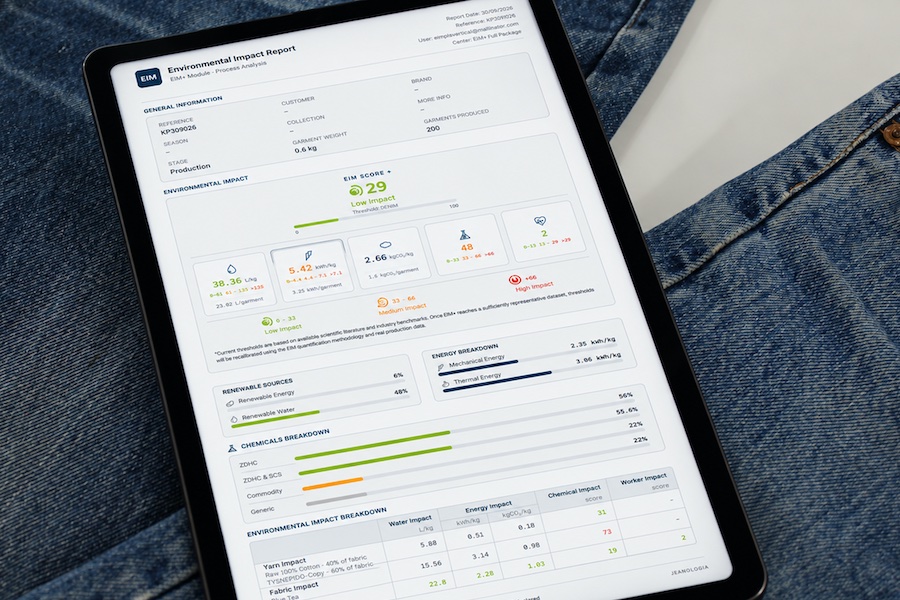
Jeanologia is showcasing how software is transforming product development in the fashion industry at PI Apparel Europe: The Fashion Technology Show, taking place on March 30–31 in London.

#Techtextil 2026

Groz-Beckert showcases cross-segment innovations for technical textiles in Frankfurt

From April 21 to 24, 2026, Groz-Beckert will present its latest innovations and solutions across the product areas of knitting, weaving, nonwovens and sewing at Techtextil 2026 in Frankfurt (Hall 12, Booth B90).

#Techtextil 2026

VANDEWIELE Group at Techtextil 2026 – Textile innovations together

The VANDEWIELEGroup will showcase its latest technologies for technical textiles at Techtextil 2026 in Frankfurt from April 21–24 (Hall 12.0, Stand C21). As a global leader in textile machinery, the group brings together specialised brands to support the evolving demands of high-performance textile applications. Visitors will discover solutions in laboratory testing, yarn joining, yarn feeding and thread tension monitoring, designed to create measurable value across the textile value chain.

TOP