[pageLogInLogOut]

#Sustainability

Global Standard opens public consultation for GOTS version 8.0

The public is invited to consult on the next version of the Global Organic Textile Standard (GOTS) and its Implementation Manual. Global Standard, the non-profit that owns and operates the Standard, makes the announcement at a time when the textile industry needs guidance on staying in compliance with global regulations and combat greenwashing.

GOTS revisions occur every three years in an open and transparent manner, seeking inputs from the public and expertise from industry stakeholders. As a dynamic Standard, GOTS remains relevant, effective and aligned with the latest developments in the textile industry, environmental and social responsibility, and regulatory frameworks.

“Global Standard is excited for the next era of GOTS in a period of evolving regulations and increased public awareness of the need for a more sustainable textile sector,” said Claudia Kersten and Rahul Bhajekar, Global Standard managing directors, in a joint statement. “We remain committed to our vision of a world where all textiles are produced in accordance with the principles of health, ecology, fairness and care to enhance people’s lives and the environment. GOTS Version 8.0 will continue to build on that and provide much-needed rules and tools for businesses and remain the trusted label for consumers.” 

The first public consultation for the initial draft of GOTS Version 8.0 and accompanying Implementation Manual will remain open until 7 March 2025. Global Standard invites inputs from all stakeholders, which will be reviewed and discussed by the GOTS Standard Revision Committee. A second public consultation will take place in July. Summarized inputs and outcomes of comment discussions will be published on the GOTS revision webpage for transparency and further engagement. 

As part of the process, Global Standard announced to the public 1 January 2025 the new Standards Revision Committee. This 25-member group chosen from over 50 applicants after a public appeal consists of representatives from all sectors of the textile value chain, including fibre production and processing, chemical production, manufacturing, labour, traders, retailers, consumers, the post-consumer sector, civil society and professional and technical services.

Read the first GOTS Version 8.0 revision drafts, submit comments and learn more on the GOTS Revision webpage.

https://global-standard.org/the-standard/gots-revision


More News from Global Standard (GOTS)

#Natural Fibers

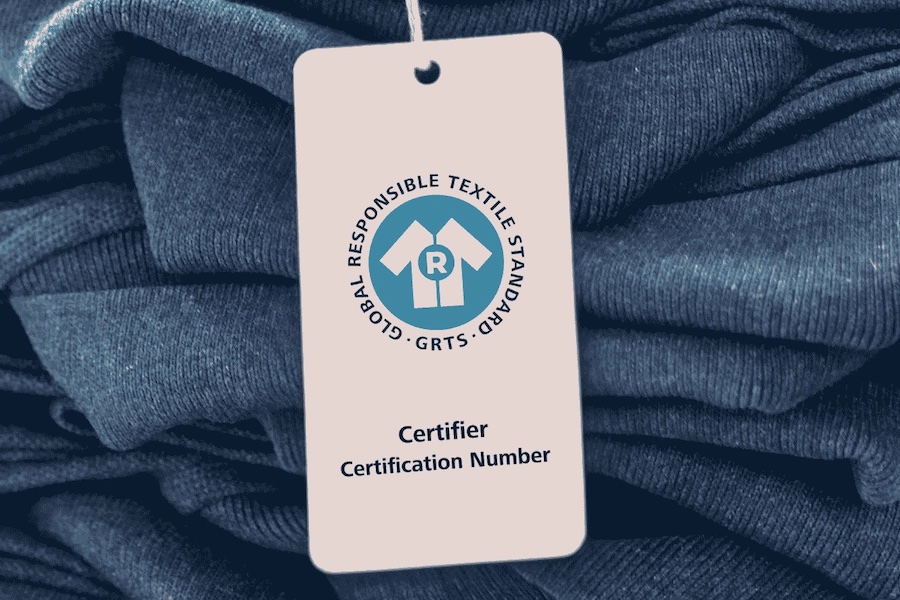
Global Standard gGmbH launches second public consultation for GRTS Draft 2 for the textile industry (1–30 April 2026)

Global Standard gGmbH is pleased to announce the release of Draft 2 of the Global Responsible Textile Standard (GRTS) for its second public consultation. The consultation will be open from 1 April 2026 to 30 April 2026, inviting stakeholders across the textile and apparel value chain to provide input and contribute to the further development of this new Standard.

#Sustainability

GOTS version 8.0 released: advanced supply chain accountability, from fibre to finished product

Global Standard is pleased to announce the release of GOTS Version 8.0, the latest update to the world's leading processing standard for organic textiles. The updated Standard strengthens requirements for air emissions and waste management, as well as criteria for product safety. It introduces new provisions on circularity, microfibre management and updates in residue testing. Version 8.0 also elevates due diligence obligations and formalises governance requirements, including ESG disclosure, anti-corruption policies and conflict-of-interest safeguards, to support credible, responsible business conduct.

#Textiles & Apparel / Garment

Global Standard strengthens presence in Southeast Asia at VIATT 2026

Global Standard will participate in the Vietnam International Trade Fair for Apparel, Textiles and Textile Technologies (VIATT) 2026, organized by Messe Frankfurt, the first textile trade show in the APAC region this year. Global Standard will host a booth and Felica Shi will lead a seminar on Global Organic Textile Standard (GOTS). The trade fair will take place from February 26 to 28, 2026, in Ho Chi Minh City, Vietnam.

#Sustainability

GOTS publishes update: Approval procedure & requirements for certification bodies – Version 4.0

The updated Version 4.0 has been aligned with the requirements of ISO 17065 and incorporates revised conformity assessment procedures and methodologies for Certification Bodies. These updates reflect best practices in evaluating management systems, thereby strengthening quality assurance, and safeguarding the integrity of certified products.

More News on Sustainability

#Sustainability

Practical toolkit to drive coordinated climate action launched

An open-access workshop toolkit enables brands, suppliers, policymakers and investors across the textile industry to apply the System Map in their own work, identifying leverage points to halve emissions and enable a just transition.

#Raw Materials

Textile Exchange publishes cotton Life Cycle Assessment study to strengthen impact data

Textile Exchange has published the first in a series of seven Life Cycle Assessment (LCA) studies designed to improve the quality and robustness of environmental impact data for raw material production across the fashion, textile, and apparel industry. The first LCA study focuses on cotton and addresses critical data gaps and methodology variability through new high-quality data across key producing countries. The study includes organic, regenerative, recycled, and country averages for conventional cotton production systems, providing a clearer picture of the associated environmental impact.

#Sustainability

Experts publish APAC policy priorities

Cascale today announced the publication of its APAC Policy Priorities Paper, developed by the Asia-Pacific (APAC) Policy Member Expert Team (MET) to identify key regional sustainability challenges and provide practical, aligned recommendations for policymakers and industry stakeholders across Asia-Pacific.

#Sustainability

The nova-Institute establishes new Renewable Feedstock Department to lay the groundwork for industrial defossilisation

The transition from fossil-based to renewable carbon – sourced from biomass, CO₂ utilisation and recycling – is the cornerstone of a climate-neutral chemical industry. The nova-Institute’s new department is dedicated to providing the essential data, analyses and strategic roadmaps required to secure a reliable future feedstock supply and make this transition a commercial and ecological reality.

Latest News

#Techtextil 2026

AI, Start-ups, Research: Techtextil and Texprocess bring together players in the textile industry

From start-ups to universities and research institutes: at Techtextil and Texprocess, the world’s leading innovation trade fairs in Frankfurt am Main, exhibitors present future-oriented concepts for the global textile industry. With the international Campus & Research area, a strong participation from start-ups and the latest AI applications for textile processing, both trade fairs showcase current developments in the textile industry. By bringing together innovation, research and application, they enable new partnerships across the textile value chain.

#Techtextil 2026

IVGT joint stand brings innovation and networking to Techtextil 2026

At Techtextil 2026 and the parallel Texprocess 2026, key transformation topics such as artificial intelligence, digitalisation, sustainability, recycling and the circular economy will be reflected across the show. Against this backdrop, the IVGT, together with 16 member companies, will present its joint stand in Hall 12.1 (Stand D62) as a platform for exchange and networking.

#Man-Made Fibers

Indorama Ventures supports Southeast Asia’s textile customers with reliable regional supply and global innovative portfolio

Indorama Ventures, one of the leading global polyester fiber and filament yarn suppliers globally, will participate in Indo Intertex 2026 in Jakarta this April, making its diverse global portfolio available to apparel, home textile, and hygiene customers across Southeast Asia.

#Raw Materials

New study shows low environmental impact by Cotton made in Africa Organic Cotton from Tanzania

Today, the Aid by Trade Foundation (AbTF) is announcing the results of a comprehensive life-cycle analysis (LCA) for cotton produced in Tanzania under the Cotton made in Africa Organic (CmiA Organic) standard. The study emphasises the small ecological footprint of CmiA Organic verified cotton. This can largely be traced back to the absence of synthetic pesticides, artificial fertilisers, and artificial irrigation. Consequently, CmiA Organic cotton can help the textile industry meet regulatory requirements as well as science-based targets. The results also show that the consequences of climate change threaten the livelihoods of these cotton farmers, even though the type of agriculture they practise barely contributes to climate change.

TOP