[pageLogInLogOut]

#Sustainability

Textile Exchange enhances MIE Tool with forest and air pollution risk categories

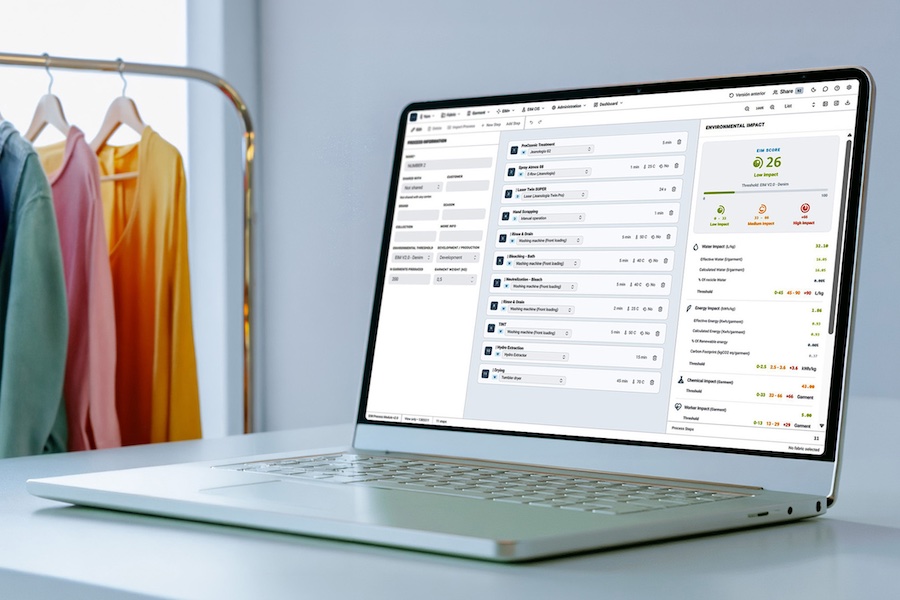
Textile Exchange has updated its Materials Impact Explorer (MIE) tool to include risk ratings and recommendations for forests and air pollution. This addition, along with a new category for manmade cellulosic fibers (MMCF), helps brands, retailers, and suppliers assess potential environmental impacts from the raw material stage.

Developed with insights from leading organizations such as the Apparel Impact Institute and the Rainforest Alliance, the MIE tool now enables users to evaluate biodiversity and environmental risks more comprehensively. 

Key Updates:

+ New risk categories for forests and air pollution

+ Inclusion of manmade cellulosic fibers (MMCF)

+ Expert contributions from top environmental organizations

One of the tools users, Veronique Rochet, Senior Director of Sustainability at PUMA, said:

“At PUMA we are currently taking steps to mitigate biodiversity risks and address environmental pollution risks through our 10FOR25 targets and supplier programs related to climate, chemicals, water, and air. We recently used the Materials Impact Explorer (MIE) tool provided by Textile Exchange to inform our biodiversity risk assessment of our key raw materials such as polyester and cotton. The MIE tool has helped us to review if we have the right strategies in place to address the risk of the potential impact on biodiversity and the risk of dependency in terms of environmental assets and ecosystem services that our organization relies on to function. We value having forests included as a risk category to explore further deforestation-free commitments in addition to our commitment to source all bovine leather used in our products from verified deforestation-free supply chains by 2030 or earlier. We also value having air pollution as a risk category as this is part of our Tier 1 and 2 supplier programs, but we also need to understand the risks in our upstream value chain. The MIE tool analyses risk in terms of potential impacts and dependencies at the very start of the value chain (Tier 4).”

The tool is designed for organizations that know the country of origin of their raw materials, where the farm, forest, or initial production facility is based.

Textile Exchange also acknowledges that forests are part of a broader land use change risk area; the organization plans to explore opportunities for building this out in the future.

The enhanced MIE tool is available to organizations familiar with the country of origin of their raw materials. Access the tool here.

https://materialsimpactexplorer.com/


More News from Textile Exchange

More News on Sustainability

#Nonwovens

EDANA wraps up its Sustainability & Policy Forum 2025: Uniting the industry and EU policymakers to navigate the future of nonwovens

Against a backdrop of rapidly evolving environmental legislation, the EDANA Sustainability & Policy Forum 2025 concluded the past week in Brussels, marking a step forward in the dialogue between the nonwovens industry and European policymakers. Held from 9-10 December at the historic Residence Palace, the two-day event successfully brought together business leaders, sustainability experts, and EU officials to address the dual challenges of circularity and industrial competitiveness.

#Sustainability

YKK recognized with Top ‘A’ rating by CDP for climate change leadership for third consecutive year

YKK Corporation announced its achievement of the highest “A List” rating in the 2025 Climate Change survey conducted by the global environmental disclosure nonprofit, CDP . This marks the third consecutive year YKK has received this prestigious recognition.

#Weaving

Itema announces strategic partnership with Ivy Decarb to accelerate decarbonization in weaving process

Itema is pleased to announce the strategic partnership with Ivy Decarb, the digital platform helping textile companies measure and reduce their carbon footprint.

#Man-Made Fibers

Teijin Carbon Europe receives EcoVadis Silver status – ranked among the top 15% of evaluated companies

Teijin Carbon Europe (TCE) has been recognized for its sustainability performance and has been awarded the EcoVadis Silver Medal in the latest assessment. In its first-ever EcoVadis evaluation, the company achieved a notable 72 out of 100 points, ranking among the top 15% of all companies evaluated worldwide, within the “Manufacture of Man-Made Fibres” category.

Latest News

#People

Happy Holidays!

Dear reader, the year 2025 is drawing to a close. We are entering what we hope will be a peaceful holiday season, spending time with our families and taking a moment to pause and reflect. We hope we have been able to support you once again this year with relevant news and articles, and we look forward to surprising you with many innovations in the coming year. Enjoy the festive season, stay healthy, and we wish you a happy and joyful holiday season.

#Weaving

Lindauer Dornier announces leadership transition in weaving machine business

After more than ten successful years at Lindauer DORNIER GmbH, Mr Wolfgang Schöffl will leave the family-owned company at the end of the year to enter well-deserved retirement.

#Heimtextil 2026

Texpertise Focus AI: Messe Frankfurt puts Artificial Intelligence centre stage at its international textile and apparel trade fairs

Under the banner 'Texpertise Focus AI, Messe Frankfurt will place a strong emphasis on Artificial Intelligence (AI) across its international textile and apparel trade fairs from 2026 onwards, setting a future-shaping signal for the industry. The initiative highlights the responsible use of AI along the entire textile value chain, from fibre production to the point of sale. The programme will launch at Heimtextil in Frankfurt in January 2026.

#Technical Textiles

Autoneum and Polestar set new benchmarks for passenger experience and sustainability

As the global market leader in sustainable acoustic and thermal management, Autoneum is a key supplier of interior and exterior components for the highly anticipated Polestar 5 model. The successful collaboration between Autoneum and Polestar marks a significant milestone in sustainable automotive engineering: the electric grand tourer sports car features several innovations in lightweight, fully recyclable polyester-based components that ensure a superior driving experience. Polestar 5 was revealed at the IAA Mobility 2025 in Munich and is available in 24 markets.

TOP