[pageLogInLogOut]

#Sustainability

SABIC joins global together for sustainability initiative

SABIC, a global leader in the chemicals industry, has joined Together for Sustainability (TfS), a procurement-driven initiative created by chemical companies with the goal of assessing, auditing, improving sustainability practices within their supply chains. Building on SABIC’s global network and commitment to driving sustainable solutions through collaboration, the move will enable SABIC to help raise sustainability standards in procurement in partnership with a network of 40+ other chemical companies.

Khaled Saleh Al-Kharboush, Vice President of Global Procurement at SABIC, said, “Embedding sustainability into the company’s procurement processes, policies and culture as a foundational pillar is a key part of SABIC’s sustainable procurement strategy. Joining TfS will enable us to reach our goals faster, to allocate our resources to value-adding activities, and to proactively contribute to enhanced ESG performance in close collaboration with our industry peers.”
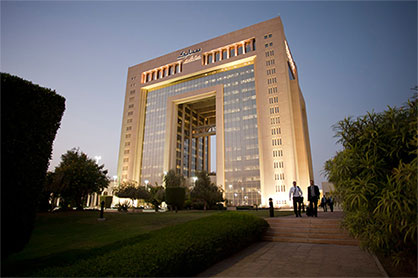
© 2023 Sabic
© 2023 Sabic


By joining TfS, SABIC will also gain access to established methodologies and infrastructure that will help accelerate the implementation of its sustainable procurement strategy and environmental, social and governance (ESG) goals. Collaboration is vital to increasing the industry’s transparency on upstream value chains to support further reductions in scope 3 greenhouse emissions. Members of TfS jointly operate global supplier assessments and audit programs through independent experts, eliminating the need for each member to conduct their own assessment programs and greatly reducing the burden on suppliers to participate in numerous different programs.


Bertrand Conquéret, President of TfS, said, “The arrival of SABIC strengthens TfS’s global leadership and opens up a new region, namely the Middle East. Together and with our strategic partners we will continue to increase our impact on the sustainability performance in chemical supply chains around the world.”

The move signals yet another way SABIC seeks to deliver sustainable solutions by collaborating and exchanging ideas with experienced industry peers. In addition to TfS, SABIC co-chairs the LCET Initiative, an effort developed with the World Economic Forum (WEF) focused on upscaling low-carbon emitting technologies in chemical production to put the industry on track to reach net zero emissions by 2050. The company is also a founding member of the Alliance to End Plastic Waste, a global community of companies dedicated to building a circular economy for plastic.

More News from SABIC

More News on Sustainability

#Sustainability

Experts publish APAC policy priorities

Cascale today announced the publication of its APAC Policy Priorities Paper, developed by the Asia-Pacific (APAC) Policy Member Expert Team (MET) to identify key regional sustainability challenges and provide practical, aligned recommendations for policymakers and industry stakeholders across Asia-Pacific.

#Sustainability

GOTS version 8.0 released: advanced supply chain accountability, from fibre to finished product

Global Standard is pleased to announce the release of GOTS Version 8.0, the latest update to the world's leading processing standard for organic textiles. The updated Standard strengthens requirements for air emissions and waste management, as well as criteria for product safety. It introduces new provisions on circularity, microfibre management and updates in residue testing. Version 8.0 also elevates due diligence obligations and formalises governance requirements, including ESG disclosure, anti-corruption policies and conflict-of-interest safeguards, to support credible, responsible business conduct.

#Sustainability

The nova-Institute establishes new Renewable Feedstock Department to lay the groundwork for industrial defossilisation

The transition from fossil-based to renewable carbon – sourced from biomass, CO₂ utilisation and recycling – is the cornerstone of a climate-neutral chemical industry. The nova-Institute’s new department is dedicated to providing the essential data, analyses and strategic roadmaps required to secure a reliable future feedstock supply and make this transition a commercial and ecological reality.

#Sustainability

Textile Exchange unveils commitment-based pathway for members to accelerate responsible raw material production

Textile Exchange has unveiled further details about its new membership structure, designed to guide the fashion, textile, and apparel industry in a collective course of action toward preferred production systems for raw materials and fibers.

Latest News

#Techtextil 2026

Gebr. Otto highlights versatility at Techtextil with regional supply chains, yarn innovations and new hygiene segment

At this year’s Techtextil, Gebr. Otto places its versatility at the center of its presentation. In addition to spinning, twisting and dyeing – traditionally focused on fine cotton – textile processors will also find a competent development partner for technical specialty solutions. The Dietenheim-based spinning mill has now built up a decade of experience in the production of technical yarns, particularly from aramids. A new hygiene segment has also been established, where yarns for medical and hygiene products are currently being produced. In the future, this department could also develop textile products for the food sector. Gebr. Otto will once again be present at the BW-i joint stand, booth D81, hall 12.1. What is wound onto the spool is determined by the customer: Gebr. Otto develops according to specific customer requirements and transforms its own ideas into yarn innovations.

#Europe

Commission presents proposal for EU Inc. - unlocking the full potential of the Single Market for Europe's entrepreneurs

Today, the European Commission presented its proposal for EU Inc., a new single set of corporate rules, building the cornerstone and starting point for the EU's 28th regime. EU Inc. is an optional, digital-by-default European corporate framework. It will make it easier for businesses to start, operate and grow across the EU – incentivising them to stay in Europe, and encourage those who once looked elsewhere to return.

#Man-Made Fibers

OnceMore® from Södra brings end-to-end traceability for circular Man-made Cellulosic Fibers (MMCF) using TextileGenesis

OnceMore® from Södra, the world’s first large-scale process for recycling blended fabrics into high‐quality dissolving pulp, will begin using TextileGenesis, a Lectra company, to strengthen traceability from raw material to retail across the value chain. OnceMore® produces dissolving pulp made from blended textile waste and wood sourced from responsibly managed Swedish forests. By integrating TextileGenesis, OnceMore® supports the growing need for verified data and secure, transparent tracking throughout increasingly complex supply chain.

#Spinning

Temco launches a new DTY all-in-one solution

Temco introduces the DTY All-in-One Solution – a fully harmonized set of components engineered to give customers a highly stable, low maintenance and reproducible process environment. The solution reduces interruptions, extends component lifetimes and supports consistent yarn quality across all machine positions. All-in-One Solution – a fully harmonized set of components engineered to provide maintenance and reproducible process environment.

TOP