[pageLogInLogOut]

#Sustainability

Green Button: The government-led textile certification label celebrates its third anniversary and presents new standard version

For three years now, consumers have been able to recognise sustainable textiles more easily when shopping: By the government-run textile certification label Green Button. Since August, an even more sophisticated standard version, the Green Button 2.0, has been on the market.

90% of our textiles are produced in countries of the Global South -often under inadequate conditions. To curb unpaid overtime for seamstresses or the use of hazardous chemicals, companies in industrialised nations must fulfill their due diligence obligations. The government-run textile certification label Green Button shows which companies fulfill their responsibility for people and the environment in their textile supply chains and distinguishes their sustainable products. The record is positive.

  • Only three years after its market launch, the Green Button is already known to largesections of the public: According to a recent representative survey by the Gesellschaft für Konsumforschung (GfK Fashion Consumer Panel 2022), 44% of people in Germany are already aware of the certification label, and over half (52%) of them have already consciously purchased at least one Green Button certified product.
  • Over 90 companies offer products that meet the demanding requirements for corporate due diligence and socially and environmentally sustainable production. Since its launch, more than 260 million Green Button textileshave already been sold.
  • The government-run certification label is increasingly aligning itself internationally. Among the Green Button licensees are several European companies. In addition, the Green Button has been a registered trademark with the European Union Intellectual Property Office (EUIPO) since March 2021.
  • The Green Button has also arrived in sustainable procurement. Whether it's workwear for the railroads and police or the bed linen in large hotel chains and hospitals: More and more public institutions are opting for sustainable textiles with the Green Button.
  • Just in time for its anniversary, the certification label is launching a new standard version: with a one-year transition period, the "Green Button 2.0" will apply from August this year -a further development of the previous criteria with even more comprehensive requirements and specifications for the raw material level.

Ulrich Plein heads the Green Button Secretariat. He assesses the impact of the certification label positively: "I am pleased about the Green Button success story because it puts people in the production countries in the spotlight. The positive impact benefits women in particular, who do most of the work in textile supply chains. The new standard version also makes the requirements stricter: among other things, companies must tackle the issue of living wages and involve local stakeholders to a greater extent. In addition, under the Green Button 2.0, textiles may only be made from approved fibers and materials. In this way, the Green Button sets a decisive course toward greater sustainability in the textile industry and ensures that the rights of people and the environment in the production countries will be even better protected in the future."


The requirements of the certification label are made up of two components: The Green Button checks whether companies systematically take responsibility for their supply chains by fulfilling their human rights and environmental due diligence obligations along textile supply chains. In addition, recognised certification labelsmust prove that the respective product has been produced sustainably.

These requirements have now been sharpened and expanded. In the future, companies seeking Green Button 2.0 certification must, for example, promote the payment of living wages in the supply chain and extend their risk analysis to the entire supply chain. Local stakeholders must be more involved, for example in promoting grievance mechanisms.

In addition to the requirements for corporate due diligence, there are also further requirements for sustainable production. For example, under the Green Button 2.0, textiles may now only consist of approved fibers and materials. No genetically modified seeds may be used in cotton production. Cotton must come from sustainable agriculture, plant-based plastics such as viscose from sustainable forestry, and animal fibers from species-appropriate husbandry. Particularly harmful materials such as fluorine fibers or polyacrylic must notbe used, and the same applies to fur or angora.

The further development was accompanied by an independent advisory board of experts and publicly commented on and evaluated in two rounds. In particular, the opinions and suggestions of civil society, business and other standard-setting stakeholders were taken into account.

The Green Button was launched on September 9, 2019 and has since made an important contribution to promoting decent working conditions along textile supply chains. The certification label is issued by the German Federal Ministry for Economic Cooperation and Development (BMZ), which thus continues to promote the protection of people and the environment in global supply chains.




More News from TEXDATA International

#Recycling / Circular Economy

textile.4U publishes special edition “Top 100 Textile Recycling Companies 2025”

With a comprehensive 176-page special edition, textile.4U is dedicating its latest issue entirely to one of the most dynamic and influential topics in today’s textile industry: textile recycling. The new issue, published exclusively in high-quality print, presents the Top 100 textile recycling companies researched and selected by TexData – organizations that already play a key role in the transition to circular textiles or are expected to have a significant impact in the near future.

#Recycling / Circular Economy

Responsible Textile Recovery Act of 2024 signed by Governor

Senator Josh Newman (D-Fullerton) is proud to announce that Senate Bill 707 (SB 707), the Responsible Textile Recovery Act of 2024, has been signed into law by the Governor of California, Gavin Newsom. This groundbreaking legislation establishes the country’s first Extended Producer Responsibility (EPR) textile recycling program, marking a significant step forward in the state’s efforts to combat waste and promote sustainability.

#Textiles & Apparel / Garment

Modtissimo promotes sustainability with 28 coordinates in the Green Circle

Modtissimo is proving more and more to be a textile and clothing show that delivers the latest innovations in the area of sustainability, with the iTechStyle Green Circle being the main showcase for companies' creations. In this 60+4 edition, taking place on 12 and 13 September, 28 coordinates will be exhibited in a section organised by CITEVE and curated by Paulo Gomes.

#Europe

The EU and Egypt team up to mobilise private sector investments at Investment Conference and sign a Memorandum of Understanding underpinning €1 billion in macro-financial assistance for Egypt

At the EU-Egypt Investment Conference, co-organised by the EU and the Government of Egypt on 29-30 June, the EU and Egypt are teaming up to intensify private sector investments in Egypt. They are also signing a Memorandum of Understanding (MoU) for the disbursement to Egypt of up to €1 billion in Macro-Financial Assistance.

More News on Sustainability

#Sustainability

YKK recognized with Top ‘A’ rating by CDP for climate change leadership for third consecutive year

YKK Corporation announced its achievement of the highest “A List” rating in the 2025 Climate Change survey conducted by the global environmental disclosure nonprofit, CDP . This marks the third consecutive year YKK has received this prestigious recognition.

#Weaving

Itema announces strategic partnership with Ivy Decarb to accelerate decarbonization in weaving process

Itema is pleased to announce the strategic partnership with Ivy Decarb, the digital platform helping textile companies measure and reduce their carbon footprint.

#Man-Made Fibers

Teijin Carbon Europe receives EcoVadis Silver status – ranked among the top 15% of evaluated companies

Teijin Carbon Europe (TCE) has been recognized for its sustainability performance and has been awarded the EcoVadis Silver Medal in the latest assessment. In its first-ever EcoVadis evaluation, the company achieved a notable 72 out of 100 points, ranking among the top 15% of all companies evaluated worldwide, within the “Manufacture of Man-Made Fibres” category.

#Research & Development

The region of renewable raw materials: Central German Alliance for Bioplastics

The development of sustainable plastic solutions is rapidly gaining importance in light of global environ- mental pollution, dwindling fossil resources and ambitious climate protection targets. As part of the re- gional alliance RUBIO, which brings together 18 partners from central Germany and the Berlin-Branden- burg area, the bio-based and biodegradable plastic polybutylene succinate (PBS) was comprehensively investigated, starting with the raw material, through the manufacturing process, to industrial application.

Latest News

#Recycled_Fibers

Recycling mixed-fibre garments becomes a reality: RadiciGroup, The LYCRA Company and Triumph take circular fashion a step forward

The process, which is both economically and environmentally sustainable, has enabled the production of an underwear set made from 100% recycled nylon and LYCRA® fibre in a closed-loop system.

#Spinning

First PA66 spinning plant with EvoQuench successfully commissioned

With the successful commissioning of a multi-digit PA66 spinning line for microfiber yarns, Chinese textile company Shandong Nanshan Fashion Technology Co., Ltd. has added yarn production to its textile value chain.

#Knitting & Hosiery

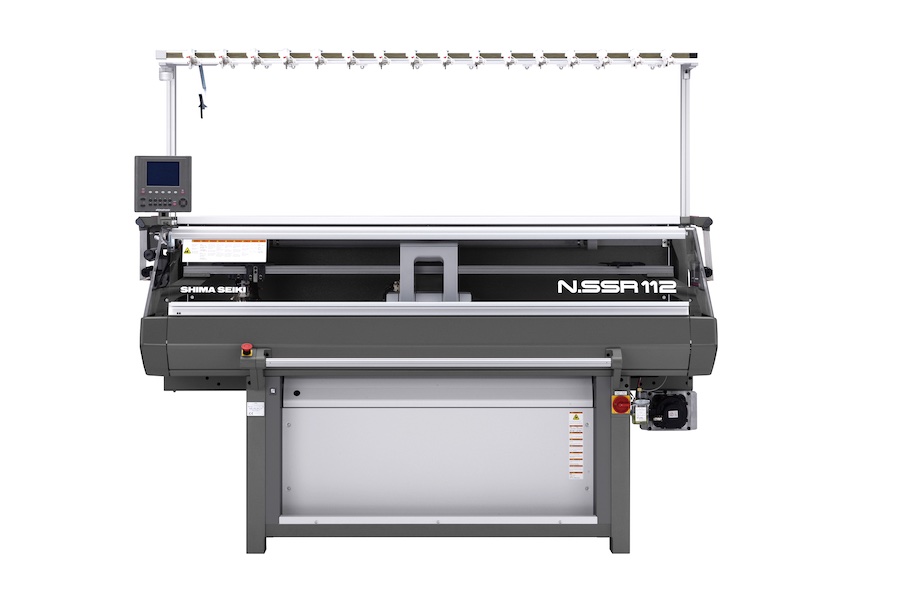
SHIMA SEIKI returns to ShanghaiTex

Leading flat knitting solutions provider SHIMA SEIKI MFG., LTD. of Wakayama, Japan, together with its Hong Kong and Chinese market subsidiary SHIMA SEIKI (HONG KONG) LTD., will exhibit at the ShanghaiTex 2025 exhibition (Booth No.: Hall N3, Booth A20) held in Shanghai, China this month. This marks the return of SHIMA SEIKI to ShanghaiTex after a 14-year hiatus, its last exhibit at the show having been in 2011.

#Research & Development

Fraunhofer CCPE presents the “Monomaterial Design Set” – Innovative solutions for circular product design

Composite materials made from different types of plastic often extend the lifetime of products but make recycling more difficult in the circular economy. That is why Fraunhofer CCPE has developed the “Monomaterial Design Set”. This new approach helps to reduce the variety of plastics used in durable products and offers circular solutions for designers and product developers.

TOP