[pageLogInLogOut]

#Sustainability

TENCEL™ Modal fiber with Indigo Color technology won 2022 ITMF Award for Sustainability and Innovation
© 2022 Lenzing
Lenzing, the world’s leading supplier of sustainably produced specialty fibers, has been recognized in The International Textile Manufacturers Federation (ITMF)’s ITMF Awards 2022 for its unwavering commitment towards paving sustainable practices for the denim industry. Paving a clear path towards a more sustainable denim industry, TENCEL™ Modal fiber with Indigo Color technology was presented with the award for Sustainability and Innovation at the ITMF Annual Conference today in Davos, Switzerland.
  • The Indigo Color technology features an innovative one-step, spun-dyeing process that delivers superior color fastness relative to conventional indigo dyeing
  • Significant savings achieved in water, electricity and chemical usage during fiber production process enhances sustainability of finished products

First launched in 2021, TENCEL™ Modal fiber with Indigo Color technology has been established as the foremost fiber solution to address the demand for more eco-responsible fiber alternatives among denim brands and retailers. The new technology incorporates indigo pigment directly into TENCEL™ branded modal fibers using a one-step, spun-dyeing process. Such process delivers superior color fastness relative to conventional indigo dyeing. Compared with traditional rope-dyed indigo yarns, the production of TENCEL™ Modal fiber with Indigo Color technology saves around 99% of water and electricity, 80% of chemicals and even 100% of heat energy, significantly reducing the ecological footprint of denim products.


“At Lenzing, sustainability and innovation are key drivers of our business, and it is truly an honor to be recognized by industry players and the ITMF Awards. Through a blend of eco-responsible materials and pioneering technology, we created a new benchmark for the denim industry with TENCEL™ Modal with Indigo Color technology. We will continue to innovate our fiber offerings to address the rising demand for eco-responsible alternatives. With each fiber innovation, we are one step closer to reducing environmental impact of our textile industry ecosystem,” said Florian Heubrandner, Vice President Global Textiles Business at Lenzing AG.

TENCEL™ Modal with Indigo Color technology fibers offer virtually endless possibilities, from denim to outerwear, active attire and footwear. Without the worry about harmful chemicals, the new fibers can even open up applications for indigo in baby items, such as clothing and sheets.

“While we continue to explore different washes, effects and fiber blends, we are open for innovation and what can be done. Beyond the denim market there are already commercial programs in knitwear. With so many great minds and new ideas out in the market, this is an excellent opportunity to experiment with something new and lower the environmental footprint,” said Tricia Carey, Director of Global Business Development Denim and Americas, Lenzing AG.

To date, TENCEL™ Modal with Indigo technology has been designated BioPreferred® by the United States Department of Agriculture (USDA) and was certified with the EU Ecolabel.
More News from Lenzing

#Nonwovens

Lenzing invests EUR 27 million in US facility to expand specialty fibers for nonwovens

The Lenzing Group is investing EUR 27 million (USD 31 million) to expand specialty fiber production capabilities at its lyocell fiber site in Mobile, Alabama, USA. The investment forms part of the company’s “Grow NW. Reset TX.” strategy and will strengthen its global Nonwovens business, with a particular focus on short-cut fibers and customized wood-based solutions for specialty applications.

#Man-Made Fibers

Lenzing improves profitability as strategic transformation gains momentum

The Lenzing Group reported improved operating profitability in the first nine months of 2026 despite declining revenue and a challenging market environment. Revenue decreased by 2.3 percent to EUR 1.93 billion, while adjusted EBITDA remained stable at EUR 353 million. The adjusted EBITDA margin increased from 17.9 percent to 18.3 percent, reflecting progress in the company's strategic transformation under its “Grow Nonwovens. Reset Textiles.” strategy.

#Man-Made Fibers

Lenzing and Kaihara to debut REMOD denim collection at Kingpins Amsterdam

The Lenzing Group, a global producer of wood-based fibers for the textile and nonwovens industries, has partnered with Japanese denim manufacturer Kaihara Corporation to launch the “REMOD Collection”. The collection combines three of Lenzing's fiber offerings for denim applications: TENCEL™ Lyocell Standard, TENCEL™ Lyocell – HV100 and TENCEL™ Lyocell dtex 2.2.

#Man-Made Fibers

Lenzing shareholders approve €300 million capital increase

Shareholders of Lenzing AG have approved a capital increase of approximately €300 million, providing financial support for the company's recently announced "Grow Nonwovens, Reset Textiles" strategy.

More News on Sustainability

#Sustainability

Cascale adds more than 20 material options to the Higg MSI

Cascale announced version 3.13 of the Higg Material Sustainability Index (Higg MSI) on 12 November 2026. The update adds more than 20 material options from 10 data contributors and revises more than 20 existing datasets. It has been available on the Worldly platform since 11 November.

#Sustainability

Inside the Making at Ecomondo 2026: Textile supply chain calls for transparency and measurable sustainability

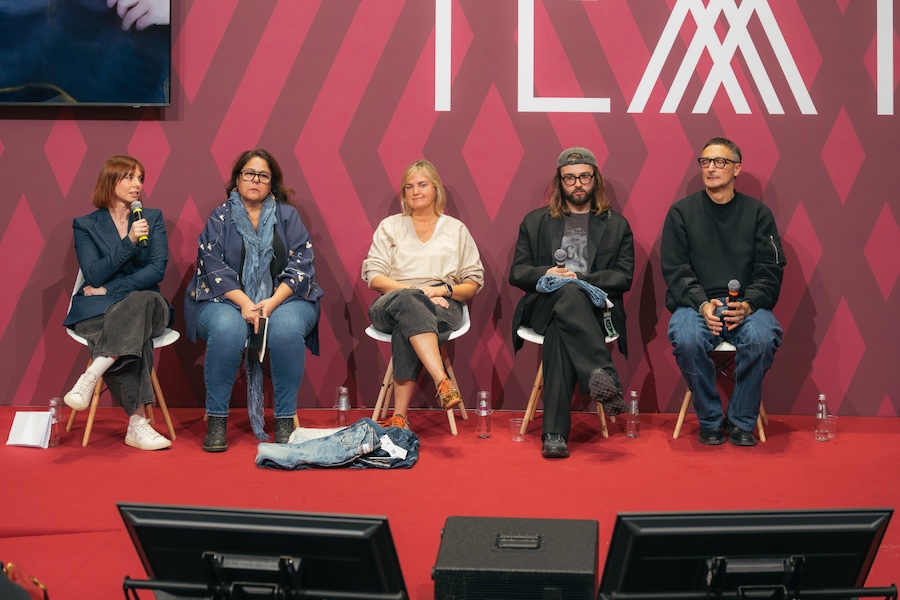
Transparency, verifiable environmental claims and closer cooperation across the textile value chain were the central themes of the “Inside the Making: The Power of the Process” panel at Ecomondo 2026 in Rimini. Representatives from denim and sportswear manufacturing, textile finishing, digital printing and branding discussed how technological innovation and supply chain collaboration can help companies meet new European regulatory requirements while making sustainability economically viable.

#Recycling / Circular Economy

H&M Foundation highlights economic barriers to scaling circular textile systems

Discussions at Textile Exchange 2026 underline the need for coordinated investment, reliable material flows and a fair distribution of costs and risks across the textile recycling value chain.

#Recycled Fibers

C&A and Zalando join Altag® Fiber Club to accelerate adoption of agricultural waste-based fibres

Fashion for Good and AltMat announced today that C&A and Zalando have joined the Altag® Fiber Club as its first brand signatories, marking a critical commercial milestone in the journey to mainstream adoption of next-generation fibres derived from agricultural waste.

Latest News

#Textile processing

Jeanologia combines digitalisation, laser and ozone technology to strengthen China’s textile competitiveness

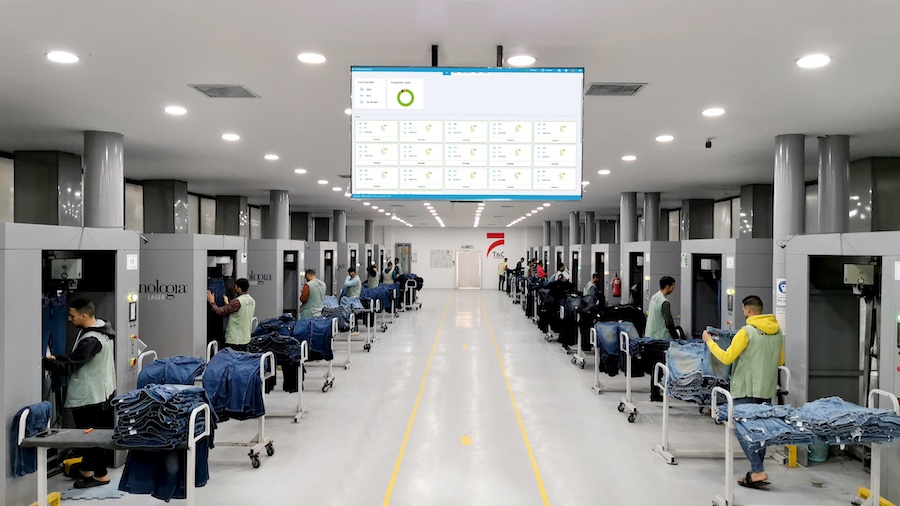
At ITMA Asia + CITME 2026 in Shanghai, Jeanologia showcased how the combination of digitalisation, laser technology and G2 Ozone can help China’s textile industry improve productivity, speed, quality and efficiency. With its Compact Super Flash laser system and integrated production concepts, the Spanish technology specialist demonstrated how connecting product development and industrial production can enable faster, more automated and sustainable manufacturing processes.

#Textile chemistry

Flame protection and OEKO-TEX® certification: Gulec Chemicals clears an important hurdle

Three halogen-free flame retardants from German specialist Gulec Chemicals have been included in the OEKO-TEX® list of accepted Active Chemical Products (ACP). The listing opens up additional opportunities for textile finishers, coaters and manufacturers of technical textiles seeking to combine demanding fire protection requirements with certification according to OEKO-TEX® STANDARD 100.

#Dyeing, Drying, Finishing

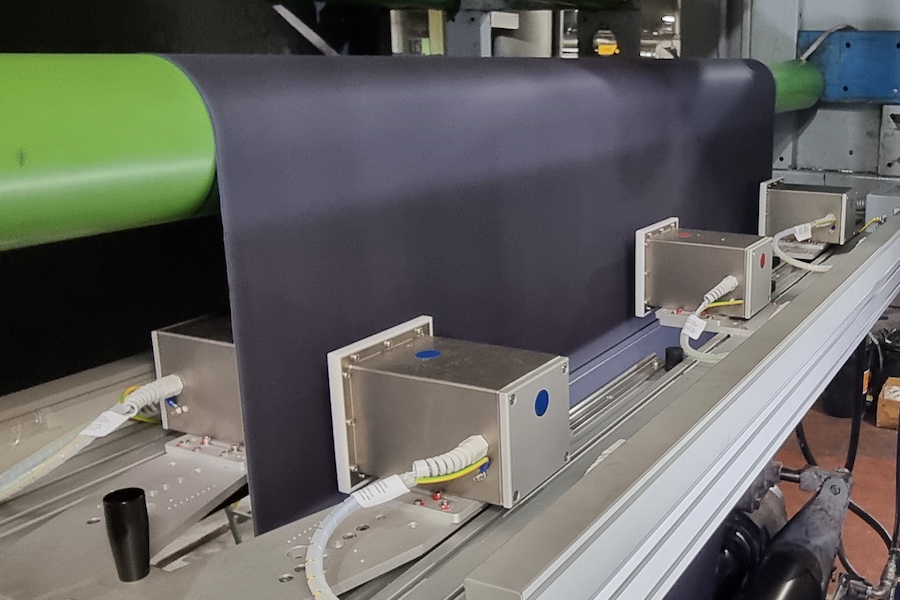
PLEVA improves dyeing consistency with inline microwave measurement of liquor pick-up

Consistent shades are essential in continuous textile dyeing. Yet variations in fabric absorbency or uneven padder pressure can go unnoticed until the end of the line. By then, hundreds of metres of fabric may already be affected and may become second-choice or rejected.

#Recycling / Circular Economy

DITF establishes CYCLOTEXUM recycling center to advance mechanical and solvent-based textile recycling

As part of the CYCLOTEXUM research project, the German Institutes of Textile and Fiber Research Denkendorf (DITF) established the CYCLOTEXUM recycling center. There, in collaboration with industry partners, the center develops application-oriented solutions for mechanical and solvent-based recycling processes. The technologies developed make a significant contribution along the textile value chain toward the efficient use of textile resources in the future and the transition of production in the German textile sector to a circular economy. The project was funded by the Ministry for the Environment, Climate and Energy Sector of the State of Baden-Württemberg.

TOP