[pageLogInLogOut]

#Sustainability

Ahlstrom-Munksjö, Metsä Fibre and 3M continue collaboration in responsible wood sourcing

Ahlstrom-Munksjö, Metsä Fibre and 3M, with the help of Earthworm Foundation, continue their close collaboration in responsible wood sourcing. This year the partnership concentrates on the Kainuu region, Finland, where the different parties will conduct research on current forestry practices and future practices linked to Kemi Mill expansion in the area. Based on the results, the three companies will develop their operations and continue collaboration among each other and other stakeholders to pursue sustainability in wood sourcing.

Metsä Fibre, the world’s largest producer of bleached softwood pulp and a globally significant manufacturer of sawn timber; Ahlstrom-Munksjö, a significant wood pulp consumer; and 3M, a global producer of paper-based products, seek to advance environmental performance and sustainability throughout their operations and supply chains. Bringing all supply chain actors together promotes responsible practices from forests to customers.

“Ahlstrom-Munksjö is committed to providing transparency along the supply chain, from forests to fiber-based materials, and to deploying sustainable practices. This unique collaboration is stepping up the supplier-customer relationship, beyond purely commercial benefits, to include people who live and work in the sourcing region. We collectively engage in forest and biodiversity protection, and development of local interests,” said Maud Laverroux, Manager, Sustainable Operations at Ahlstrom-Munksjö.

The partnership, which started in 2019, has mainly focused on responsible wood sourcing in the value chain from forests to end-products. This year, the companies will conduct research in Kainuu, Finland to collect views on the local forestry practices. Research will be organized by Earthworm Foundation, a global non-profit that transforms supply chains by partnering and innovating with the private sector, governments, communities and civil society to create solutions to environmental and social challenges.

“At Metsä Fibre, sustainability and responsibility are an integral part of everything we do. We have ambitious 2030 sustainability targets that help to pave the path towards a low-carbon society. We see that proactive sustainability collaboration with customers and other stakeholders is beneficial for us and also for the entire value chain. We are highly committed to driving responsibility not just in our own operations but also within the industry.” said Marko Ruottinen, Sustainability Manager at Metsä Fibre.


Finnish forests have areas important for their biodiversity, and as a carbon sink and source of livelihood for local residents, as well as community well-being. Therefore, it is crucial to understand local views and challenges to ensure sustainable operations in the area. Earthworm will conduct interviews with different stakeholders to understand possible issues and development areas related to regional forestry practices. Based on the results, partners will determine with relevant stakeholders what steps, if any, can be taken towards achieving a more sustainable balance between different forest values.

“At 3M, sustainability is tied to shared global needs. For the world to have a sustainable future, many challenges must be addressed, including the limited availability of natural resources and a global climate crisis. We understand that our impact, as we improve our business, our planet, and every life, can be far greater when we collaborate with our suppliers, customers, and communities. This is the continued story of our promise to help solve the world’s greatest challenges,” said Geertje Pollaris, Responsible Sourcing Leader for 3M EMEA Region.



More News from TEXDATA International

#ITM 2026

ITM 2026: The new geography of textile production

New production hubs are emerging across North Africa and Central Asia, while Türkiye is accelerating its transformation toward higher-value, technology-driven and more sustainable textile manufacturing.

#Research & Development

“Production is a product”

From technical textiles and AI-driven robotics to the limitations of textile circularity: Professor Dr Thomas Gries looks back on more than two decades of development at ITA Aachen. In the interview, he explains why production technology remains a decisive success factor, discusses international collaborations and innovation ecosystems, and shares his views on the transformation of production landscapes and the challenges facing an increasingly regulated industry.

#Knitting & Hosiery

“We need to move away from the price trap and return to a value-driven mindset.”

With its new Textile Innovation Center, KARL MAYER is sending a strong signal for innovation, collaboration, and the future of textile applications. In this interview, Karl Josef Mayer discusses new opportunities in warp knitting, the processing of staple fibres, recycling, the changing role of machinery manufacturers, and why the textile industry must once again focus more strongly on the value of textiles. by Oliver Schmidt

#Associations

“Innovation, resilience and international experience remain the great strengths of the Swiss textile machinery industry”

Geopolitical uncertainty, growing competitive pressure from China, new free trade agreements and the shift towards a circular economy are currently reshaping the global textile industry. In this interview, Cornelia Buchwalder discusses the current mood within the Swiss textile machinery sector, the industry’s distinctive innovative strength, new market opportunities in India and Asia, and the technological trends that could shape the upcoming trade fair cycle leading up to ITMA 2027.

More News on Sustainability

#Sustainability

Closing the Footwear Loop reveals challenges and opportunities for circular footwear

The footwear industry faces one of the most complex circularity challenges in the fashion sector. A new Phase 1 report from the Fashion for Good initiative Closing the Footwear Loop, developed together with Circle Economy, provides new insights into the composition, condition and recycling potential of post-consumer footwear waste.

#Man-Made Fibers

The updated poster on biodegradable Polymers in various environments has been released

As part of the PerPlacsBio project, nova-Institute has updated its popular poster on the biodegradability of polymers in different environments. The updated version reflects current standards, certifications and the latest scientific findings. The poster can be used to assess biodegradable alternatives for use in agriculture and forestry, and it is now available in German for the first time.

#Sustainability

A new standard to combat plastic waste in forests

With DIN SPEC 35808 “Tree Shelter for Forestry Applications,” the testing and research service provider Hohenstein, in collaboration with Rottenburg University of Forestry, as well as forestry authorities and industry partners, has established a clear framework for bio-based and fully biodegradable tree shelters. The pre-standard defines requirements and practical testing methods designed to reduce plastic waste in forests and strengthen the long-term protection of soil and the environment.

#Denim

Denim moves towards sustainability

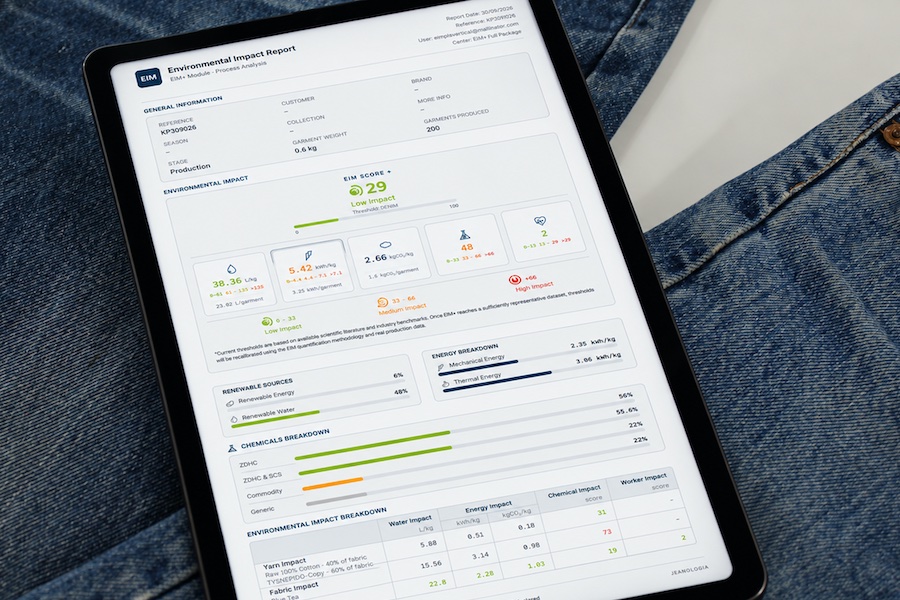
EIM (Environmental Impact Measurement), the global reference platform for measuring the environmental impact of garment finishing, presents the second edition of its annual report Denim Industry Progress & Insights 2025. The study analyses over 100,000 real denim finishing processes, providing an accurate and up-to-date view of the industry’s evolution towards more sustainable models.

Latest News

#ITM 2026

The future of textiles, the power of trade, and the summit of technology come together at ITM 2026

ITM 2026 International Textile Machinery Exhibition, one of the most prestigious organizations in the textile technologies sector, opens its doors to visitors between June 9-13. Expected to break records in terms of both exhibitor and visitor numbers, as well as the technological vision it presents, ITM 2026 will transform into a global trade hub with machine sales, and new business collaborations.

#Nonwoven machines

ATCO Hygienics, Uzbekistan, orders baby diaper production line from ANDRITZ

International technology group ANDRITZ has received an order from ATCO Hygienics to supply a new baby diaper production line for its plant in Tashkent, Uzbekistan. The order is included in ANDRITZ’s order intake for the first quarter of 2026. Commissioning of the production line is scheduled for the end of 2026.

#Weaving

Itema manufactures the first Projectile Weaving Machines “Made in Italy” at its Colzate Headquarters.

Itema proudly announces an important industrial milestone: in early May, the first Itema projectile weaving machines manufactured in Italy were successfully produced at the Group’s headquarters in Colzate.

#Spinning

Nico Pedretti appointed as Managing Director Graf Group

As of June 1, 2026, Nico Pedretti has assumed the role of Managing Director Graf Group. With more than 20 years of international industrial experience and extensive expertise in Operations, Supply Chain Management, Finance and Controlling, he brings a broad range of leadership and business experience to support Graf’s continued success.

TOP