[pageLogInLogOut]

#Sustainability

Epson publishes its 2021 ‘Green Choice’ European sustainability report

Report evidences Epson’s actions and progress towards sustainable transformation through technology innovation

Epson publishes its 2021 ‘Green Choice’ European sustainability report

Report evidences Epson’s actions and progress towards sustainable transformation through technology innovation

“Above all else, our chief aim is to deliver the very best in sustainable technologies for our customers.” Yoshiro Nagafusa - President and CEO, Epson EMEAR.
© 2021 Epson
© 2021 Epson


Epson showcases significant progress towards to fully sustainable operations today, with the publication of its 2021 European Sustainability Report, Making the Green Choice. Beyond Epson’s investment in its own transformation, the report details innovations — such as heat-free technologies — that will help every customer achieve a sustainable future.

Sustainability — ambition and investment

Yoshiro Nagafusa, President and CEO, Epson EMEAR, added, “As the world realigns after COP26, Epson continues its ambitious sustainability commitments, investment and objectives. Our lower carbon, less wasteful, heat-free technologies will empower our customers as we all work to deliver on the promise of a sustainable society.”

Epson is targeting ¥100 billion (around €770 million) at its sustainability transformation over the next decade. This will see investment to decarbonise and close resource loops (maximising resource use) internally. Externally, Epson innovation will reduce the environmental impact of customers and develop new products that are inherently sustainable.

Sustainability — commitment

In 2021, Epson has committed to ensure it will, by or before:

• 2023— reduce emissions to align with the 1.5 degree warming target

• 2023 ­— achieve 100% renewable energy use across all Group operations

• 2025 —target reductions in direct (19%) and indirect (44%) emissions

• 2030 —meet the UN’s Sustainable Development Goals — adding goals 1, 2 and 16 to its commitments in 2021, ensuring that all 17 UN SDGs are now in scope

• 2050 —become carbon negative and underground resource (e.g. oil, metals) free


Sustainability — innovation

Today’s Sustainability Report details Epson’s customer-focused and sustainability-led innovation. The company’s heat free printers, for example, can cut power consumption and CO 2emissions by up to 83%. Europe-wide adoption of these technologies would cut 1 billion kWh of energy use a year and 410,000 tonnes of CO 2. Epson’s heat free technologies have inspired a partnership with National Geographic and its work to reverse the thaw of permafrost and an accompanying increase in methane emissions.

Epson’s EcoTank printerssimilarly bring benefits across the value chain, eliminating the need for ink cartridges. To date, EcoTank printers have removed 1.6 million tonnes of plastic based consumable waste from the environment. Further gains can be seen in Epson’s development of new textile printing technologies, which can slash water use by up to 90% and energy by 30%.

Epson also helps customers to close the resource loop with PaperLab.It is a world first dry fibre process that allows in-office paper recycling — to significantly reduce water consumption and the need for transport to offsite recycling centres.

Sustainability — oversight

Epson’s Sustainability Report also details the company’s commitment to independent, robust and internationally respected oversight.

In 2021 Epson has achieved its second consecutive Platinum Status rating with EcoVadis, one of the world’s most trusted business sustainability rating platforms. Platinum status places Epson in the top 1% of sustainability performers in the computer and peripheral equipment manufacturing industry.

Epson’s platinum rating recognises the company’s global corporate social responsibility (CSR) initiatives. In the four themes EcoVadis assessed, Epson received the highest “Outstanding” rating for the environment, as well as high scores for sustainable procurement, labour and human rights and ethics.

Epson has also been awarded Platinum Status with the Responsible Business Alliance (RBA)- the world's largest industry coalition dedicated to corporate social responsibility in global supply chains. Platinum Status is only awarded to those companies that meet the highest standards of Corporate Social Responsibility. Epson has undergone a robust assessment and shown that it is a company dedicated to meaningful sustainability and the wellbeing of its employees.

The past year has also seen Epson:

• Move into the not for profit, global disclosure CDP platform’s A-List — and selected for the second year running as global supply chain leader.

• Join the RE100 initiative through its commitment to 100% renewable electricity

• Operate to ISO 9001 and 14001 standards

• Included in FTSE4Good Index Series for the 18 thconsecutive year

Henning Ohlsson, Director Sustainability, Epson Europe, said, “Epson’s Sustainability Report is much more than an overview of this year’s strategy and progress. It is a covenant that further commits our company to its role as an indispensable partner — innovating technologies that are sustainable as they are used in the real world, not simply when we produce them. It is only by looking at the bigger picture and working together — with scientists, partners and customers — that we can all move to a truly sustainable future.”


More News from Epson Europe

#Digital Printing

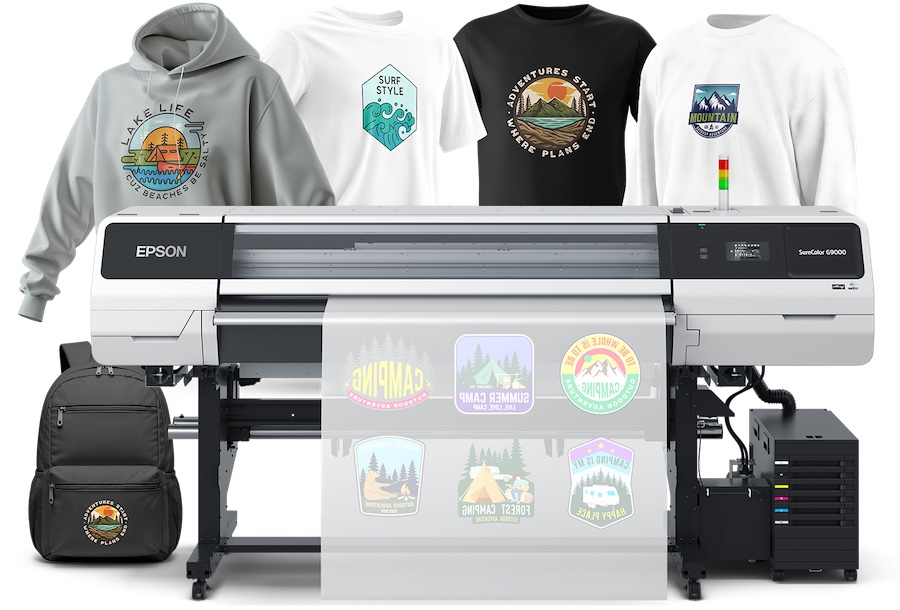
Epson launches SureColor G9000: high-production Direct-To-Film printer delivering greater productivity and reliability

Epson today announces the launch of the SureColor G9000, a new high-production Direct-To-Film (DTFilm) printer designed to meet growing global demand for flexible and efficient textile transfer printing. Expanding Epson’s DTFilm line-up alongside the SC-G6000, the SC-G9000 introduces enhanced speed, reliability and ease of maintenance for commercial garment decorators and textile producers.

#Digital Printing

Epson future proofs textile printing with Epson Textile Academy 2.0

Technology leader Epson today hosted its second Textile Academy Event at the company’s Textile Innovation Centre in Lutterworth, Leicestershire. Building on the success of its inaugural Textile Academy earlier this year, the event welcomed Textile Design BA students from Nottingham Trent University (NTU) and Loughborough University. The event features workshops designed to enhance student’s practical textile printing skills; corporate and entrepreneurial business acumen; marketing and self-branding; and environmental awareness around the textile industry.

#Recycling / Circular Economy

HKRITA and Epson develop silk-like regenerated fiber from cotton

The Hong Kong Research Institute of Textiles and Apparel ("HKRITA") and Seiko Epson Corporation ("Epson"; TSE: 6724) have succeeded in developing new regenerated cellulose fiber with a silk-like sheen from waste cotton fabric through a new production process.

#Digital Printing

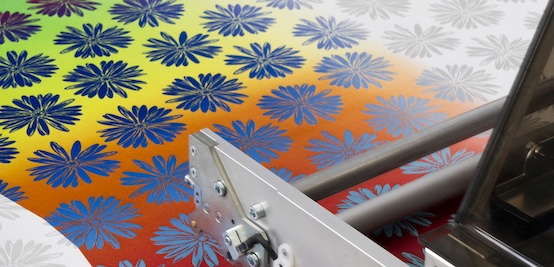
Epson unveils Monna Lisa ML-16000JQ for more efficient and sustainable Jacquard fabric printing

Global technology firm Epson announces a new direct-to-fabric digital textile printer designed for jacquard fabrics. The Monna Lisa ML-16000JQ delivers direct-to-fabric double-sided printing on jacquard fabrics, meeting the needs of fashion designers looking to enhance their creativity by seamlessly integrating vibrant colours with intricate woven patterns.

More News on Sustainability

#Sustainability

Ying McGuire becomes new CEO of Cascale

Cascale today announced the appointment of Ying McGuire as Chief Executive Officer, effective June 1, 2026.

#Sustainability

VAUDE eliminates PFAS from all products

PFAS (per- and polyfluoroalkyl substances) are now detectable worldwide – in drinking water, soil and the human body. These so-called “forever chemicals” are considered hazardous to health and potentially carcinogenic, as they do not break down and remain in the environment permanently. Despite these risks, PFAS are still used in a wide range of products. More than 15 years ago, VAUDE made a strategic decision to gradually eliminate PFAS from all product categories.

#Sustainability

OEKO-TEX® chooses TextileGenesis to advance digital traceability for organic cotton

OEKO-TEX® today announced a full collaboration with TextileGenesis, a Lectra company, to digitally trace and authenticate organic cotton, strengthening fraud prevention across the supply chain. This announcement follows a successful pilot and brings together OEKO-TEX®’s certification expertise and closed testing system with TextileGenesis’ digital traceability platform to deliver a secure, end-to-end solution for managing certified organic cotton flows.

#Europe

ICAC to support European Commission on pending PEF legislation

The International Cotton Advisory Committee (ICAC) is proud to announce that it has been included as a member of the European Commission’s Technical Advisory Board (TAB) on the Product Environmental Footprint methodology. The Commission developed the Product Environmental Footprint (PEF) to assess and communicate the life cycle environmental performance of products and organizations.

Latest News

#Technical Textiles

Sustainable, lightweight, and sound absorbing: Polyester-based front trunk solution for BEVs

As car manufacturers look to further reduce their carbon footprint, Autoneum has developed an innovative front trunk solution for battery electric vehicles (BEVs), made entirely from polyester-based textile. The Ultra-Silent Frunk offers significant weight reduction, improved acoustic and thermal insulation, and uses up to 70 percent recycled material, supporting sustainable and efficient vehicle design. Autoneum, global technology leader in acoustic and thermal management for vehicles, has already received orders for the new frunk from three major OEMs in Asia and Europe to be built in three BEV models. Series production for two BEVs has been underway in China and Germany since last year.

#Raw Materials

Modern testing methods for raw cotton

The 38th International Cotton Conference Bremen will take place from 25 to 27 March 2026 at the Bremen Parliament. This conference has traditionally stood for in-depth expertise and international exchange. The program will focus on technical innovations, market trends, and regulatory frameworks across the entire value chain – from agriculture to the circular economy. With high-profile speakers, the conference is regarded as the key meeting point for the global cotton industry. Today’s focus: Cotton quality and testing methods.

#Spinning

Rieter responds to higher raw material prices

Global political and economic developments have been leading to rising raw material and energy costs for some time. The textile machinery industry is also affected by this trend. Rieter machines and components consist to a large extent of steel, copper, aluminum and electronics. These materials in particular have seen higher demand and higher prices in recent months.

#Weaving

Stäubli demonstrates how innovation translates into real benefits for weaving mills at SITEX 2026

One of India’s most prominent textile industry events, SITEX 2026, is held from February 21 to 23 in Surat. Committed to empowering Indian weaving mills with state‑of‑the‑art solutions tailored to regional needs, Stäubli will present a selection of solutions designed for performance, reliability, and power efficiency. Through its weaving preparation, cam and dobby shedding solutions and Jacquard technologies, Stäubli highlights its global expertise tailored to the specific needs of the local market.

TOP