[pageLogInLogOut]

#Associations

Global Textile and garment manufacturers initiative publishes white paper on commercial compliance

The initiative, led by the STAR Network, the International Apparel Federation (IAF) and the Better Buying Institute and supported by GIZ FABRIC consists of 13 industry associations from nine countries facing similar challenges regarding purchasing practices in the textile and garment industry. Through a process of consultation, these associations have now jointly agreed on the text of the white paper that is published today. This marks the first joint manufacturers’ position on the improvement of purchasing practices.

The white paper contains the core principles that manufacturers as part of the Sustainable Terms of Trade Initiative (STTI) do not want to see breached by the companies that buy from them. And it suggests how manufacturers will collaborate to apply commercial compliance in the apparel sourcing business

The white paper establishes commercial compliance as a leading principle for the manufacturer’s perspective on the improvement of purchasing practices. STTI defines it as ‘purchasing practices that do not cause obvious and avoidable harm to manufacturers’. The white paper lists ‘key recommendations’, defining what purchasing practices manufacturers consider to be breaches of their definition of commercial compliance. The associations participating in the initiative recognise that the breaches of these key recommendations seriously impair their ability to run a commercially viable business, let alone to contribute to stronger and more sustainable supply chains.

Going beyond the key recommendations, the work by the associations has also yielded a set of further recommended improvements to current common purchasing practices. Importantly, the white paper also contains a comprehensive research agenda aimed at finding out how purchasing practices can adhere to commercial compliance and be further improved while maintaining the flexibility and commercial independence that is to the advantage of both buyers and suppliers, as well as their customers and workers.


A phase 2 to the initiative is foreseen to start within weeks. In phase 2, two major and interconnected approaches will emerge. The initiative will seek structural dialogue with buying brands and retailers and some of the MSIs in which they participate on the inclusion of the concept commercial compliance in purchasing practices codes. Secondly, the initiative will aid the creation of a system of improved transparency regarding commercial compliance.

More News from INTERNATIONAL APPAREL FEDERATION (IAF)

#Textiles & Apparel / Garment

IAF Position on tariffs

The International Apparel Federation (IAF) represents the apparel manufacturing community across more than 40 countries—a global industry comprising hundreds of thousands of companies and millions of employees. Apparel and textiles are among the most globalized industries, historically foundational to industrial development around the world.

#Associations

IAF and ITMF unite global fashion and textile leaders

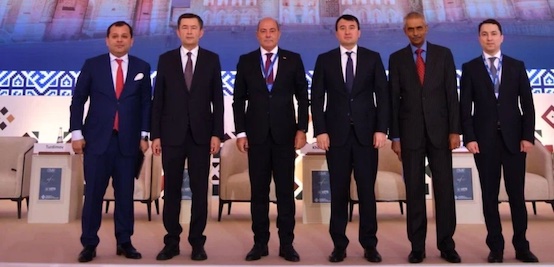
The joint ITMF Annual Conference and IAF World Fashion Convention was held on September 8-10 in the historic city of Samarkand, Uzbekistan. This year’s convention, co-organized by the International Apparel Federation (IAF) and the International Textile Manufacturers Federation (ITMF), and hosted by Uztextileprom, the Uzbekistan Textile and Garment Industry Association, and the Chamber of Commerce & Industry, Uzbekistan highlighted the crucial interdependence of our sectors.

#Associations

Partnership ITC and IAF: Full supply chain profitability

The International Trade Centre (ITC) and the International Apparel Federation (IAF) announce a partnership to stimulate innovation towards “full supply chain profitability” for apparel manufacturers and brands. The first phase of collaboration is research to be previewed at the 38th IAF World Fashion Convention, Philadelphia, October 23-24. Applying learning in autos and electronics, a joint study articulates how material suppliers and garment manufacturers create ‘smart flexibility’ by postponing production commitments closer to actual demand, unlocking capital from unneeded inventory and excess production. Smart Flexibility is a new approach that uses a mix of process and data tools enabling suppliers to create additional value for brands and manufacturers alike that supersedes the benefits of lowest cost global sourcing.

More News on Associations

#Associations

Industry associations warn against state-run EPR models in the EU

European industry associations, led by Euratex, have raised concerns over a growing trend in several EU Member States to introduce state-run Producer Responsibility Organisations (PROs) within Extended Producer Responsibility (EPR) schemes.

#Associations

European business associations celebrate the signature of the EU-Mercosur FTA

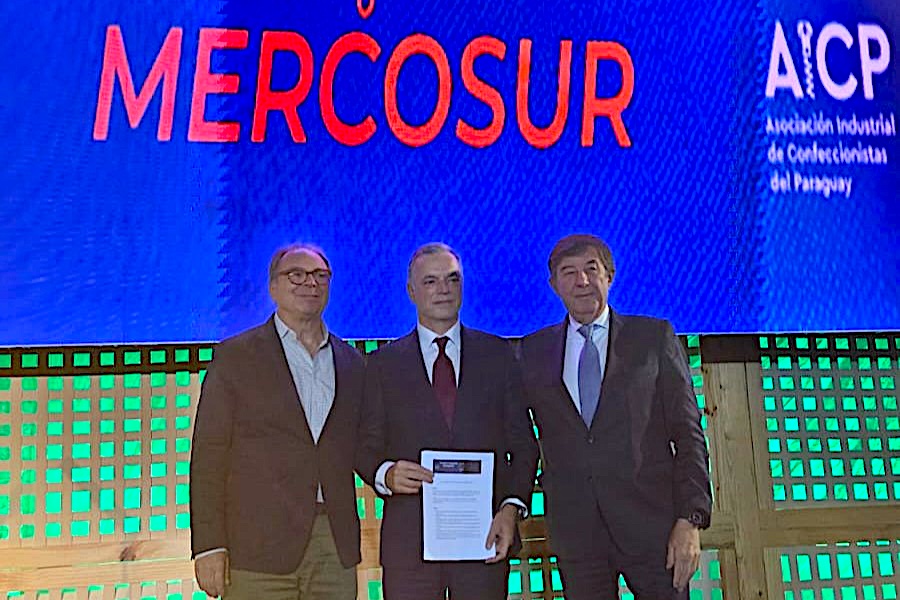
The 17th January marks a historic milestone with the signing of the EU-Mercosur Trade Agreement, creating the biggest trading block in the world. European business – represented by more than 28 associations across a wide range of sectors – warmly welcomes this signature. It sends a strong and timely signal that the EU remains open and is committed to rules-based global trade. In a time of global uncertainty, this agreement is a key growth booster.

#Associations

INDA announces future dates and locations for FiltXPO™ and IDEA® events

INDA, the Association of the Nonwoven Fabrics Industry, announced the future dates and locations for its FiltXPO™ and IDEA® events, reaffirming its long-term commitment to serving the global filtration, nonwovens, and engineered materials communities.

#Associations

Latest news from Bremen: ICAC Plenary Meeting to take place right before the International Cotton Conference

The International Cotton Advisory Committee (ICAC) will hold its 83rd Plenary Meeting on 23–24 March 2026 at the Parliament building in Bremen. The meeting will take place immediately ahead of the 38th International Cotton Conference Bremen (25–27 March 2026) and marks a historic premiere: for the first time, the ICAC Plenary will be hosted in close cooperation with the Bremen Cotton Exchange and the Faserinstitut Bremen e.V. (FIBRE).

Latest News

#Denim

ISKO’s denim language at Bluezone

ISKO returns to Bluezone to showcase its latest advancements in denim innovation, presenting a comprehensive overview of its SS27 collection alongside key creative and technological collaborations. At booth C02, ISKO offers visitors an immersive look into how performance, design, and circular thinking are shaping the future of denim.

#Natural Fibers

Modern testing methods for raw cotton

The 38th International Cotton Conference Bremen will take place from 25 to 27 March 2026 at the Bremen Parliament. This conference has traditionally stood for in-depth expertise and international exchange. The program will focus on technical innovations, market trends, and regulatory frameworks across the entire value chain – from agriculture to the circular economy. With high-profile speakers, the conference is regarded as the key meeting point for the global cotton industry. Today’s focus: Cotton quality and testing methods.

#Research & Development

Exchange data between textile companies openly, securely and cost-effectively without a central platform – ITA makes it possible

The Institut für Textiltechnik (ITA) of RWTH Aachen University has launched a new demonstrator for an open and secure data space in the textile industry at the Digital Innovation Centre Europe (DICE). For the first time, the demonstrator shows directly and clearly how companies can share their data securely with each other without the need for a central platform. Data exchange is based on shared, freely usable technical foundations.

#Man-Made Fibers

Kelheim Fibres GmbH informs about the closure of operations

The management of Kelheim Fibres GmbH informs that business operations will be terminated as of 31 March 2026. A continuation of the company beyond this date is not possible. The investor and sales process conducted within the framework of the self-administration did not lead to a positive outcome. The potential strategic investor who most recently entered the process has withdrawn from a potential investment at short notice.

TOP