[pageLogInLogOut]

#Sustainability

Lenzing welcomes clear positioning of the EU Commission in the fight against plastic waste
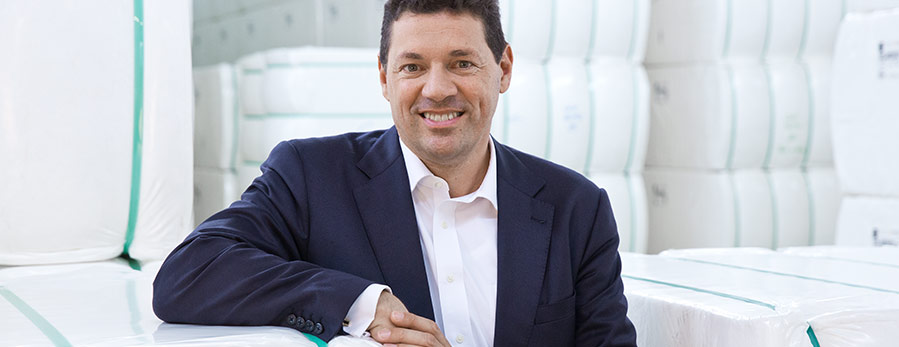
CCO Robert van de Kerkhof © 2021 Lenzing
The Lenzing Group, the globally leading supplier of sustainably produced specialty fibers, welcomes the issuance of the guidelines for the implementation of the Single-Use Plastics Directive (EU) 2019/904, which took effect on June 05, 2019[1]. In these guidelines, the EU Commission specifies which products fall within the scope of the directive, thus providing clarity in the joint fight of the EU member states against environmental pollution from plastic waste. Lenzing’s wood-based, biodegradable cellulosic fibers such as those of the VEOCEL™ brand comprise a sustainable and innovative solution to this man-made problem.
  • Guidelines of the EU Commission to implement the Single-Use Plastics Directive have been published
  • Uniform labelling obligation for wipes and feminine hygiene products containing plastics as of July 03, 2021
  • Lenzing’s wood-based, biodegradable VEOCEL™ branded fibers as a sustainable alternative to plastic

“Pollution of the environment – especially marine pollution – is one of the biggest problems of our time. For this reason, we welcome the measures taken by the EU to reduce certain single-use plastic products and the transition to closed-loop models”, says Robert van de Kerkhof, Member of the Managing Board of the Lenzing Group. “Lenzing has been investing in the development of sustainable and innovative solutions for the textile and nonwovens industry for many years and will also continue in the future to intensively work on achieving systemic change towards a circular economy”, van de Kerkhof adds.

Lenzing’s ambitious sustainability targets make it a trailblazer in manufacturing industry, especially the fiber segment. Lenzing’s considerable investments in developing sustainable innovations and implementing climate objectives focusing on carbon neutrality not only strengthen the company’s market position and increase shareholder value but also continuously create new jobs.

Uniform labelling rules for some single-use plastic products

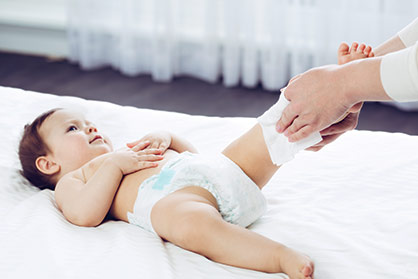
The Commission implementing regulation (EU) 2020/2151 applying to the Single-Use Plastics Directive stipulate uniform labelling requirements for some of the single-use plastic products on the packaging or the product itself starting on July 03, 2021. They encompass feminine hygiene products and wet wipes for personal and household care containing plastic.  
© 2021 Lenzing
© 2021 Lenzing


“The issue of hygiene is becoming increasingly important and is especially the order of the day in the light of the prevailing epidemic conditions”, states Jürgen Eizinger, Vice President Global Nonwovens Business at Lenzing. “The Single-Use Plastics Directive enables consumers to make a more informed purchase decision. That is why we welcome these implementation guidelines which now provide enhanced clarity. Lenzing‘s VEOCEL™ fibers already offer a natural solution today for the problem of global plastic waste, and the company is continually expanding its capacities for wood-based specialty fibers as a means of promoting the development of sustainable wipes and hygiene products“, Jürgen Eizinger adds.


Consumers want sustainable hygiene products

Even before the implementation of the Single-Use Plastics Directive, Lenzing already gives consumers clear guidance in their purchasing decisions. Products bearing the VEOCEL™ brand logo on their packaging are produced in line with stringent certification criteria. As a consequence, consumers can be assured that the products contain biodegradable, cellulosic materials.

Jürgen Eizinger © 2021 Lenzing


A Marketagent survey carried out in German-speaking Europe in October 2019[2] concluded that nine out of ten consumers would immediately change their purchasing behavior for wipes if they found out that their current product contains plastic. This would seem to imply that new market dynamics will emerge once the labelling rules for single-use plastic products takes effect. According to a Smithers Report[3], about 500,000 tons of petroleum-based fibers are used each year for the production of wipes.  

© 2021 Lenzing
© 2021 Lenzing


#ItsInOurHands – the initiative for enhanced awareness and transparency

On the basis of its environmental initiative #ItsInOurHands, Lenzing has been supporting a movement since the end of 2019 in collaboration with its partners to create enhanced awareness and transparency for materials used in wet wipes. An online platform as well as a dedicated community strive to increase awareness on the part of producers and consumers and thus push ahead with the development of sustainable alternatives (more information at https://itsinourhands.com).

More News from Lenzing

#Man-Made Fibers

Lenzing AG to become majority owner of TreeToTextile AB and accelerates industrialization of new fibers

The Lenzing Group is taking another strategic milestone by acquiring a controlling majority in the Swedish innovation company TreeToTextile AB. This step strengthens Lenzing’s position as a leading provider of sustainable, wood‑based specialty fibers and expands its innovation pipeline with a highly scalable, patent‑protected technology platform. The transaction is executed through the issuance of new shares.

#Man-Made Fibers

Fourth CDP Triple “A” Rating reinforces Lenzing’s leadership in sustainability

Lenzing AG has once again been recognized by the global nonprofit organization CDP for its transparent reporting performance in the areas of climate change, forests, and water security. This places Lenzing among only 23 companies worldwide that made it on the “Corporate A List” across all three categories in 2025 – out of more than 22,000 companies that disclosed their environmental data. For Lenzing, this marks the fourth time the company has achieved this prestigious triple‑“A” rating.

#Man-Made Fibers

Lenzing AG announces new leadership and establishment of Executive Committee

Lenzing AG announced that Rohit Aggarwal, Managing Board Member and Chief Executive Officer of Lenzing AG, has informed the Supervisory Board of his decision to resign from his position due to personal reasons, effective 31 January 2026. To support a smooth transition, Mr. Aggarwal will remain with Lenzing AG as an advisor to the company until end of September 2026. The Supervisory Board expresses its appreciation for Mr. Aggarwal’s leadership and contributions during his tenure.

#Man-Made Fibers

Lenzing invests EUR 15 mn to strengthen position in the hygiene market

The Lenzing AG is investing approximately EUR 15 mn to expand its production capacity for premium viscose fibers at its site in Lenzing, Austria. This strategic investment is part of the recently announced investment program of EUR 100 mn in total to secure the long-term competitiveness of Lenzing’s Austrian production sites. The capacity expansion reinforces the company’s commitment to providing sustainable solutions to the global hygiene market. It also strengthens the company's role as a trusted provider of high-quality fibers for feminine care applications.

More News on Sustainability

#Sustainability

Ying McGuire becomes new CEO of Cascale

Cascale today announced the appointment of Ying McGuire as Chief Executive Officer, effective June 1, 2026.

#Sustainability

VAUDE eliminates PFAS from all products

PFAS (per- and polyfluoroalkyl substances) are now detectable worldwide – in drinking water, soil and the human body. These so-called “forever chemicals” are considered hazardous to health and potentially carcinogenic, as they do not break down and remain in the environment permanently. Despite these risks, PFAS are still used in a wide range of products. More than 15 years ago, VAUDE made a strategic decision to gradually eliminate PFAS from all product categories.

#Sustainability

OEKO-TEX® chooses TextileGenesis to advance digital traceability for organic cotton

OEKO-TEX® today announced a full collaboration with TextileGenesis, a Lectra company, to digitally trace and authenticate organic cotton, strengthening fraud prevention across the supply chain. This announcement follows a successful pilot and brings together OEKO-TEX®’s certification expertise and closed testing system with TextileGenesis’ digital traceability platform to deliver a secure, end-to-end solution for managing certified organic cotton flows.

#Europe

ICAC to support European Commission on pending PEF legislation

The International Cotton Advisory Committee (ICAC) is proud to announce that it has been included as a member of the European Commission’s Technical Advisory Board (TAB) on the Product Environmental Footprint methodology. The Commission developed the Product Environmental Footprint (PEF) to assess and communicate the life cycle environmental performance of products and organizations.

Latest News

#Technical Textiles

Sustainable, lightweight, and sound absorbing: Polyester-based front trunk solution for BEVs

As car manufacturers look to further reduce their carbon footprint, Autoneum has developed an innovative front trunk solution for battery electric vehicles (BEVs), made entirely from polyester-based textile. The Ultra-Silent Frunk offers significant weight reduction, improved acoustic and thermal insulation, and uses up to 70 percent recycled material, supporting sustainable and efficient vehicle design. Autoneum, global technology leader in acoustic and thermal management for vehicles, has already received orders for the new frunk from three major OEMs in Asia and Europe to be built in three BEV models. Series production for two BEVs has been underway in China and Germany since last year.

#Raw Materials

Modern testing methods for raw cotton

The 38th International Cotton Conference Bremen will take place from 25 to 27 March 2026 at the Bremen Parliament. This conference has traditionally stood for in-depth expertise and international exchange. The program will focus on technical innovations, market trends, and regulatory frameworks across the entire value chain – from agriculture to the circular economy. With high-profile speakers, the conference is regarded as the key meeting point for the global cotton industry. Today’s focus: Cotton quality and testing methods.

#Spinning

Rieter responds to higher raw material prices

Global political and economic developments have been leading to rising raw material and energy costs for some time. The textile machinery industry is also affected by this trend. Rieter machines and components consist to a large extent of steel, copper, aluminum and electronics. These materials in particular have seen higher demand and higher prices in recent months.

#Weaving

Stäubli demonstrates how innovation translates into real benefits for weaving mills at SITEX 2026

One of India’s most prominent textile industry events, SITEX 2026, is held from February 21 to 23 in Surat. Committed to empowering Indian weaving mills with state‑of‑the‑art solutions tailored to regional needs, Stäubli will present a selection of solutions designed for performance, reliability, and power efficiency. Through its weaving preparation, cam and dobby shedding solutions and Jacquard technologies, Stäubli highlights its global expertise tailored to the specific needs of the local market.

TOP