[pageLogInLogOut]

#Sustainability

Elevate Textiles releases 2020 Sustainability Report

Elevate Textiles, a global provider of advanced, high quality products and mission critical textile solutions, is excited to release its 2020 Sustainability Report. Elevate Textiles offers distinguished global textile brands including American & Efird (A&E), Burlington, Cone Denim, Gütermann and Safety Components. The report serves as the first corporate report for Elevate and the 10th annual report to include the A&E brand.

Within the report, Elevate outlines progress towards its 2025 Sustainability Goals, focused on sustainably sourced fibers, reduced water consumption and reduction in greenhouse gases. As Elevate’s first annual Communication on Progress for the UN Global Compact and CEO Water Mandate, 2020’s report shares the company’s performance against goals outlined within its environmental program, the Ten Threads of Sustainability.

“Our brands share a long-standing commitment to sustainability and a drive to accelerate our efforts to new heights,” said Sim Skinner, President and Chief Executive Officer of Elevate Textiles. “Elevate teams around the globe work every day to create and distribute premium, ethically and sustainably sourced products through excellence in innovation and responsible manufacturing practices. We are pleased to present Elevate’s first Sustainability Report and look forward to sharing our continued progress in our journey to lead meaningful change.”

Elevate outlines its progress and achievements in this report, including:

  • 7% reduction of absolute greenhouse gas from 2016 to 2019, meeting the corporate goal of 2.5% per year reduction
  • 5% reduction of absolute global water consumption since 2016
  • Increased water recycling by 65% since 2016 by implementing new wastewater technologies
  • Achieved 52% sustainably sourced cotton against its goal of 80% sustainably sourced by 2025


“As part of Elevate’s dedication, we are actively engaged with our customers and suppliers to positively impact the people and natural environments associated with our operations and supply chain,” said Chief Sustainability Officer Jimmy Summers. “It is through the efforts of our 15,000 employees around the world that we are able to make continued progress and we are proud to highlight the work they do each day on the frontlines of sustainability.”


Summers added, “We pledge to continue to be a good corporate citizen and one in which our customers and employees can be proud. We are committed to the principles of the UN Global Compact and the Sustainable Development Goals, and to contributing towards many other efforts including the ZDHC Programme. We are excited to build on our current progress as we work towards achieving our 2025 sustainability goals.”

To review Elevate’s full 2020 Sustainability Report and updates on other sustainable innovations, visit the website at

www.elevatetextiles.com/home/sustainability/.

(c) 2020 Elevate Textiles


More News from TEXDATA International

#ITM 2026

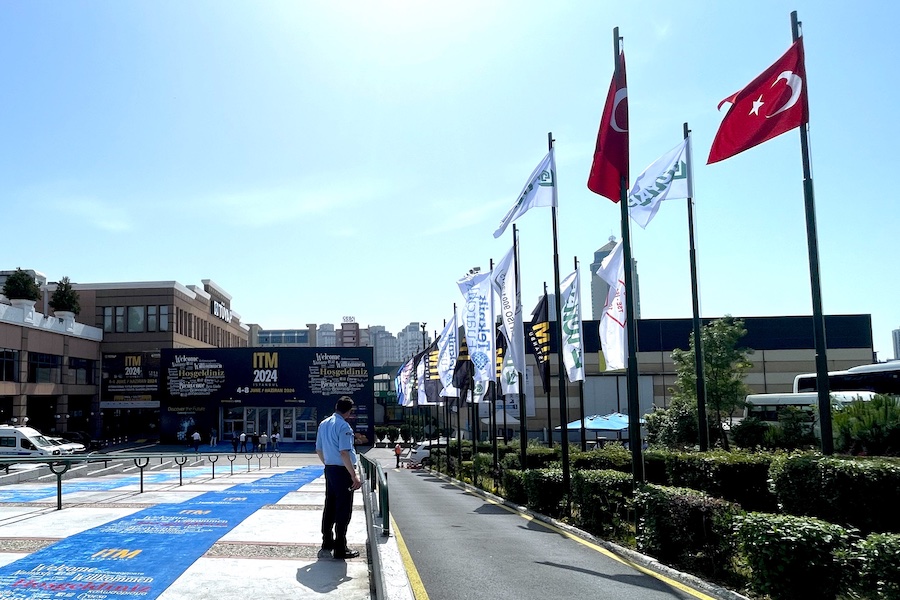
ITM 2026: The new geography of textile production

New production hubs are emerging across North Africa and Central Asia, while Türkiye is accelerating its transformation toward higher-value, technology-driven and more sustainable textile manufacturing.

#Research & Development

“Production is a product”

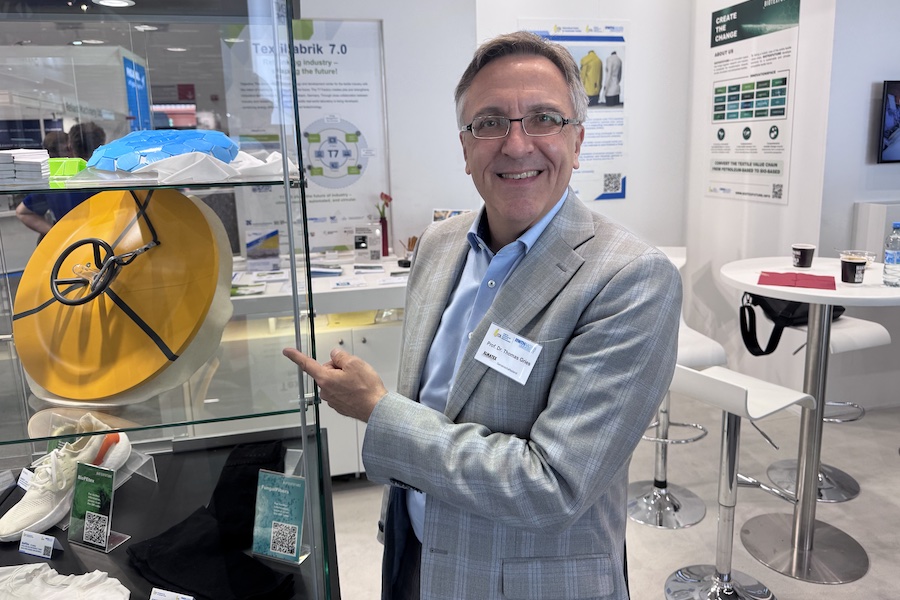
From technical textiles and AI-driven robotics to the limitations of textile circularity: Professor Dr Thomas Gries looks back on more than two decades of development at ITA Aachen. In the interview, he explains why production technology remains a decisive success factor, discusses international collaborations and innovation ecosystems, and shares his views on the transformation of production landscapes and the challenges facing an increasingly regulated industry.

#Knitting & Hosiery

“We need to move away from the price trap and return to a value-driven mindset.”

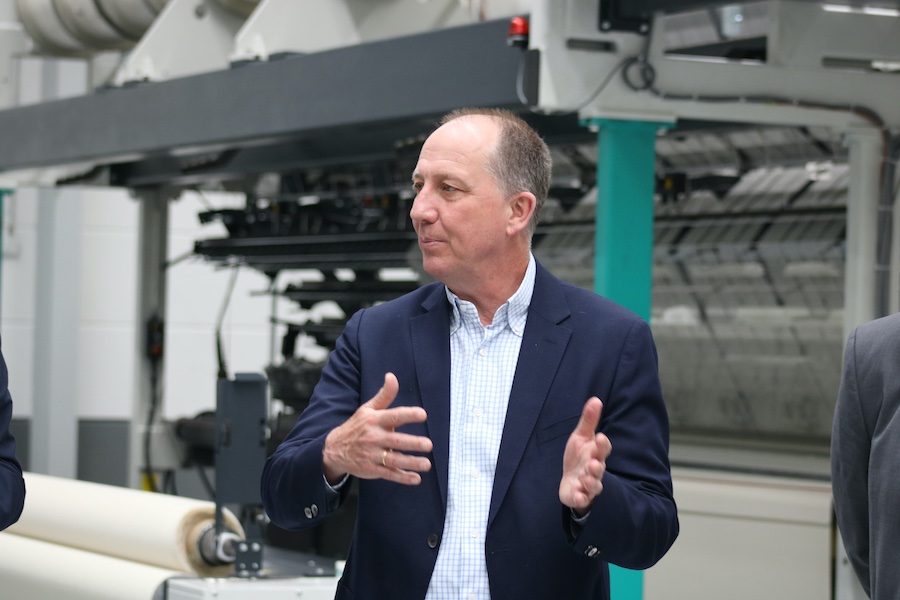
With its new Textile Innovation Center, KARL MAYER is sending a strong signal for innovation, collaboration, and the future of textile applications. In this interview, Karl Josef Mayer discusses new opportunities in warp knitting, the processing of staple fibres, recycling, the changing role of machinery manufacturers, and why the textile industry must once again focus more strongly on the value of textiles. by Oliver Schmidt

#Associations

“Innovation, resilience and international experience remain the great strengths of the Swiss textile machinery industry”

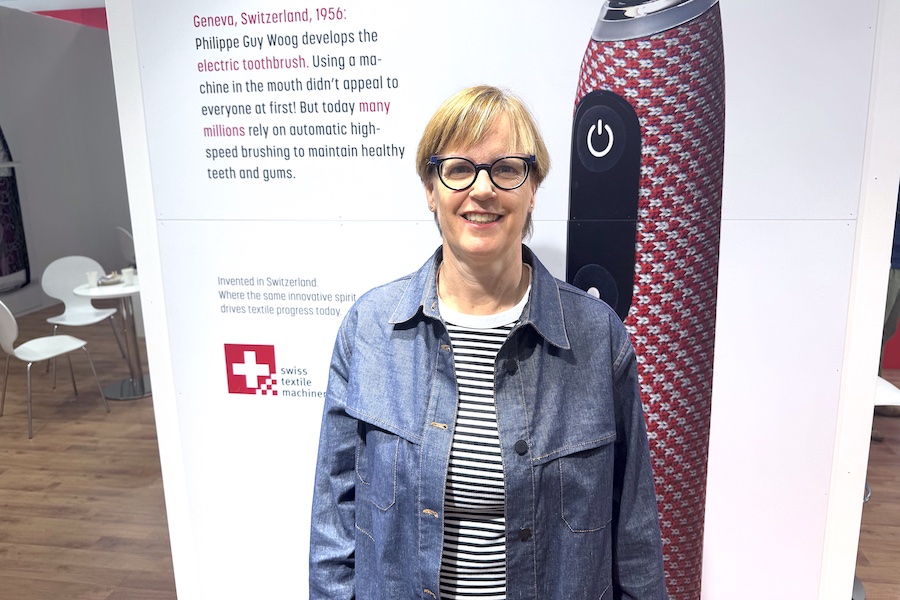
Geopolitical uncertainty, growing competitive pressure from China, new free trade agreements and the shift towards a circular economy are currently reshaping the global textile industry. In this interview, Cornelia Buchwalder discusses the current mood within the Swiss textile machinery sector, the industry’s distinctive innovative strength, new market opportunities in India and Asia, and the technological trends that could shape the upcoming trade fair cycle leading up to ITMA 2027.

More News on Sustainability

#Recycling / Circular Economy

H&M Foundation highlights economic barriers to scaling circular textile systems

Discussions at Textile Exchange 2026 underline the need for coordinated investment, reliable material flows and a fair distribution of costs and risks across the textile recycling value chain.

#Recycled Fibers

C&A and Zalando join Altag® Fiber Club to accelerate adoption of agricultural waste-based fibres

Fashion for Good and AltMat announced today that C&A and Zalando have joined the Altag® Fiber Club as its first brand signatories, marking a critical commercial milestone in the journey to mainstream adoption of next-generation fibres derived from agricultural waste.

#Industry 4.0 / Digitalization

Jeanologia and BCome connect factory data with Life Cycle Assessment and Digital Product Passports

A new white paper by EIM by Jeanologia and BCome demonstrates how primary environmental data from denim finishing processes can be integrated into a garment's Life Cycle Assessment (LCA) and prepared for use in a Digital Product Passport (DPP). A comparative case study highlights significant improvements at the production stage while also showing how these translate into the environmental performance of the finished garment.

#Sustainability

Textile Exchange 2026: From sustainability commitments to industry-wide action

More than 1,300 participants and over 90 speakers gathered in Vancouver to discuss how the textile and apparel industry can move from planning to implementation, with a focus on resilient supply chains, circularity, regenerative agriculture and collaboration.

Latest News

#ITMA Asia + CITME 2026

Brückner showcases sustainable technologies for the future of textile finishing at ITMA ASIA 2026

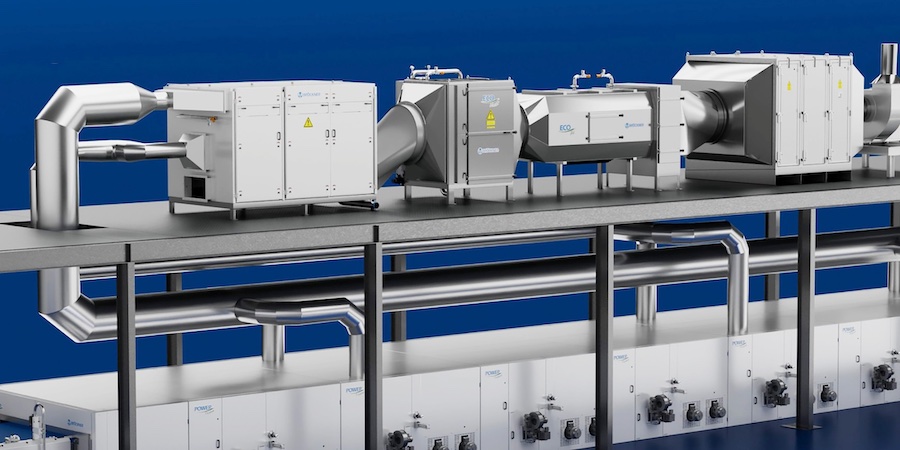
With rising energy costs, increasing environmental requirements, and growing competitive pressure, textile manufacturers worldwide are facing the challenge of making their production processes both more sustainable and more cost-effective. As one of the world's leading specialists in textile finishing machinery, Brückner will present innovative solutions and advanced production technologies at ITMA ASIA 2026 in Shanghai. These technologies can play a key role in significantly reducing both energy consumption and emissions.

#India ITME 2026

Stäubli to introduce new S3292 dobby for high-speed weaving at ITME India 2026

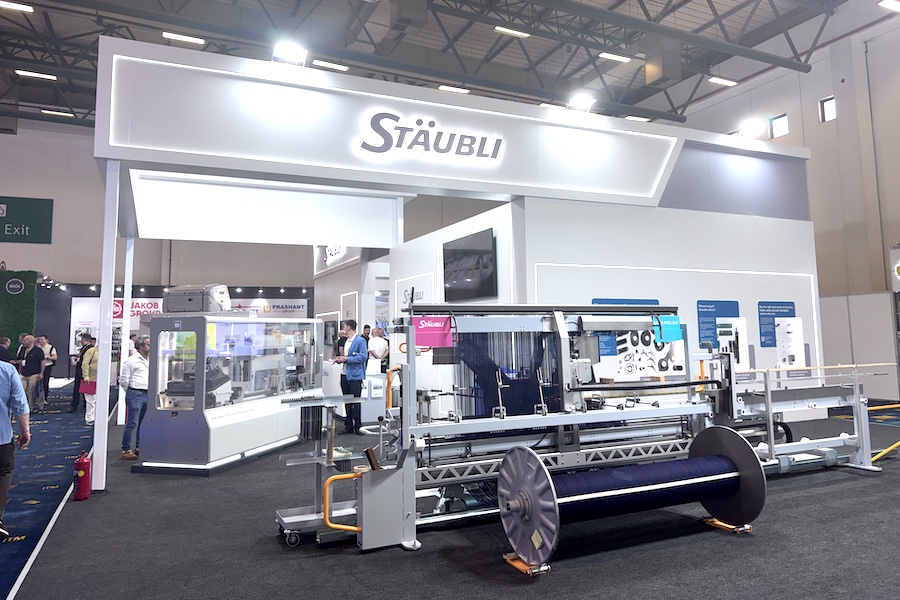
Stäubli will introduce its new S3292 dobby at ITME India 2026, taking place from December 4 to 9 at the India Expo Centre & Mart in Greater Noida, Uttar Pradesh. Designed for high-speed air-jet weaving, the new machine will be among the highlights of the company's presentation, which also includes warp preparation systems, cam motions, Jacquard technologies and digital services.

#Research & Development

DITF develops bio-based binding fibers for wood-fiber insulation materials

As part of the CelluWoodFlex project, the German Institutes of Textile- and Fiber-Research in Denkendorf (DITF) are developing bio-based cellulose ester fibers as alternative binding fibers for flexible wood fiber insulation materials. In addition to the spinning process and the production of suitable staple fibers, the institute is also investigating how wood and cellulose fibers can be separated and recycled at the end of their useful life.

#Recycled Fibers

Reju expands textile-to-textile recycling network with six international fabric manufacturers

Reju, a textile-to-textile regeneration company, is expanding its industrial network through collaborations with six fabric manufacturers in Europe and the Americas. The initiative aims to accelerate the integration of regenerated polyester into textile manufacturing and support the development of finished fabrics for commercial applications.

TOP