[pageLogInLogOut]

#Sustainability

adidas successfully places its first sustainability bond

Today, adidas successfully placed its first sustainability bond as the company continues to execute on its ambitious long-term sustainability roadmap while at the same time further optimizing its capital structure and financing costs. The € 500 million bond has a term of 8 years and a coupon of 0.00%. It will be listed on the Luxembourg Stock Exchange and has denominations of € 100,000 each. The offering was more than five times oversubscribed.

“Following the first-time bond placements as an investment-grade-rated issuer earlier this month, today’s successful sustainability bond offering marks another milestone for our company,” said adidas CFO Harm Ohlmeyer. “The proceeds will help fund environmental as well as social initiatives at adidas as we are committed to keep building on our industry leadership in the area of sustainability.”

Proceeds from the offering will be used in accordance with adidas’ newly created sustainability bond framework. The framework has been validated by a second-party opinion from Sustainalytics, a leading independent provider of sustainability ratings, who confirmed that the framework is credible, impactful and aligned with established sustainability principles. Eligible sustainable projects cover investments into more sustainable materials and processes as well as projects that positively impact communities. More specifically, this includes purchases of recycled materials for sustainably sourced products, investments into renewable energy production and energy-efficient buildings as well as various initiatives to create lasting change for underrepresented communities. The full sustainability bond framework is available on adidas-group.com, where the company will also publish regular updates on the allocation of proceeds.

adidas has taken important steps toward optimizing its capital structure and financing costs in the recent past. In early August, the company received strong first-time investment-grade ratings by both S&P and Moody’s. While Standard & Poor’s rated adidas ‘A+’, Moody’s granted the company an ‘A2’ rating.


The outlook for both ratings is ‘stable’. In the beginning of September, adidas successfully placed two bonds in an amount of € 1 billion in total. The bonds of € 500 million each have maturities of four and 15 years and coupons of 0.00% and 0.625%, respectively.

In context of today’s sustainability bond issuance, the syndicated revolving loan facility under participation of KfW will be further reduced by € 500 million to € 2.1 billion. The company had secured the facility earlier this year to bridge the unprecedented situation caused by the global coronavirus pandemic.

J.P. Morgan acted as Sole Sustainability Structuring Agent and Global Coordinator, and, together with BNP Paribas and Commerzbank, as Joint Active Bookrunners for the offering.
More News from TEXDATA International

#ITM 2026

ITM 2026: The new geography of textile production

New production hubs are emerging across North Africa and Central Asia, while Türkiye is accelerating its transformation toward higher-value, technology-driven and more sustainable textile manufacturing.

#Research & Development

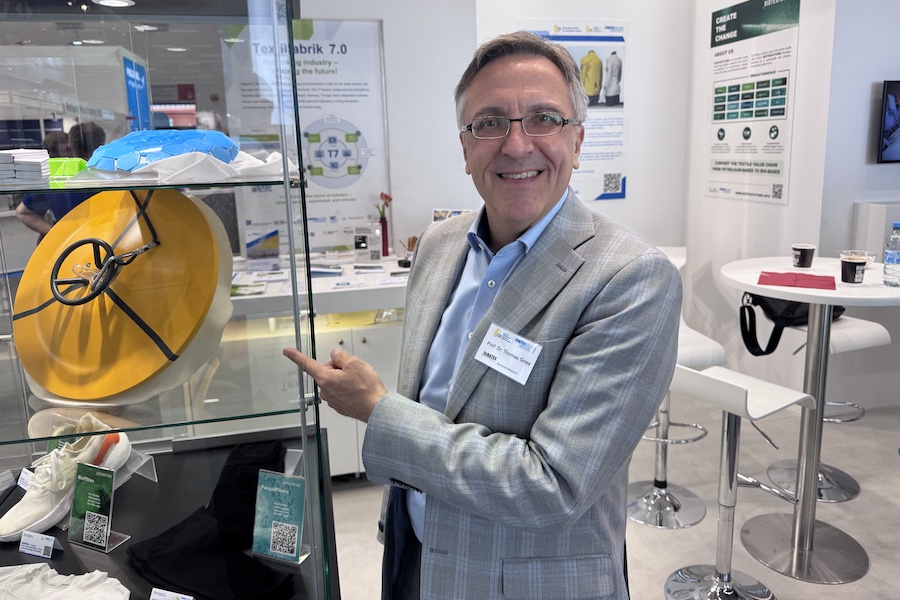
“Production is a product”

From technical textiles and AI-driven robotics to the limitations of textile circularity: Professor Dr Thomas Gries looks back on more than two decades of development at ITA Aachen. In the interview, he explains why production technology remains a decisive success factor, discusses international collaborations and innovation ecosystems, and shares his views on the transformation of production landscapes and the challenges facing an increasingly regulated industry.

#Knitting & Hosiery

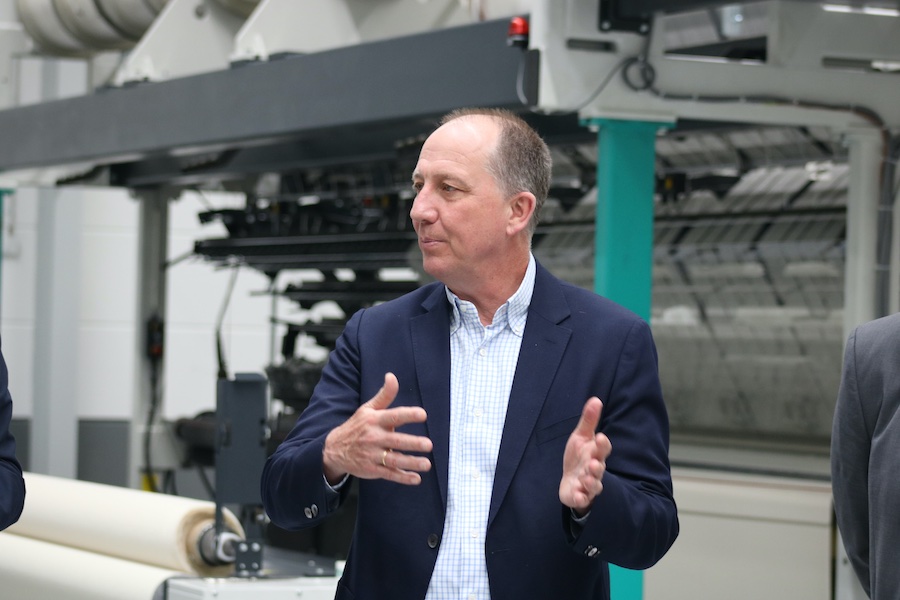
“We need to move away from the price trap and return to a value-driven mindset.”

With its new Textile Innovation Center, KARL MAYER is sending a strong signal for innovation, collaboration, and the future of textile applications. In this interview, Karl Josef Mayer discusses new opportunities in warp knitting, the processing of staple fibres, recycling, the changing role of machinery manufacturers, and why the textile industry must once again focus more strongly on the value of textiles. by Oliver Schmidt

#Associations

“Innovation, resilience and international experience remain the great strengths of the Swiss textile machinery industry”

Geopolitical uncertainty, growing competitive pressure from China, new free trade agreements and the shift towards a circular economy are currently reshaping the global textile industry. In this interview, Cornelia Buchwalder discusses the current mood within the Swiss textile machinery sector, the industry’s distinctive innovative strength, new market opportunities in India and Asia, and the technological trends that could shape the upcoming trade fair cycle leading up to ITMA 2027.

More News on Sustainability

#Sustainability

Textile Exchange reports growth in certifications and industry engagement

Textile Exchange has published its 2025 Annual Report, highlighting continued growth in certified sites, industry participation and the development of its standards and membership structure. According to the report, more than 100,000 sites worldwide are now certified to Textile Exchange standards, more than three times the number recorded in 2020. Preliminary figures also indicate 12% year-on-year growth across the organization's current standards, including the Global Recycled Standard (GRS), Recycled Claim Standard (RCS) and the Responsible Animal Fiber standards.

#Textile chemistry

bluesign updates chemical reference lists with stronger PFAS restrictions

bluesign has published the 2026 editions of its three core chemical reference lists, introducing updated substance limits and testing requirements in line with the latest scientific findings and regulatory developments.

#Sustainability

GOTS releases Version 8.1 with clarifications and editorial updates

Global Standard has released Version 8.1 of the Global Organic Textile Standard (GOTS), following the publication of Version 8.0 in March 2026.

#Sustainability

bluesign appoints Hanane Taidi as CEO to lead next phase of global impact

bluesign, which partners with the textile industry to reduce adverse impact across the value chain, appoints Hanane Taidi as Chief Executive Officer, marking a pivotal moment as the company builds on its leadership amid rapid industry change.

Latest News

#Functional Fabrics

PERFORMANCE DAYS announces new focus topic & forums for October 2026

With its upcoming October 13–14, 2026 edition, PERFORMANCE DAYS is placing the spotlight on one of the textile industry’s most important transformations: “Bio-Based Materials – From Fiber to Fabric”, a two-part Focus Topic exploring the future of bio-based innovation across the textile value chain. Part 1, presented in October 2026, will focus on fibers and next-generation material developments, while Part 2 at the March 2027 edition will shift the perspective toward dyeing, finishing, additives, and processing technologies.

#Nonwoven machines

MENANG rapidly resumes production with new ANDRITZ airlay line after major fire

MENANG, a Malaysian manufacturer of nonwoven automotive components, has resumed production after a major fire severely damaged its airlay line in mid-March 2026. A new airlay line supplied by ANDRITZ enabled production to restart within only four months.

#Exhibitions & Events

Febratex 2026 to be the largest edition of the leading textile trade fair in the Americas with 10 exhibition halls

Febratex 2026 will be the largest edition in the history of the leading textile trade fair in the Americas. Dedicated to the textile and apparel manufacturing industries, the event will take place from August 18–21, 2026, in Blumenau, Santa Catarina, Brazil, with a strong focus on technology, sustainability, and business generation.

#Raw Materials

Cotton Brazil Dialogues field trip brings international stakeholders closer to Brazil’s cotton production chain

How do you build trust across the global textile value chain? By opening the farm gates. This is the principle behind the Cotton Brazil Dialogues. At the end of July, the programme welcomed its first group of international participants for a five-day immersion into Brazilian cotton production, combining field visits with technical workshops to showcase the quality, sustainability, innovation and traceability behind one of the world’s leading cotton origins.

TOP