[pageLogInLogOut]

#Sustainability

Beyond MRSL conformance: Hohenstein and Scivera collaborate on pathway to verified, greener chemical formulations

Hohenstein and Scivera have streamlined the process for chemical suppliers to assess and validate preferred chemicals and to proactively improve formulations to ZDHC MRSL conformance level 3 and beyond for apparel, footwear and home textiles.

The collaboration integrates software, certification and analytical testing to enable suppliers to improve and verify greener formulations. Brands taking action to move beyond MRSL compliance, including Levi Strauss & Co., will benefit from meeting ZDHC goals along with verified greener chemistries they can trust.

“Progressive brands and chemical suppliers are showing strong leadership that will positively impact our industry, consumer safety and the environment,” John Frazier, senior technical director at Hohenstein, said. “This is a systems approach to achieve then move beyond MRSL compliance to verified, greener chemistry.”

Engaging with Hohenstein or Scivera as their lead service provider, chemical suppliers can take advantage of the streamlined process to meet greener chemistry requirements for a growing number of brands. Formulations certified with Screened Chemistry through Scivera and conforming to ZDHC MRSL level 3 through ECO PASSPORT by OEKO-TEX® with Hohenstein can go beyond level 3 by assessing and verifying greener attributes.

“Greener chemistry means formulating and using chemistries that have verified, preferred characteristics to create safer conditions for workers, consumers and the environment. When applied together, the powerful tools offered by Hohenstein and Scivera remove barriers, enable continuous improvement and make greener chemistry attainable,” Joe Rinkevich, President at Scivera, said.


Hohenstein offers the ECO PASSPORT by OEKO-TEX® certification to manage and verify chemicals, dyes and auxiliaries. Following RSL/MRSL screening, analytical testing, feedback and assessments, certified chemicals are listed in the OEKO-TEX® Buying Guide and pushed to the ZDHC Chemical Gateway at MRSL conformance levels 1, 2 or 3.

Scivera offers its globally accessible platform, SciveraLENS®, to support their Screened Chemistry Scoring and Certification for hazard assessment of formulation ingredients and impurities. Through the platform, users evaluate the characteristics of individual chemicals and formulations for sourcing and formulation decisions and preview these results to improve scores and avoid regrettable chemical substitutions.

For more information, go to

Hohenstein.US/GreenerChemistry or

Scivera.com/GreenerChemistry.


More News from Hohenstein Institute

#Textiles & Apparel / Garment

Global size study for brands and retailers to optimize fit and market coverage

Hohenstein Apparel Fit Solutions, a global leader in apparel fit, sizing, and product development, today announces the launch of its Global Size Study, a new initiative designed to equip brands to better understand and serve their target consumers through more accurate, market-relevant sizing.

#Sustainability

A new standard to combat plastic waste in forests

With DIN SPEC 35808 “Tree Shelter for Forestry Applications,” the testing and research service provider Hohenstein, in collaboration with Rottenburg University of Forestry, as well as forestry authorities and industry partners, has established a clear framework for bio-based and fully biodegradable tree shelters. The pre-standard defines requirements and practical testing methods designed to reduce plastic waste in forests and strengthen the long-term protection of soil and the environment.

#Research & Development

Hohenstein publishes 2025 Sustainability Report

The testing and research service provider Hohenstein has published its latest sustainability report, outlining key progress and strategic initiatives. The report focuses on ambitious CO₂ reduction targets, the company’s new mission statement and the systematic expansion of sustainable services for customers worldwide.

#Research & Development

New DIN SPEC assesses environmental impact of textile fragments in soil

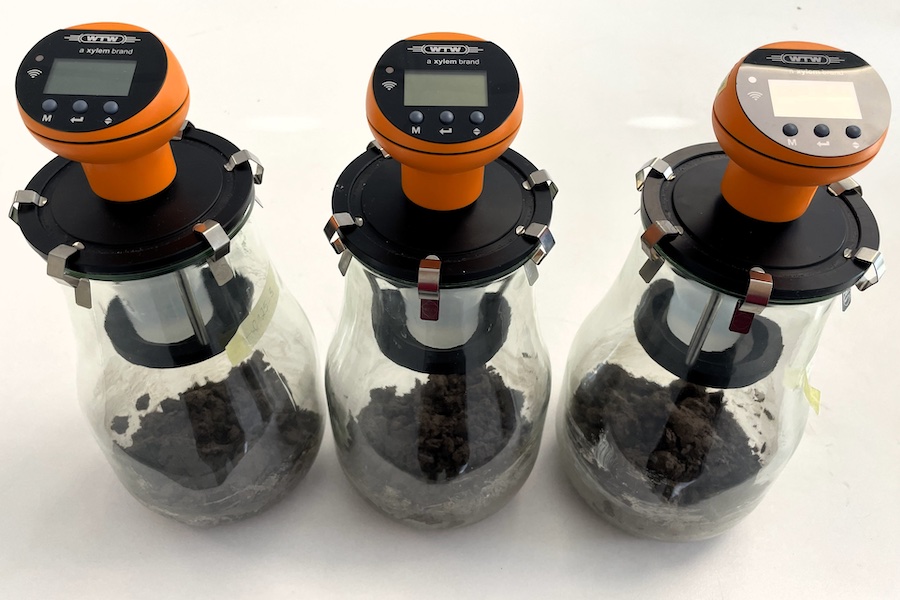
Textile products made from synthetic fibres, finished fabrics or dyed materials release fibre fragments into the environment at every stage of their life cycle. With the new DIN SPEC 19296, Hohenstein has developed a standardised testing method to analyse how these fragments behave in soil under natural conditions. Until now, little was known about their environmental behaviour or potential ecological effects once released.

More News on Sustainability

#Sustainability

Global Standards establishes new non-profit foundation to strengthen governance

Global Standards gGmbH, the nonprofit organisation behind the globally recognised Global Organic Textile Standard (GOTS), announced a new governance structure designed to support its long-term mission and reinforce organisational autonomy of its Voluntary Sustainability Standards and programmes.

#Textile chemistry

DyStar releases FY2025 sustainability report, marking a new milestone towards its 2030 targets

DyStar, a leading specialty chemicals company with more than a century of expertise in product development and innovation, today announced the release of its FY2025 Sustainability Report, marking a significant milestone in its sustainability journey and reinforcing its commitment to long-term value creation.

#Textiles & Apparel / Garment

Catalyst Club launches in Florence: Where conversations become catalysts for change

The first chapter of Catalyst Club debuted in Florence, bringing together creative directors, entrepreneurs, manufacturers, journalists and innovators from across the fashion and textile industry for an evening of dialogue, exchange and connection.

#Sustainability

Renewables lower energy prices and play key role to reduce vulnerability to fossil fuel supply shocks

Renewables lower energy prices and play key role to reduce vulnerability to fossil fuel supply shocks Boosting the use of homegrown renewable electricity is Europe’s best way to reduce its vulnerability to volatile international energy supplies and rising energy prices according to a European Environment Agency (EEA) assessment published today.

Latest News

#Recycling / Circular Economy

Ence and ShareTex begin initial testing of the ATENEA innovation project to promote textile recycling in Spain

Ence and ShareTex are making progress on the Atenea R&D project, which aims to develop a complete value chain for textile recycling in Spain. Specifically, the goal of the ATENEA project—which is funded by the Center for Technological Development and Innovation (CDTI)—is to connect all the necessary stages for the recovery of textile waste, from collection and management, through recycling and transformation into new raw materials, to their incorporation into new textile products.

#Recycling / Circular Economy

DePoly Inaugurates its Showcase Plant in Monthey Switzerland

What if used plastic bottles, PET packaging material and polyester textiles could become raw materials just as high performing as virgin resources? That is the ambition of DePoly, a circular materials company based in Sion, Switzerland which inaugurated its Showcase Plant in Monthey on July 6th & 7th. The first depolymerization facility of its kind and scale in Switzerland, this industrial Showcase Plant represents a major milestone in the company's growth and its journey toward commercialization.

#Recycling / Circular Economy

Commission clarifies rules on plastic bottles recycling

The European Commission today adopted new rules on recycling of single-use plastic beverage bottles made primarily of polyethylene terephthalate (PET bottles). These rules establish, for the first time, a methodology to calculate, verify and report chemically recycled content. This is part of the Commission’s December 2025 plastics package.

#Research & Development

TERIS reaches milestone: Fraunhofer consortium develops new standards for tire analysis

In the “TERIS” project, the Fraunhofer institutes ICT, IGD, and IWM—led by the Fraunhofer Institute for Structural Durability and System Reliability LBF—have reached a decisive milestone. For the first time, the teams aim to generate, analyse, and predict tire wear in the laboratory in a standardized and practical manner. As part of this milestone, results are now available on reference abrasion, particle analysis, tribological models, AI-based surface analysis, a test bench concept, and methods for accelerated aging and VOC detection. The tire industry, testing services, and environmental agencies will in future benefit from reliable, rapid laboratory procedures for emissions assessment.

TOP