[pageLogInLogOut]

#Sustainability

Fortum and Spinnova present the world’s first wheat straw-based clothing
(c) 2019 Spinnova
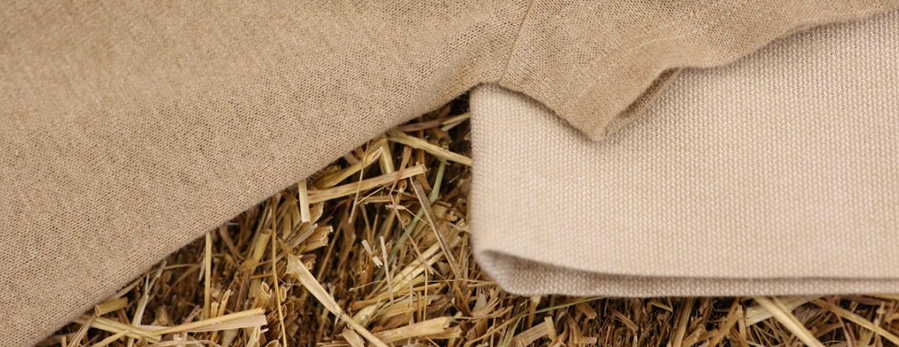
Fortum, a major European energy company building new business options in the circular economy, together with the sustainable fibre technology company Spinnova have today introduced the first prototype product born out of their joint development of using wheat straw in the production of highly sustainable textile fibre.

Fortum and Spinnova are showcasing the world’s first clothing made from agricultural waste, namely wheat straw, at the Textile Exchange Sustainability Conference in Vancouver, during 15-17 October. The showpieces include a knitted t-shirt, as well as a jacket and skirt made of a woven fabric on organic cotton warp.

The prototype material is unique also due to its extremely low environmental impact from raw material extraction, processing and manufacture, verified by life-cycle analysis (LCA).

“We are very excited to present this revolutionary textile. Today, wheat straw is mostly discarded or even burned in the fields. As it can now be used in numerous textile applications, this opens up huge possibilities globally. This cooperation is a tangible step towards Fortum’s strategy to build options for significant new businesses that improve resource efficiency and provide smart solutions for a cleaner world. We would like to invite more key industry players to join us in this journey,” says Heli Antila, VP, Biobased solutions at Fortum.

“We are all very proud of this amazing collaborative accomplishment! This was a very fast journey from the first trials to real, appealing fabric materials. This shows that wheat straw-based fibre is well on its way to being a drop-in product of the most sustainable kind,” says Spinnova’s CEO Janne Poranen.


The parties announced their partnership earlier this year after testing various biomasses. The showcased straw was first processed with highly sustainable fractionation technology, developed by Fortum’s associate company Chempolis Oy. Spinnova’s technology, presently in a piloting phase, turns microfibrillated cellulose (MFC) directly into fibre mechanically without any dissolving or harmful chemical processes. Fibres of the now showcased clothing were produced in Spinnova’s pilot facility in Finland, which also means that Spinnova’s technology can be applied to various biomasses without further technology development.

Fortum and Spinnova plan to establish sustainable fibre production in Fortum’s future biorefineries that will use residual biomasses such as agro waste. The biomass will be processed into materials for bioproducts of lignocellulosic origin, as well as cellulosic products. The refineries will be based on fractionation technology, enabling highly resource-efficient utilization of wheat straw and resulting in significantly lower environmental impact compared to other processing technologies.

Spinnova, Fortum and the clothing are showcased in the Conference during 15-17 October in booth 35.

More News from TEXDATA International

#Techtextil 2026

Performance Apparels: Functional textiles drive innovation at Techtextil 2026

From high-performance fibres and advanced membranes to smart textiles and sustainable material concepts – functional apparel is becoming one of the most dynamic innovation fields in technical textiles. At Techtextil 2026, exhibitors demonstrate how new materials, finishing technologies and digital functions are shaping the next generation of protective, workwear and outdoor systems.

#Texprocess 2026

Texprocess 2026: Automation, digitalisation and AI reshape textile processing

Investment decisions in textile processing have become increasingly complex. Rising energy prices, labour shortages and geopolitical uncertainties are forcing companies to prioritise technologies that deliver measurable improvements in efficiency and process stability. This applies not only to apparel production, but also to the processing of technical textiles and high-performance materials. Modernisation projects are therefore being evaluated more selectively – but the pressure to upgrade production systems continues to grow. Texprocess 2026 reflects this tension between cautious investment behaviour and increasing technological demand.

#Techtextil 2026

Textile Chemicals & Dyes: Innovation in Textile Chemistry moves into focus at Techtextil 2026

From PFAS-free finishes and water-saving dyeing technologies to advanced coatings and recycling-compatible formulations, innovation in textile chemistry is accelerating across the industry. Reflecting this development, Techtextil 2026 introduces Textile Chemicals & Dyes as a dedicated product segment, highlighting the growing role of chemical solutions in shaping the next generation of technical textiles.

#Recycling / Circular Economy

textile.4U publishes special edition “Top 100 Textile Recycling Companies 2025”

With a comprehensive 176-page special edition, textile.4U is dedicating its latest issue entirely to one of the most dynamic and influential topics in today’s textile industry: textile recycling. The new issue, published exclusively in high-quality print, presents the Top 100 textile recycling companies researched and selected by TexData – organizations that already play a key role in the transition to circular textiles or are expected to have a significant impact in the near future.

More News on Sustainability

#Sustainability

Practical toolkit to drive coordinated climate action launched

An open-access workshop toolkit enables brands, suppliers, policymakers and investors across the textile industry to apply the System Map in their own work, identifying leverage points to halve emissions and enable a just transition.

#Raw Materials

Textile Exchange publishes cotton Life Cycle Assessment study to strengthen impact data

Textile Exchange has published the first in a series of seven Life Cycle Assessment (LCA) studies designed to improve the quality and robustness of environmental impact data for raw material production across the fashion, textile, and apparel industry. The first LCA study focuses on cotton and addresses critical data gaps and methodology variability through new high-quality data across key producing countries. The study includes organic, regenerative, recycled, and country averages for conventional cotton production systems, providing a clearer picture of the associated environmental impact.

#Sustainability

Experts publish APAC policy priorities

Cascale today announced the publication of its APAC Policy Priorities Paper, developed by the Asia-Pacific (APAC) Policy Member Expert Team (MET) to identify key regional sustainability challenges and provide practical, aligned recommendations for policymakers and industry stakeholders across Asia-Pacific.

#Sustainability

GOTS version 8.0 released: advanced supply chain accountability, from fibre to finished product

Global Standard is pleased to announce the release of GOTS Version 8.0, the latest update to the world's leading processing standard for organic textiles. The updated Standard strengthens requirements for air emissions and waste management, as well as criteria for product safety. It introduces new provisions on circularity, microfibre management and updates in residue testing. Version 8.0 also elevates due diligence obligations and formalises governance requirements, including ESG disclosure, anti-corruption policies and conflict-of-interest safeguards, to support credible, responsible business conduct.

Latest News

#Techtextil 2026

Modernizing Needling – DiloGroup at Techtextil & INDEX 2026

With the theme “Modernizing Needling”, the DiloGroup presents a comprehensively enhanced portfolio for needling technology. The objective is to further increase the performance and application range of needlefelt production lines in terms of productivity, flexibility, and the development of new products, thereby meeting the growing demands of modern technical textiles.

#Advertorial

New Gravimax MMX-R X-ray sensor platform opens up new application fields

The demands placed on quality control in web-based production processes are increasing: materials are becoming more complex, basis weights are varying more widely, and at the same time, pressure is growing to make processes more efficient and transparent. Precise measurement data across the entire web width has therefore become a key factor in ensuring stable production processes. With its new Gravimax MMX-R sensor platform, Mahlo introduces a radiometric measurement solution designed to set new standards in determining basis weight and material composition. The platform combines advanced X-ray technology with newly developed signal processing, enabling measurement tasks that previously often required multiple sensor technologies.

#Recycling / Circular Economy

Carbios confirms Longlaville plant in France following financing progress

Carbios has reaffirmed its plans to build its Longlaville plant in France within a project financing framework, targeting the start of production in the first half of 2028. The company also reports a solid cash position of around €60 million at the end of 2025 and has appointed Benoît Grenot as Deputy Chief Executive Officer to support the execution of its strategic projects.

#Composites

KARL MAYER strengthens partnerships in the composites industry at JEC World 2026

KARL MAYER further strengthened its role as a reliable and competent partner to the composites industry at JEC World 2026. The global market leader in textile machinery manufacturing used the trade show to meet key customers, establish numerous new contacts, and engage in in-depth technical discussions.

TOP