[pageLogInLogOut]

#Sustainability

Highlights from the 2019 Global Cotton Sustainability Conference

Over 300 representatives from across the cotton supply chain – from farmers to retailers and brands – met in Shanghai on 12 and 13 June for the 2019 Global Cotton Sustainability Conference. The conference, hosted by the Better Cotton Initiative (BCI), brought the sector together to collaborate on a more sustainable future for cotton. Here are some conference highlights.

Farmer stories

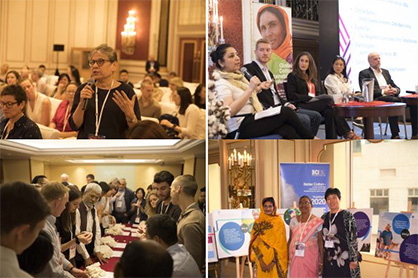
Smallholder cotton farmers from India, Pakistan and China, and large-scale cotton farmers from Australia, Brazil, China and South Africa took to the stage to share their personal stories from the field. From making homemade natural pesticides (derived from ingredients found in nature), to embracing the latest technological innovations to improve water-use efficiency, BCI Farmers are striving to make cotton production more sustainable.

“Inspiring presentations from inspiring farmers.” – Brooke Summers, Supply Chain Consultant, Cotton Australia.
(c) 2019 BCI
(c) 2019 BCI


Collaboration across standards

It’s important that different cotton sustainability programmes and standards work together to drive real change in the sector. Representatives from Fairtrade Foundation, Organic Cotton Accelerator (OCA), Cotton Australia, ABRAPA, Cotton made in Africa, Textile Exchange, BCI and ISEAL came together at the conference to share their insights on capacity building and field-level impacts. Each of these organisations also contributed to the development of the conference agenda.

“It was great to see a panel of different cotton sustainability standards speaking together about what they have in common, as well as what makes each of them unique.” – Charlene Collison, Associate Director of Sustainable Value Chains and Livelihoods, Forum for the Future.


Knowledge sharing

Throughout the conference, attendees joined industry experts to take part in hands-on, interactive sessions covering timely field-level, supply-chain and consumer-facing topics. Participants explored subjects such as adapting to a warmer world, the value of raw cotton, challenges faced by women in agriculture, and how to engage consumers on sustainability.

Celebrating BCI’s founding members

2019 marks BCI’s tenth anniversary. To celebrate, BCI gave recognition to the members who were amongst BCI’s first membership base and have been committed to BCI for the past decade: ABRAPA, adidas AG, All Pakistan Textile Mills Association, Association des Producteurs de Coton Africains (AProCA), CottonConnect, Cotton Incorporated, Ecom Agroindustrial Corp. Ltd., Farmers Associates of Pakistan, Federation of Migros Cooperatives, Hemtex AB, Hennes & Mauritz AB, IFC, IKEA Supply AG, KappAhl Sverige AB, Levi Strauss & Co., Lindex AB, Marks & Spencer, Nike, Inc., Pesticide Action Network UK, Sadaqat Ltd., Sainsbury’s Supermarkets Ltd., Solidaridad, Textile Exchange and WWF.

If you were at the 2019 conference, we’d love to hear your feedback. Please share your thoughts in this short survey.

Thanks to all of the presenters, panellists and participants, the 2019 Global Cotton Sustainability Conference was a great success. We look forward to seeing everyone in Lisbon, Portugal in June 2020.



More News from TEXDATA International

#Texprocess 2026

Texprocess 2026: Automation, digitalisation and AI reshape textile processing

Investment decisions in textile processing have become increasingly complex. Rising energy prices, labour shortages and geopolitical uncertainties are forcing companies to prioritise technologies that deliver measurable improvements in efficiency and process stability. This applies not only to apparel production, but also to the processing of technical textiles and high-performance materials. Modernisation projects are therefore being evaluated more selectively – but the pressure to upgrade production systems continues to grow. Texprocess 2026 reflects this tension between cautious investment behaviour and increasing technological demand.

#Techtextil 2026

Textile Chemicals & Dyes: Innovation in Textile Chemistry moves into focus at Techtextil 2026

From PFAS-free finishes and water-saving dyeing technologies to advanced coatings and recycling-compatible formulations, innovation in textile chemistry is accelerating across the industry. Reflecting this development, Techtextil 2026 introduces Textile Chemicals & Dyes as a dedicated product segment, highlighting the growing role of chemical solutions in shaping the next generation of technical textiles.

#Recycling / Circular Economy

textile.4U publishes special edition “Top 100 Textile Recycling Companies 2025”

With a comprehensive 176-page special edition, textile.4U is dedicating its latest issue entirely to one of the most dynamic and influential topics in today’s textile industry: textile recycling. The new issue, published exclusively in high-quality print, presents the Top 100 textile recycling companies researched and selected by TexData – organizations that already play a key role in the transition to circular textiles or are expected to have a significant impact in the near future.

#Recycling / Circular Economy

Responsible Textile Recovery Act of 2024 signed by Governor

Senator Josh Newman (D-Fullerton) is proud to announce that Senate Bill 707 (SB 707), the Responsible Textile Recovery Act of 2024, has been signed into law by the Governor of California, Gavin Newsom. This groundbreaking legislation establishes the country’s first Extended Producer Responsibility (EPR) textile recycling program, marking a significant step forward in the state’s efforts to combat waste and promote sustainability.

More News on Sustainability

#Sustainability

Experts publish APAC policy priorities

Cascale today announced the publication of its APAC Policy Priorities Paper, developed by the Asia-Pacific (APAC) Policy Member Expert Team (MET) to identify key regional sustainability challenges and provide practical, aligned recommendations for policymakers and industry stakeholders across Asia-Pacific.

#Sustainability

GOTS version 8.0 released: advanced supply chain accountability, from fibre to finished product

Global Standard is pleased to announce the release of GOTS Version 8.0, the latest update to the world's leading processing standard for organic textiles. The updated Standard strengthens requirements for air emissions and waste management, as well as criteria for product safety. It introduces new provisions on circularity, microfibre management and updates in residue testing. Version 8.0 also elevates due diligence obligations and formalises governance requirements, including ESG disclosure, anti-corruption policies and conflict-of-interest safeguards, to support credible, responsible business conduct.

#Sustainability

The nova-Institute establishes new Renewable Feedstock Department to lay the groundwork for industrial defossilisation

The transition from fossil-based to renewable carbon – sourced from biomass, CO₂ utilisation and recycling – is the cornerstone of a climate-neutral chemical industry. The nova-Institute’s new department is dedicated to providing the essential data, analyses and strategic roadmaps required to secure a reliable future feedstock supply and make this transition a commercial and ecological reality.

#Sustainability

Textile Exchange unveils commitment-based pathway for members to accelerate responsible raw material production

Textile Exchange has unveiled further details about its new membership structure, designed to guide the fashion, textile, and apparel industry in a collective course of action toward preferred production systems for raw materials and fibers.

Latest News

#Techtextil 2026

Gebr. Otto highlights versatility at Techtextil with regional supply chains, yarn innovations and new hygiene segment

At this year’s Techtextil, Gebr. Otto places its versatility at the center of its presentation. In addition to spinning, twisting and dyeing – traditionally focused on fine cotton – textile processors will also find a competent development partner for technical specialty solutions. The Dietenheim-based spinning mill has now built up a decade of experience in the production of technical yarns, particularly from aramids. A new hygiene segment has also been established, where yarns for medical and hygiene products are currently being produced. In the future, this department could also develop textile products for the food sector. Gebr. Otto will once again be present at the BW-i joint stand, booth D81, hall 12.1. What is wound onto the spool is determined by the customer: Gebr. Otto develops according to specific customer requirements and transforms its own ideas into yarn innovations.

#Europe

Commission presents proposal for EU Inc. - unlocking the full potential of the Single Market for Europe's entrepreneurs

Today, the European Commission presented its proposal for EU Inc., a new single set of corporate rules, building the cornerstone and starting point for the EU's 28th regime. EU Inc. is an optional, digital-by-default European corporate framework. It will make it easier for businesses to start, operate and grow across the EU – incentivising them to stay in Europe, and encourage those who once looked elsewhere to return.

#Man-Made Fibers

OnceMore® from Södra brings end-to-end traceability for circular Man-made Cellulosic Fibers (MMCF) using TextileGenesis

OnceMore® from Södra, the world’s first large-scale process for recycling blended fabrics into high‐quality dissolving pulp, will begin using TextileGenesis, a Lectra company, to strengthen traceability from raw material to retail across the value chain. OnceMore® produces dissolving pulp made from blended textile waste and wood sourced from responsibly managed Swedish forests. By integrating TextileGenesis, OnceMore® supports the growing need for verified data and secure, transparent tracking throughout increasingly complex supply chain.

#Spinning

Temco launches a new DTY all-in-one solution

Temco introduces the DTY All-in-One Solution – a fully harmonized set of components engineered to give customers a highly stable, low maintenance and reproducible process environment. The solution reduces interruptions, extends component lifetimes and supports consistent yarn quality across all machine positions. All-in-One Solution – a fully harmonized set of components engineered to provide maintenance and reproducible process environment.

TOP