[pageLogInLogOut]

#Sustainability

Textile Exchange releases first annual 2025 Sustainable Cotton Challenge Report

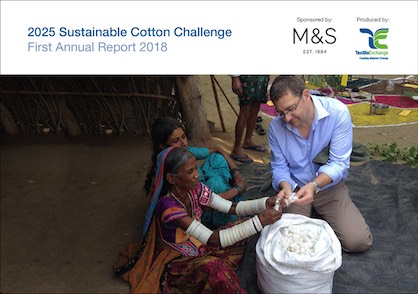
The 2025 Sustainable Cotton Challenge serves as a cornerstone for change in the apparel and textile industry by encouraging brands and retailers to commit to source 100% of their cotton from the most sustainable sources by the year 2025. The Challenge was formed in 2017 when His Royal Highness The Prince of Wales convened a group of CEOs through the work of his International Sustainability Unit that existed to address critical challenges facing the world.

A catalyst to spur a shift in the market toward the use of more sustainable cotton

Those original 13 CEOs committed to work together to accelerate the use of sustainable cotton, which paved the way for other industry leaders to follow – resulting in 39 companies now committed to sourcing 100% sustainable cotton by 2025.

At the time of its inception, the 2025 Sustainable Cotton Challenge was known as the “Sustainable Cotton Communiqué” and its purpose was, and still is, to increase the uptake of organic and preferred cotton, therefore increasing the income of smallholder farmers, eliminating highly hazardous pesticides, eliminating or reducing the amount of pesticides and synthetic fertilizer used, reducing water use and improving water quality and soil health, which includes positive carbon impacts as a result of more sustainable practices.

Mike Barry, Director of Sustainable Business at M&S said, “There is growing recognition of the enormous social and environmental impact of the global fashion industry. The 2025 Sustainable Cotton Challenge shows how by working collaboratively the sector can scale rapidly solutions that are good for farmers, the environment and consumers alike.” Today, 19% of the world’s cotton is more sustainable. By 2025, it is the vision of this Challenge that more than 50% of the world’s cotton is converted to more sustainable growing methods.

Brands and retailers joining the challenge and committing to source more sustainable cotton, can choose from sources that are included on Textile Exchange’s list of recognized organic and sustainable cotton initiatives. These initiatives include:

  • *ABRAPA •
  • *BASF e3 •
  • Better Cotton Initiative (BCI)
  • *Cleaner Cotton
  • Organic
  • Recycled cotton (that is certified to an independently verifiable standard such as the Global Recycled Standard (GRS) or the Recycled Claim Standard (RCS))
  • Cotton made in Africa (CmiA)
  • Fairtrade
  • *Fairtrade Organic
  • *Field to Market
  • *REEL Cotton
  • *Regenerative Cotton
  • *Transitional Cotton
  • *ISCC
  • *myBMP

* Denotes initiatives being Benchmarked starting in 2019.

This first annual report provides information and statistics on the achievements and impacts these programs are having on water, communities, soil quality, biodiversity and social considerations and regulations. By committing to use cotton from these initiatives and

standards, the brands are ensuring that the intentions of their sustainable sourcing strategies are maintained and the integrity of their commitments are uncompromised.


KEY FINDINGS

Of the 39 2025 Sustainable Cotton Challenge signatories, 30 participated in the 2018 Preferred Fiber and Materials Benchmark program to report on their progress towards their goal of 100% cotton being sourced from the approved initiatives by 2025:

  • 10% of 2025 Sustainable Cotton Challenge signatories have achieved their 2025 target of 100% preferred cotton usage, all of which are organic.
  • 37% have achieved a preferred cotton share of between 75-99%.
  • 23% have achieved a preferred cotton share of between 50-74%.
  • 7% have achieved a preferred cotton share of between 25-49%.
  • 17% have achieved a preferred cotton share of less than 24%.
  • 6% of cotton is not tracked yet.

From the niche to a market share of 19 percent, preferred cotton is gaining ground.

“The tide is turning on traditional supply chains, with demands for greater transparency generating a change from transactional relationships to transformational partnerships,” said Alison Ward, CEO for CottonConnect. In order for sustainable cotton to become standard business practice, the amount of sustainable cotton grown and bought must increase significantly. The 2025 Sustainable Cotton Challenge pledge sends a signal to millions of producers that there is a real demand for a more sustainable approach to cotton production that reduces the environmental and social costs.

Liza Schillo, Manager of Global Product Sustainability at Levi Strauss & Co. said, “Greater transparency across the supply chain and stronger, more strategic relationships between supply chain partners will be critical to the much- needed widespread adoption of sustainable farming practices around the world.” 

TEXTILE EXCHANGE’S ROLE

In March 2018, the Prince’s International Sustainability Unit was closed and Textile Exchange became the initiative’s secretariat. Working under the guidance of a steering group with representatives from Marks & Spencer, Soil Association, Better Cotton Initiative, Levi Strauss & Co., and Kering, Textile Exchange continues to build on the momentum to secure a more sustainable cotton sector.

In recognition of the influential work HRH The Prince of Wales has done to start the 2025 Sustainable Cotton Challenge initiative, Textile Exchange received the honor of being selected by publisher St James’s House to appear in Our Future King: Prince Charles at 70, a coffee- table book celebrating a lifetime of achievement, and heralding his current and future roles and responsibilities. The inclusion of the 2025 Sustainable Cotton Challenge is featured on pages 138-139. The eBook version is available here:

https://textileexchange.org/2025-sustainable-cotton-challenge/
(c) 2019 Textile Exchange


More News from Textile Exchange

#Raw Materials

Textile Exchange publishes cotton Life Cycle Assessment study to strengthen impact data

Textile Exchange has published the first in a series of seven Life Cycle Assessment (LCA) studies designed to improve the quality and robustness of environmental impact data for raw material production across the fashion, textile, and apparel industry. The first LCA study focuses on cotton and addresses critical data gaps and methodology variability through new high-quality data across key producing countries. The study includes organic, regenerative, recycled, and country averages for conventional cotton production systems, providing a clearer picture of the associated environmental impact.

#Sustainability

Textile Exchange unveils commitment-based pathway for members to accelerate responsible raw material production

Textile Exchange has unveiled further details about its new membership structure, designed to guide the fashion, textile, and apparel industry in a collective course of action toward preferred production systems for raw materials and fibers.

#Yarns

Textile Exchange publishes the final criteria for its new Materials Matter Standard, marking a pivotal shift in connecting certification to impact

Textile Exchange has published the final criteria for its Materials Matter Standard—a major milestone in the organization’s multi-year transition toward a unified, impact-driven standards system for raw material production and primary processing. 

#Sustainability

Textile Exchange evolves its membership structure to unlock the next stage of collective action for climate and nature

Textile Exchange is excited to announce that it is evolving its membership structure to a more action-oriented, impact-driven model designed to provide clearly defined pathways that help organizations respond to the climate and nature crisis.

More News on Sustainability

#Man-Made Fibers

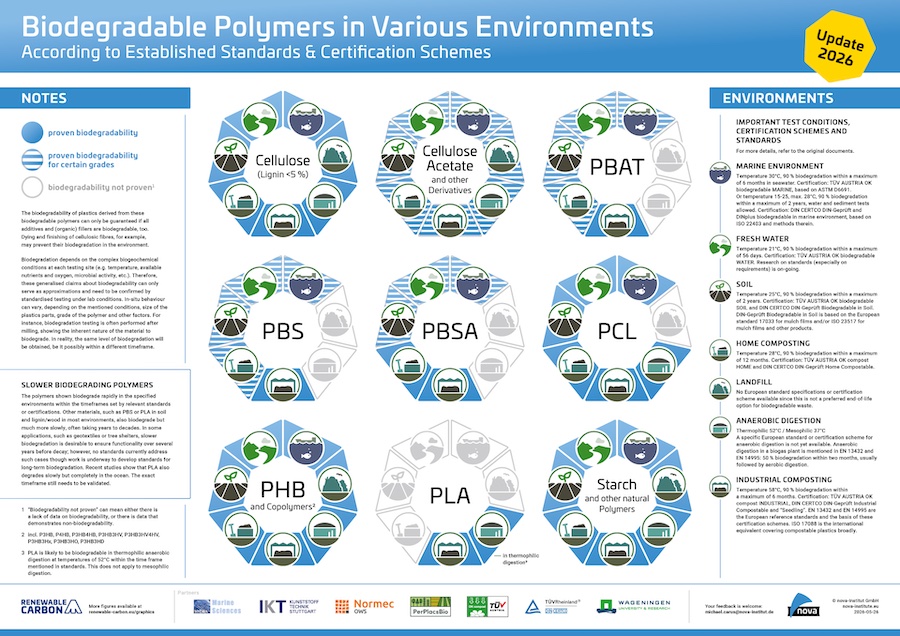
The updated poster on biodegradable Polymers in various environments has been released

As part of the PerPlacsBio project, nova-Institute has updated its popular poster on the biodegradability of polymers in different environments. The updated version reflects current standards, certifications and the latest scientific findings. The poster can be used to assess biodegradable alternatives for use in agriculture and forestry, and it is now available in German for the first time.

#Sustainability

A new standard to combat plastic waste in forests

With DIN SPEC 35808 “Tree Shelter for Forestry Applications,” the testing and research service provider Hohenstein, in collaboration with Rottenburg University of Forestry, as well as forestry authorities and industry partners, has established a clear framework for bio-based and fully biodegradable tree shelters. The pre-standard defines requirements and practical testing methods designed to reduce plastic waste in forests and strengthen the long-term protection of soil and the environment.

#Denim

Denim moves towards sustainability

EIM (Environmental Impact Measurement), the global reference platform for measuring the environmental impact of garment finishing, presents the second edition of its annual report Denim Industry Progress & Insights 2025. The study analyses over 100,000 real denim finishing processes, providing an accurate and up-to-date view of the industry’s evolution towards more sustainable models.

#Recycling / Circular Economy

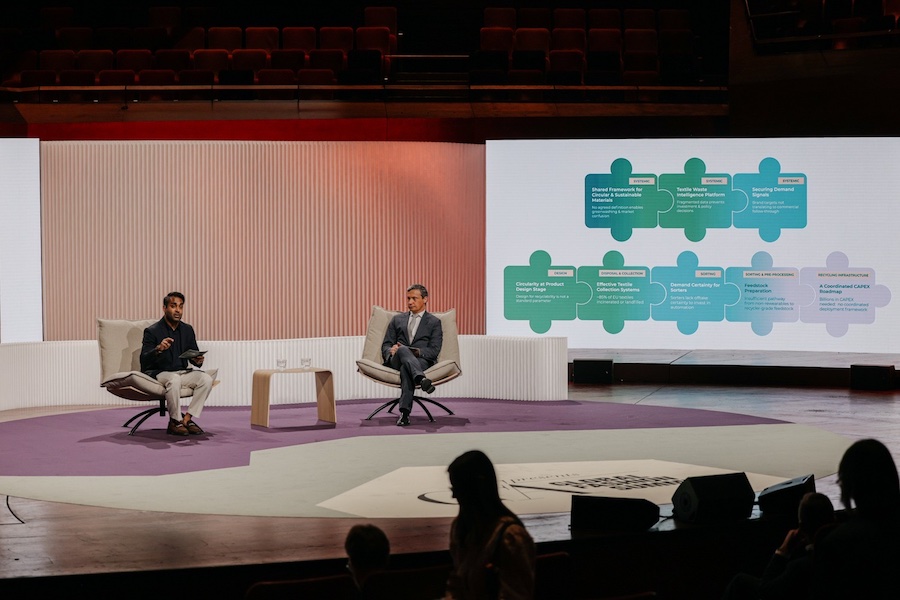
Europe’s textile future at a turning point: New 2030 Circularity Blueprint aims to scale recycling and unlock investment opportunities

The EU textile system is at a critical crossroads. Today, less than 1% of discarded garments are recycled into new garments, despite EU-wide obligations for separate collection. In response, Global Fashion Agenda (GFA) is launching the 2030 Circularity Blueprint, in partnership with ReHubs. This ambitious initiative is designed to support the transformation of the EU textile ecosystem to advance textile-to-textile recycling and drive the transition to a circular economy.

Latest News

#Technical Textiles

Fifteen years of Autoneum – From spin off to global technology leader

What started as a strategic carve‑out has since become the success story of a global technology leader in acoustic and thermal management solutions for vehicles. Headquartered in Winterthur, Switzerland, Autoneum supplies leading automobile manufacturers worldwide with innovative, lightweight and increasingly sustainable solutions.

#Textile chemistry

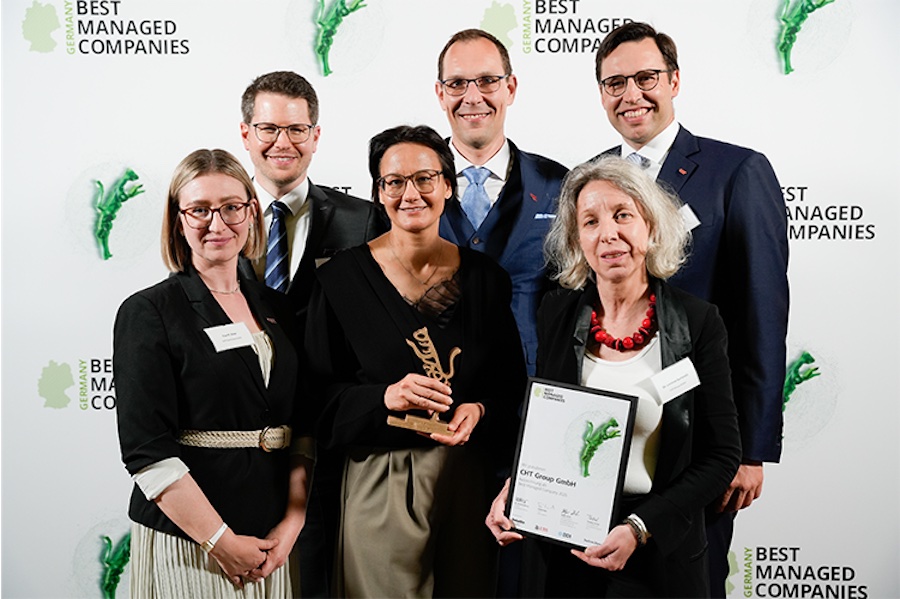
The CHT Group GmbH awarded Best Managed Company 2026

The CHT Group GmbH has been honored as Best Managed Company 2026. The seal of approval recognizes excellently managed medium-sized companies and is awarded as part of a program by Deloitte Private, UBS, the Frankfurter Allgemeine Zeitung, and the Federation of German Industries (BDI).

#Nonwoven machines

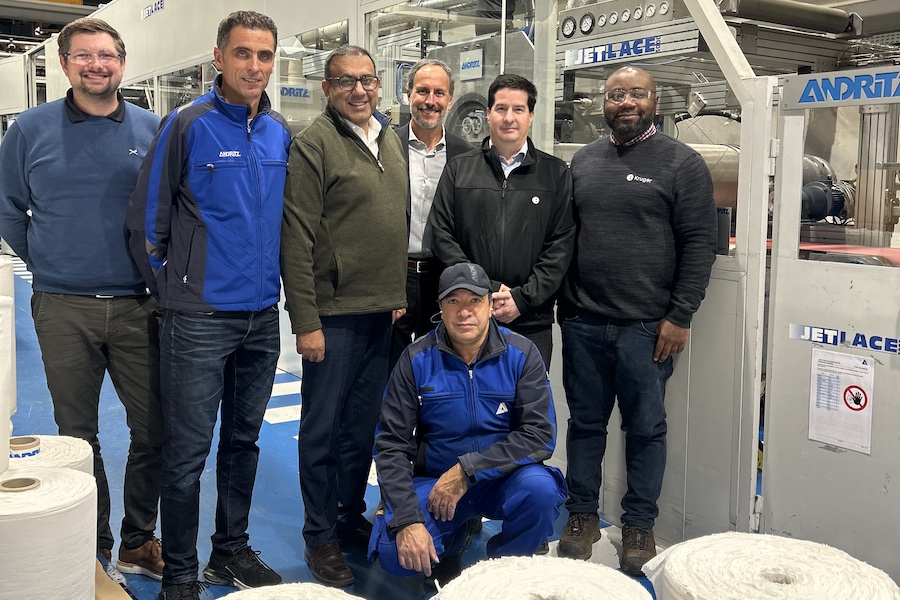
Kruger, Canada, orders first nonwovens line for sustainable wipes from ANDRITZ

International technology group ANDRITZ has received an order from newly established Kruger Nonwovens to deliver a complete WetlaceTM hybrid line for the Wayagamack mill in Trois-Rivières, Quebec, Canada. With this investment, pulp and paper producer Kruger is preparing to enter the nonwovens market with a new generation of plastic-free, chemical-free materials for sustainable wipes. The line is the first of its kind in Canada and is scheduled to start production in 2028.

#ITM 2026

Picanol to present its leading weaving technology at ITM 2026

Picanol is pleased to announce it will be participating in ITM 2026 in Istanbul. This is a key event for industry professionals to engage with the Turkish textile industry as well as the extensive international audience attending the fair. During the event, Picanol will present its latest innovations to the visitors in Hall 8, booth 802.

TOP