[pageLogInLogOut]

#Sustainability

DuPont™ Nomex® plant in Asturias receives ISCC PLUS certification
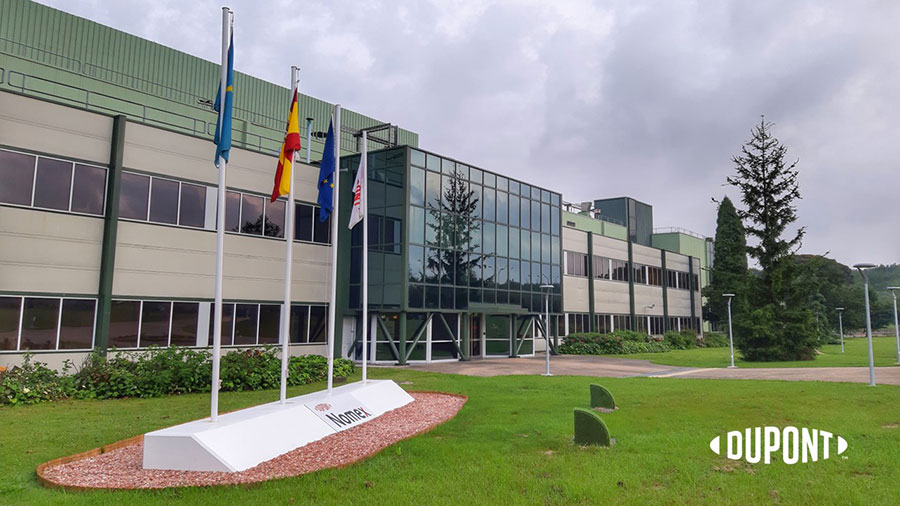
(c) 2025 DuPont
DuPont announced today that its Nomex® production facility in Tamón, Asturias, has received International Sustainability and Carbon Certification (ISCC PLUS) certification. This achievement underscores DuPont's commitment to advancing its sustainability goals and building capabilities to provide reliable Nomex® solutions from sustainable raw materials worldwide.

This achievement represents an important milestone in the company's commitment to climate action and the implementation of its sustainability goals in the circular economy. ISCC PLUS certification enables the sustainability of a product to be verified across the entire supply chain - from raw material sourcing to production and distribution - using the mass balance approach in a robust, transparent, and reliable manner.

One of the most important aspects of ISCC PLUS certification is that it helps to reduce the carbon footprint of products and gradually replace fossil fuel-based raw materials with more sustainable alternatives. At the same time, it promotes the transition to a more circular economy.

"Nomex® is a trusted brand known for its incredible durability and inherent flame resistance built into the fiber, which cannot be washed out or worn away. This makes it the ideal solution for a range of end markets, including utilities, manufacturing, emergency services, automotive, and more," said Matt Reinhardt, vice president and general manager of DuPont Aramids. “This important integration of ISCC PLUS certification into Nomex® production is consistent with our commitment to not only meet but exceed our sustainability goals and those of our customers in each of these end markets - we will continue to drive our commitment to safety and sustainability.”

The ISCC certification builds on DuPont's progress outlined in the company's recently released 2025 Sustainability Report. This includes a 55% reduction in Scope 1, Scope 2, and Scope 3 emissions from their respective baselines. In doing so, DuPont has exceeded its 2030 goal and surpassed the expectations of the Paris Agreement's 1.5°C target. Since 2022, Nomex® has been manufactured using renewable electricity through the purchase of Renewable Energy Certificates (RECs) and Guarantees of Origin (GOs) to cover the annual energy consumption of DuPont's operations. In addition, the Asturias site has partnered with ENGIE on a 12 MW photovoltaic plant that began operating earlier this year, underscoring its commitment to local solar energy. ISCC PLUS certification for Nomex® production at the Asturias manufacturing site supports DuPont's strategy to further reduce Scope 3 emissions and work with global supply chains toward a more circular economy.

For more information on our sustainability strategy and related achievements, visit www.dupont.com/sustainability


More News from Dupont

More News on Sustainability

#Sustainability

Number of GOTS-certified facilities grow 15% globally as demand for credible sustainability standards continues to strengthen

Global Organic Textile Standard (GOTS) certification continued to grow in 2025, with nearly 18,000 certified facilities worldwide, despite ongoing geopolitical uncertainty and rapidly evolving regulatory requirements across global textile supply chains.

#Sustainability

bluesign technologies introduces bluepass

bluesign technologies ag (www.bluesign.com) today announces the launch of bluepass, a new certification mark and product labeling system created to deliver clear, substantiated, and verifiable sustainability claims at scale.

#Research & Development

Hohenstein publishes 2025 Sustainability Report

The testing and research service provider Hohenstein has published its latest sustainability report, outlining key progress and strategic initiatives. The report focuses on ambitious CO₂ reduction targets, the company’s new mission statement and the systematic expansion of sustainable services for customers worldwide.

#Natural Fibers

Global Standard gGmbH launches second public consultation for GRTS Draft 2 for the textile industry (1–30 April 2026)

Global Standard gGmbH is pleased to announce the release of Draft 2 of the Global Responsible Textile Standard (GRTS) for its second public consultation. The consultation will be open from 1 April 2026 to 30 April 2026, inviting stakeholders across the textile and apparel value chain to provide input and contribute to the further development of this new Standard.

Latest News

#Techtextil 2026

Techtextil 2026: KARL MAYER impresses as an innovative sector partner

KARL MAYER looks back with satisfaction on its participation in Techtextil 2026. From April 21 to 24, the international industry leader used the trade show in Frankfurt to meet with numerous key customers at its booth and, at the same time, establish many new contacts. Most visitors came from Germany, followed by major markets such as Poland, the United Kingdom, Turkey, France, and Portugal.

#Associations

BTMA backs global growth while investing in future UK leaders

As one of a number of new initiatives launched this year, the British Textile Machinery Association (BTMA) is launching the UK-India Textile Machinery Coalition. The UK-India Free Trade Agreement, signed in July 2025, has implications that extend across sourcing, competitiveness and long-term trade dynamics, believes BTMA CEO Jason Kent.

#Raw Materials

China projected to increase cotton production, yields, and imports in 2026/27

World cotton production in the 2026/27 season is projected at 25.9 million tonnes, exceeding global consumption of 25.2 million tonnes, according to the May 2026 issue of Cotton This Month. That means both production and consumption are expected to remain close to current season levels, while global cotton trade is projected to decline by 2.7% to approximately 9.6-9.7 million tonnes.

#Raw Materials

ICAC launches Carbon Credits Initiative to deliver new income streams to cotton farmers

The International Cotton Advisory Committee (ICAC) has announced a new initiative designed to unlock additional income streams for cotton farmers through participation in carbon credit markets, linking sustainable production practices directly to financial returns.

TOP