[pageLogInLogOut]

#Sustainability

Textile Exchange Preferred Fiber & Materials benchmark report released
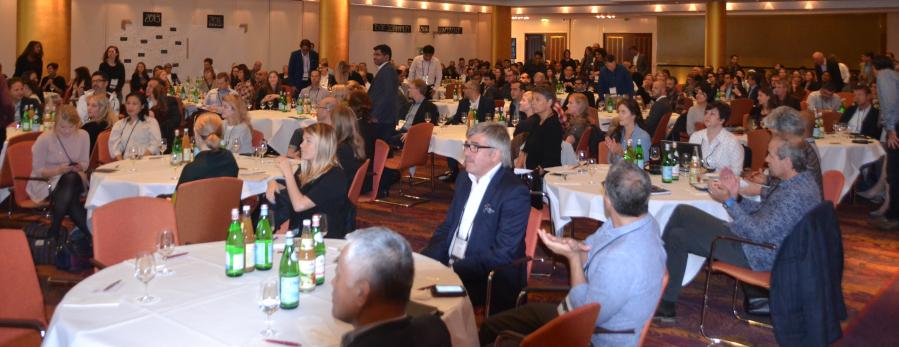
Textile Exchange conference on Preferred Fiber & Materials (PFM) in 2016 in Hamburg (c) 2017 TexData
71 Companies have stepped up to the mark and put themselves forward for benchmarking against their peers and competitors in the Textile Exchange Preferred Fiber & Materials (PFM) Benchmark Program, linking their efforts to the UN Sustainable Development Goals (SDGs).
61% of companies have set targets for switching to a more sustainable source of cotton, three quarters having a specific target for organic. Liesl Truscott, Materials Strategy Director for Textile Exchange said:

“Millions of people – cotton farmers, foresters, and other textile feedstock providers – form the base of the textile supply network and are impacted by the decisions brands and retailers make every day. Influencing improvement in fiber and material production is one of the greatest opportunities textile brands and retailers can contribute to securing a sustainable future. “

“Preferred” is another way of saying “more sustainable.” Textile Exchange defines a “preferred” fiber or material (PFM) as one that is ecologically and socially progressive and has been selected because it has more sustainable properties in comparison to conventional options. “The mix of fibers in your product range can be just as important as the sustainability profile of each fiber,” Truscott added. “It’s great to have a forward-thinking cotton program, but if most of your range is synthetic you should be concentrating on recycled choices. Our benchmarking will point companies towards that.”

Textile Exchange recommends a “portfolio approach,” building a suite of preferred fiber and materials from a choice of preferred options, through the consideration of impacts and product range priorities. The goal is that PFMs are produced to a globally accepted standard, with strict criteria that qualifies the product as preferred, and can be traced through the supply chain.

Nanda Bergstein, Head of Vendor Relations & Sustainability (Non Food) for Tchibo, said “Our goal of a 100% sustainable business model challenges us to think about completely new, innovative models of doing business. One of them is our partnership with the Appachi ECO-LOGIC Cotton Project in India which brings together a value chain from the farmers to the customers. The key is the partnership and working together – and we see this as pivotal for the entire industry.

This is why we are proud to support the Preferred Fiber and Materials Benchmark. It is not only a tool to benchmark our individual progress as a company within the index community, it also creates motivation for the industry to increase the conversion from conventional into sustainable materials and products.”

71 companies (up from 57 last year), ranging from adidas to Woolworths, completed a bespoke online survey and have received confidential Company Feedback Reports revealing their individual results. An Industry Report – containing the combined results of all participating companies – is to be released this week.

More News from Textile Exchange

#Raw Materials

Textile Exchange publishes cotton Life Cycle Assessment study to strengthen impact data

Textile Exchange has published the first in a series of seven Life Cycle Assessment (LCA) studies designed to improve the quality and robustness of environmental impact data for raw material production across the fashion, textile, and apparel industry. The first LCA study focuses on cotton and addresses critical data gaps and methodology variability through new high-quality data across key producing countries. The study includes organic, regenerative, recycled, and country averages for conventional cotton production systems, providing a clearer picture of the associated environmental impact.

#Sustainability

Textile Exchange unveils commitment-based pathway for members to accelerate responsible raw material production

Textile Exchange has unveiled further details about its new membership structure, designed to guide the fashion, textile, and apparel industry in a collective course of action toward preferred production systems for raw materials and fibers.

#Yarns

Textile Exchange publishes the final criteria for its new Materials Matter Standard, marking a pivotal shift in connecting certification to impact

Textile Exchange has published the final criteria for its Materials Matter Standard—a major milestone in the organization’s multi-year transition toward a unified, impact-driven standards system for raw material production and primary processing. 

#Sustainability

Textile Exchange evolves its membership structure to unlock the next stage of collective action for climate and nature

Textile Exchange is excited to announce that it is evolving its membership structure to a more action-oriented, impact-driven model designed to provide clearly defined pathways that help organizations respond to the climate and nature crisis.

More News on Sustainability

#Man-Made Fibers

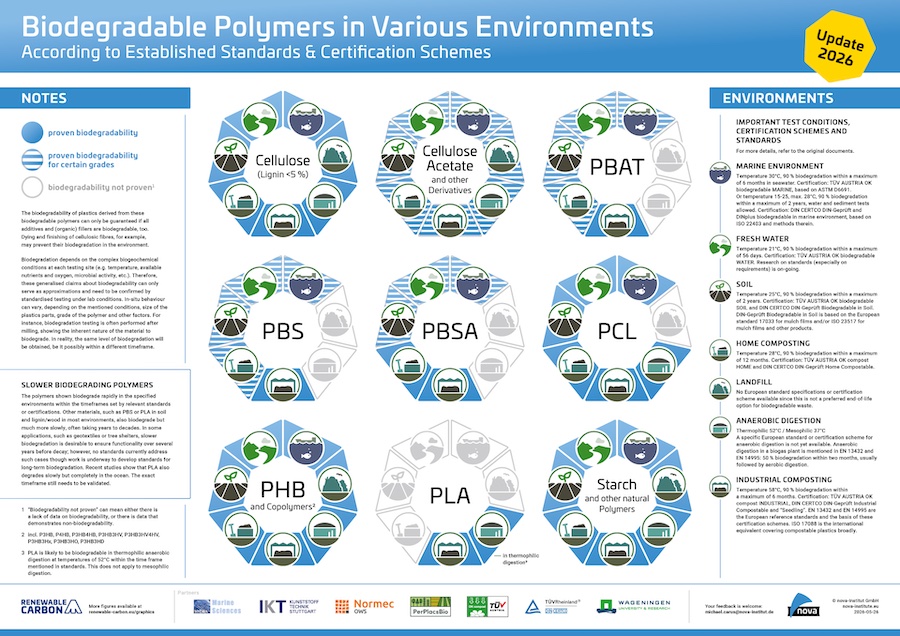
The updated poster on biodegradable Polymers in various environments has been released

As part of the PerPlacsBio project, nova-Institute has updated its popular poster on the biodegradability of polymers in different environments. The updated version reflects current standards, certifications and the latest scientific findings. The poster can be used to assess biodegradable alternatives for use in agriculture and forestry, and it is now available in German for the first time.

#Sustainability

A new standard to combat plastic waste in forests

With DIN SPEC 35808 “Tree Shelter for Forestry Applications,” the testing and research service provider Hohenstein, in collaboration with Rottenburg University of Forestry, as well as forestry authorities and industry partners, has established a clear framework for bio-based and fully biodegradable tree shelters. The pre-standard defines requirements and practical testing methods designed to reduce plastic waste in forests and strengthen the long-term protection of soil and the environment.

#Denim

Denim moves towards sustainability

EIM (Environmental Impact Measurement), the global reference platform for measuring the environmental impact of garment finishing, presents the second edition of its annual report Denim Industry Progress & Insights 2025. The study analyses over 100,000 real denim finishing processes, providing an accurate and up-to-date view of the industry’s evolution towards more sustainable models.

#Recycling / Circular Economy

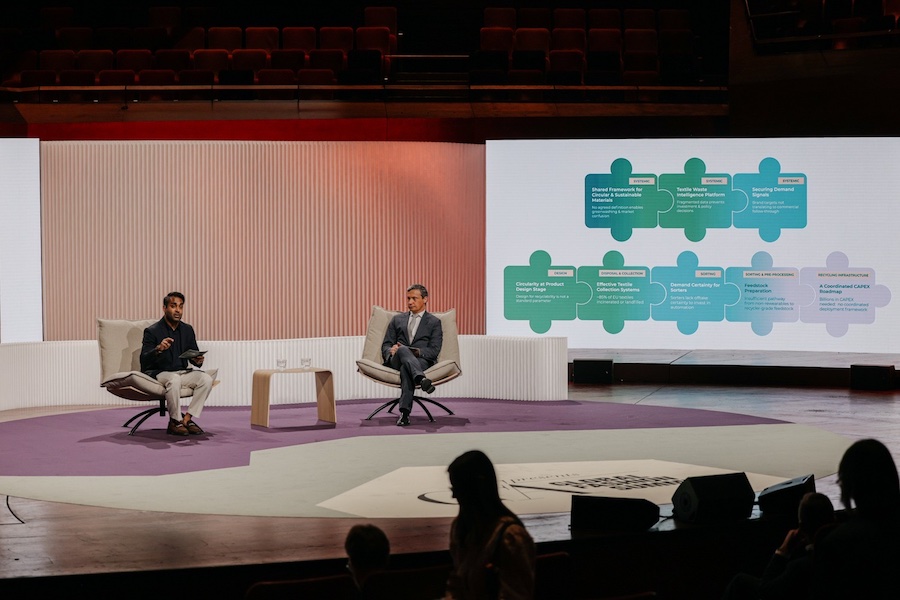
Europe’s textile future at a turning point: New 2030 Circularity Blueprint aims to scale recycling and unlock investment opportunities

The EU textile system is at a critical crossroads. Today, less than 1% of discarded garments are recycled into new garments, despite EU-wide obligations for separate collection. In response, Global Fashion Agenda (GFA) is launching the 2030 Circularity Blueprint, in partnership with ReHubs. This ambitious initiative is designed to support the transformation of the EU textile ecosystem to advance textile-to-textile recycling and drive the transition to a circular economy.

Latest News

#Technical Textiles

Fifteen years of Autoneum – From spin off to global technology leader

What started as a strategic carve‑out has since become the success story of a global technology leader in acoustic and thermal management solutions for vehicles. Headquartered in Winterthur, Switzerland, Autoneum supplies leading automobile manufacturers worldwide with innovative, lightweight and increasingly sustainable solutions.

#Textile chemistry

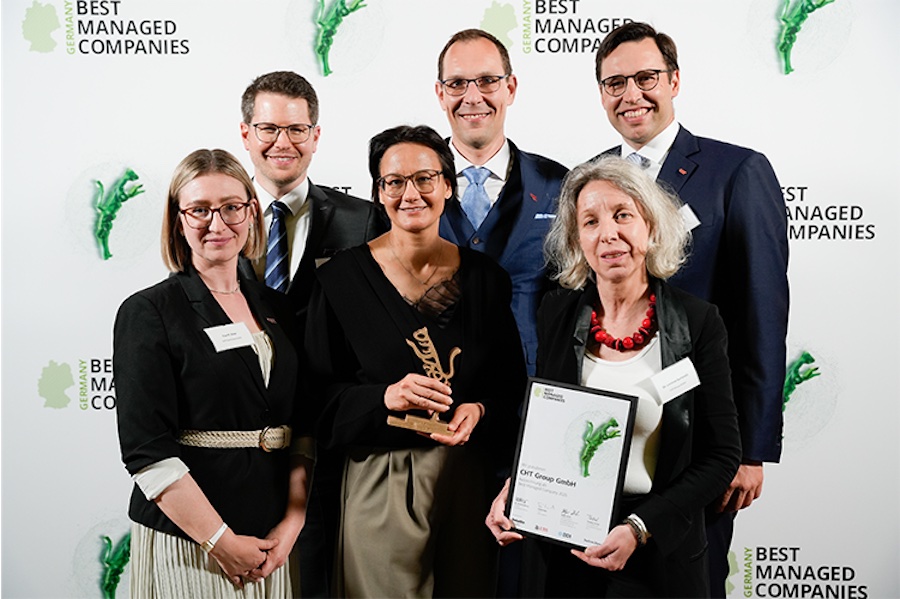
The CHT Group GmbH awarded Best Managed Company 2026

The CHT Group GmbH has been honored as Best Managed Company 2026. The seal of approval recognizes excellently managed medium-sized companies and is awarded as part of a program by Deloitte Private, UBS, the Frankfurter Allgemeine Zeitung, and the Federation of German Industries (BDI).

#Nonwoven machines

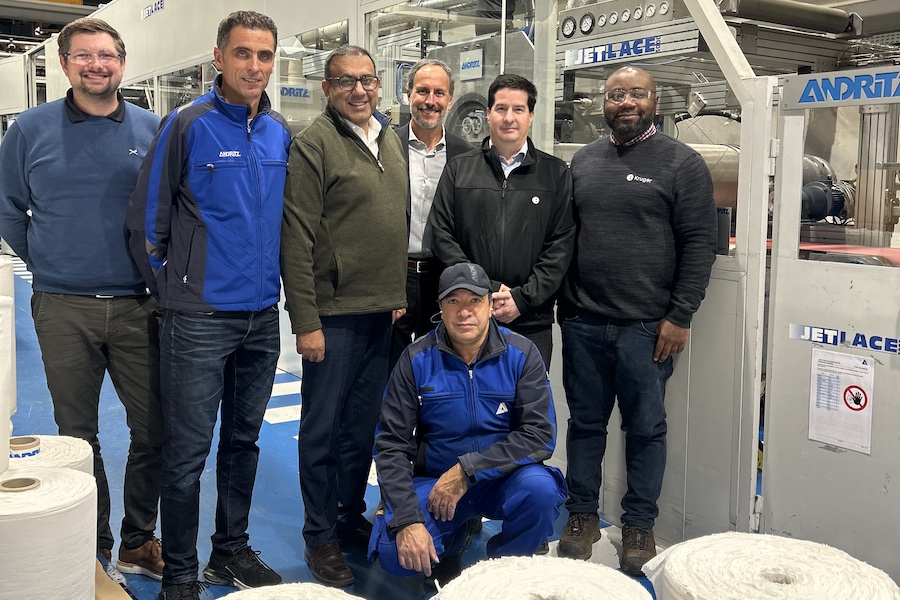
Kruger, Canada, orders first nonwovens line for sustainable wipes from ANDRITZ

International technology group ANDRITZ has received an order from newly established Kruger Nonwovens to deliver a complete WetlaceTM hybrid line for the Wayagamack mill in Trois-Rivières, Quebec, Canada. With this investment, pulp and paper producer Kruger is preparing to enter the nonwovens market with a new generation of plastic-free, chemical-free materials for sustainable wipes. The line is the first of its kind in Canada and is scheduled to start production in 2028.

#ITM 2026

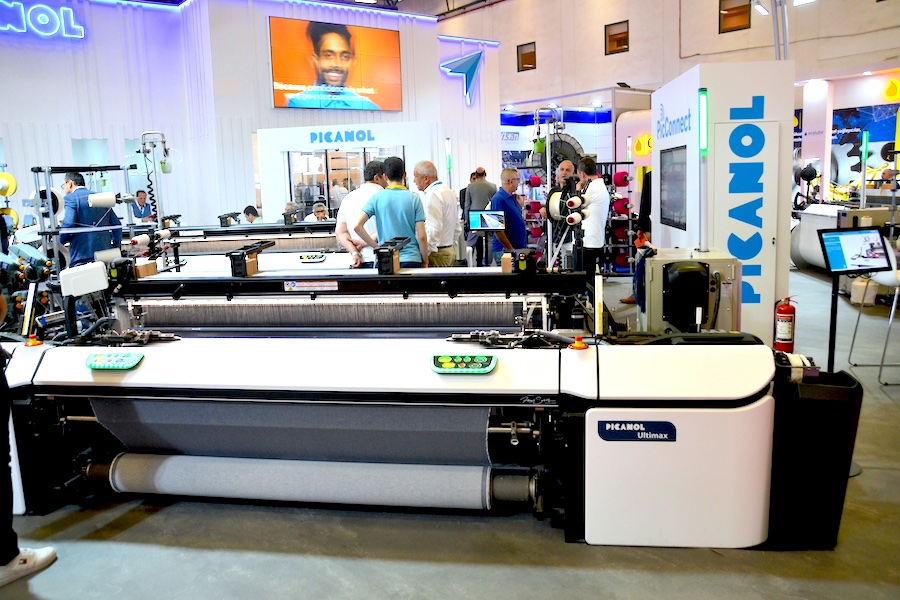
Picanol to present its leading weaving technology at ITM 2026

Picanol is pleased to announce it will be participating in ITM 2026 in Istanbul. This is a key event for industry professionals to engage with the Turkish textile industry as well as the extensive international audience attending the fair. During the event, Picanol will present its latest innovations to the visitors in Hall 8, booth 802.

TOP