#ITMA Asia + CITME 2026
ITMA Asia 2026: How Barmag is reshaping the future of man-made fiber production
A new era. Powered by innovation.
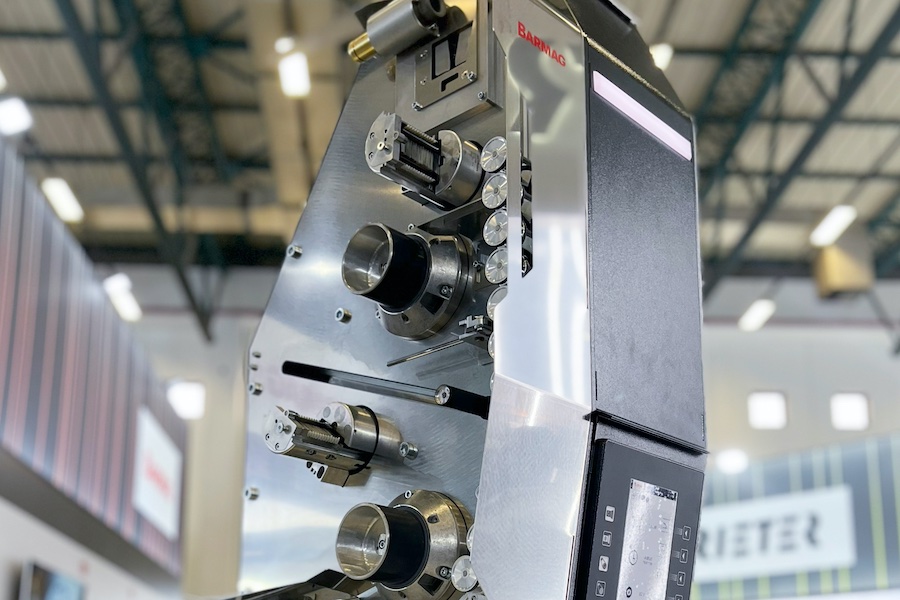
Against this backdrop, Barmag will present a innovation portfolio at ITMA Asia 2026 that goes far beyond incremental machine upgrades. From November 20 to 24, 2026, Barmag’s experts will be presenting next-generation spinning concepts, smart factory platforms, and groundbreaking technologies for filament, staple fibers and nonwovens at their booth D45 in Hall 6.1 at the NECC in Shanghai. In doing so, the company is laying the foundation for what it calls “A New Era” of textile production. At the center of this transformation stands one development in particular: Barmag POY 2.0.
Every few years, an innovation emerges that fundamentally changes how an industry thinks about production. Barmag believes POY 2.0 represents exactly such a moment. The new spinning concept is the result of a complete re-evaluation of the entire POY process chain, from spinning and quenching to winding, parallel with a digital process control. Rather than improving isolated components, engineers reimagined the interaction between all process steps.
The dawn of POY 2.0
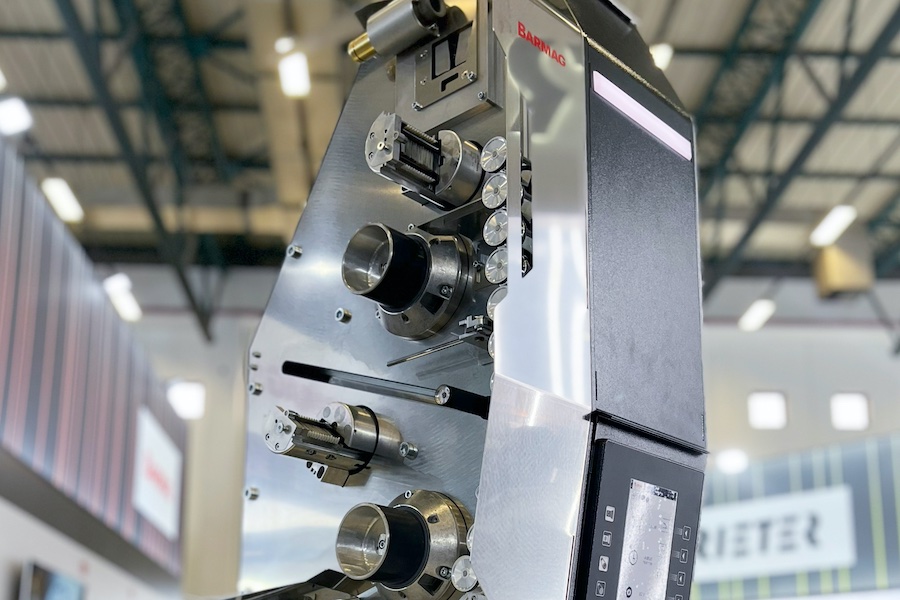
The outcome is a production concept designed to deliver measurable gains in quality, productivity, labor efficiency, and sustainability simultaneously. At the heart of the system is the new Barmag WINGS POY 2.0 winder, featuring an innovation the market has demanded for years: a fully automatic string-up function. This capability dramatically reduces startup times, minimizes waste generation, and lowers operator intervention requirements. In an environment where skilled labor shortages continue to challenge spinning mills worldwide, automation of traditionally labor-intensive tasks offers significant strategic value.
"For decades, productivity improvements in spinning were often measured in percentages. With POY 2.0, we set out to rethink the entire process from the ground up," said André Wissenberg, Head of Marketing, Corporate Communications and Public Affairs at Barmag. "The result is a solution that simultaneously addresses the industry's most pressing challenges: efficiency, quality, sustainability, and workforce availability. This is not a machine upgrade. It is a new production philosophy."

Engineering every detail for greater value
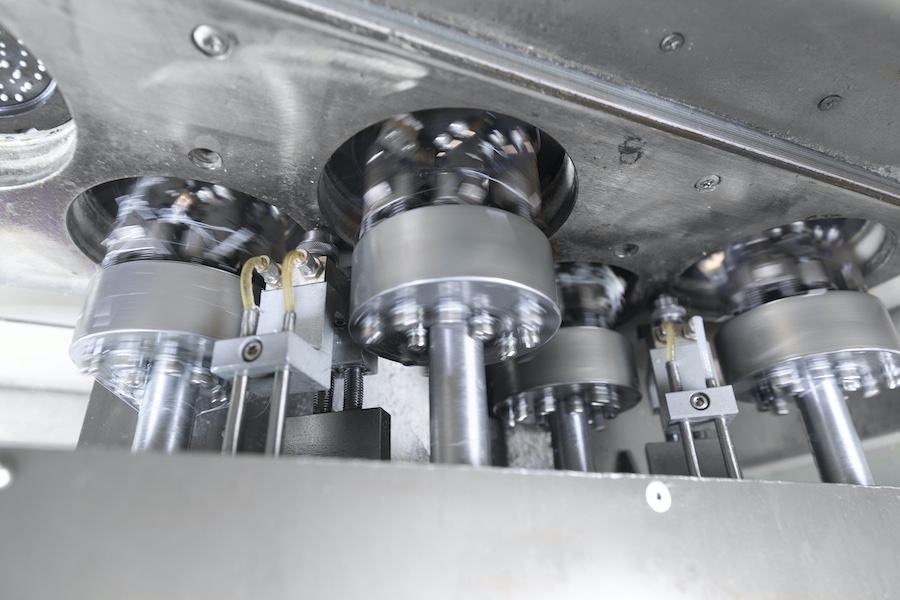
The innovations behind POY 2.0 extend far beyond winding. The newly developed DIO Spin Pack Generation 2 improves rheological performance while delivering more homogeneous filament quality. Its significantly more compact design reduces filter sand consumption by approximately one-third and lowers component weight by more than 30 percent. The impact reaches beyond material savings. The redesigned spinning beam features reduced surface areas, leading to energy savings of up to ten percent.
Meanwhile, the latest Barmag EvoQuench 2.0 system simplifies process adjustments and optimizes filament quenching. Improved accessibility shortens setup times, reduces operator effort, and helps minimize off-quality production during product changes. The cumulative effect is an innovative production system that consumes fewer resources while producing more consistent yarn quality.
"Our customers are no longer looking at individual machine specifications," explained Wissenberg.
"They are evaluating total operational performance. Energy efficiency, waste reduction, ease of operation and reproducible quality all directly influence profitability. Our solution POY 2.0 was designed around exactly these priorities."
From smart machines to smart factories
Yet perhaps the most important element of POY 2.0 cannot be seen on the shop floor. It resides in the digital ecosystem behind the machinery. Barmag's atmos.io platform represents the company's vision of the intelligent yarn factory. Every machine enters production with a digital core that continuously captures, analyzes, and distributes process data. Instead of fragmented information systems, atmos.io creates a fully connected manufacturing environment where every bobbin carries its own digital identity from polymer processing to warehouse storage.
Production managers gain unprecedented transparency across entire operations. Quality deviations can be identified early, process parameters can be optimized instantly, and decisions become data-driven rather than assumption-based. The platform's app-based architecture allows producers to select precisely the functionalities they require while integrating seamlessly into existing infrastructures.
"The future competition among yarn manufacturers will not be decided by who owns the most machines," said Wissenberg. "It will be decided by who can transform production data into actionable intelligence. atmos.io is enabling exactly that transformation."
The advantages are tangible: lower waste rates, more stable quality, reduced operator workload, and significantly improved productivity. For manufacturers pursuing Industry 4.0 strategies, atmos.io may prove as important as the machinery itself.
Flexibility becomes the new productivity
Market volatility has changed production requirements fundamentally. Fashion cycles are shorter. Product portfolios are broader. Customers demand rapid changeovers without sacrificing quality or efficiency. Recognizing this shift, Barmag has developed WINGS FDY FLEX, a new winding concept specifically designed around maximum production flexibility.
The system offers a remarkably wide production window and supports rapid product changes across a diverse range of yarn types, including recycled polyester materials. This adaptability enables producers to react faster to market opportunities while maintaining optimized production economics. In a business environment where responsiveness increasingly determines profitability, flexibility itself becomes a productivity tool.
Texturing reinvented: The eFK EvoSmart
While spinning technologies continue to evolve, enormous opportunities also remain within texturing operations. Barmag's answer is the eFK EvoSmart, a machine concept developed to combine proven reliability with substantial improvements in operational efficiency. Through a combination of optimized process control, the innovative EvoHeater system, and Smart Godet technology, the machine can reduce specific energy consumption by as much as 25 percent per kilogram of yarn.
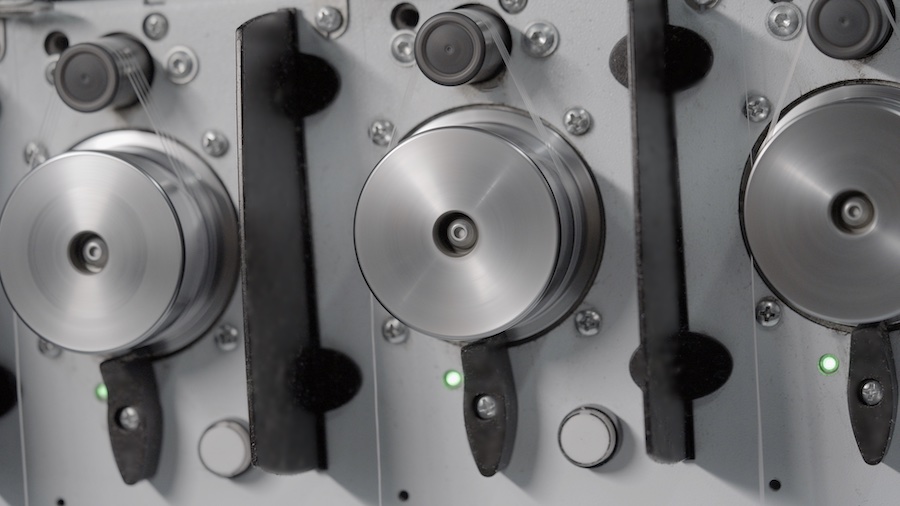
Just as importantly, maintenance requirements decline dramatically. The replaceable heater inserts eliminate complex cleaning procedures, while the integration of optimized airflow systems doubles service intervals and cuts maintenance effort by up to 50 percent.
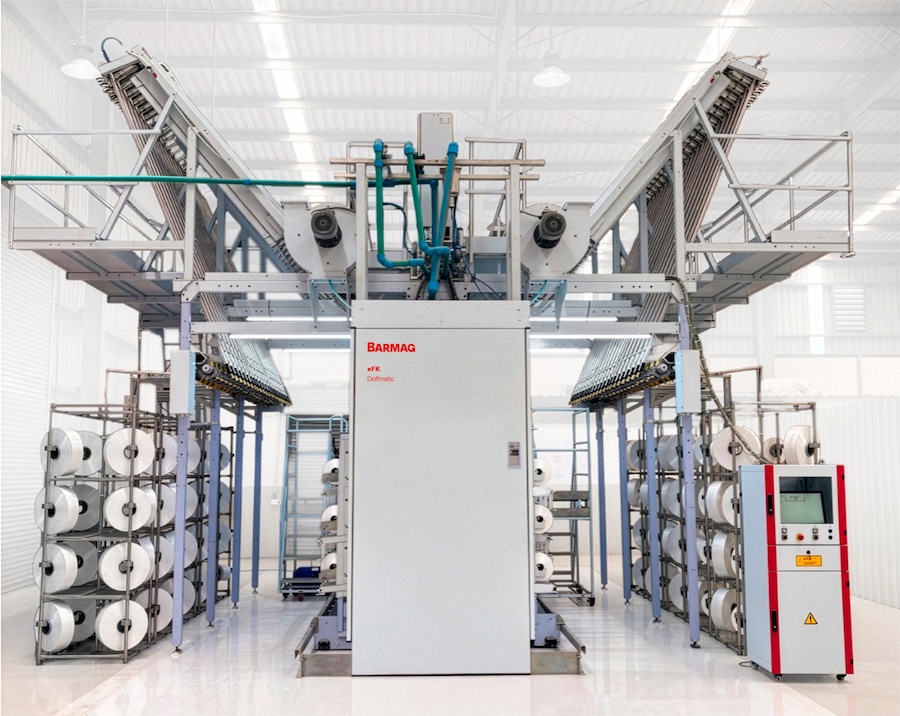
The result is greater machine availability, lower operating costs, and consistently high yarn quality. To further address automation needs in texturing operations, Barmag has partnered in June 2026 with India's Hitech Automation Solutions to integrate the Doffmatic solution into proven eFK systems. This retrofit-capable approach creates a practical pathway toward automation for producers seeking improved productivity without investing in fully automated lines.
Neumag productline: Redefining staple fiber production
Innovation is equally visible in Barmag’s product line Neumag and its staple fiber portfolio. Its advanced EvoSteam process is designed to achieve two objectives simultaneously: substantial energy savings and improved fiber quality. Supporting technologies such as EvoDuct and EvE-2 optimize airflow management and monomer extraction, creating greater process stability and more uniform fiber properties.
At the same time, Neumag is extending automation into staple fiber production through the implementation of robotic spin pack cleaning technology. The advantages are immediate and measurable: consistent cleaning quality, longer service intervals, reduced labor requirements, and improved process reliability.
"Automation is not about replacing people," said Wissenberg. "It is about allowing skilled operators to focus on higher-value activities while ensuring greater process consistency and operational excellence."
Smarter carpet yarn production
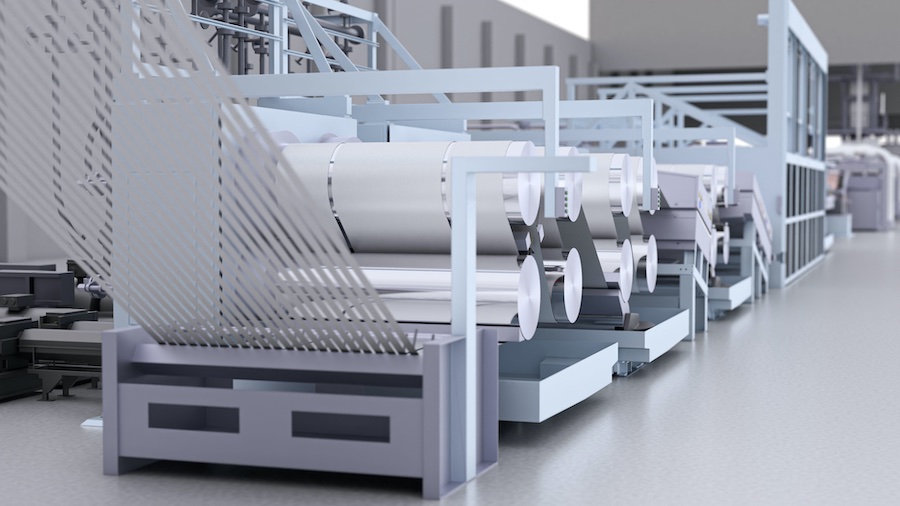
In the carpet sector, Neumag is introducing innovations that directly influence performance and sustainability. Its new BICO BCF technology creates a novel yarn structure capable of delivering enhanced carpet bulk and recovery performance while reducing face fiber consumption by approximately 20 percent. The result is a lighter carpet with premium performance characteristics and reduced raw material requirements.
Complementing this breakthrough is FiberGuard BCF, an intelligent sensor-based monitoring system that continuously measures yarn tension between twisting and winding. The software automatically adjusts production parameters whenever deviations occur, reducing waste and improving efficiency without manual intervention. Importantly, FiberGuard can be retrofitted onto existing BCF installations, making advanced process control accessible beyond new machinery investments.
Nonwovens: The next frontier
As filtration, hygiene, and technical textile applications continue to expand, Neumag is also pushing boundaries in nonwoven production. Its patented hycuTEC technology enables meltblown materials to achieve electrostatic charging efficiencies of up to 99.99 percent using osmosis-treated water. This performance creates significant opportunities within demanding filtration applications.
Polycondensation and sustainability
And the first step in any man-made fiber spinning process for polyester, polypropylene, or nylon is the production of polymers into a high-quality homogeneous melt. Barmag Huitong Engineering’s homogenization technology supports the thermomechanical recycling of post-industrial polyester waste, such as bottle flakes and film material, and lays the groundwork for high-quality rPET products. By specifically increasing viscosity, it is possible to produce defined intermediate products for the manufacture of pellets, melt, or fibers for direct spinning. In addition to improved control over polymer quality, users benefit from greater independence from external raw material suppliers, higher value creation from the recycled material, and more sustainable production.
A strategic opportunity
For the global textile industry, these innovations come at just the right time. Manufacturers are seeking ways to improve export competitiveness while addressing rising production costs, sustainability targets, and evolving customer expectations. The technologies presented by Barmag and its product line Neumag offer a compelling answer: higher productivity without sacrificing quality, greater sustainability without compromising profitability, and increased automation without disrupting existing production models. Most importantly, they demonstrate how digitalization, energy efficiency, and intelligent automation can work together to create future-ready operations.
The beginning of “A New Era”
The textile industry's next chapter will not be defined by isolated technological advances. It will be shaped by integrated ecosystems in which machinery, software, automation, and sustainability function as one. With innovations ranging from WINGS POY 2.0 and atmos.io to eFK EvoSmart, EvoSteam, FiberGuard, and hycuTEC, Barmag is demonstrating a clear vision of that future. Or as André Wissenberg concluded: "The industry stands at a turning point. The producers who will lead tomorrow are those who embrace innovation today. Our goal is to give customers the technologies, intelligence, and confidence they need to succeed in a rapidly changing world. It’s definitely ‘A New Era. Powered by Innovation.’”