[pageLogInLogOut]

#Spinning

Rieter Ring Spinning System powers Beste’s fully traceable supply chain
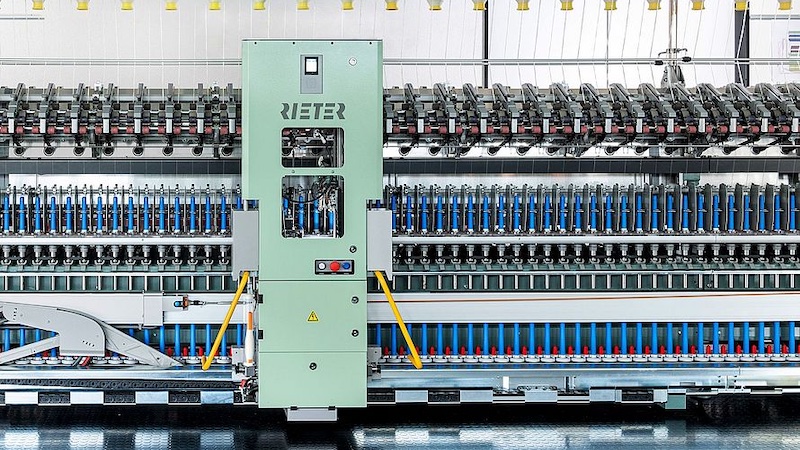
The innovative Italian textile company Beste Spa has placed an order for a complete Rieter ring spinning system. The latest Rieter technology, in conjunction with digitization and automation solutions, will support Beste in setting up the entire textile production process locally in Italy, centered around producing the highest quality for luxury brands. This investment is a key component of the ITACO project, which focuses on creating a 100% organic and fully traceable Italian cotton supply chain.
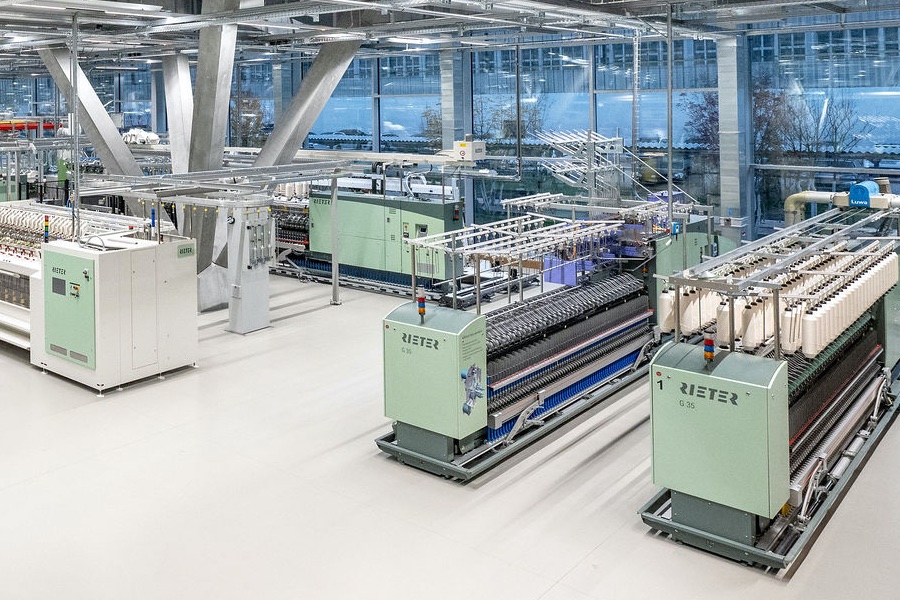
ith the fully electronic ring spinning machine G 38 equipped with the piecing robot ROBOspin, Beste Spa produces yarns of highest quality © 2024 Rieter


Beste and Rieter have signed an order to exclusively equip the newly founded spinning mill, FILUM S.R.L., in Bergamo, Italy, with the latest Rieter technology, including a complete ring spinning system. This is a pivotal step in the ITACO project, which encompasses every phase of cotton production – from the cultivation of organic cotton in southern Italy to spinning in Bergamo and garment manufacturing in the Prato region. Everything is done within a few hundred kilometers, providing unparalleled control over quality and sustainability, making Beste’s supply chain fully transparent.

From fiber preparation to winding, the new spinning mill will be exclusively equipped with the latest Rieter technology. With the fully electronic ring spinning machine G 38, equipped with the compacting device COMPACTapron, Beste produces combed compacted yarn that meets the highest standards required for its ITACO collection.

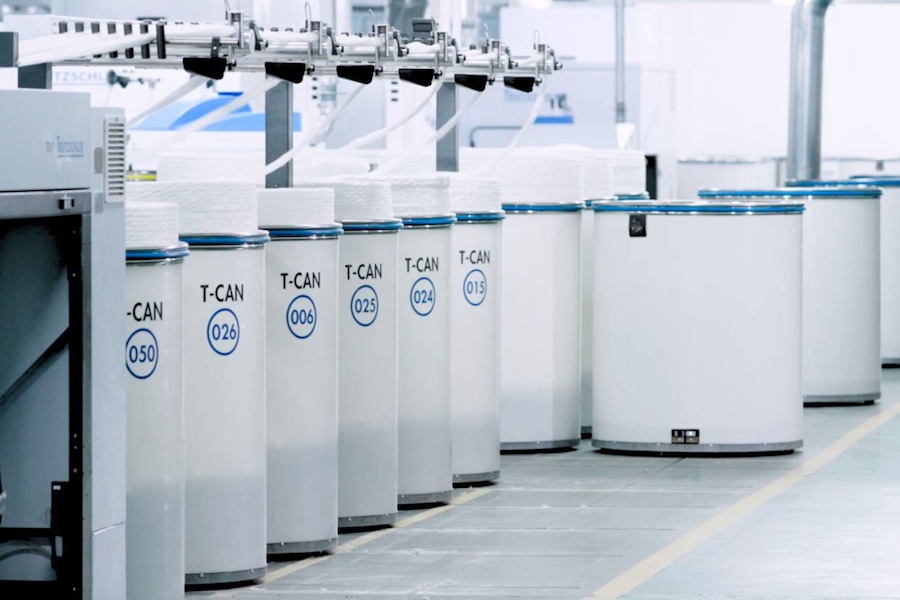
The all-in-one digital mill management system ESSENTIAL connects data throughout Beste’s new spinning mill, giving the company a comprehensive view of all relevant performance indicators from bale to package. The fully automated piecing robot ROBOspin ensures consistent performance of the ring spinning machines and minimizes personnel deployment. The fully automated roving bobbin transport system SERVOtrail Direct further reduces personnel requirements as no manual bobbin transport is needed.
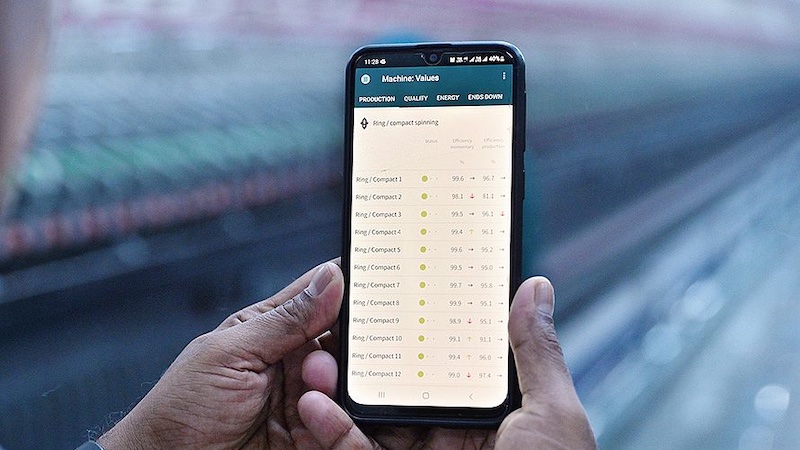
The Rieter Digital Spinning Suite ESSENTIAL connects the data in Beste Spa’s new spinning mill © 2024 Rieter


"We engage with partners who share our philosophy and standards. Rieter machines meet our demand for the highest quality and enable us to produce yarns for our garments that embody the design and quality hallmarks of ITACO, our unique, fully traceable Italian cotton project", says Giovanni Santi, CEO of Beste.

Roger Albrecht, Head of the Rieter Business Group Machines & Systems, says: "We are proud that Beste has chosen our technology to accelerate their growth momentum. Our ring spinning system perfectly fits into this complete Italian production chain, supporting the ITACO project’s vision of high-quality, sustainable garments."

ITACO (Italian Cotton) is a groundbreaking initiative by Beste, aimed at creating a fully traceable and made in Italy supply chain for 100% organic Italian cotton. From seed to garment, ITACO covers all production stages within a few hundred kilometers in Italy, emphasizing quality, transparency, and local regrowth.

More News from Rieter Textile Systems

#Spinning

Rieter prepares leadership transition in Components & Technology

Roger Albrecht, Head of the “Components & Technology” Division, has decided to pursue a new opportunity outside the Rieter Group. Roger has worked for the Group for 11 years and has been instrumental in maintaining Rieter’s position as a technology leader in the short-staple business.

#Recycling / Circular Economy

Rieter and partners launch Recycling Powerhouse for industrial-scale textile recycling

Recycling Powerhouse Ltd. was established in July 2026 to industrialize, standardize and scale textile recycling. Based in Switzerland, the venture will operate a franchise-driven business model that enables the production of high-quality, certified recycled yarns. The project is supported by the following partners: Rieter Group, the world’s leading system supplier for natural and man-made fibers, Säntis Textiles, a Swiss textile engineering company, and Valvan, a Belgian sorting technology company. The first blueprint franchise operation is scheduled to launch early 2027 in partnership with Suhail Industrial Holding Group in Qatar.

#Spinning

Rieter sees Barmag integration on track as orders and sales rise

The first half of 2026 was shaped by the successful completion of the largest acquisition in Rieter’s history. The Man-Made Fiber Division enables entry into the growth segment of man-made fibers and sustainably strengthens Rieter’s market position in the Asia region. The expanded Group is now the world’s leading system supplier for the processing of natural and man-made fibers. In the first half of the year, initial cost savings in material costs and operating expenses have already been realized. The targeted synergies are expected to amount to at least CHF 20 million by the end of the 2028 financial year. Due to the completion of the acquisition on February 2, 2026, the first half of the year for the Man-Made Fiber Division only amounts to five months.

#Spinning

"We will become a recycling powerhouse"

The textile industry is now in its fourth consecutive year of crisis, while automation, artificial intelligence and recycling are reshaping the rules of the game. In this interview, Rieter CEO Thomas Oetterli discusses the first signs of a market recovery, reflects on his first three years at the helm of the company, explains the integration of Barmag, outlines Rieter’s vision of the fully automated spinning mill and highlights the strategic importance of recycling. In doing so, he explains why the new Rieter Group aims to play a leading role in transforming the textile value chain into a circular economy.

More News on Spinning

#ITMA Asia + CITME 2026

ITMA Asia 2026: How Barmag is reshaping the future of man-made fiber production

The textile industry is entering a groundbreaking era. Manufacturers face rising energy prices, growing sustainability demands, increasing labor shortages, and an unprecedented need for flexibility. For a globally active textile industry, where competitiveness is closely linked to production efficiency and cost leadership, this means that technology is no longer merely a means of improving operational processes – it is increasingly becoming a strategic differentiator.

#Spinning

Eltex takes the tension out of heat-setting

The ACT-MULTI system developed by Eltex – a member of TMAS, the Swedish textile machinery association – is bringing individual yarn tension monitoring and automatic control to the heat-setting process, helping manufacturers maintain consistent processing conditions across every yarn position.

#Spinning

Heberlein reinforces its commitment to the Chinese market

Heberlein, globally recognised as a leading provider of air interlacing and air texturing jets for synthetic filament yarns, is consolidating its success in the Chinese market with its APh- and APe-series for DTY applications. Particularly in the field of Air Covering, Heberlein technologies combine excellent quality with significant savings in compressed-air consumption. A new service hub in Shengze City underlines the company’s long-term commitment in the Chinese market.

#Recycled Fibers

Driving circularity with Uster Recycled Fiber Matrix

The textile industry’s commitment to circularity continues to accelerate, and mechanical recycling is viewed as a targeted approach to cutting textile waste and its environmental impact. At the forefront of this drive, Uster has developed the Recycled Fiber Matrix, a two-dimensional assessment of mechanically recycled fibers to guide optimum processing and end-uses.

Latest News

#Industry 4.0 / Digitalization

Coats Digital launches AI-powered GSD RealMotion for motion analysis

Coats Digital has launched GSD RealMotion, an AI-powered solution designed to provide apparel manufacturers with greater visibility into factory-floor operations. By analysing shop-floor video and applying Coats Digital’s GSD methodology, the solution turns video recordings into structured, motion-by-motion method studies.

#Textile chemistry

Archroma and Lameirinho partner in pioneering deployment of InOneGO single-step dyeing

Archroma, a global leader in specialty chemicals, and Lameirinho, a leading home textiles manufacturer based in Portugal, are collaborating to bring InOneGO by Archroma, a new single-step dyeing process, into commercial production. Lameirinho’s first InOneGo bedlinens collection is now available worldwide.

#Knitting & Hosiery

KARL MAYER launches extra-wide HKS 3-M EL for increased productivity

KARL MAYER has launched a new extra-wide version of its HKS 3-M EL tricot machine, designed to increase productivity particularly in the manufacture of textiles for sports, activewear and athleisure applications.

#Research & Development

Reducing development times for technical textiles by accelerated thermo-oxidative aging in a high-pressure autoclave

Synthetic polymers used in technical textiles can be effectively protected against degradation caused by heat, oxygen, and water through the use of stabilizer systems. This enables service lives of several decades, extending to more than 50 years. As the use of durable technical textiles continues to grow, so does the demand for reliable methods to predict their service life within economically feasible testing periods. For the first time the German Institutes of Textile and Fiber Research Denkendorf (DITF) developed methods for robust service life prediction for textiles in an IGF research project.

TOP