[pageLogInLogOut]

#Spinning

TRUECYCLED: A holistic approach to textile recycling success
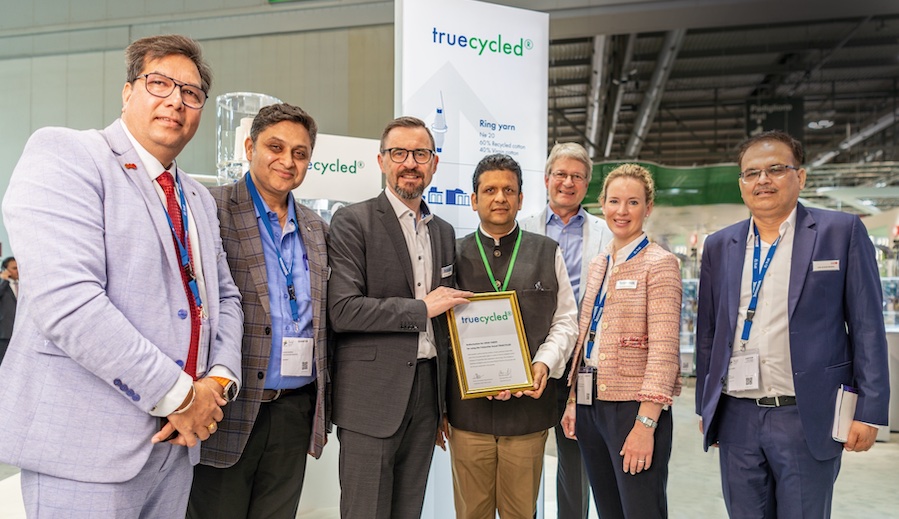
USHA yarns, a leading Indian yarn manufacturer, is producing recycling yarns in a state-of-the-art TRUECYCLED line - and got a special certificate for this at the ITMA 2023 © 2024 Trützschler
Trützschler has taken a bold step to tackle the global problem of textile waste: They expanded their portfolio to become the first full-liner in the preparation of textile waste – from mechanical recycling to the spinning preparation of torn secondary fibers. Tearing and spinning preparation are both key processes for achieving the best possible quality from secondary fibers. That means Truetzschler customers can tap into a competitive advantage by embracing this holistic approach.

The new complete TRUECYCLED solution is the result of a cooperation with the company Balkan Textile Machinery INC.CO. in Turkey, which Trützschler announced at the ITMA 2023 trade event in Milan. Since then, Trützschler has received many inquiries for recycling systems. More and more customers are now producing recycled yarns on a TRUECYCLED line: State-of-the-art recycling installations, configured and fine-tuned by Trützschler experts based on the customer’s specific requirements.

Success with a systems approach

Recycling systems face significant technological challenges. On average, torn fibers are much shorter than virgin fibers. The percentage share of short fibers in the fiber mass is much higher. Unopened yarn and fabric particles are also difficult to process. Not surprisingly, much academic and practical research is currently conducted to find solutions for these problems. Dr. Georg Stegschuster, a researcher specializing in textile recycling, believes a systems approach is needed. He is working at the Recycling atelier, a model factory for mechanical recycling in Augsburg, Germany, which is committed to delivering the latest technological insights for textile recycling. “A perfect fine-tuning between tearing and spinning preparation is key for obtaining the best possible quality results and avoiding unnecessary fiber shortening,” he says. “This can be achieved if you are in control of both processes – and have the necessary expertise for both processes too.”

Gentle but effective

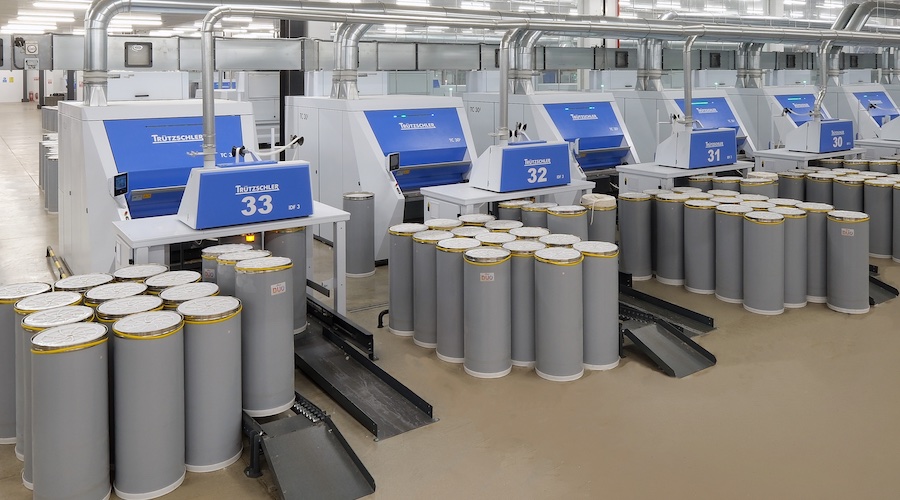
In some cases, for example, it may be advantageous to have less aggressive settings in the tearing line. This can help avoid unnecessary fiber shortening. The remaining higher share of unopened fabric must then be handled in a high-performance spinning preparation line. This starts with the right blow room configuration for perfect opening, cleaning and blending. A card that is specially designed for recycling materials, such as the new TC 30Ri, can also enable gentle but effective treatment of fibers.

A shortened drafting process is also a must. The integrated draw frame IDF 3 can make this possible. The draft is high enough to provide excellent levelling of the numerous short fibers, but low enough to prevent floating fibers. “There is a lot of technological potential for improving the quality of the end-product through the right configurations and settings,” Stegschuster says. “There’s a growing number of examples that show how higher quality end-products can be achieved from recycled materials, and how the share of pre- or postconsumer waste in yarns can be increased without compromising on quality.” A new chapter in mechanical recycling is now beginning – and Trützschler’s TRUECYCLED system will play a leading role in this exciting story!

First full-liner in mechanical recycling and preparation of textile waste

Trützschler now offers a complete system covering the whole process, from cutting and tearing textile waste through to carding and drawing secondary fibers. Thanks to this holistic approach and Trützschler’s expertise for the whole process, manufacturers can avoid unnecessary fiber shortening and achieve the best possible quality results.
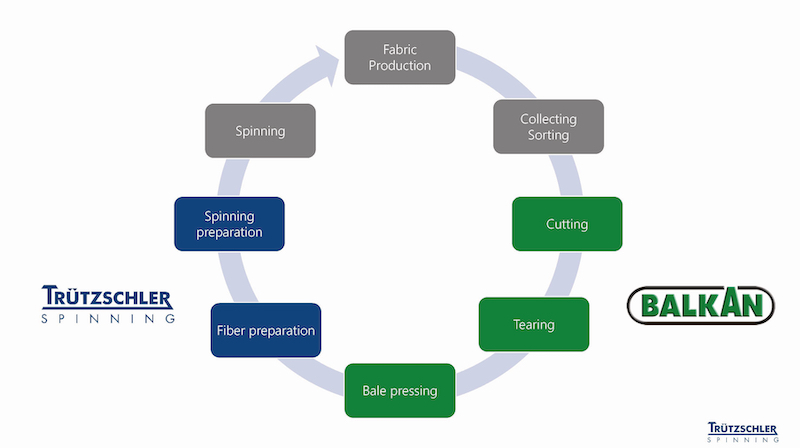
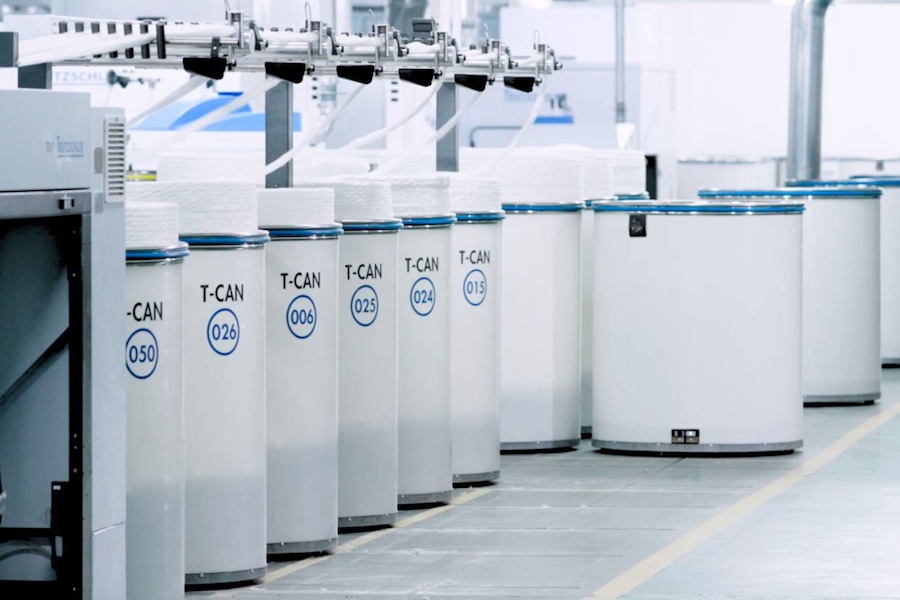
Truecycled concept with Balkan  © 2024
Truecycled concept with Balkan © 2024


More News from Truetzschler GmbH & Co. KG

#Spinning

Perfect quality through collaboration: Machinery from Trützschler, Toyota and Murata at Zirve Tekstil

In today’s textile industry, excellence is not achieved by chance – it’s the result of deliberate decisions, technical expertise, and the courage to go beyond conventional paths. The Turkish company Zirve Tekstil has done just that: by combining the best technologies from Trützschler, Toyota and Murata, they’ve created a production setup that delivers outstanding yarn quality – recognized worldwide.

#Spinning

Details matter: How Trützschler cylinder wires boost efficiency in Pakistan’s spinning sector

Pakistan’s textile industry, especially its spinning sector, is the backbone of the national economy and a vibrant hub of innovation. Today’s spinning mills face growing demands for efficiency, quality, and sustainability. From the serene northern valleys to the vibrant port city of Karachi in the south, mills like Suraj Cotton Mills, Liberty, and Nishat Chunian are turning to advanced solutions.

#ITMA Asia + CITME Singapore 2025

T-CAN – Revolutionizing can transport

In virtually all spinning mills, transporting sliver cans is still done manually. Rising labor costs, lack of operators and increasing quality requirements make this a growing challenge. With T-CAN, Trützschler introduces a practical solution: a fully automated can transport system that will be presented live at ITMA ASIA 2025 in Singapore.

#Spinning

Pre-Cleaner CL-X: The future of cotton cleaning

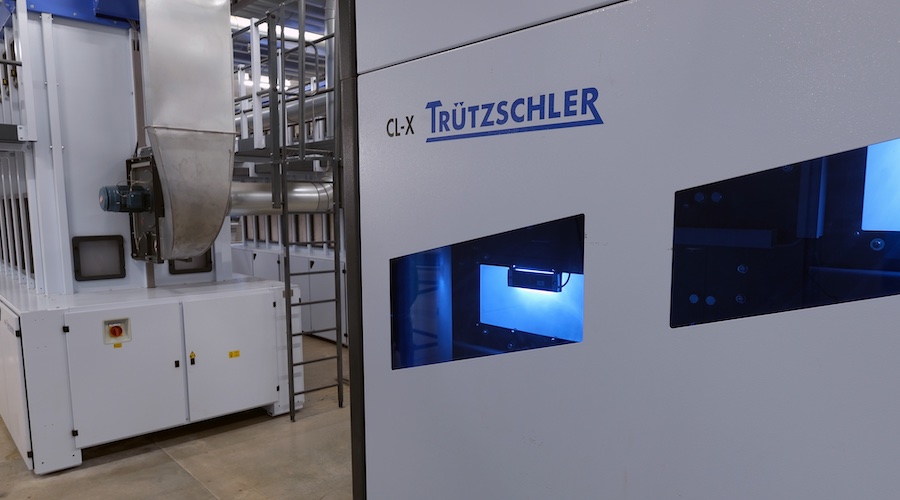
What if the future of cotton cleaning was already here – setting a new standard for cleaning efficiency, productivity and energy savings? That future has a name: CL-X. Since its market launch in 2022, the Pre-Cleaner CL-X has become a true bestseller, proving its value in several hundred customer applications worldwide. Now, new results from Türkiye demonstrate again how the Pre-Cleaner CL-X outperforms the competition.

More News on Spinning

#Spinning

Rieter advances strategic repositioning amid market volatility

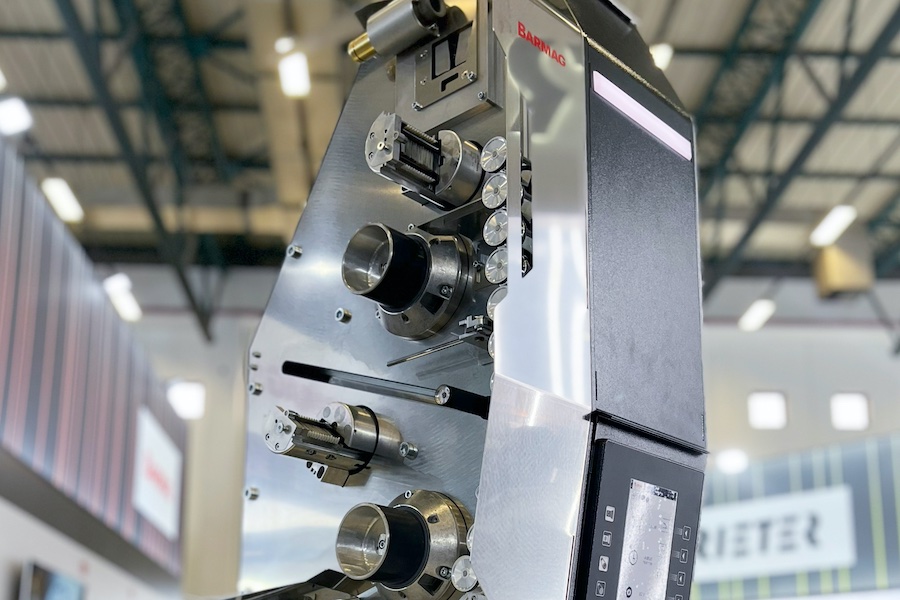
Rieter successfully completed the acquisition of Barmag on February 2, 2026, and reached an important milestone in the company’s repositioning. Barmag will be integrated into the Rieter Group as the “Man-Made Fiber” Division. With this strategically transformative acquisition, Rieter is expanding its core business beyond the short-staple fiber business in a targeted way. This positions Rieter as the global market leader along the entire value chain for natural and man-made fibers. In addition, as a complete systems supplier, Rieter is further strengthening its technological leadership in the areas of automation and digitization.

#Spinning

Measure and control the fiber – optimize yarn quality

Producing consistent yarn quality is an everyday challenge – and a very difficult one. Detailed knowledge and understanding of the fiber raw material is absolutely critical to achieving the best possible quality in the yarn. To help spinners, Uster experts have put together guidelines for avoiding yarn irregularity claims, in a special edition of the Uster News Bulletin.

#Spinning

A breakthrough innovation for diaper manufacturers

Developed and manufactured by Mesdan, Italy, the Loop knotter type 093E is a special version of the well-known Loop knotter, specifically designed to join hygiene-grade spandex yarns used in the personal care industry.

#Spinning

Rieter responds to higher raw material prices

Global political and economic developments have been leading to rising raw material and energy costs for some time. The textile machinery industry is also affected by this trend. Rieter machines and components consist to a large extent of steel, copper, aluminum and electronics. These materials in particular have seen higher demand and higher prices in recent months.

Latest News

#Recycled_Fibers

Selenis to double capacity in Portugal by Q3 2027 - Accelerating the Global transition to circular and low-carbon polyesters

Selenis, a global leader in high-performance specialty polyesters and part of the IMG Group, has announced a transformational expansion of its industrial headquarters in Portalegre, Portugal. This strategic investment is set to double the site’s production capacity by the third quarter of 2027, significantly accelerating the industrial scale-up of bio-based, medical-grade, and circular co-polyesters.

#Technical Textiles

Independent testing confirms no detectable PFAS in Milliken firefighter turnout gear fabrics

Independent laboratory testing has confirmed that Milliken fabrics used in the manufacturing of firefighter turnout gear contain no detectable PFAS, based on third-party analysis conducted by Forever Analytical, an independent laboratory specializing in screening products and environmental samples for the presence of per- and polyfluoroalkyl substances (PFAS).

#Home Textiles

Intertextile Shanghai Home Textiles returns in August as global sourcing hub and trend barometer for home textiles industry

Following the conclusion of Heimtextil last month, the flagship fair in Messe Frankfurt’s global home and contract textiles portfolio, Intertextile Shanghai Home Textiles – Autumn Edition will return 18 – 20 August 2026 at the National Exhibition and Convention Center (Shanghai). Building on the momentum generated in Frankfurt, the Shanghai fair will reinforce its position as the foremost home and contract textile platform in Asia – successfully bridging the gap between East and West, and connecting global product trends, supply-chain shifts, and buyer demand in one marketplace.

#Digital Printing

Express Print boosts production using an expanded fleet of Mimaki technologies

Express Print, a fast-growing Bulgarian provider of visual communication and soft signage solutions, has significantly enhanced its production workflow with a comprehensive portfolio of Mimaki digital printing systems. Based in Varna and active for more than 10 years, the company maintains a strong focus on the advertising sector. Over the years, it has steadily expanded its operations, driven by a clear vision to bring the full spectrum of large-format printing services in-house, avoiding outsourcing and ensuring complete control over production quality.

TOP