[pageLogInLogOut]

#Spinning

From waste to high-quality yarn: Contributing to the sustainable use of cotton with IDF 2
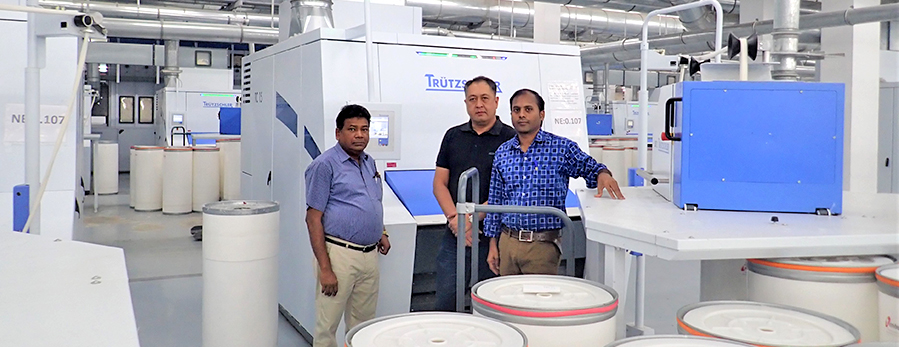
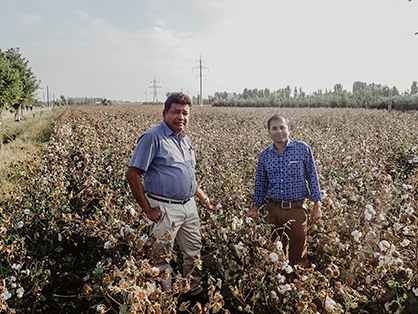
From left to right: Mr. Sekar, Mr. Saidov, Mr. Prakash (c) 2020 Truetzschler
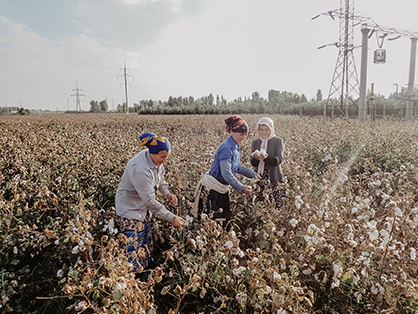
The demand for clothing is increasing worldwide - but the areas for cotton cultivation are limited. Truetzschler contributes significantly to the sustainable use of this valuable raw material with future-oriented technologies that enable the production of high-quality yarns from cotton waste.

Using your own waste - a clever concept

One example of a successful sustainability concept is Bakan Tex in Uzbekistan. The company was founded in Tashkent in 2017 after the government decided to promote the entire value chain around the domestic textile sector. 

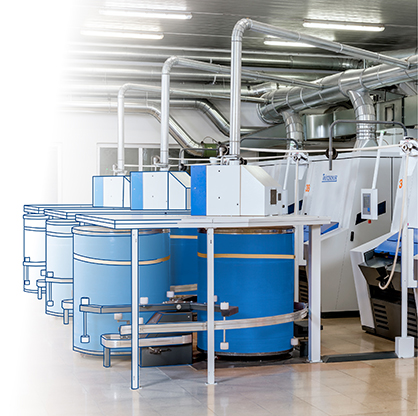
Bakan Tex produces first-class combed ring yarn. In the process, the so-called comber noil, which contains short fibres and neps that are undesirable in high quality combed ring yarn, is combed out at the combers. As the fibres have already passed through the blow room and over the cards, it is a high-quality "waste". Comber noil is a recyclable raw material which is used, for instance, in banknotes or hygiene products. It can also be spun into excellent rotor yarns. This is made possible by shortening the process through the use of Integrated Draw Frames (IDF). To allow processing into a good yarn, the fibre length can be significantly shorter thanks to the IDF. The yarn is of excellent quality even if 100% comber noil has been processed. Until now, this has not been possible without the shortened process. 
(c) 2020 Truetzschler


Interview with FT Textile

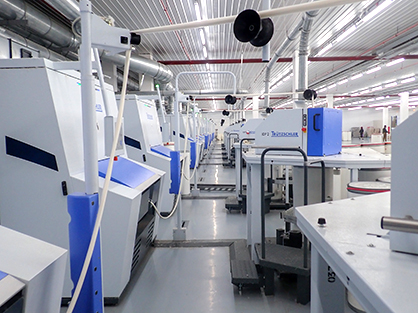
Bakan Tex already uses this great potential. In the subsidiary FT Textile, founded in 2019, a rotor spinning mill which processes the noils of Bakan Tex is operated with 250 employees. 22 IDF 2 produce the feed for 8640 rotors. In addition, the company invested in additional IDF machines and a recycling plant to process blow room and carding waste with the short preparation process.

We spoke to Mr. Sekar Rajam (CEO of FT Textile), Mr. Jaya Prakash (Quality Production Manager) and Mr. Abdukayum Saidov (Director) about the advantages of the shortened process with IDF.

Truetzschler: What made you decide to process your own noils with IDF2? What convinced you of this concept?

FT Textile: At FT Textile we rely on OE spinning. We use 100 % raw cotton, but also cotton mix with waste (comber noil). This process allows excellent processing of short fibres (fibre length 20.6 mm) into yarn.

Truetzschler: What are the main advantages of the shortened process for your spinning mill? Does it open up savings potentials for you?

FT Textile: This process is particularly suitable for us, since we can use short waste fibres produced during combing without any problems, in addition to so-called virgin cotton. This not only saves raw materials, but also space, energy and personnel.
(c) 2020 Truetzschler


Truetzschler: How much yarn do you already produce with the shortened process? And how are your future plans in this respect?
(c) 2020 Truetzschler


FT Textile: So far we have produced an average of 450 tons per card. We produce yarn from Ne 10 to 36. In the near future, we expect to produce at least 1,000 tons of yarn with consistent quality from each card.

Truetzschler: What blending ratio do you use? And how much waste and raw cotton do you blend?

FT Textile: We produce with three blending ratios: The first blend consists of 100 % raw cotton, blend 2 of 80 % cotton and 20 % waste. Blend 3 contains only noils.

Truetzschler: How do you assess the yarn quality? What do your customers say?
(c) 2020 Truetzschler


FT Textile: Excellent! We are extremely satisfied with the quality. We have not yet received any major complaints from our customers.

Truetzschler: For which end products are the yarns produced with the shortened process (IDF2) used?

FT Textile: Our customers mainly come from the knitwear and woven fabric sector.

Truetzschler: In your opinion, what are the ecological advantages of this process?

FT Textile: The most important advantages for us are the significant energy savings and the reduced space requirement. Also important for us is the fact that we need less personnel due to the simplified can transport. 

Truetzschler: How do you assess the future significance of the shortened process?

FT Textile: We are convinced that the shortened process will continue to be important for us.
More News from Truetzschler GmbH & Co. KG

#Spinning

Perfect quality through collaboration: Machinery from Trützschler, Toyota and Murata at Zirve Tekstil

In today’s textile industry, excellence is not achieved by chance – it’s the result of deliberate decisions, technical expertise, and the courage to go beyond conventional paths. The Turkish company Zirve Tekstil has done just that: by combining the best technologies from Trützschler, Toyota and Murata, they’ve created a production setup that delivers outstanding yarn quality – recognized worldwide.

#Spinning

Details matter: How Trützschler cylinder wires boost efficiency in Pakistan’s spinning sector

Pakistan’s textile industry, especially its spinning sector, is the backbone of the national economy and a vibrant hub of innovation. Today’s spinning mills face growing demands for efficiency, quality, and sustainability. From the serene northern valleys to the vibrant port city of Karachi in the south, mills like Suraj Cotton Mills, Liberty, and Nishat Chunian are turning to advanced solutions.

#ITMA Asia + CITME Singapore 2025

T-CAN – Revolutionizing can transport

In virtually all spinning mills, transporting sliver cans is still done manually. Rising labor costs, lack of operators and increasing quality requirements make this a growing challenge. With T-CAN, Trützschler introduces a practical solution: a fully automated can transport system that will be presented live at ITMA ASIA 2025 in Singapore.

#Spinning

Pre-Cleaner CL-X: The future of cotton cleaning

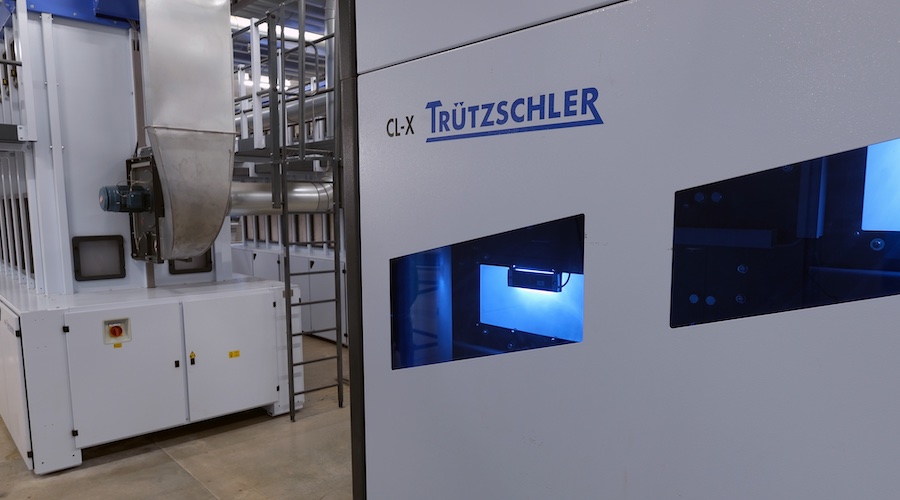
What if the future of cotton cleaning was already here – setting a new standard for cleaning efficiency, productivity and energy savings? That future has a name: CL-X. Since its market launch in 2022, the Pre-Cleaner CL-X has become a true bestseller, proving its value in several hundred customer applications worldwide. Now, new results from Türkiye demonstrate again how the Pre-Cleaner CL-X outperforms the competition.

More News on Spinning

#Techtextil 2026

RETECH showcases high-precision godets for high-performance fiber processing at Techtextil 2026

RETECH designs and manufactures godets and draw frames for heated, ambient and cooled processes, enabling precise heat treatment and consistently high yarn quality for a wide range of polymers and applications, with process temperatures of up to 400 °C for high-performance fibers. The company’s key competence lies in exact and stable temperature and speed control, individually adapted to the specific material and process requirements.

#Spinning

Barmag presents the next generation of POY production – energy-efficient and partial-automated

With POY 2.0, Barmag is introducing a completely redesigned spinning concept that takes the production of partially oriented yarn (POY) to a new level in terms of technology and economy. The solution, which was presented to a selected audience of experts for the first time at ITMA Asia + CITME 2025, was met with great enthusiasm: several yarn producers worldwide immediately expressed their interest in a pilot plant.

#Spinning

Development of bio-based polyethylene fibers for textile applications – BB Engineering partici-pates in the bioPEtex research project

In the German research project bioPEtex, BB Engineering (BBE) is working with other partners to develop textiles made from 100% bio-based polyethylene (PE). The aim is to make use of this poly-mer, which has hardly been used in the chemical fiber industry to date. BBE is contributing its spinning and texturizing expertise and developing the texturing process on an industrial scale. The first promising results are already available – opening up new opportu-nities for sustainable and economically attractive applications in the textile industry.

#Techtextil 2026

Saurer sets new standards at Techtextil 2026

When the international textile industry gathers at Techtextil in Frankfurt from April 21 to 24, Saurer is going to present a powerful solution for the growing demands in the field of technical yarns with the TechnoCorder TC2plus.

Latest News

#Raw Materials

A Powerful Opening: Global thought leaders launch the International Cotton Conference Bremen

The International Cotton Conference Bremen will open on 25 March 2026 in the Parliament building of the Free Hanseatic City of Bremen with a keynote session of exceptional calibre. Distinguished international experts will set the stage for the conference by offering incisive perspectives on the most pressing challenges and the defining trends shaping the future of the global cotton trade. Their insights will span a broad spectrum — from geopolitically driven disruptions affecting global supply chains to the opportunities emerging from innovation-led agriculture capable of supporting a growing world population. Together, these opening keynotes will frame the dialogue of the conference, highlighting both the complexity of today’s market environment and the pathways toward a resilient and forward-looking cotton sector.

#Techtextil 2026

Where performance becomes product strategy: Techtextil 2026 puts functional apparel in the spotlight

The demand for high-performance textile solutions for the apparel industry increases – and with it the sector’s innovative strength. Techtextil 2026 addresses these developments: The Performance Apparel Textiles area (Hall 9.0) presents around 130 exhibitors from 13 countries showcasing innovative materials for workwear, protective clothing, smart fashion, outdoor and sports. Global key players such as Concordia Textiles, Getzner, Kermel, Klopman International and YKK Europe are among the participants. The live show “Performance Apparels on Stage” brings forward-looking wearables on stage and demonstrates textile innovations where they matter most: in action.

#Denim

Jeanologia launches Billy

The new AI extracts precise laser designs from a garment image in minutes, transforming how vintage denim is recreated for production. If Jeanologia’s laser changed the way jeans were made at the end of the last century, its AI now takes the next step: moving from reproducing wear to designing it. / archive photo © 2026 Jeanologia

#INDEX 2026

EDANA unveils nominees for INDEX™26 Awards: Highlighting the next generation of nonwoven excellence

EDANA is proud to unveil the highly anticipated nominees for the INDEX™26 Awards, the nonwoven industry’s highest accolade for technical and sustainable excellence. Out of a record-breaking field of entries, these finalists represent the cutting edge of material science—from bio-based hygiene fibers and PFAS-free protective textiles to revolutionary water-filtration machinery. Each nominee has been selected by a jury of industry experts for their ability to solve critical global challenges, including the transition to a circular economy and the pursuit of enhanced consumer performance.

TOP