[pageLogInLogOut]

#Spinning

The common language of textile quality

It all started as three pages in the German textile magazine Melliand in 1957. Today, the global benchmarks known as USTER® STATISTICS have legendary status throughout the industry as an objective measure of quality. This article marks the 60th anniversary of USTER® STATISTICS – 6 decades of a unique and free benchmarking service for the textile field.

The 60th anniversary of USTER® STATISTICS highlights remarkable increases in quality expectations worldwide

Their development over the decades provides a reliable monitor of how quality demands in textiles have increased. For example, a typical yarn with a 50% quality rating back in 1964 would need to register much better evenness to reach the same level half a century later. This comparison is made using USTER® STATISTICS Percentiles for comparing the quality of spinning mills worldwide. Looking ahead, the ongoing expansion of USTER® STATISTICS will continue with the inclusion of many more quality parameters such as Hairiness Length Classification in the 2018 edition.
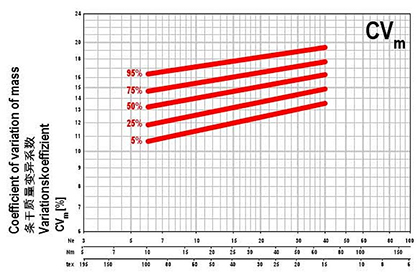
Pic: USTER® STATISTICS graph for yarn evenness, 100% cotton, carded. (c) 2017 Uster

Spinners themselves were behind the origins of USTER® STATISTICS in the 1950s, as they saw the benefit of benchmarking their yarn quality against competitors in other mills. USTER had earlier introduced the first yarn evenness tester in 1948, and was therefore an obvious choice to answer the spinners’ request. This led to the publication of the so-called USTER® STANDARDS, the forerunner of USTER® STATISTICS, which listed only unevenness data as U% and CV figures for carded and combed yarn.

From cotton to blends

Evenness remains one of the essential quality standards for the industry today – although the number of other yarn parameters now measured has grown over time, in line with the launch of further USTER® instruments for yarn quality improvement. By 1997, standards for fibers were added, based on the USTER® AFIS. The statistical data has also become much more comprehensive, extending to take in a wider range of fiber materials, including wool, viscose, polyester and even blends. 

In 1957, USTER® STANDARDS included just three quality parameters, contained in two chapters across only six pages, including six graphs. The latest 2013 edition of USTER® STATISTICS covers 101 quality parameters in 123 chapters, using over 2,500 graphs. “The standards are far more than figures to compare yarn quality around the world,” says Gabriela Peters, Product Manager Yarn Testing within Uster Technologies. “USTER® STATISTICS have become a common language of quality for yarn producers and yarn users.”
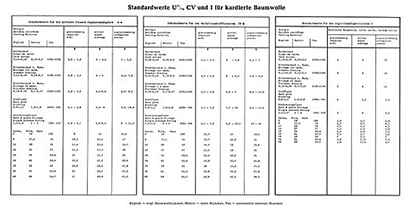
Pic: USTER® STANDARDS published in 1957. (c) 2017 Uster

The famous red lines…

USTER® STATISTICS Percentiles (USP) were introduced in 1965 – and today everybody in the industry recognizes the familiar red lines, indicating values for a 5%, 25%, 50%, 75% and 95% standard. The USP figure is a rating for a particular parameter, based on comparisons with the quality level being produced by mills worldwide.

Today yarns are often spot-market internet purchases. Missing specifications based upon objective values lead to a serious deterioration in the quality of garments or other textile products that is why also leading yarn traders insist on clear specifications for yarns and USTER® STATISTICS offer the references. The famous red lines show their relevance along the textile value chain. USTER® STATISTICS actually bridges the gap between yarn producers and yarn users, enabling them to talk about quality in a way that is understood by all.

The change in evenness

Standards for evenness testing have been available for 60 years and it is interesting to note how much the values behind this standard have improved. The evenness of yarns has become better and better over the long term (see graph). Taking a typical ring-spun yarn of 100% combed cotton, 20 tex (Ne 30), a USP rating of 50% could be achieved in 1964 with a CVm of 15.2. To be at the same level, a similar yarn in 2013 would have required a CVm value of 12.6 (shown by the red line in the graph). This changing requirement is clearly shown by comparing fabrics made from yarn with these parameters (see photos).

Sample A, with a USP 50% value for CVm in 1964, exhibits a much more ‘cloudy’ appearance than Sample B, which would have rated a USP value of 50% for CVm 49 years later. The fabric in Sample A demonstrates that the yarn used would be regarded as much less acceptable under today’s increased quality expectations.

This trend underscores the fact that customers over the years have become more and more demanding about yarn evenness, in tandem with the quality improvements made possible by the technological progress in spinning machinery. At the same time, the evenness testing instrument has become much more sophisticated – with advanced technology and sensors now providing the most accurate testing results. With the essential support of USTER® STATISTICS as a tool for daily testing routines, the latest-generation USTER® TESTER 6 is the ultimate in user-friendly and intelligent quality assurance. Its integration of all test data enables the automatic production of quality reports with a clear presentation of the USP values.

Pic: Graph showing long-term development of yarn evenness from 1964 to 2013. (c) 2017 Uster
Pic: Sample A<br />
Fabric from yarn rated at USP 50% value in 1964. (c) 2017 Uster
Pic: Sample A Fabric from yarn rated at USP 50% value in 1964. (c) 2017 Uster
Pic: Sample B<br />
Fabric from yarn rated at USP 50% value under 2013 standards. (c) 2017 Uster
Pic: Sample B Fabric from yarn rated at USP 50% value under 2013 standards. (c) 2017 Uster


The one and only

What makes USTER® STATISTICS unique is the fact that no other company has attempted to establish its own system of collating and publishing textile quality standards. The Statistics will be continuously developed in the future – with an important addition already planned for the next edition in 2018 to include hairiness length values measured by the new HL sensors, launched with USTER® TESTER 6.

The entire textile chain – yarn producers, their customers downstream, as well as traders and machine manufacturers – acknowledge that USTER® STATISTICS has played a key part in establishing the USTER name as a synonym for quality standards in the textile industry. “I congratulate Uster Technologies on the 60th anniversary of USTER® STATISTICS and I pay tribute to the company’s achievements in setting the standards we all use in our routines,” says S.P. Oswal, Chairman, Vardhaman Textiles Ltd. 

Literally, USTER® STATISTICS are the only way to compare yarn quality objectively – and the textile industry can depend on their continued assistance for the next 60 years and beyond.
More News from Uster Technologies AG

#Spinning

Measure and control the fiber – optimize yarn quality

Producing consistent yarn quality is an everyday challenge – and a very difficult one. Detailed knowledge and understanding of the fiber raw material is absolutely critical to achieving the best possible quality in the yarn. To help spinners, Uster experts have put together guidelines for avoiding yarn irregularity claims, in a special edition of the Uster News Bulletin.

#ITMA Asia + CITME Singapore 2025

Uster presents novelties at ITMA Asia + CITME 2025

There’s news from Uster Technologies to be announced for the industry’s upcoming event in Singapore. The Uster 360Q universe is growing with new products, solutions and services. Innovation developments can also be recorded in the fields of man-made fiber testing and fabric inspection. Uster innovations address the industry’s trending topics as mill management and process control, optimization of delivered fabric quality and yield.

#Spinning

Uster Technologies marks 150 years of empowering quality excellence

Uster Technologies marks 150 years of excellence – a milestone that reflects continuous adaptation to customer needs and industry change. Over the decades, Uster has evolved from manufacturing quality testing instruments into a trusted partner shaping the future of textile production.

#Recycling / Circular Economy

Challenges of making yarn from recycled fibers

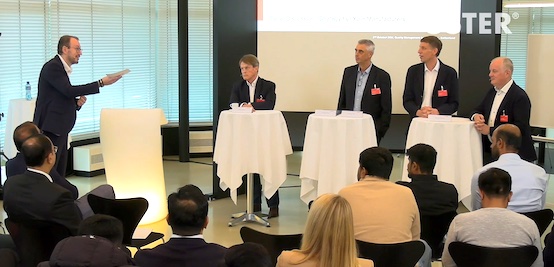
What does it take to spin quality yarn from recycled fibers? Uster Technologies brought textile industry leaders together to discuss the role of technology, data and automation – as well as the current challenges in using recycled raw material. Experts from Rieter, Säntis Textiles, Otto Yarns, and TVU commented on the current situation and looked into the future of spinning in a panel discussion organized at Uster headquarters.

More News on Spinning

#Techtextil 2026

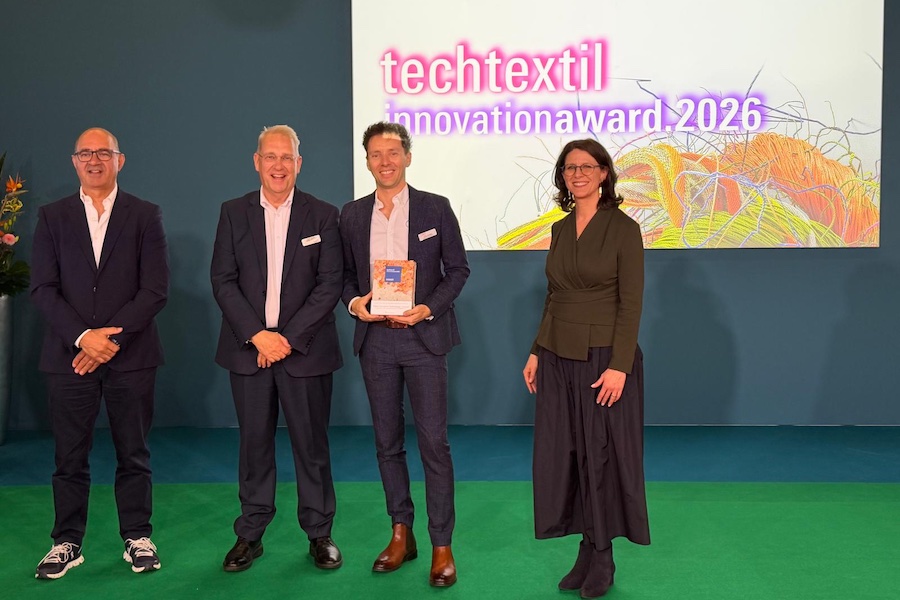
FET’s revolutionary gel spinning system wins Techtextil Innovation Award

FET has received the prestigious Techtextil Innovation Award 2026 in the New Production Technology category. The Techtextil Innovation Award honours outstanding ideas in textile technology, sustainability, AI and the creation of technical textiles, selected by an international jury of experts. Ranging from new materials to new production technologies, this award recognises progressive ideas that are driving forces for numerous industries, such as automotive, medical and construction.

#ITM 2026

Savio Macchine Tessili will exhibit at ITM Istanbul 2026 presenting its flagship technologies

Savio Macchine Tessili will participate in ITM Istanbul 2026 in a corporate booth of Vandewiele Group, showcasing a selection of its most advanced winding and spinning solutions designed to support textile mills in achieving higher efficiency, flexibility and yarn quality. The company will bring to the show three flagship solutions: Proxima Smartconer®, Lybra Smartspinner® and the Phoenix Assembly Winder.

#ITM 2026

Rieter at ITM 2026: Spinning Redefined with Automation and Intelligence

Spinning mills need solutions that deliver stability, efficiency and future-proof performance. Rieter has put together a powerful portfolio for ITM 2026 in Istanbul, Türkiye. These innovations give customers the tools to enhance cost efficiency, improve responsiveness and actively develop their competitive edge. Step-by-step, Rieter is moving closer to its Vision 2027 – the fully automated spinning mill. With each new technology, Rieter enables spinning mills worldwide to operate with greater precision and reliability, ensuring they remain at the forefront of an increasingly demanding global market.

#ITM 2026

Experience Trützschler’s leading fiber processing technologies at ITM 2026

From June 9 to 13, the Trützschler Group will present its latest machinery, service expertise and digital solutions at ITM 2026 in Istanbul, Türkiye. Visitors are invited to explore innovations across Spinning, Card Clothing, and Nonwovens at Hall 7, Booth 714A at the Tüyap Fair Convention and Congress Center. They can experience modern fiber processing with Trützschler!

Latest News

#Nonwovens

Temafa Maschinenfabrik GmbH supplies a complete decortication plant for processing hemp straw to Hanffaser Geiseltal eG

Temafa Maschinenfabrik GmbH, a leading supplier of machinery and plants for fibre processing, has successfully secured an order to supply a complete plant for processing hemp straw to Hanffaser Geiseltal eG, based in Mücheln.

#ITM 2026

Driving sustainable growth in Türkiye through advanced technology and strong partnerships

Heberlein is globally recognised as a leading provider of air interlacing and air texturing jets for synthetic filament yarns. In Türkiye, the brand has built a strong market presence thanks to its close cooperation with its experienced representative Bozok Mümessillik Makina Kimya San. ve Tic. A.Ş. in Istanbul. Together, they support Turkish filament yarn producers with advanced technology, local expertise, and trusted services.

#ITM 2026

Saurer at ITM 2026: Answering markets needs for flexibility

The textile industry is facing unprecedented challenges: geopolitical tensions, natural disasters and pandemics and are changing market conditions overnight. Today, flexibility is no longer an option, but a survival strategy. At the ITM 2026 in Istanbul, Saurer will be demonstrating how modern machine technology delivers flexibility – from bale to yarn – in hall 7 at booth 709 A.

#ITM 2026

Barmag and Neumag showcase innovations across all manmade fiber processes

For the first time, Barmag is presenting itself alongside its new parent company, Rieter: At this year’s ITM in Istanbul, both companies will be represented from June 9 to 13 at the Tüyap Fair Convention and Congress Center in Hall 7, Booth 702B. As a technology leader in the field of chemical fiber equipment, Barmag will showcase its entire portfolio of systems for filament yarn, staple fiber, and nonwoven production, as well as solutions for the networked factory.

TOP