[pageLogInLogOut]

#Smart Textiles

Peugeot drives new revolution in car interior design with Stratasys 3DFashion technology

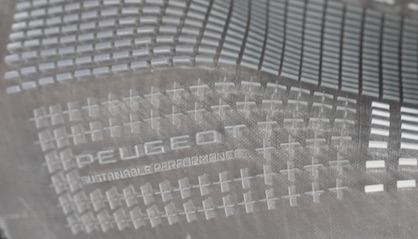
Stratasys Ltd. (Nasdaq: SSYS), a leader in polymer 3D printing solutions, today announced that global automotive manufacturer Peugeot has integrated Stratasys’ innovative 3DFashion™ technology into the interior of its new Inception concept, achieving a level of resolution that would not have been possible with traditional embellishment methods.

“Often, there is a delta between what we imagine and what we can obtain, so it was quite magical to see our idea arrive precisely as envisaged and with a remarkable quality of execution.”

Heralding a new era for the Stellantis-owned Peugeot brand and embodying its vision for future electric vehicles, the Inception concept is the first design manifesto led by the company’s brand design director, Matthias Hossann, and represents a major change for the marque. The car incorporates an interior design described by the company as ‘revolutionary’, and features advanced materials produced exclusively using Stratasys J850™ TechStyle™ 3D printers.

The vehicle interior of the Inception concept is aligned with Peugeot’s new design architecture for electric vehicles. It features a minimalistic cockpit designed to support the car’s overall objective of reinventing the driver experience. Integral to this experience are immersive seats covered with a velvet made from 100% recycled polyester. This velvet extends onto the floor and features stunning 3D patterns created with Stratasys’ 3D printing technology.

SSYS Interior Peugeot Concept Car (c) 2023 Peugeot


“At Peugeot, we always like to combine function with aesthetics,” said Maud Rondot, CMF Designer, Advanced Design Team at Peugeot, the department responsible for the future vision of the Peugeot brand. “Our objective with the Inception concept’s seating area was to modernize the velvet material used and decompartmentalize the design by extending it to also serve as a visually impactful floor mat,” she explained.

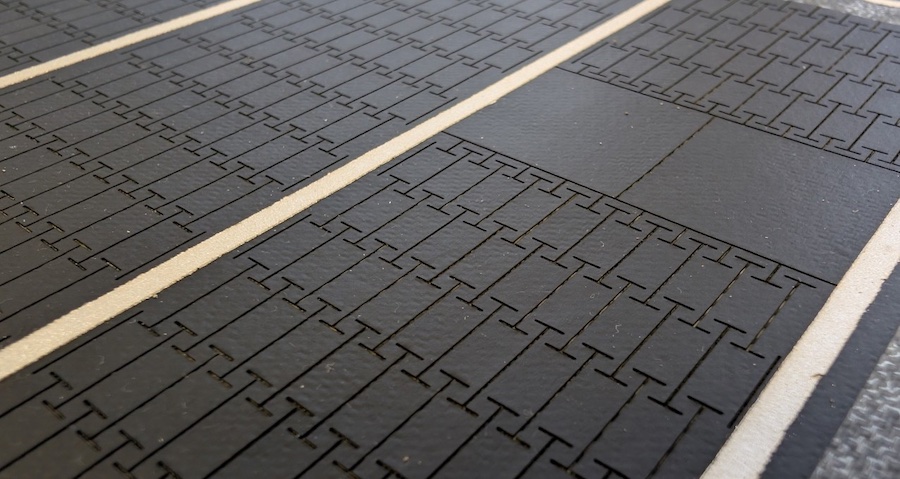
According to Rondot, where the floor area space would typically need to be treated with a protective overlay, the Inception concept instead leverages direct-to-textile 3D printing to deliver a unique coalescence of functionality, texture and aesthetics. She believes this would not have been achievable with other technologies.

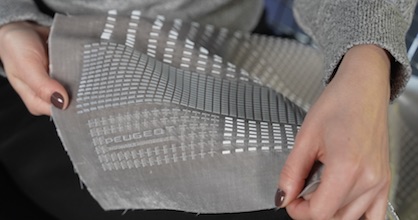
SSYS Peugeot 3DFashion Technology (c) 2023 Peugeot


SSYS Peugeot flexible velvet material (c) 2023 Peugeot


“Although we have access to relatively flat designs with current embellishment methods, it is not possible to build thickness and height. This is why we turned to Stratasys, and it is thanks to the company’s exclusive 3DFashion technology that we could 3D print directly onto the flexible material,” she added. “Often, there is a delta between what we imagine and what we can obtain, so it was quite magical to see our idea arrive precisely as envisaged and with a remarkable quality of execution.”

A fundamental theme of the Inception concept aims to capture the relationship between materials and light, which required the Peugeot Advanced Design team to use materials that would befit the car’s specific look and embody the brand’s vision for future electric vehicles.

To support this move towards new architecture, new space and decompartmentalization, Peugeot worked with single material effects. This saw the team select a metallic shade for the velvet, which is designed both visually and symbolically to play with light and convey something more futuristic, before using the J850 TechStyle 3D printer to create the semi-transparent ‘micro-architectures’.

“Instead of covering the whole stretch of material, it was really advantageous that we could leave the velvet visible,” Rondot added. “3D printing gave us the ability to modify and reprint the files very easily, but also important is its durability and efficiency; indeed, as a technology it doesn’t require molds, which is revolutionary in terms of industrialization.”
More News from TEXDATA International

#Recycling / Circular Economy

textile.4U publishes special edition “Top 100 Textile Recycling Companies 2025”

With a comprehensive 176-page special edition, textile.4U is dedicating its latest issue entirely to one of the most dynamic and influential topics in today’s textile industry: textile recycling. The new issue, published exclusively in high-quality print, presents the Top 100 textile recycling companies researched and selected by TexData – organizations that already play a key role in the transition to circular textiles or are expected to have a significant impact in the near future.

#Recycling / Circular Economy

Responsible Textile Recovery Act of 2024 signed by Governor

Senator Josh Newman (D-Fullerton) is proud to announce that Senate Bill 707 (SB 707), the Responsible Textile Recovery Act of 2024, has been signed into law by the Governor of California, Gavin Newsom. This groundbreaking legislation establishes the country’s first Extended Producer Responsibility (EPR) textile recycling program, marking a significant step forward in the state’s efforts to combat waste and promote sustainability.

#Textiles & Apparel / Garment

Modtissimo promotes sustainability with 28 coordinates in the Green Circle

Modtissimo is proving more and more to be a textile and clothing show that delivers the latest innovations in the area of sustainability, with the iTechStyle Green Circle being the main showcase for companies' creations. In this 60+4 edition, taking place on 12 and 13 September, 28 coordinates will be exhibited in a section organised by CITEVE and curated by Paulo Gomes.

#Europe

The EU and Egypt team up to mobilise private sector investments at Investment Conference and sign a Memorandum of Understanding underpinning €1 billion in macro-financial assistance for Egypt

At the EU-Egypt Investment Conference, co-organised by the EU and the Government of Egypt on 29-30 June, the EU and Egypt are teaming up to intensify private sector investments in Egypt. They are also signing a Memorandum of Understanding (MoU) for the disbursement to Egypt of up to €1 billion in Macro-Financial Assistance.

More News on Smart Textiles

#Research & Development

Catching heart disease early with AI-based sensor system

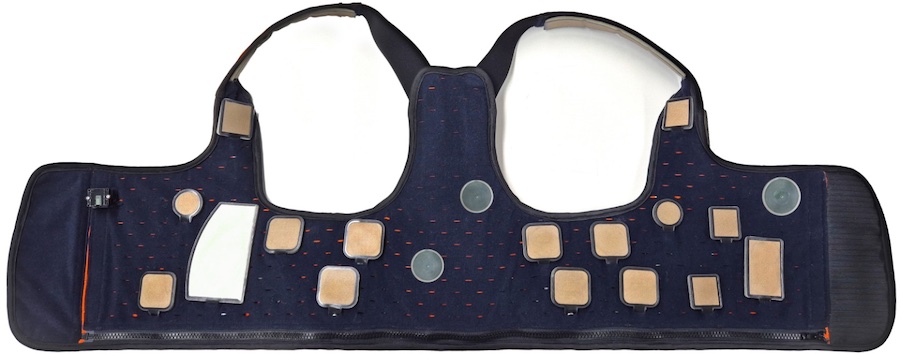
It slips on like a normal vest: Fraunhofer IZM has created a smart sensor system in cooperation with the Charité and the Technical University of Berlin. The vest records a vast array of cardiovascular parameters, which an AI-based system uses to support medical diagnostics and spot potentially dangerous developments.

#Research & Development

Soft interfaces: Textile-integrated light switches, made possible by printable Liquid Metal Ink

A gentle tap on the knitted lampshade is enough to switch on the light. The lamp developed by Fraunhofer IZM in cooperation with WINT Design Lab works with a revolutionary conductive ink. Visitors can find out more and try the lamp themselves at the Berlin Science Week on November 1st and 2nd.

#Smart Textiles

Intelligent textiles for construction, architecture and mobility: Smart Textiles User Forum in Stuttgart

When textiles are equipped with electronic components, conductive yarns and textile sensors, the application possibilities are almost unlimited. These high-tech textiles are a global growth market. In Stuttgart, manufacturers, users and researchers presented amazing examples of applications in construction, architecture and mobility. The appropriate standards ensure quality and safety.

#Smart Textiles

Innovations with smart textiles

The second free online masterclass of the AddTex project will take place on March 5 from 15:30 to approx. 17:00. Industry partners and textile researchers will present the latest innovations in the field of functional and smart textiles.

Latest News

#Spinning

First PA66 spinning plant with EvoQuench successfully commissioned

With the successful commissioning of a multi-digit PA66 spinning line for microfiber yarns, Chinese textile company Shandong Nanshan Fashion Technology Co., Ltd. has added yarn production to its textile value chain.

#Knitting & Hosiery

SHIMA SEIKI returns to ShanghaiTex

Leading flat knitting solutions provider SHIMA SEIKI MFG., LTD. of Wakayama, Japan, together with its Hong Kong and Chinese market subsidiary SHIMA SEIKI (HONG KONG) LTD., will exhibit at the ShanghaiTex 2025 exhibition (Booth No.: Hall N3, Booth A20) held in Shanghai, China this month. This marks the return of SHIMA SEIKI to ShanghaiTex after a 14-year hiatus, its last exhibit at the show having been in 2011.

#Research & Development

Fraunhofer CCPE presents the “Monomaterial Design Set” – Innovative solutions for circular product design

Composite materials made from different types of plastic often extend the lifetime of products but make recycling more difficult in the circular economy. That is why Fraunhofer CCPE has developed the “Monomaterial Design Set”. This new approach helps to reduce the variety of plastics used in durable products and offers circular solutions for designers and product developers.

#Man-Made Fibers

arena introduces renewable LYCRA® EcoMade fiber in its latest swimwear collection

Italian swimwear specialist arena has unveiled a new collection that brings sustainability and performance even closer together. Launched on December 4, the line features swimsuits made from recycled nylon and renewable LYCRA® EcoMade fiber — the first time the bio-based spandex has been used commercially in swimwear.

TOP