[pageLogInLogOut]

#Smart Textiles

Textiles are smarter with Durak SilverPro conductive threads
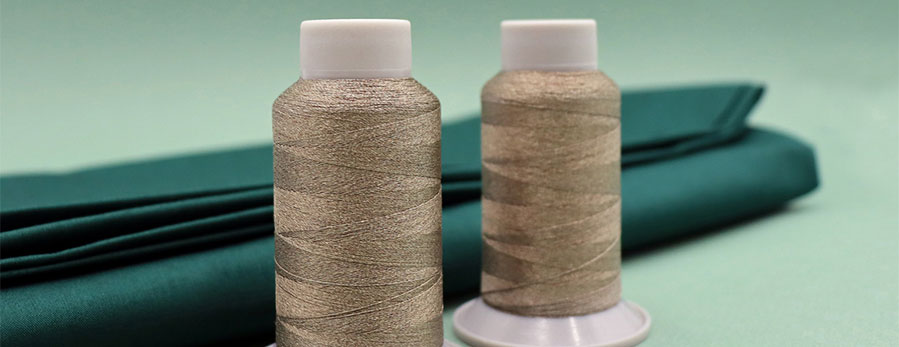
Durak Tekstil inspires smart textile solutions with Durak SilverPro conductive threads, which are developed and launched for various applications ranging from smart textiles to automotive, from safety wear to fashion and home textiles.

Durak Tekstil, one of the leading manufacturers of industrial sewing and embroidery threads, continues to offer innovative solutions to the global market. The company has also become an important solution provider for electronics-based applications such as smart textiles and wearable technologies with its conductive threads. Durak SilverPro 12 and Durak SilverPro 40 conductive threads, which met the market in 2022, can be successfully used in dozens of different smart textile applications from the automotive industry to fashion, home textiles, work and safety wear and medical textiles. 

© 2023 Durak
© 2023 Durak


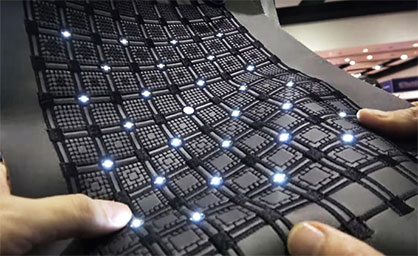
Durak Tekstil Board Member and Marketing Director Yigit Durak said that these threads, providing a certain level of electrical conductivity, make textile surfaces functional. Durak stated that our daily lives have started to change radically thanks to smart textiles and wearable technologies and disclosed: “A lot of information, especially our health and safety data, from calculating the number of steps we take to measuring calories, can now be obtained quickly through smart textile solutions. Advances in software and sensor technologies enable this process and, more importantly, these developments are complemented by conductive threads. Conductive threads carry electrical signals between sensors and actuators, much like veins carry blood through the body, leading to the generation of electronic data. In short, conductive threads are a must for smart textiles.”
© 2023 Durak
© 2023 Durak


Durak mentioned that work on conductive threads started in 2020, and that they conducted extensive technical R&D studies and field examinations for application areas. Stating that the company is moving forward rapidly with its experience in successfully combining conductive material and thread, Durak said: “The conductive material must not lose its properties or break during the spinning process. We managed to achieve the optimum spinning result we wanted with both our advanced production technology and research in the market. We broke new ground in Turkey with our Durak SilverPro 12 and Durak SilverPro 40 conductive threads, which we started to offer to the market in 2022. While different brands in the global market were already in production in this field, we became Turkey’s first local and national manufacturer and quickly started to gain significant advantages.”


Durak SilverPro conductive threads ideal for sewing and embroidery applications

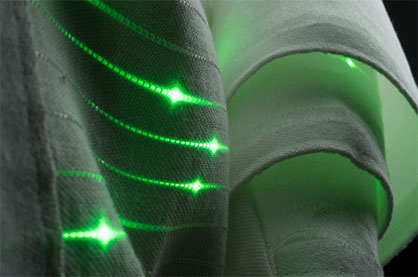
Yigit Durak noted that Durak SilverPro 12 and Durak SilverPro 40 conductive threads are produced in two different thicknesses according to the purpose of use and that both sewing and embroidery processes can be performed with these threads. He continued as follows: “Our Durak SilverPro conductive threads, which we produce from Nylon 6,6 type fiber, have passed the necessary quality, durability, processability and flexibility tests. With its thread counts and bobbin widths, it offers the desired efficiency in sewing and embroidery processes, and with its conductivity, it can apply its technical properties to surfaces such as fabrics, leather and composites. Our Durak SilverPro conductive threads, which prove themselves with fastness levels such as washing and perspiration, can maintain their functional properties for a long time. We are happy to offer the market an innovative product that we are very confident in.”
© 2023 Durak
© 2023 Durak


More comfortable and safe life with smart textiles

Yigit Durak underlined that smart textiles have made a rapid entry into every stage of our lives and will show serious growth in the next decade, and shared the following market information on this subject: “As known, smart textiles have new functions other than apparel, covering and ornamentation properties of traditional textiles. Smart textiles that detect and react to changes in light, heat and pressure both increase the comfort of life and further improve safe living standards. The global smart textile market reached a value of 2.10 billion dollars in 2020, according to market research. The market is expected to grow by 25% annually until 2031 and surpass a value of $23.82 billion. The automotive textiles market is growing rapidly as electric cars, which are rapidly gaining recognition in the market and increasing sales figures, bring with them more digitalization. Automotive textiles, which accounted for a market of 29 billion dollars in 2021, is projected to increase by 3.2% annually until 2030. The share of smart applications in automotive textiles is increasing rapidly in parallel. The need for conductive threads is more important than ever for the realization of smart textile applications, whose use in daily life and industrial areas is increasing day by day. As Durak Tekstil, we offered a new solution to the global industry that is open to development. We will continue to innovate in conductive threads based on feedback from our customers’ applications and the market. When you wear a jacket that measures your body temperature and pulse, you will experience the confidence and comfort of knowing that this data is presented to you through Durak Tekstil threads. Durak Tekstil's conductive threads offer new opportunities in voice transmission and new solutions integrated with LED technology, among other data transmissions.”

Durak announced that they will continue to introduce many new technical threads, especially conductive threads, to the market in 2023 and informed that the share of technical threads in their product portfolio and sales turnover will increase steadily. He concluded his words as follows: “As a well-established brand of 50 years, we will continue to offer the Durak experience to the market with our sustainable, technological and artistic products and strong vision. We focus on the products of the future and prepare our industry for the future with our R&D studies.”



More News from TEXDATA International

#Texprocess 2026

Texprocess 2026: Automation, digitalisation and AI redefine textile processing

Making investment decisions in textile processing has become significantly more demanding. Increasing energy costs, a shortage of skilled labour and ongoing geopolitical uncertainties are compelling companies to focus on technologies that deliver clear gains in efficiency and process reliability. This applies equally to apparel manufacturing and to the processing of technical textiles and high-performance materials. As a result, modernisation initiatives are assessed more carefully – even as the need to upgrade production systems continues to intensify.

#Techtextil 2026

Techtextil 2026: Between innovation pressure & market reality

From 21 to 24 April 2026, Techtextil in Frankfurt am Main will once again become the central meeting point for the international technical textiles and nonwovens industry. Running in parallel, Texprocess will focus on the industrial implementation of textile processing technologies as the leading platform in this field. Together, the two trade fairs form a closely integrated presentation and working platform along the entire textile value chain – from material development to finished applications.

#Techtextil 2026

Between geopolitical pressure and industrial resilience

In this interview, Dr. Janpeter Horn (VDMA) discusses the current challenges facing textile machinery manufacturers, shaped by geopolitical tensions, regulatory developments and subdued investment. He also outlines why innovation strength, integrated solutions and strategic positioning remain key to global competitiveness.

#Texprocess 2026

Between investment restraint and modernization pressure

Texprocess 2026 takes place in a complex market environment shaped by uncertainty and innovation pressure. In this interview, Elgar Straub (VDMA) explains why the trade fair is particularly relevant this year and which technologies are driving efficiency and competitiveness.

More News on Smart Textiles

#Smart Textiles

Covestro, FILK Freiberg, and OUT e.V. develop flexible, conductive polymer smart textile system

As the smart textiles market continues to grow across healthcare, personal protection, sportswear, and automotive applications, developers are seeking new ways to integrate electronic functionality directly into textiles, without the rigidity and complexity of conventional wiring. To address this challenge, FILK Freiberg Institute, an independent research institution with expertise in polymer coatings for textile applications, collaborated with Optotransmitter-Umweltschutz-Technologie (OUT) e.V. The joint project, funded under the German Industrielle Gemeinschaftsforschung (IGF) program of the Bundesministerium für Wirtschaft und Energie (BMWE), focused on developing flexible, conductive polymer surfaces for next-generation smart textiles.

#Research & Development

Catching heart disease early with AI-based sensor system

It slips on like a normal vest: Fraunhofer IZM has created a smart sensor system in cooperation with the Charité and the Technical University of Berlin. The vest records a vast array of cardiovascular parameters, which an AI-based system uses to support medical diagnostics and spot potentially dangerous developments.

#Research & Development

Soft interfaces: Textile-integrated light switches, made possible by printable Liquid Metal Ink

A gentle tap on the knitted lampshade is enough to switch on the light. The lamp developed by Fraunhofer IZM in cooperation with WINT Design Lab works with a revolutionary conductive ink. Visitors can find out more and try the lamp themselves at the Berlin Science Week on November 1st and 2nd.

#Smart Textiles

Intelligent textiles for construction, architecture and mobility: Smart Textiles User Forum in Stuttgart

When textiles are equipped with electronic components, conductive yarns and textile sensors, the application possibilities are almost unlimited. These high-tech textiles are a global growth market. In Stuttgart, manufacturers, users and researchers presented amazing examples of applications in construction, architecture and mobility. The appropriate standards ensure quality and safety.

Latest News

#Textile processing

trinamiX mobile NIR spectroscopy: New applications for the footwear and textile industry

trinamiX GmbH expands its solution portfolio for the circular economy, now enabling the identification of materials used in the footwear and textile industries. With its mobile near-infrared (NIR) spectroscopy solutions, trinamiX supports manufacturers, sorters, recyclers, and brand owners in reliably identifying materials and improving transparency across increasingly complex value chains.

#Sustainability

bluesign technologies introduces bluepass

bluesign technologies ag (www.bluesign.com) today announces the launch of bluepass, a new certification mark and product labeling system created to deliver clear, substantiated, and verifiable sustainability claims at scale.

#Texprocess 2026

Texprocess 2026: Style3D | ASSYST showcases AI, 3D, 2D and automation and meets strong industry response

Four days, countless discussions and a clear signal from the industry: the future of fashion is digital and AI-driven. At Texprocess 2026, Style3D | ASSYST demonstrated how AI, 3D and automation are already fundamentally transforming processes from design to production.

#Dyeing, Drying, Finishing

Smart Quality Control for Technical Textiles

In the end, what matters is the result: a filter that performs reliably, a membrane that remains stable in storm conditions, a composite material with precisely defined properties. But the path to achieving this is demanding. In the production of technical textiles, numerous parameters interact – and even the smallest deviations can have major consequences.

TOP