[pageLogInLogOut]

#Smart Textiles

ASCENT+ access programme launches a new phase to become the powerhouse of researchers and innovators in nanoelectronics in Europe

ASCENT+ mobilises an unprecedented network of knowledge and investment to open access to key European infrastructures and enable academic and industry researchers to address emerging challenges in Nanoelectronics and to accelerate innovation path-finding.

Building on previous success, and with an additional EU investment of €10m, ASCENT+ brings together 15 partners to make world-class facilities available and to foster the Nanoelectronics community. ASCENT+ offers an extensive portfolio to access state-of-the-art processing, modelling and data sets, metrology and characterisation, and devices and test structures for Nanoelectronics. As such, it significantly advances the first phase of the open access programme (ASCENT https://www.ascent.network/) which delivered 100 access projects to researchers from 30 countries across the global research community over the last four years and built a community of over 400 researchers.

ASCENT+ integrates a unique research infrastructure with outstanding credentials. The partners’ facilities at CEA-Leti (FR), Fraunhofer Mikroelekronik (DE), imec (BE), INL (PT/ES) and Tyndall (IE) combine research infrastructure and expertise representing over €2.5 billion of investment and several millennia of accumulated knowledge.

ASCENT+ also includes CNRS (FR), Universiteit Gent (BE), TU Bergakademie Freiberg (DE), JKU (AT) and the University of Padova (IT) as academic partners to advance the project’s offering and further stimulate the user community to bridge the gap between scientific exploration and development of proof-of-concept technologies. This will fast-track the development of next generation information processing devices.

ASCENT+ will grow a first-class research and innovation network through the participation of Silicon Europe Alliance members: DSP Valley (BE), MIDAS (IE), Minalogic (FR) and Silicon Saxony (DE) as well as the SiNANO Institute (FR), reaching out to over 3,700 members.


Giorgos Fagas, ASCENT+ lead and Head of EU Programmes at Tyndall National Institute said “The next era in Nanoelectronics is driven by demonstrations of: (i) quantum advantage using solid-state platforms; (ii) low-power, energy-efficient, high-performance computing based on disruptive devices; and (iii) increased functionality through advanced integration of a diverse range of materials and innovative technologies. ASCENT+ offers an unparalleled access opportunity to users, empowering them to respond to these new problems and to advance knowledge and technology through generating novel results and nurturing talent in their own labs.”

ASCENT+ presents a unique opportunity for Europe to regain global leadership in Nanoelectronics at a pivotal time as the horizon broadens beyond Moore’s law.

This project has received funding from the European Union’s Horizon 2020 research and innovation programme under Grant Agreement No. 871130.
More News from TEXDATA International

#ITM 2026

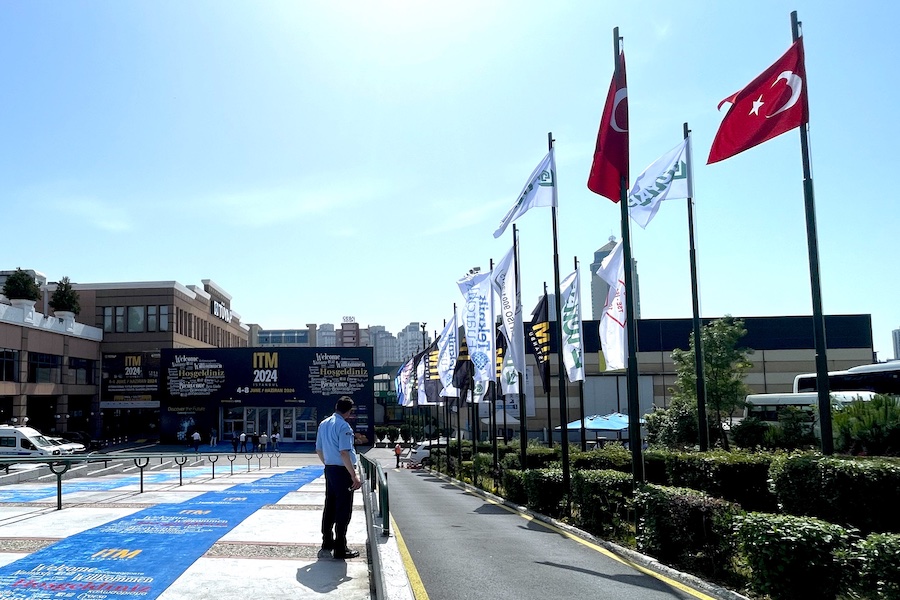
ITM 2026: The new geography of textile production

New production hubs are emerging across North Africa and Central Asia, while Türkiye is accelerating its transformation toward higher-value, technology-driven and more sustainable textile manufacturing.

#Research & Development

“Production is a product”

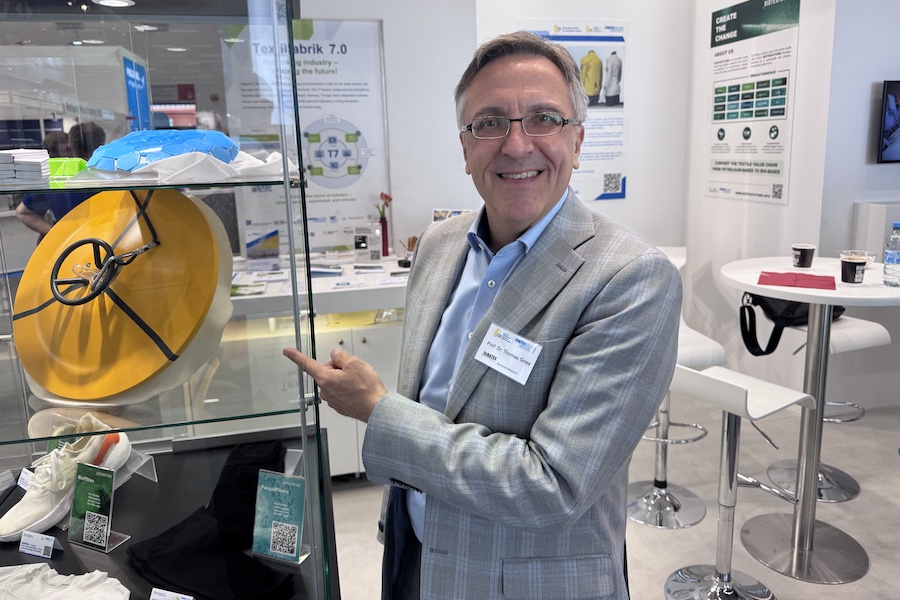
From technical textiles and AI-driven robotics to the limitations of textile circularity: Professor Dr Thomas Gries looks back on more than two decades of development at ITA Aachen. In the interview, he explains why production technology remains a decisive success factor, discusses international collaborations and innovation ecosystems, and shares his views on the transformation of production landscapes and the challenges facing an increasingly regulated industry.

#Knitting & Hosiery

“We need to move away from the price trap and return to a value-driven mindset.”

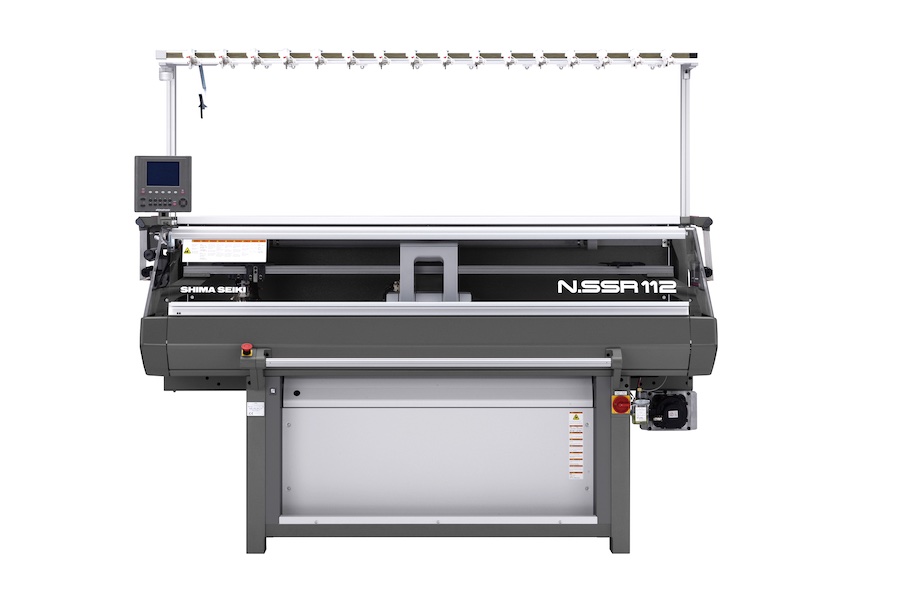
With its new Textile Innovation Center, KARL MAYER is sending a strong signal for innovation, collaboration, and the future of textile applications. In this interview, Karl Josef Mayer discusses new opportunities in warp knitting, the processing of staple fibres, recycling, the changing role of machinery manufacturers, and why the textile industry must once again focus more strongly on the value of textiles. by Oliver Schmidt

#Associations

“Innovation, resilience and international experience remain the great strengths of the Swiss textile machinery industry”

Geopolitical uncertainty, growing competitive pressure from China, new free trade agreements and the shift towards a circular economy are currently reshaping the global textile industry. In this interview, Cornelia Buchwalder discusses the current mood within the Swiss textile machinery sector, the industry’s distinctive innovative strength, new market opportunities in India and Asia, and the technological trends that could shape the upcoming trade fair cycle leading up to ITMA 2027.

More News on Smart Textiles

#Smart Textiles

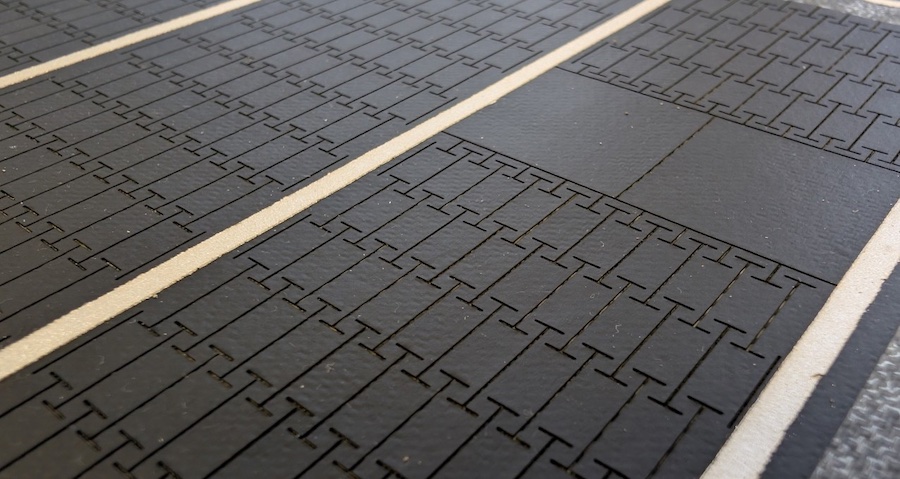
Covestro, FILK Freiberg, and OUT e.V. develop flexible, conductive polymer smart textile system

As the smart textiles market continues to grow across healthcare, personal protection, sportswear, and automotive applications, developers are seeking new ways to integrate electronic functionality directly into textiles, without the rigidity and complexity of conventional wiring. To address this challenge, FILK Freiberg Institute, an independent research institution with expertise in polymer coatings for textile applications, collaborated with Optotransmitter-Umweltschutz-Technologie (OUT) e.V. The joint project, funded under the German Industrielle Gemeinschaftsforschung (IGF) program of the Bundesministerium für Wirtschaft und Energie (BMWE), focused on developing flexible, conductive polymer surfaces for next-generation smart textiles.

#Research & Development

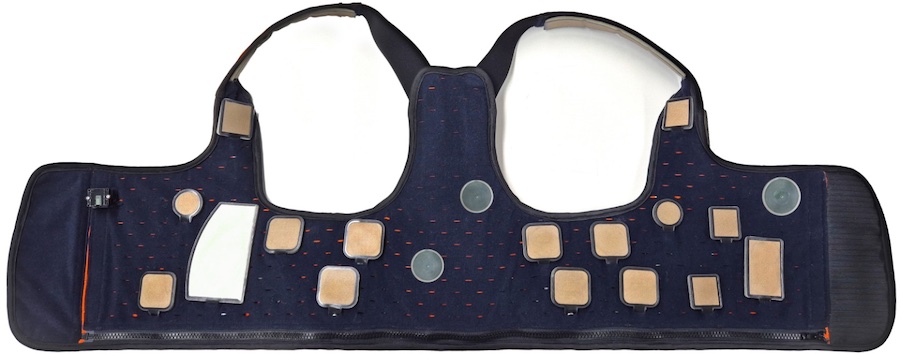
Catching heart disease early with AI-based sensor system

It slips on like a normal vest: Fraunhofer IZM has created a smart sensor system in cooperation with the Charité and the Technical University of Berlin. The vest records a vast array of cardiovascular parameters, which an AI-based system uses to support medical diagnostics and spot potentially dangerous developments.

#Research & Development

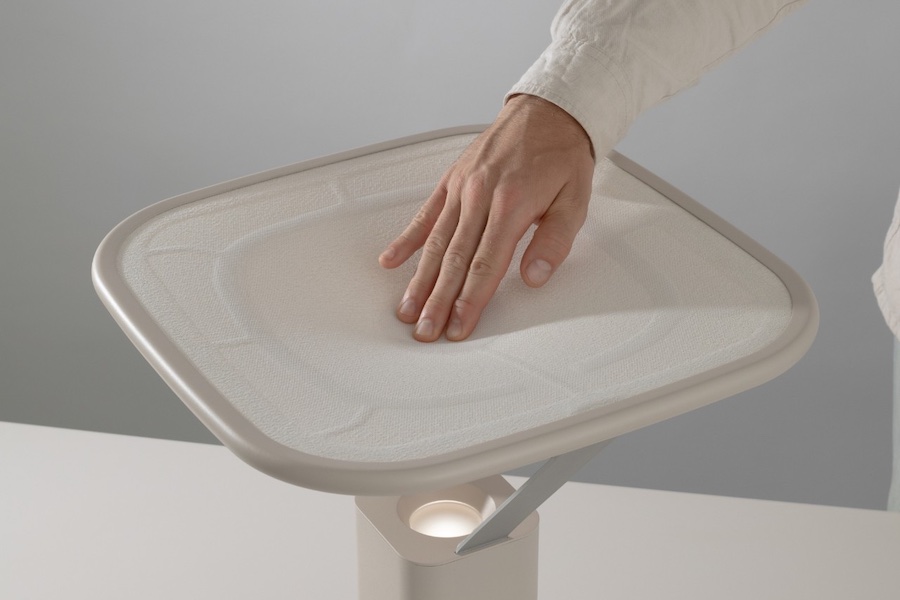
Soft interfaces: Textile-integrated light switches, made possible by printable Liquid Metal Ink

A gentle tap on the knitted lampshade is enough to switch on the light. The lamp developed by Fraunhofer IZM in cooperation with WINT Design Lab works with a revolutionary conductive ink. Visitors can find out more and try the lamp themselves at the Berlin Science Week on November 1st and 2nd.

#Smart Textiles

Intelligent textiles for construction, architecture and mobility: Smart Textiles User Forum in Stuttgart

When textiles are equipped with electronic components, conductive yarns and textile sensors, the application possibilities are almost unlimited. These high-tech textiles are a global growth market. In Stuttgart, manufacturers, users and researchers presented amazing examples of applications in construction, architecture and mobility. The appropriate standards ensure quality and safety.

Latest News

#Raw Materials

Better Cotton Initiative welcomes new and returning Council members

The Better Cotton Initiative (BCI) has confirmed a series of appointments and reappointments to its Council, the multistakeholder board responsible for BCI’s strategic direction.

#Man-Made Fibers

DYNEEMA® and NP Aerospace advance personal protection for military servicewomen

Dyneema®, owned by Avient Corporation, an innovator of materials solutions, is supplying its high-performance unidirectional (UD) materials to world-leading armor manufacturer NP Aerospace, enabling the production of armor systems designed specifically to fit the female body. With 2,000 new armor systems, including 4,000 plates, made in the United Kingdom (UK) and delivered in June 2026, this collaboration addresses a long-standing lack of high-quality personal protection specially built for female defense and security personnel.

#Man-Made Fibers

Textile Exchange publishes comprehensive polyester LCA study

Textile Exchange has released a new Life Cycle Assessment (LCA) study on polyester, providing detailed data on the environmental impacts of both virgin and recycled polyester production. The study aims to strengthen understanding across the fashion, textile and apparel industries and support more informed decision-making regarding polyester sourcing and production.

#Textiles & Apparel / Garment

Autopsy, the new trend book by Texworld Apparel Sourcing Paris, deciphers the fractures of our time through 12 creative signals

Presented during Texworld Apparel Sourcing Paris, from August 31 to September 2, 2026, at the Paris-Le Bourget Exhibition Center, Autopsy offers a reinterpretation of the contours of fashion in a world undergoing profound transformation, balancing radical introspection and sensitive renewal.

TOP