[pageLogInLogOut]

#Retail & Brands

PUMA’s materials strategy receives top marks in the Material Change Index by Textile Exchange

Sports company PUMA has received the highest recognition for its materials strategy in the Material Change Index compiled by global non-profit organization Textile Exchange.
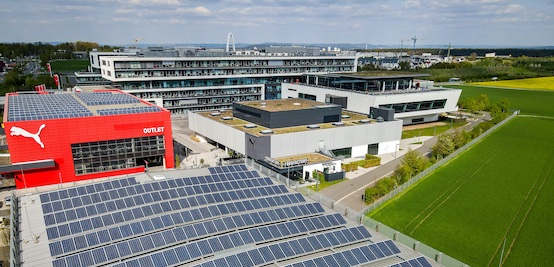
PUMA Headquarters Germany Herzogenaurach (Photo: Business Wire)


“We know how important our choice of product materials is, when we want to reduce our carbon footprint and lessen our environmental impact”

Out of hundreds of companies examined, PUMA was amongst 11 in 2024 to be ranked in the fourth and highest “Leading” tier. Companies with this distinction showed an integrated materials strategy aligned with global goals, disclosed climate goals and targets and made progress towards a circular use of materials, Textile Exchange said. This year’s result is one step up from PUMA’s inclusion in the second-highest “Scaling” tier in 2023.

“We know how important our choice of product materials is, when we want to reduce our carbon footprint and lessen our environmental impact,” said Anne Laure Descours, PUMA’s Chief Sourcing Officer. “We are very happy to be ranked as ‘Leading’ in this years’ index and we will take it as an opportunity to further strengthen our materials strategy.”

PUMA has a 2025 target of making 9 out of 10 products with materials that are classified as preferred fibres by Textile Exchange or which originate from certified sources. In 2023, this was already the case for 8 out of 10 products. In 2023, 99.7% of all leather was sourced from Leather Working Group-certified tanneries and 99.2% of all cotton was certified or recycled as was 99.4% of all paper and cardboard packaging.

Almost 65% of the polyester used for PUMA’s apparel and accessories in 2023 came from recycled materials and the company also started to scale up the use of recycled cotton. In 2024 PUMA announced that millions of football jerseys had been made with textile waste through its RE:FIBRE recycling initiative.

The Material Change Index is the largest peer-to-peer comparison initiative in the industry and aims to help track the sector’s progress in fibre and materials sourcing, strategy and the circular transition. The aim of the organization is to help the fashion industry achieve a 45% reduction in greenhouse gases from raw material production by 2030.


More News from PUMA

More News on Retail & Brands

#Recycling / Circular Economy

Recover™ secures multi-year recycled cotton agreement with H&M

Recover™ has signed a multi-year agreement with H&M to support the integration of its recycled cotton fiber, RCotton, for use in H&M’s products. Since early 2024, H&M and Recover™ have collaborated on product development, which now enables scaled commercial introduction of Recover™ mechanically recycled cotton into H&M’s collections.

#Sustainability

GORE-TEX® KIDSWEAR launches innovative membership scheme for kids’ jackets

With its revolutionary new membership model, GORE-TEX® Kidswear now offers families a simple, flexible and sustainable way of kitting out their children in top-quality jackets. It is aimed at the parents of children aged between five and ten and kicks off with a choice of functional winter jackets.

#Sustainability

H&M Foundation funds pioneering initiative to build the factories of the future

The H&M Foundation is committing SEK 53 million (approx. EUR 5 million) towards Future Forward Factories, a five-year initiative led by Fashion for Good, to address fashion’s most polluting stage: tier 2 textile processing.

#Natural Fibers

Better Cotton Initiative marks World Cotton Day with launch of innovative product label

The Better Cotton Initiative (BCI) has launched an innovative product label for the fashion and textile sectors which allows retailer and brand members to provide consumers with greater clarity about the origin and percentage of BCI Cotton in their products.

Latest News

#Techtextil 2026

Smart sensors, smart savings - Reducing energy and cost in textile finishing

As energy prices, sustainability requirements and quality expectations continue to rise, manufacturers of technical textiles face increasing pressure to optimize efficiency while ensuring process reliability. At the same time, skilled labor shortages require production systems that are intuitive, automated and easy to manage. PLEVA addresses these challenges with robust, maintenance-friendly sensor technologies combined with intelligent process control.

#Techtextil 2026

DIENES at Techtextil 2026: Flexible pilot lines for bio-based fiber development

The growing relevance of bio-based materials in technical textiles is accompanied by increasing demands for reproducibility, high-quality data, and scalable process routes. Especially when working with cellulose and its derivatives, chitosan, lignin-based approaches, or bio-based PAN as a carbon-fiber precursor, R&D teams face variable feedstock quality, tighter process windows, and the need for reliable comparability across trials. This calls for flexible, data-driven experimental setups that can be reconfigured efficiently when recipes, solvents, and raw-material batches change.

#Texprocess 2026

Gunold showcases embroidery product range and services at Texprocess

At Texprocess 2026, GUNOLD will present numerous hands-on examples related to embroidery in Hall 8, Booth E20. The focus is on creative embroidery designs as well as the extensive product range of threads, nonwovens, and accessories for embroidery and embellishment. “Trade visitors can once again look forward to many new and creative embroidery designs. Of course, we will also showcase the matching products required to bring these ideas to life,” announces Marketing Manager Stephan Gunold.

#Nonwovens

EDANA and more than 70 industry organisations call for consistent exemptions in EU packaging regulation

EDANA, together with more than 70 industry associations and organisations, has issued a joint statement commenting on the European Commission’s Delegated Act under Article 29 of the Packaging and Packaging Waste Regulation (PPWR).

TOP