[pageLogInLogOut]

#Research & Development

High-performance elastomers and plasma polymer coatings to replace fluoropolymers in technical applications: new Fraunhofer project
Users of poly- and perfluorinated alkyl compounds (PFAS), also known as "forever chemicals", are under pressure due to regulatory proposals from the European Chemicals Agency (ECHA). This also affects the use of fluoroelastomers, whose economic significance is enormous. Fraunhofer experts initiated the "HATE-Fluor" project at the beginning of February. Together, they want to develop high-performance elastomer compounds to replace fluoropolymers in certain technical applications.
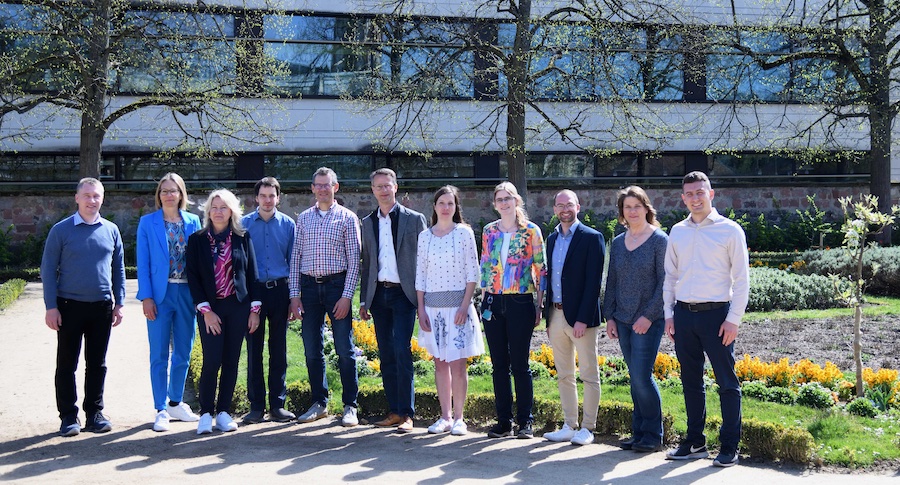
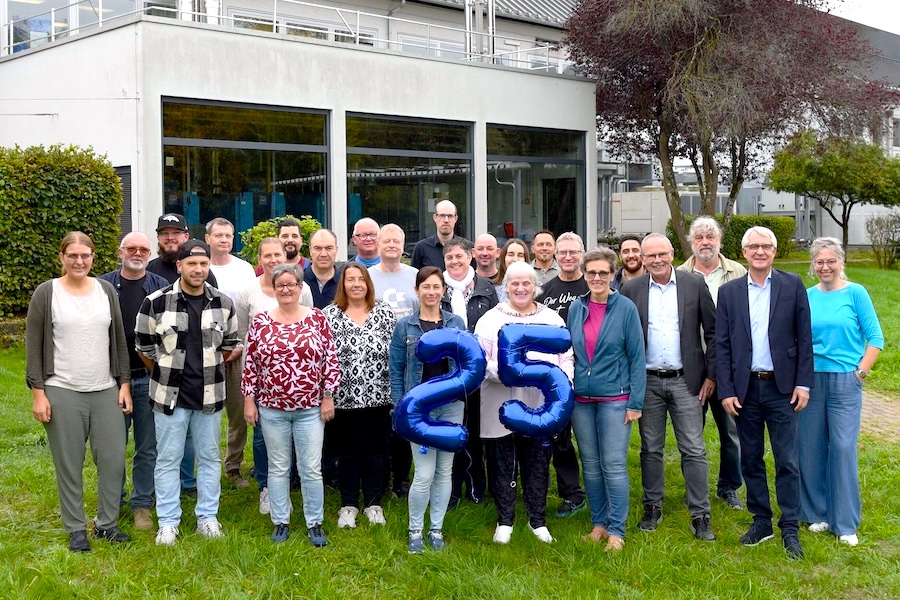
Kick-off: The Fraunhofer project team and the industry advisory board of
Kick-off: The Fraunhofer project team and the industry advisory board of "HATE-Fluor" at the first meeting on Tuesday, April 8, 2025 © Fraunhofer IFAM


Various industries can benefit from this, including manufacturers of semi-finished and finished parts as well as companies in mechanical engineering industry, medical engineering, clean room and semiconductor technology, chemical process technology and electrical applications.

Many companies are looking for alternatives to poly- and perfluorinated alkyl compounds (PFAS), as their possible uses in the future are uncertain and voluntary commitments are expected. PFAS are found in everyday products such as coated pans, pizza boxes and outdoor jackets, as well as in medical engineering, heat pumps and batteries. While there are already fluorine-free substitutes for some everyday applications, there is a great need for new individual solutions to replace fluoropolymers for technical applications that have to withstand extreme conditions

PFAS replacement: coated elastomers and customizable modular solutions

In the newly initiated "HATE-Fluor" project, teams of experts at the Fraunhofer Institute for Structural Durability and System Reliability LBF and the Fraunhofer Institute for Manufacturing Technology and Advanced Materials IFAM will develop fluorine-free coated elastomers and offer customizable modular solutions to meet the growing market demand. The solution comprises three main steps: improving the thermal stability of fluorine-free elastomers with novel antioxidants, producing customized elastomer formulations and developing a coating system to protect the elastomer from oxidative and chemical attack.

The modular structure of this system, consisting of paint and plasma coatings, is intended to cover a broad spectrum in the section of fluorine alternative seals. The target properties are determined by the areas of application of the fluoroelastomers that are being replaced in the project.

Bundled Fraunhofer expertise

In the "HATE-Fluor" project, the Fraunhofer Institute for Structural Durability and System Reliability LBF is concentrating on the development of high-performance elastomers as a replacement for fluoropolymers in technical applications. One focus is on improving the thermal and thermo-oxidative stability of fluorine-free elastomers using innovative antioxidants. In addition, application-optimized elastomer formulations are being developed to ensure maximum resistance and optimum adhesion. This is complemented by the formulation of a coating system for the elastomers. The latter is being developed at the Fraunhofer Institute for Manufacturing Technology and Advanced Materials IFAM to protect the material from oxidative attack and chemical degradation.

Fraunhofer IFAM is also working within the project on coatings for these elastomers to improve their friction reduction and barrier properties. A particular focus is on the development of polyimide coatings in combination with layered silicates that prevent the permeation of harmful gases and moisture. These coatings are used in particular for high-performance electronics and other demanding applications. In addition, the modification of the layered silicates is being investigated to reduce the permeation of water vapor and oxygen through the coating by up to 99%. The application of these coatings shows significantly reduced ageing and prevents dendrite growth as a result of exposure to harmful gases.

The Fraunhofer institutes LBF and IFAM are combining their expertise to develop new solutions and application-ready technologies. Both institutes already have extensive expertise in PFAS substitution thanks to many years of development and project work. The "HATE-Fluor" project is funded by the Fraunhofer-Gesellschaft as part of the PREPARE program and will run for three years.

More News from Fraunhofer Institute for Structural Durability and System Reliability LBF

More News on Research & Development

#Research & Development

The region of renewable raw materials: Central German Alliance for Bioplastics

The development of sustainable plastic solutions is rapidly gaining importance in light of global environ- mental pollution, dwindling fossil resources and ambitious climate protection targets. As part of the re- gional alliance RUBIO, which brings together 18 partners from central Germany and the Berlin-Branden- burg area, the bio-based and biodegradable plastic polybutylene succinate (PBS) was comprehensively investigated, starting with the raw material, through the manufacturing process, to industrial application.

#Nonwoven machines

Cooperation in the field of meltblown laboratory technology

The Nonwoven Institute (NWI) at North Carolina State University and Oerlikon Nonwoven will be collaborating in the field of meltblown laboratory technology in the future. This was announced by Professor Raoul Farer, Executive Deputy Director of the NWI and Professor at the Wilson College of Textiles at North Carolina State University, and Dr. Ingo Mählmann, Sales Director Nonwoven at Oerlikon Neumag, during this year's ITMA Asia and CITME in Singapore.

#Recycling / Circular Economy

European research project addresses textile waste through integrated recycling technologies

A major European research initiative coordinated by Fraunhofer UMSICHT has been launched to develop integrated solutions for textile waste recycling. The AUTOLOOP project aims to create a comprehensive system that could process 1.24 million tonnes of textile waste annually by 2050, whilst potentially creating over 130,000 green jobs across the EU. This project aims to develop, test and integrate automated sorting, tracing, and closed-loop recycling technologies for polyester-based textiles (NRT), addressing the pressing challenge of textile waste management.

#Research & Development

Feasibility study shows potential to convert textile waste into PHB bioplastic

Textile waste could serve as a valuable source of raw materials for sustainable plastics in the future, according to the joint TexPHB feasibility study conducted by the Fraunhofer Institute for Applied Polymer Research IAP, Beneficial Design Institute GmbH and matterr GmbH. The study will be presented to the public for the first time at a network meeting on 25 November 2025 at the State Chancellery in Potsdam.

Latest News

#Recycling / Circular Economy

Advanced Recycling Conference 2025 fuels innovation across key waste streams

The Advanced Recycling Conference (ARC) 2025 brought together nearly 220 experts from 28 countries to spotlight pioneering advancements and foster industry collaboration in recycling across diverse waste streams including plastics, textiles, automotive and other materials.

#Dyeing, Drying, Finishing

Navis TubeTex announces U.S. partnership with Icomatex

Navis TubeTex, a global leader in advanced dyeing and finishing machinery solutions, is pleased to announce a new partnership with Icomatex (www.icomatex.com), a respected European manufacturer of high-quality stenters and textile finishing equipment. Under this agreement, Navis TubeTex will exclusively represent the Icomatex stenter line in the United States.

#Recycling / Circular Economy

ADVANSA launches ADVA®tex: A new step toward textile-to-textile recycling

ADVANSA has introduced ADVA®tex, a new filling fibre made entirely from recycled pre-consumer textile waste, positioning the material as a significant step forward in textile-to-textile (T2T) recycling. The fibre is designed for use in duvets, pillows, mattresses, and furniture applications and is available in three versions.

#Knitting & Hosiery

KARL MAYER celebrates 35 years of EL pattern drive

KARL MAYER is celebrating an anniversary this year: on 30 November 1990, the first warp knitting machine with electronic guide bar control, the KS 4 EL, was delivered – another milestone for patterning. As early as 1980, the SU gearbox with the MRS42SU had initiated the transition from mechanical chains to digital data.

TOP