[pageLogInLogOut]

#Research & Development

Hohenstein and Under Armour present test kit for textile microfibre shedding
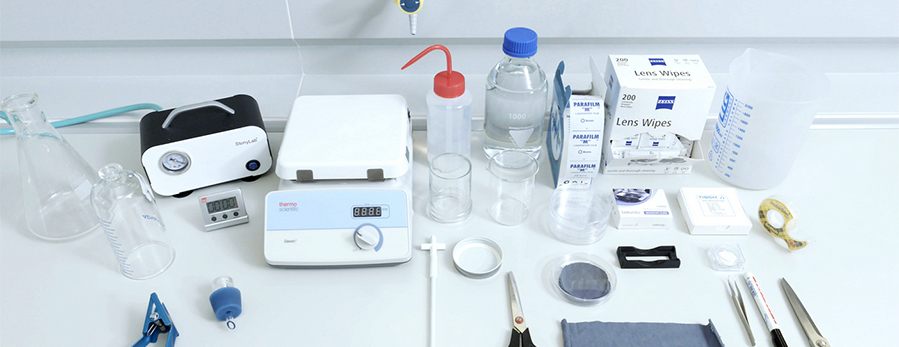
For the test, the textiles are cut into round pieces and stirred by magnetic mixers in a glass of liquid. After this process, the fibers are filtered and visually assessed. ©Hohenstein
In cooperation with testing provider Hohenstein, Under Armour is launching a new fiber-shed test kit. It will help textile companies along the supply chain to develop lower shed materials. The companies can use the test kit on their own or commission Hohenstein to test in the lab.

During the production, wear and laundering of synthetic and natural fabrics, fiber shedding occurs in varying degrees. Hohenstein and Under Armour expect that their test method will help the industry better understand and reduce its contribution to the microfiber problem.

“Until now, integrating fiber-shed testing into industry research and development activities has required a significant time and cost investment,” said Kyle Blakely, Senior Vice President of Innovation for Under Armour. “At Under Armour, we believe intervening early to mitigate shedding is critical, which is why our test method is designed to specifically address these time and cost barriers.”

"We are proud to support Under Armour and its suppliers with neutral, third-party testing and technical advice. As a leading research and testing lab for textile fiber release, this new method perfectly complements our current portfolio," emphasizes Dr Timo Hammer, CEO at Hohenstein.


The kit is a one-off purchase, after which users can buy additional materials from project partner James Heal. By using the new kit, Under Armour can reliably assess the quality and shed rate of the materials from suppliers.

For Hohenstein customers, the test kit is a useful addition to their microplastics testing. It is a quick and relatively inexpensive preliminary test that ensures better early-stage results for the end product.

A Hohenstein Academy video takes users through the process step by step to ensure accurate results.

https://www.hohenstein-academy.com/en/e-learning-videos/seminar-detail/show/under-armour


More News from Hohenstein Institute

#Textiles & Apparel / Garment

Global size study for brands and retailers to optimize fit and market coverage

Hohenstein Apparel Fit Solutions, a global leader in apparel fit, sizing, and product development, today announces the launch of its Global Size Study, a new initiative designed to equip brands to better understand and serve their target consumers through more accurate, market-relevant sizing.

#Sustainability

A new standard to combat plastic waste in forests

With DIN SPEC 35808 “Tree Shelter for Forestry Applications,” the testing and research service provider Hohenstein, in collaboration with Rottenburg University of Forestry, as well as forestry authorities and industry partners, has established a clear framework for bio-based and fully biodegradable tree shelters. The pre-standard defines requirements and practical testing methods designed to reduce plastic waste in forests and strengthen the long-term protection of soil and the environment.

#Research & Development

Hohenstein publishes 2025 Sustainability Report

The testing and research service provider Hohenstein has published its latest sustainability report, outlining key progress and strategic initiatives. The report focuses on ambitious CO₂ reduction targets, the company’s new mission statement and the systematic expansion of sustainable services for customers worldwide.

#Research & Development

New DIN SPEC assesses environmental impact of textile fragments in soil

Textile products made from synthetic fibres, finished fabrics or dyed materials release fibre fragments into the environment at every stage of their life cycle. With the new DIN SPEC 19296, Hohenstein has developed a standardised testing method to analyse how these fragments behave in soil under natural conditions. Until now, little was known about their environmental behaviour or potential ecological effects once released.

More News on Research & Development

#Research & Development

“Production is a product”

From technical textiles and AI-driven robotics to the limitations of textile circularity: Professor Dr Thomas Gries looks back on more than two decades of development at ITA Aachen. In the interview, he explains why production technology remains a decisive success factor, discusses international collaborations and innovation ecosystems, and shares his views on the transformation of production landscapes and the challenges facing an increasingly regulated industry.

#Research & Development

TCLF: Resilient value chains in times of crises

The textiles, clothing, leather and footwear (TCLF) industry was at the centre of the webinar “Resilient value chains in times of crises”, which took place on 28 April 2026. Global supply chains continue to face increasing pressure, raw material dependencies are growing and economic uncertainties are affecting the entire sector.

#Research & Development

Textile climate control system in workwear – exhibition at the 2026 SME Innovation Day!

Conventional protective workwear often reaches its limits during strenuous physical activity. In particular, the transport of sweat and excess body heat poses a problem. The German Institutes of Textile and Fiber Research (DITF) conducted research on flow-optimized, air-conducting textile structures that enable targeted climate control directly on the body. These structures can be integrated straight into protective work garments. The textile climate control system supports the body’s natural thermoregulation. This contributes to improved workplace safety and comfort.

#Research & Development

Elastic yarns to become more recyclable and environmentally friendly in future

On 29 April 2026, ITA student Tobias Dickmeiß was awarded a sponsorship prize by the Wilhelm Lorch-Stiftung for his innovative approach, to replacing conventional elastane with elastic yarns made from thermoplastic copolyester elastomers (TPC). Thanks to their thermoplastic nature and compatibility with typical polyesters used in the textile industry, elastic TPC yarns offer improved recyclability. Furthermore, the use of the melt-spinning process in yarn production eliminates the need for solvents that are harmful to the environment and human health.

Latest News

#Associations

Keeping products moving with Swedish automation at FILTECH 2026

At FILTECH 2026, taking place in Cologne from June 30th to July 2nd, members of TMAS – the Swedish textile machinery association – will highlight how the country’s engineering expertise is enabling filtration manufacturers to increase productivity, improve traceability and reduce dependence on labour-intensive manual processes.

#ITM 2026

Global Mmeeting of textile technologies, ITM 2026, attracts great interest

ITM 2026, one of the world's most prestigious organizations in the field of textile technologies, opened its doors with the participation of over 1,000 companies and company representatives from 59 countries, as well as thousands of professional visitors from nearly 100 country. Attracting thousands of international visitors on its first day, ITM 2026 once again demonstrated its status as a global meeting point for the textile industry with its advanced technologies on display, newly established business connections, and record-breaking international participation.

#Recycling / Circular Economy

Countdown to Textiles Recycling Expo 2026: Brussels prepares for Europe’s textile recycling gathering

With only two weeks remaining until the start of the second edition of the Textiles Recycling Expo 2026, preparations are entering the final phase. The exhibition and conference, dedicated exclusively to textile recycling and circularity, will take place on 24–25 June 2026 at Brussels Expo and is expected to attract stakeholders from across the textile recycling value chain.

#Recycled Fibers

Indorama Ventures enables brands to scale circular textiles through proven, traceable supply chains

Indorama Ventures, a global leader in recycled polyester staple fibers and filament yarns, will exhibit at Textiles Recycling Expo in Brussels on June 24–25. At the event, the company will show how brands and textile manufacturers can build traceable, circular textile supply chains by working with proven partners who deliver recycled materials on an industrial scale.

TOP