[pageLogInLogOut]

#Research & Development

Toray develops Hollow Fiber Membrane Module that can slash CO2 emissions in food and beverage and biotechnology processes

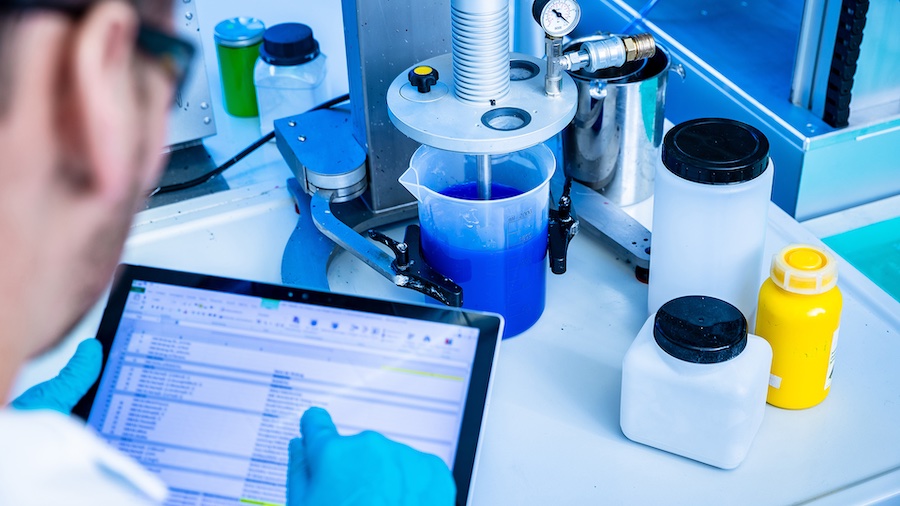
Toray Industries, Inc., announced today that it has developed and begun supplying samples to customers of an exceptionally robust hollow fiber ultrafiltration membrane module for food and beverage manufacturing and biotechnology purification and concentration processes.

This module can save energy and contribute to carbon neutrality by attaining CO2 emissions that are more than 80% lower than those from the food production sector’s conventional thermal concentration processes. The company will accelerate development, with a view to full-fledged mass production, and will cultivate an array of applications.

Hollow fiber membranes have become one of the mainstream in liquid filtration due to their excellent separation, high membrane integration, reduced footprint, and superb area utilization efficiency. Toray’s exiting hollow fiber membranes are used widely in water treatment. This is because its polyvinylidene fluoride ultrafiltration hollow fiber membrane technology delivers exceptional durability and separability.

Toray leveraged the high-strength hollow fiber membrane technology cultivated in water treatment to develop the new module, which employs an outside-in type crossflow filtration design. Crossflow filtration is a common technique, through which feed passes parallel to membrane surface and prevents turbidity from accumulating. Pressure losses from this design are just one-third those of inside-out type that food companies normally use. It is thus possible to filter and concentrate highly turbid or viscous liquids, which is challenging with regular membranes.

Other benefits of Toray’s new module are that it features large membrane area technology which reduces the number of modules needed, halving space requirements and potentially lowering cleaning and equipment costs by more than 20%.

The module performs well in steam (125°C) and hot water (90°C) environments to enable thermal sterilization and high temperature filtration. Filtration testing of a high turbidity microbial culture solution with the new module demonstrated stable, long-term filtration, with steam sterilization preventing bacterial contamination for more than 20 days.


Toray will build collaborative ties with engineering companies in Japan and abroad to develop an array of uses. They include high-viscosity, and high-turbidity raw water applications that have to date employed solid-liquid separation technologies such as diatomaceous earth filtration or centrifugation. They also encompass food manufacturing and bio production processes in which production lines require thermal sterilization.

Based on the corporate philosophy, Toray will contribute to the development of society and technology by continuing to produce high-performance, cutting-edge materials.
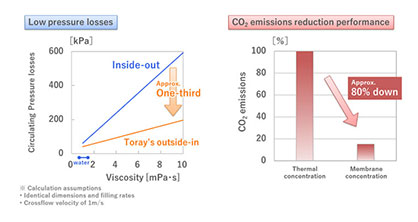
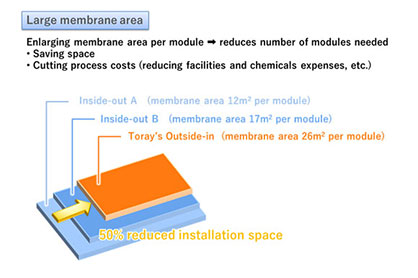
Figure 1: Low pressure loss characteristics and CO2 emissions reduction performance


Figure 2: Benefits of large membrane area


https://go.mktg.toray/t012-WC-20211119-1965-01-DownloadPage.html


More News from Toray Engineering Co. Ltd.

#Recycling / Circular Economy

Toray develops recycling technology that retains carbon fiber strength and surface quality

Toray Industries, Inc., announced today that it has developed a recycling technology that can decompose diverse carbon fiber reinforced plastics (CFRP) made from thermosetting resins while retaining the strength and surface quality of those fibers. The company drew on this technology to create a nonwoven fabric employing recycled carbon fibers.

#Composites

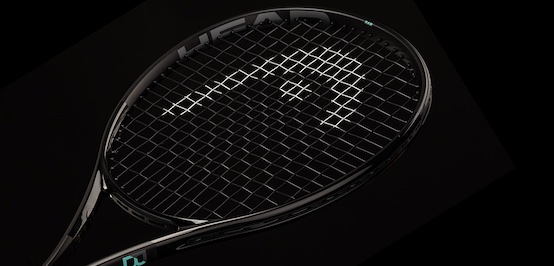
HEAD launches more sustainable(1) BOOM RAW racquet on Earth Day by using Toray’s bio-circular carbon fibers

HEAD continues to innovate with the launch of the BOOM RAW tennis racquet, an encouraging development in the search for a more sustainable future for racquet sports. All of the carbon fibers are bio-circular carbon fibers in the limited-edition and highly innovative BOOM RAW racquet, which offers the same explosive power - along with the same fun, feel and easy playability - as the regular, in-line BOOM racquet. The bio-circular carbon fibers are manufactured by Toray and its subsidiary Toray Carbon Fibers Europe.

#Recycling / Circular Economy

Companies in Japan initiate demonstration to expand the automotive recycling process

DENSO CORPORATION and other partners have been chosen by an industry-government-academia collaborative project aiming to expand the recycle content for automobile in the fiscal year 2023 supported by Ministry of the Environment, Japan.

#Yarn & Fiber

Toray develops durable reverse osmosis membrane

Toray Industries, Inc., announced today that it has developed a highly durable reverse osmosis (RO) membrane (see glossary note 1). This innovative offering guarantees the long-term provision of high-quality water. It also maintains the superior removal performance of Toray’s existing membranes vital for reusing industrial wastewater and treating sewage.

More News on Research & Development

#Research & Development

New DIN SPEC assesses environmental impact of textile fragments in soil

Textile products made from synthetic fibres, finished fabrics or dyed materials release fibre fragments into the environment at every stage of their life cycle. With the new DIN SPEC 19296, Hohenstein has developed a standardised testing method to analyse how these fragments behave in soil under natural conditions. Until now, little was known about their environmental behaviour or potential ecological effects once released.

#Research & Development

Solid Air Dynamics wins second place at RWTH Innovation Award

On 30 January, RWTH spin-off Solid Air Dynamics was awarded second place in the RWTH Innovation Awards for its research in the field of aerogel fibres. Manufactured from renewable raw materials, aerogel fibres offer outstanding thermal insulation, are extremely lightweight and completely biodegradable, and can consist of over 90 per cent air.

#Research & Development

Testing and research laboratory ensures safe and more sustainable products worldwide

For 80 years, Hohenstein has stood for independent testing, scientific expertise and practical solutions. Today, the testing and research service provider supports manufacturers and brands worldwide in making textiles, hardlines and medical devices safe, more sustainable and market-ready – thereby building trust among consumers. With an international presence and interdisciplinary expertise, Hohenstein supports its customers from production through to market launch, helping them navigate an environment of growing regulatory and societal demands.

#Research & Development

Award-winning research for sustainable carbon fibre cycles

Sustainable recycling of carbon fibres is possible through targeted electrochemical surface modification, which makes the sizing of carbon fibres resistant to solvolysis. ITA PhD student Sabina Dann was awarded the MSW Award from RWTH Aachen University for her master's thesis on this development. The award ceremony took place on 12 November 2025 in Aachen.

Latest News

#Textile chemistry

Jeanologia urges industry to accelerate PP Spray phase-out following ZDHC Watchlist update

Potassium permanganate has officially entered the Chemical Watchlist of the ZDHC Foundation, signaling increased scrutiny and potential phase-out of one of the most hazardous chemicals still used in denim finishing. The inclusion confirms an industry shift that Jeanologia anticipated more than a decade ago.

#Recycling / Circular Economy

Circulose restarts commercial-scale production at Ortviken plant in Sundsvall

Circulose today announced the restart of its commercial-scale production plant at Ortviken in Sundsvall, Sweden, marking a significant step in scaling next-generation materials for the global fashion industry. The company plans to resume production of CIRCULOSE®, a recycled pulp made entirely from discarded cotton textiles, in the fourth quarter of 2026.

#Textiles & Apparel / Garment

VIATT 2026 to debut German Pavilion, strengthening European participation alongside key Asian textile hubs

Vietnam’s textile and garment sector continues to be a major contributor to the country’s economic growth, with export revenues expected to reach USD 46 billion in 2025, a 5.6% increase from 2024 . From 26 – 28 February, the Vietnam International Trade Fair for Apparel, Textiles and Textile Technologies (VIATT) is set to contribute to economic growth opportunities by accelerating digital transformation and green transition across the entire textile value chain. The upcoming edition will respond to the rising demand for advanced technologies and sustainable materials with the introduction of the German Pavilion, alongside strong exhibitor participation from key Asian sectors, as well as several high-profile fringe events.

#Sustainability

Ying McGuire becomes new CEO of Cascale

Cascale today announced the appointment of Ying McGuire as Chief Executive Officer, effective June 1, 2026.

TOP