[pageLogInLogOut]

#Research & Development

Successful Take Off of "CARL II" student rocket
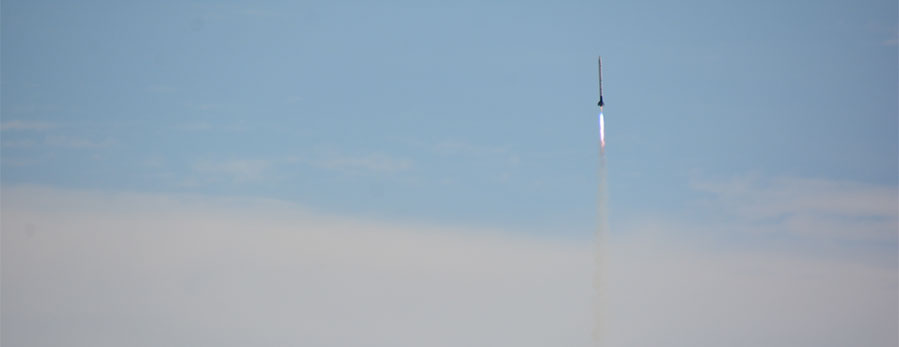
Successful Take Off of “CARL II”, source: Space Team Aachen e.V. © Space Team Aachen e.V.
Space Team Aachen is the association for space-loving students at RWTH Aachen University. In mid-October, Space Team Aachen once again took part in EuRoC, the largest student rocket competition in Europe, where it successfully launched the club's second competition solid rocket, CARL II. CARL II reached an apogee of 2840 m and a maximum speed of 280 m/s.

During the descent the main parachute got caught and did not open fully, so the impact was a little stronger than expected. Apart from that, the flight can be considered a complete success, as the recorded data and most of the systems could be recovered without damage. Including images from the on-board camera! Thus, this and all future generations of Space Team Aachen can learn a lot from the flight of CARL II.
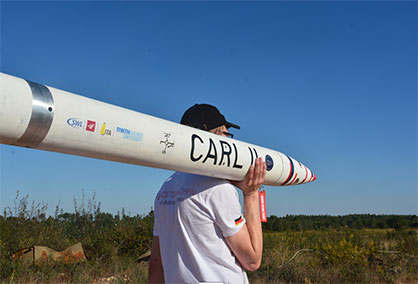
Transport of “CARL II”  © Space Team Aachen e.V.
Transport of “CARL II” © Space Team Aachen e.V.


The Institut für Textiltechnik (ITA) of RWTH Aachen University supports Space Team Aachen in the design and manufacture of the body tubes, which form the central structural parts of the rocket. The manufacturing methods provided by ITA enable the production of these body tubes from CFRP, resulting in a lightweight and robust structure. ITA is also supporting Space Team Aachen in the development of the new rocket, STAHR, which is to reach an altitude of 10 km with a self-developed engine. For this rocket, the association needs a fuel tank for the first time, which is to be designed and manufactured with the help of ITA. 

More News from Institut für Textiltechnik of RWTH Aachen University (ITA)

#Research & Development

Solid Air Dynamics wins second place at RWTH Innovation Award

On 30 January, RWTH spin-off Solid Air Dynamics was awarded second place in the RWTH Innovation Awards for its research in the field of aerogel fibres. Manufactured from renewable raw materials, aerogel fibres offer outstanding thermal insulation, are extremely lightweight and completely biodegradable, and can consist of over 90 per cent air.

#Research & Development

Award-winning research for sustainable carbon fibre cycles

Sustainable recycling of carbon fibres is possible through targeted electrochemical surface modification, which makes the sizing of carbon fibres resistant to solvolysis. ITA PhD student Sabina Dann was awarded the MSW Award from RWTH Aachen University for her master's thesis on this development. The award ceremony took place on 12 November 2025 in Aachen.

#Research & Development

Kick-off for the Textile Production of the Future: Establishment of a Textile Technology and Development Centre in Mönchengladbach, Germany

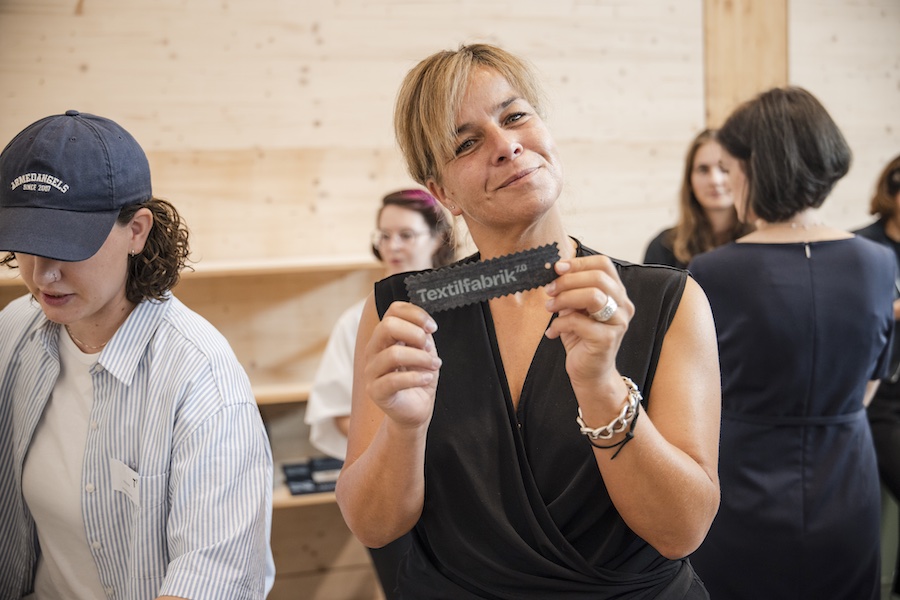
The Institut für Textiltechnik (ITA) of RWTH Aachen University, together with its partners, is pleased to announce that it has received approval for its joint initiative, ‘Textile Factory 7.0’. The goal of the project is the establishment of a technology and development centre for the textile industry in Mönchengladbach.

#Research & Development

Exchange data between textile companies openly, securely and cost-effectively without a central platform – ITA makes it possible

The Institut für Textiltechnik (ITA) of RWTH Aachen University has launched a new demonstrator for an open and secure data space in the textile industry at the Digital Innovation Centre Europe (DICE). For the first time, the demonstrator shows directly and clearly how companies can share their data securely with each other without the need for a central platform. Data exchange is based on shared, freely usable technical foundations.

More News on Research & Development

#Research & Development

New DIN SPEC assesses environmental impact of textile fragments in soil

Textile products made from synthetic fibres, finished fabrics or dyed materials release fibre fragments into the environment at every stage of their life cycle. With the new DIN SPEC 19296, Hohenstein has developed a standardised testing method to analyse how these fragments behave in soil under natural conditions. Until now, little was known about their environmental behaviour or potential ecological effects once released.

#Research & Development

Testing and research laboratory ensures safe and more sustainable products worldwide

For 80 years, Hohenstein has stood for independent testing, scientific expertise and practical solutions. Today, the testing and research service provider supports manufacturers and brands worldwide in making textiles, hardlines and medical devices safe, more sustainable and market-ready – thereby building trust among consumers. With an international presence and interdisciplinary expertise, Hohenstein supports its customers from production through to market launch, helping them navigate an environment of growing regulatory and societal demands.

#Research & Development

Bio-based fibers with good flame retardancy

Fibers made from bio-based plastics reduce dependence on fossil raw materials and promote the circular economy. The covalent bonding of flame-retardant additives can open the way for these fibers to enter the mass market.

#Research & Development

Sustainable athletic wear made from bio-based Polyethylene

Conventional sports textiles made from petroleum-based synthetic fibres are to be replaced in the future by sustainable, bio-based, cooling textiles. Polyethylene, previously used mainly in the packaging industry, is thus qualified for use in textiles and, as a bio-based drop-in solution, offers a cost-effective, sustainable alternative for the future.

Latest News

#Digital Printing

Erreà upgrades sportswear printing operations with seven high-performance Mimaki digital textile printers

Mimaki Europe, a leading manufacturer of industrial inkjet printers and cutting systems, has supported renowned Italian sportswear brand, Erreà in upgrading its digital textile printing operations with the installation of seven high-performance Mimaki systems. The new installation includes three Tiger600-1800TS industrial dye-sublimation printers and four TS330-1600 solutions, replacing a previous fleet of 28 digital printers. This major upgrade marks a significant step forward in Erreà’s production strategy, enabling the company to streamline its printing infrastructure while improving efficiency, colour consistency and overall production control.

#HIGHTEX 2024

The future of Technical Textiles takes shape at HIGHTEX 2026

HIGHTEX 2026 International Technical Textiles and Nonwoven Exhibition is preparing to open its doors at Tüyap Fair and Congress Center between 9–13 June 2026. Bringing together the world’s leading manufacturers and technology providers in the field of technical textiles and nonwoven technologies in Istanbul, the exhibition will go beyond being merely a trade platform where new products are displayed and will assume the character of an international hub where the strategic future of the industry is discussed.

#Textile chemistry

Jeanologia urges industry to accelerate PP Spray phase-out following ZDHC Watchlist update

Potassium permanganate has officially entered the Chemical Watchlist of the ZDHC Foundation, signaling increased scrutiny and potential phase-out of one of the most hazardous chemicals still used in denim finishing. The inclusion confirms an industry shift that Jeanologia anticipated more than a decade ago.

#Recycling / Circular Economy

Circulose restarts commercial-scale production at Ortviken plant in Sundsvall

Circulose today announced the restart of its commercial-scale production plant at Ortviken in Sundsvall, Sweden, marking a significant step in scaling next-generation materials for the global fashion industry. The company plans to resume production of CIRCULOSE®, a recycled pulp made entirely from discarded cotton textiles, in the fourth quarter of 2026.

TOP