[pageLogInLogOut]

#Research & Development

New: Hohenstein Quality Labels for workwear

In October 2019, the testing services provider and research partner Hohenstein released quality labels for tested workwear and uniforms to emphasise product safety, quality and the durability of workwear. The Quality labels combine all the demands made on modern workwear.

Their clear product information provides certainty from the supply chain onwards. They include quality parameters such as testing for harmful substances with STANDARD 100 by OEKO-TEX® and other technology testing. Both labels can be tailored to validate claims for individual workwear and uniform requirements including tested fit, breathability, UV protection and suitability for leasing. The big plus: You can also choose to include any of these parameters in a combined label.

The Hohenstein Quality Labels Tested Workwear and Tested Uniforms are independent proofs of quality that slot neatly into the existing range of Hohenstein Quality Labels. These have long enjoyed a high degree of credibility with retailers and consumers and provide a great recognition factor at the point of sale.

You can find more detailed information at

https://www.hohenstein.com/en/trust/.


The Hohenstein Quality Label Tested Workwear is particularly suitable for workwear for workshops, the construction trade and all types of outdoor work, as well as workwear for the nursing profession, the kitchen sector and any indoor work. © Hohenstein


<br />
The Hohenstein Quality Label Tested Uniforms is particularly suitable for individual collections in the area of corporate fashion, such as polo shirts, shirts, blouses and business clothing. This can include suits, blazers, trousers or skirts.© Hohenstein


More News from Hohenstein Institute

#Textiles & Apparel / Garment

Global size study for brands and retailers to optimize fit and market coverage

Hohenstein Apparel Fit Solutions, a global leader in apparel fit, sizing, and product development, today announces the launch of its Global Size Study, a new initiative designed to equip brands to better understand and serve their target consumers through more accurate, market-relevant sizing.

#Sustainability

A new standard to combat plastic waste in forests

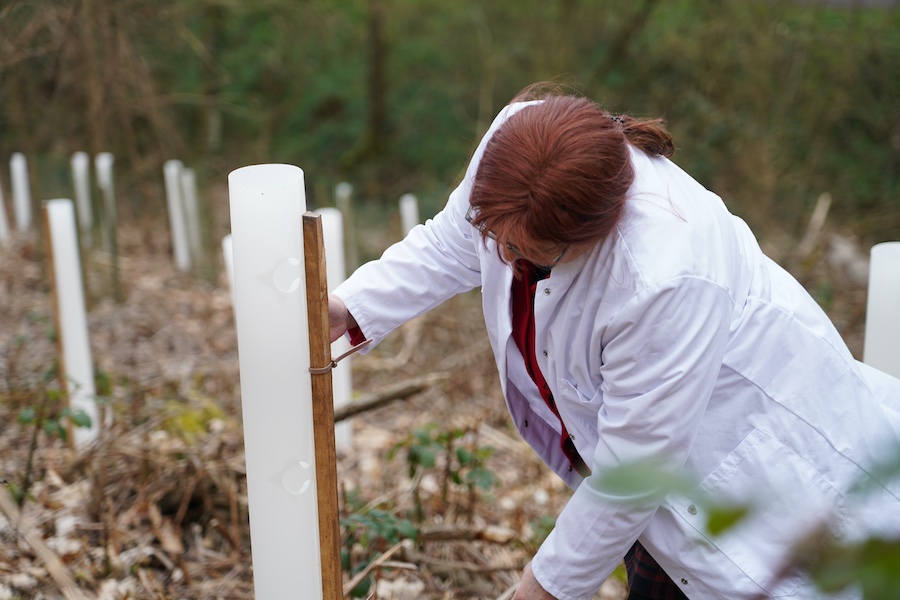
With DIN SPEC 35808 “Tree Shelter for Forestry Applications,” the testing and research service provider Hohenstein, in collaboration with Rottenburg University of Forestry, as well as forestry authorities and industry partners, has established a clear framework for bio-based and fully biodegradable tree shelters. The pre-standard defines requirements and practical testing methods designed to reduce plastic waste in forests and strengthen the long-term protection of soil and the environment.

#Research & Development

Hohenstein publishes 2025 Sustainability Report

The testing and research service provider Hohenstein has published its latest sustainability report, outlining key progress and strategic initiatives. The report focuses on ambitious CO₂ reduction targets, the company’s new mission statement and the systematic expansion of sustainable services for customers worldwide.

#Research & Development

New DIN SPEC assesses environmental impact of textile fragments in soil

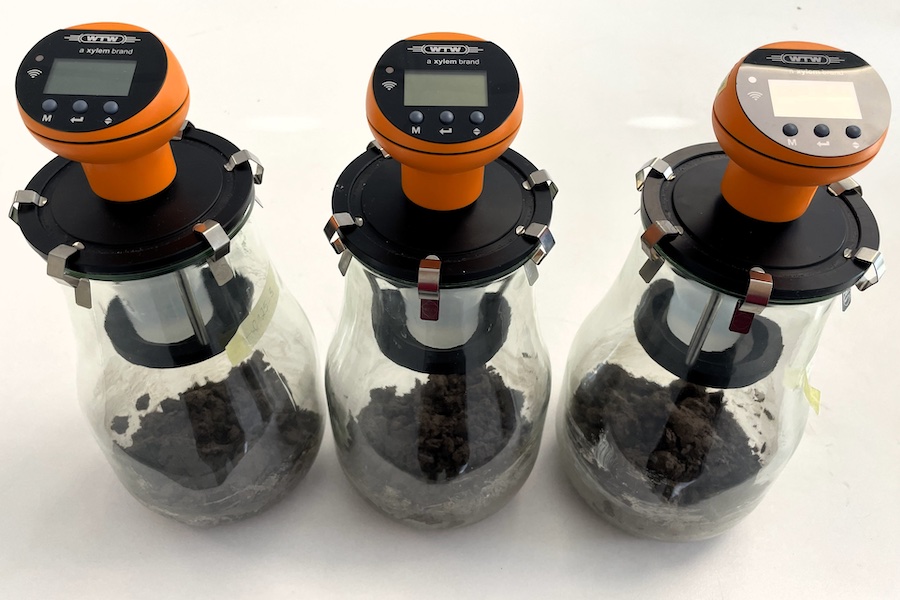
Textile products made from synthetic fibres, finished fabrics or dyed materials release fibre fragments into the environment at every stage of their life cycle. With the new DIN SPEC 19296, Hohenstein has developed a standardised testing method to analyse how these fragments behave in soil under natural conditions. Until now, little was known about their environmental behaviour or potential ecological effects once released.

More News on Research & Development

#Research & Development

“Production is a product”

From technical textiles and AI-driven robotics to the limitations of textile circularity: Professor Dr Thomas Gries looks back on more than two decades of development at ITA Aachen. In the interview, he explains why production technology remains a decisive success factor, discusses international collaborations and innovation ecosystems, and shares his views on the transformation of production landscapes and the challenges facing an increasingly regulated industry.

#Research & Development

TCLF: Resilient value chains in times of crises

The textiles, clothing, leather and footwear (TCLF) industry was at the centre of the webinar “Resilient value chains in times of crises”, which took place on 28 April 2026. Global supply chains continue to face increasing pressure, raw material dependencies are growing and economic uncertainties are affecting the entire sector.

#Research & Development

Textile climate control system in workwear – exhibition at the 2026 SME Innovation Day!

Conventional protective workwear often reaches its limits during strenuous physical activity. In particular, the transport of sweat and excess body heat poses a problem. The German Institutes of Textile and Fiber Research (DITF) conducted research on flow-optimized, air-conducting textile structures that enable targeted climate control directly on the body. These structures can be integrated straight into protective work garments. The textile climate control system supports the body’s natural thermoregulation. This contributes to improved workplace safety and comfort.

#Research & Development

Elastic yarns to become more recyclable and environmentally friendly in future

On 29 April 2026, ITA student Tobias Dickmeiß was awarded a sponsorship prize by the Wilhelm Lorch-Stiftung for his innovative approach, to replacing conventional elastane with elastic yarns made from thermoplastic copolyester elastomers (TPC). Thanks to their thermoplastic nature and compatibility with typical polyesters used in the textile industry, elastic TPC yarns offer improved recyclability. Furthermore, the use of the melt-spinning process in yarn production eliminates the need for solvents that are harmful to the environment and human health.

Latest News

#ITM 2026

KARL MAYER presents a textile TEXTRONIC® innovation at ITM 2026

With highly efficient machines and continuous textile innovations, KARL MAYER underscores its role as a reliable partner for discerning top-tier customers. Just in time for ITM 2026 in Istanbul, the industry leader is introducing a true innovation: an eyelash lace with its characteristic fringed look – combined with a previously unattainable 4-way stretch. While the established fabric could until now only be produced as rigid version or with one-dimensional stretch, the new elasticity in both dimensions expands the possibilities for cross-band panel fabrics.

#Raw Materials

Better Cotton Initiative welcomes new and returning Council members

The Better Cotton Initiative (BCI) has confirmed a series of appointments and reappointments to its Council, the multistakeholder board responsible for BCI’s strategic direction.

#Man-Made Fibers

DYNEEMA® and NP Aerospace advance personal protection for military servicewomen

Dyneema®, owned by Avient Corporation, an innovator of materials solutions, is supplying its high-performance unidirectional (UD) materials to world-leading armor manufacturer NP Aerospace, enabling the production of armor systems designed specifically to fit the female body. With 2,000 new armor systems, including 4,000 plates, made in the United Kingdom (UK) and delivered in June 2026, this collaboration addresses a long-standing lack of high-quality personal protection specially built for female defense and security personnel.

#Man-Made Fibers

Textile Exchange publishes comprehensive polyester LCA study

Textile Exchange has released a new Life Cycle Assessment (LCA) study on polyester, providing detailed data on the environmental impacts of both virgin and recycled polyester production. The study aims to strengthen understanding across the fashion, textile and apparel industries and support more informed decision-making regarding polyester sourcing and production.

TOP