[pageLogInLogOut]

#Research & Development

Stefan Hecht is the new scientific director of the DWI – Leibniz Institute for interactive materials

On August 1st, 2019, Aachen, Prof. Stefan Hecht, Ph.D., takes over as the new Scientific Director of the DWI – Leibniz Institute for Interactive Materials in Aachen. The chemist follows Prof. Dr. Martin Möller, who headed the institute for the past 16 years. In addition to his leading position at DWI, Stefan Hecht also holds the Chair of Macromolecular Chemistry at RWTH Aachen University. The change of the native Berliner to Aachen is the result of a joint appointment of the Leibniz Institute and RWTH Aachen University.

The research focus of the Leibniz Institute in Aachen is the development of active and interactive materials. As part of a bioinspired approach towards materials research, the DWI is working, among others, on the production of compounds that are designed according to the model of nature and integrate into natural cycles. These are materials that can respond to changes in their environment - for example by assembling and disassembling into their individual parts independently, or by changing their shape and even by moving actively. "The long-term vision is to breathe more life into molecular-based material composites and systems," says Stefan Hecht.
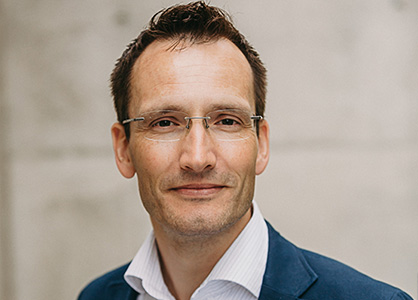
Stefan Hecht (c) 2019 RWTH Aachen University


Under the resigning director Martin Möller, the research institute, founded in 1953 as 'Deutsches Wollforschungsinstitut' (German Wool Research Institute), was refocused and dynamically expanded at the interface of fundamental and applied research, before finally becoming part of the Leibniz Association in 2014. In order to overcome the limits of materials research, scientists from various disciplines work together under the same roof at the DWI. The organisational structure of the institute, with five research programmes spanning several groups, fosters the convergence of the disciplines represented. The DWI team and all those who support the institute in various ways and partnerships have always faced challenges and developed new concepts. We maintain this courage to change. With Stefan Hecht and the great team, we are looking to the future with confidence," says Martin Möller. He stays with the DWI as a member of the institute’s Scientific Board.[1]

Stefan Hecht, 45, has thus far focused his research on the interplay between chemistry and physics. His work is based on the design and synthesis of molecules, which he regards as customised functional nano-components and central to materials engineering. He is particularly fascinated by the idea of using light to control and drive the properties of materials and various processes from optoelectronics to biology. His research group has already successfully developed flexible optical data storage devices and high-resolution displays, and has also been able to control self-healing properties and movement of polymer materials with light pulses.

At the DWI, Stefan Hecht intends to widen his research focus and, in addition to contacts in biology and medicine, also exploit synergies with the engineering sciences. The aim is to develop new material platforms and tools that can be used to deliver signals and active substances inside the body. In addition, he is interested in the development of methods for 3D printing of complex objects, for example in biomedicine. Stefan Hecht and the DWI plan to use the unique opportunities offered by interdisciplinary cooperation to achieve ambitious goals: "Why should it not be possible to recycle a plastic using sunlight? Or to produce an implant directly in the patient where it is needed without surgical intervention? In order to tackle these visions, various major projects are planned for the future, which have an enormous potential to connect strong research players at the interface of materials and medical research. Together with the RWTH Aachen University and its medical school, we can create a unique innovation cluster. I am looking forward to actively participating in the future development of this network," said Stefan Hecht.

The past of the DWI gives good reason to look optimistically towards the future, because its research findings are applied in biomedical technology, biotechnology, surface refinement, and chemical process engineering. The institute is located on the RWTH Aachen University campus and cooperates closely with the technical university. At the DWI, around 190 employees with different skills and expertise are committed to fostering new knowledge and contributing to a better life through innovation. The DWI is also committed to create a working climate free of barriers and prejudice in line with the Diversity Charter ('Charta der Vielfalt').

[1]The Scientific Board of the DWI is made up of seven professors, each representing a chair or a research area at RWTH Aachen University: Prof. Stefan Hecht, Ph.D. (Chair of Macromolecular Chemistry), Prof. Dr. Andreas Herrmann (Chair of Macromolecular Materials and Systems), Prof. Dr.-Ing. Laura De Laporte (Research Area Polymer Biomaterials), Prof. Dr. Martin Möller (Chair of Textile Chemistry and Macromolecular Chemistry), Prof. Dr. Andrij Pich (Research Area Functional and Interactive Polymers), Prof. Dr. Ulrich Schwaneberg (Chair of Biotechnology), Prof. Dr.-Ing. Matthias Wessling (Chair of Chemical Engineering).
More News from TEXDATA International

#People

Happy Holidays!

Dear reader, the year 2025 is drawing to a close. We are entering what we hope will be a peaceful holiday season, spending time with our families and taking a moment to pause and reflect. We hope we have been able to support you once again this year with relevant news and articles, and we look forward to surprising you with many innovations in the coming year. Enjoy the festive season, stay healthy, and we wish you a happy and joyful holiday season.

#Recycling / Circular Economy

textile.4U publishes special edition “Top 100 Textile Recycling Companies 2025”

With a comprehensive 176-page special edition, textile.4U is dedicating its latest issue entirely to one of the most dynamic and influential topics in today’s textile industry: textile recycling. The new issue, published exclusively in high-quality print, presents the Top 100 textile recycling companies researched and selected by TexData – organizations that already play a key role in the transition to circular textiles or are expected to have a significant impact in the near future.

#Recycling / Circular Economy

Responsible Textile Recovery Act of 2024 signed by Governor

Senator Josh Newman (D-Fullerton) is proud to announce that Senate Bill 707 (SB 707), the Responsible Textile Recovery Act of 2024, has been signed into law by the Governor of California, Gavin Newsom. This groundbreaking legislation establishes the country’s first Extended Producer Responsibility (EPR) textile recycling program, marking a significant step forward in the state’s efforts to combat waste and promote sustainability.

#Textiles & Apparel / Garment

Modtissimo promotes sustainability with 28 coordinates in the Green Circle

Modtissimo is proving more and more to be a textile and clothing show that delivers the latest innovations in the area of sustainability, with the iTechStyle Green Circle being the main showcase for companies' creations. In this 60+4 edition, taking place on 12 and 13 September, 28 coordinates will be exhibited in a section organised by CITEVE and curated by Paulo Gomes.

More News on Research & Development

#Research & Development

More safety and comfort for protective clothing thanks to auxetic fabrics

When everyday materials are pulled, they stretch or elongate in the direction of the pull and become narrower in cross-section. We can also observe this property in two-dimensional textiles. Auxetic structures behave differently here. They have the striking property of not changing under tensile stress or even increasing their width or thickness. These properties are advantageous, for example, in protective textiles or textile filter media. The DITF are researching auxetic fabrics for various applications.

#Research & Development

Fraunhofer CCPE presents the “Monomaterial Design Set” – Innovative solutions for circular product design

Composite materials made from different types of plastic often extend the lifetime of products but make recycling more difficult in the circular economy. That is why Fraunhofer CCPE has developed the “Monomaterial Design Set”. This new approach helps to reduce the variety of plastics used in durable products and offers circular solutions for designers and product developers.

#Research & Development

How innovations drive BASF’s success

“Innovation has always been part of BASF’s DNA. Especially in these volatile times, it is crucial to leverage our innovative strength to develop competitive solutions that differentiate us as a company in our markets and give us a competitive edge,” said Dr. Stephan Kothrade, Member of the Board of Executive Directors of BASF and Chief Technology Officer, at the company’s Research Press Briefing held today. To achieve this, BASF implemented its “Winning Ways” strategy about a year ago with the clear goal of becoming the preferred chemical company to enable its customers’ green transformation.

#Research & Development

Small tolerances, big impact and a recyclable alternative to elastane

ITA Master's student Janne Warnecke investigated tension differences over the fabric width in the weaving process and thereby contributed to quality assurance; ITA Bachelor's student Jasmin Roos found a basis for the development of recyclable yarns and textiles. For these developments, they were awarded the Walter Reiners Foundation's Promotion and Sustainability Prizes on 27 November. Peter D. Dornier, Chairman of the Walter Reiners Foundation, presented the awards at the Aachen-Dresden-Denkendorf International Textile Conference (ADD-ITC) in Aachen, Germany.

Latest News

#Weaving

Lindauer Dornier announces leadership transition in weaving machine business

After more than ten successful years at Lindauer DORNIER GmbH, Mr Wolfgang Schöffl will leave the family-owned company at the end of the year to enter well-deserved retirement.

#Heimtextil 2026

Texpertise Focus AI: Messe Frankfurt puts Artificial Intelligence centre stage at its international textile and apparel trade fairs

Under the banner 'Texpertise Focus AI, Messe Frankfurt will place a strong emphasis on Artificial Intelligence (AI) across its international textile and apparel trade fairs from 2026 onwards, setting a future-shaping signal for the industry. The initiative highlights the responsible use of AI along the entire textile value chain, from fibre production to the point of sale. The programme will launch at Heimtextil in Frankfurt in January 2026.

#Technical Textiles

Autoneum and Polestar set new benchmarks for passenger experience and sustainability

As the global market leader in sustainable acoustic and thermal management, Autoneum is a key supplier of interior and exterior components for the highly anticipated Polestar 5 model. The successful collaboration between Autoneum and Polestar marks a significant milestone in sustainable automotive engineering: the electric grand tourer sports car features several innovations in lightweight, fully recyclable polyester-based components that ensure a superior driving experience. Polestar 5 was revealed at the IAA Mobility 2025 in Munich and is available in 24 markets.

#Natural Fibers

Cashmere producers stress the importance of The Good Cashmere Standard®

At the invitation of the Aid by Trade Foundation (AbTF), over 70 experts from the cashmere production and supply chain, as well as other specialists, met at the GCS Unit Meeting in Shanghai, China to discuss the progress and new objectives of The Good Cashmere Standard (GCS). The meeting focused on implementation and verification of the standard, important aspects of animal welfare and the importance of the standard in the global textile market.

TOP