[pageLogInLogOut]

#Research & Development

Kansai Univ. and Teijin develop piezoelectric wearable sensors featuring fashionable stitch designs
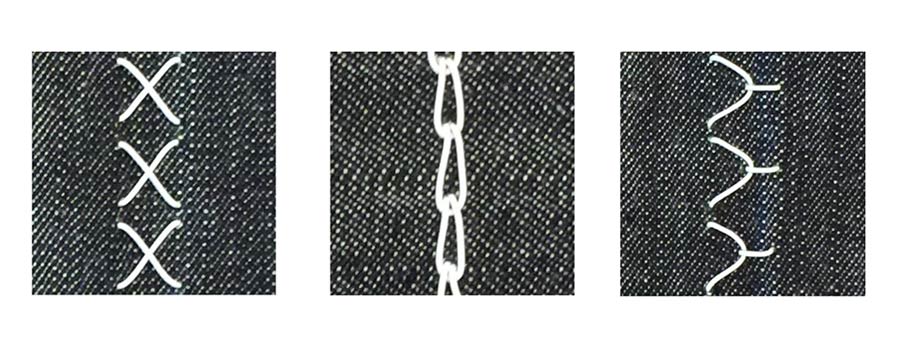
Left: Cross-stitch (bending) / Middle: Chain-stitch (elongation and contraction, twisting and bending) / Right: Fly-stitch (twisting)
Kansai University and Teijin Frontier Co., Ltd., the Teijin Group’s fiber - product converting company, announced today that Professor Yoshiro Tajitsu of Kansai University’s Faculty of Engineering Science and Teijin Frontier have developed e-stitch, a series of fashionable piezoelectric wearable sensors with stitch designs that measure body motions such as extension, contraction, bending and twisting.

Soft, flexible e-stitch sensors are largely unrestricted in terms of fabric types and embroidery patterns, allowing them to be produced in highly fashionable designs.

The new series is based on piezoelectric kumihimo wearable sensors that Kansai University and Teijin Limited announced in January 2017. For demonstration purposes, those sensors were incorporated in Japanese-style braided cords, known as kumihimo. The technologies embodied in soft, flexible e-stitch sensors represent a break from preconceived ideas about wearable sensors because they offer new levels of sensing convenience and fashion. 

Kansai University and Teijin Frontier will exhibit their e-stitch sensors and examples of their application at The 4th Wearable Expo (booth No. W15-5, West Hall), the world’s largest exhibition of wearable devices and products, which will take place at Tokyo Big Site from January 17 to 19. The booth will showcase samples of e-stitch sensors featuring traditional designs that have been incorporated in ladies’ modern denim wear made by Japanese designer Homay, the producer of Kyoto Denim clothing. Samples of e-stitch sensors incorporated in pet wear and athletic-shoe insoles also will be displayed. 

Going forward, Kansai University and the Teijin Group will continue to explore the potential of polylactic-acid (PLA). Through industry-academia collaborations, they aim to create highly added-value sensing technologies for augmented-reality applications in the Internet of Things.

Piezoelectricity is the generation of electric charges by certain dielectric materials in response to mechanical stress. Piezoelectricity also can be used to apply electric voltage to produce mechanical strain in materials. Both effects can be measured, enabling piezoelectric materials to be used for both sensors and actuators.   

Kansai University and Teijin have been jointly developing eco-conscious PLA piezoelectric materials for a number of years. They introduced a flexible piezoelectric film by alternately laminating poly-L-lactide (PLLA) and the optical isomer poly-D-lactide (PDLA) in 2012, PLA fiber- and carbon-fiber-based piezoelectric fabrics in 2015, piezoelectric roll for load-dependent voltage generation and attenuation in 2016, and piezoelectric kumihimo wearable sensors that detect body motions such as elongation and contraction, bending and extension, and twisting in 2017.
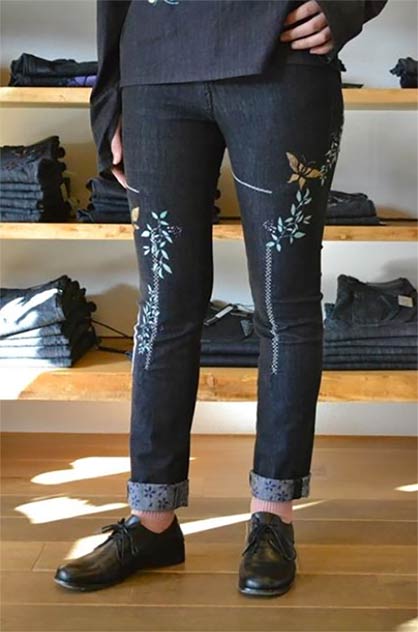

 

e-stitch sensors used in ladies’ wear (c) 2018 Teijin


More News from Teijin Aramid

#Yarn & Fiber

Teijin Aramid: Taiichi Machida to succeed Peter ter Horst as CEO

Peter ter Horst will step down as Chief Executive Officer at the end of 2025, after 19 years of dedicated service. Effective October 1, 2025, Taiichi Machida will take over as CEO.

#Yarn & Fiber

Teijin announces availability of DPP-compliant products aligned with Europe’s ESPR Environmental Regulation

Teijin Limited announced today that it has started rolling out initiatives to enable aramid fibers and carbon fibers to be accompanied by Digital Product Passport (DPP) technology, which enhances supply chain transparency by verifying the origins of materials and supporting sustainability claims. The company is using the supply chain traceability system from Netherlands-based Circularise B.V., in which Teijin has invested since November 2024, to develop DPPs for each product.

#Composites

Teijin Carbon showcases new eco-friendly Tenax Next™ R2S 513 6mm short carbon fiber at JEC World 2025

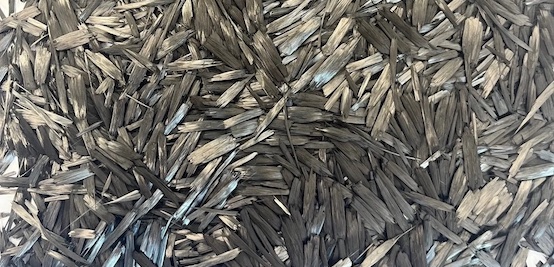
Teijin Carbon, a leading manufacturer of carbon fiber products, is presenting its latest development in sustainable materials at JEC World 2025 (hall 6, G22). New Tenax Next™ R2S 513 6mm is a short carbon fiber product in rice-shaped form for reinforcing thermoplastic compounds that not only offers exceptional performance characteristics but also reinforces the company’s commitment to environmental responsibility and circularity.

#Recycling / Circular Economy

Teijin to invest in Circularise B.V. and adopt its supply chain traceability platform to promote the Circular Economy

Teijin Limited announced today that it will invest in Circularise B.V., a company based in The Hague, Netherlands, which develops product traceability management systems using blockchain technology. Teijin will also implement Circularise’s software to improve visibility into its global supply chain. Circularise’s proprietary “Smart Questioning”(*) solution, which utilizes Zero-Knowledge Proof (ZKP) technology, provides both anonymity and transparency to ensure a highly reliable product traceability system.

More News on Research & Development

#Research & Development

More safety and comfort for protective clothing thanks to auxetic fabrics

When everyday materials are pulled, they stretch or elongate in the direction of the pull and become narrower in cross-section. We can also observe this property in two-dimensional textiles. Auxetic structures behave differently here. They have the striking property of not changing under tensile stress or even increasing their width or thickness. These properties are advantageous, for example, in protective textiles or textile filter media. The DITF are researching auxetic fabrics for various applications.

#Research & Development

Fraunhofer CCPE presents the “Monomaterial Design Set” – Innovative solutions for circular product design

Composite materials made from different types of plastic often extend the lifetime of products but make recycling more difficult in the circular economy. That is why Fraunhofer CCPE has developed the “Monomaterial Design Set”. This new approach helps to reduce the variety of plastics used in durable products and offers circular solutions for designers and product developers.

#Research & Development

How innovations drive BASF’s success

“Innovation has always been part of BASF’s DNA. Especially in these volatile times, it is crucial to leverage our innovative strength to develop competitive solutions that differentiate us as a company in our markets and give us a competitive edge,” said Dr. Stephan Kothrade, Member of the Board of Executive Directors of BASF and Chief Technology Officer, at the company’s Research Press Briefing held today. To achieve this, BASF implemented its “Winning Ways” strategy about a year ago with the clear goal of becoming the preferred chemical company to enable its customers’ green transformation.

#Research & Development

Small tolerances, big impact and a recyclable alternative to elastane

ITA Master's student Janne Warnecke investigated tension differences over the fabric width in the weaving process and thereby contributed to quality assurance; ITA Bachelor's student Jasmin Roos found a basis for the development of recyclable yarns and textiles. For these developments, they were awarded the Walter Reiners Foundation's Promotion and Sustainability Prizes on 27 November. Peter D. Dornier, Chairman of the Walter Reiners Foundation, presented the awards at the Aachen-Dresden-Denkendorf International Textile Conference (ADD-ITC) in Aachen, Germany.

Latest News

#Yarns

January 2026 marks Asahi Kasei’s restart of Bemberg production in restored sections of the Nobeoka facility

Beginning January 2026, production at the Asahi Kasei Nobeoka facility – Bemberg’s only production site – will gradually resume, marking a new chapter following the partial shutdown caused by the April 2022 incident. This progress is the result of significant investments and continuous work toreinforce safety measures, restore full operational capacity, and establish long- term stability.

#Dyeing, Drying, Finishing

Stefan Moll becomes new CEO of the machinery manufacturer

Starting January 1, 2026, Stefan Moll will take over the management of Mahlo GmbH + Co. KG, the world’s leading provider of measurement and control technology for web-shaped materials. With this move, Mahlo is focusing on the long-term safeguarding of its market position and technological leadership. The current CEO, Rainer Mestermann, will leave the company after 14 years as part of a planned succession arrangement.

#Spinning

Barmag's new texturing machine impresses the market

Since its premiere at ITMA Asia + CITME 2025, the eFK EvoSmart texturing machine has achieved impressive market success. The innovative technology is winning over yarn manufacturers worldwide who are committed to energy-efficient and economical production processes. A total of 84 machines has already been sold – including in China, Turkey, and Indonesia – a clear sign of the industry's confidence in this forward-looking solution.

#Yarns

Durak Tekstil enters 2026 with positive momentum, strengthens its global market focus

Durak Tekstil, maintaining its profitability and turnover levels in 2025 compared to the previous year, prioritizes growth through its export-oriented sales strategy. Increasing both its capacity and utilization rate, the company anticipates further gains in 2026 through expansion in global markets.

TOP