[pageLogInLogOut]

#Recycling / Circular Economy

New “Fiber Recycling Initiative” by TENCEL™ spotlights circularity with mechanical recycling of TENCEL™ Lyocell fibers

Lenzing Group, a leading global producer of wood-based specialty fibers, introduced the initial phase of the “Fiber Recycling Initiative” by TENCEL™ alongside its valued mill partners, Artistic Milliners from Pakistan, Canatiba from Brazil and Textil Santanderina from Spain. Dedicated to driving circularity in the global textile industry, the new initiative kicks-off with the production of denim fabrics derived from mechanically recycled TENCEL™ branded lyocell fibers. With usage of pre-consumer lyocell waste at a commercial scale, the initiative redefines the circular future of a sustainable denim industry globally.
  • “Fiber Recycling Initiative” by TENCEL™ set to transform the future of the textile industry with circularity and innovation at heart, starting with the denim segment in the initial phase
  • Lenzing’s long-term partners are at the forefront of fiber circularity, advocating for the mechanical recycling of TENCEL™ branded lyocell fibers for use in the production of original denim fabrics at a commercial scale


“Brands and consumers count on us to lead the change towards a more sustainable industry value chain,” said Tuncay K?l?çkan, Head of Global Business Development, Denim, at Lenzing. “As we constantly seek ways to improve circularity across various components of the textile industry, our like-minded, decades-long value chain partners have innovatively discovered the mechanical recycling of TENCEL™ Lyocell fibers in denim production. While such concept is still relatively new to the wider industry, the development of the “Fiber Recycling Initiative” by TENCEL™ sets out to promote the benefits and unleash the full potential of the new circular fabric.”
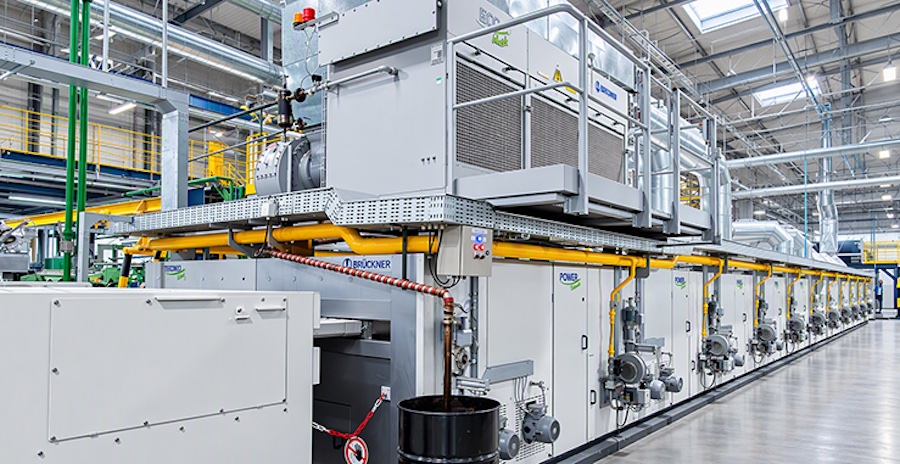
Fiber Recycling Initiative Denim © 2023 Textil Santanderina


Transforming the future of denim with mechanically recycled TENCEL™ Lyocell fibers

The initial phase of the new circularity initiative spotlights the ongoing quest for sustainable denim production and innovation from Lenzing and its mill partners as they answer a common call for sustainability, circularity and transparency in the global textile value chain. This is driven by a growing demand from consumers who are looking for more sustainable and circular product options.

“Denim circularity is undeniably the present, and the inevitable future of denim,” said Baber Sultan, Director of Research, Product and Trend at Artistic Milliners. “We have seen wider adaptation of mechanical recycling beyond textiles, particularly in paper and construction industries. Considering the high tenacity of TENCEL™ Lyocell fibers, there is an edge to increase recycled content while producing higher quality fabrics. The new fabric has so much potential across global markets, especially with the nostalgia around Y2K and other vintage looks. The classic salt and pepper effect really blooms with mechanically recycled TENCEL™ Lyocell fibers, along with that neppy denim aesthetics.”

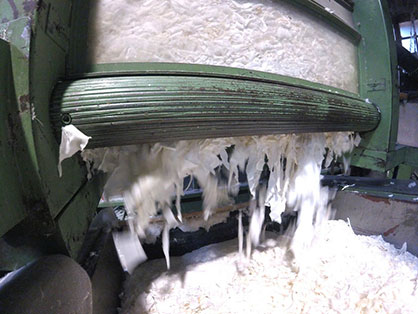
Virgin TENCEL™ Lyocell fibers are reputable for their environmentally responsible, closed loop production process, which transforms sustainably sourced wood pulp into cellulosic fibers with high resource efficiency and low carbon footprint. Mechanically recycled TENCEL™ Lyocell fibers adds to the sustainability features of the denim fabric, as it does not require usage of water or chemicals.


“The mechanically recycled TENCEL™ Lyocell fibers are ideal for denim,” said the Product Development Team at Canatiba. “Unlike cotton, the new fabric retains its characteristics in relation to virgin fibers, while maintaining the length, resistance and all the physical properties, as well as being super soft to touch. It comes from a completely clean and sustainable process that does not involve water or chemical consumption. In Brazil, mechanically recycled lyocell fibers have a strong potential to scale among large brands and department stores.”

Enabling endless possibilities for sustainable denim

Fabrics produced using mechanically recycled TENCEL™ Lyocell fibers feature a “close-to-cotton” aesthetics while retaining the core features of TENCEL™ Lyocell fibers, like breathability, smooth drape, gentle on skin and long-lasting comfort.

“We believe that the future of the textile industry depends on sustainability and circularity, which can also guarantee the survival of denim,” said José Antonio Mazorra, Corporate Social Responsibility Manager at Textil Santanderina. “The awareness of reducing environmental impact within our sector is growing, especially with the industry trends of circular economy and sustainable production practices. I expect that innovation and technological improvements around circularity, including phases of collection, selection and recycling, will result in a greater need for mechanically recycled cellulosic fibers.”

The fibers are also identifiable in end products, ensuring traceability and transparency of production processes. With the ability to be traced back to their sources, the use of mechanically recycled TENCEL™ Lyocell fibers can be documented and verified, ensuring greater accountability and transparency in the supply chain.
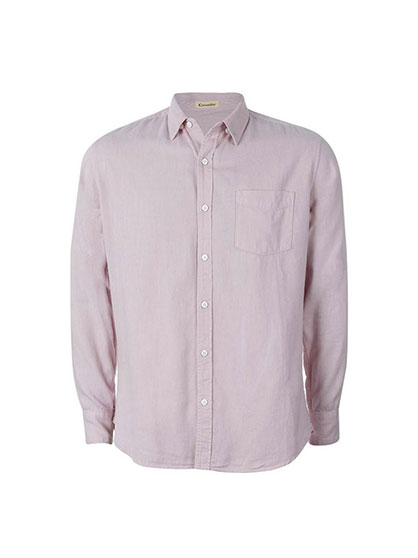
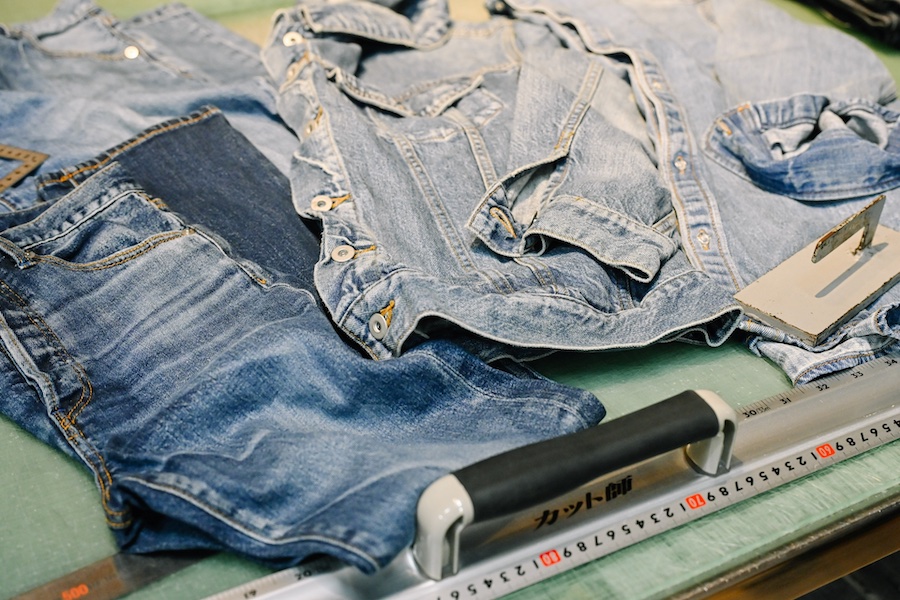
Fiber Recycling Initiative Denim © 2023 Canatiba


More News from Lenzing

#Man-Made Fibers

Lenzing AG announces new leadership and establishment of Executive Committee

Lenzing AG announced that Rohit Aggarwal, Managing Board Member and Chief Executive Officer of Lenzing AG, has informed the Supervisory Board of his decision to resign from his position due to personal reasons, effective 31 January 2026. To support a smooth transition, Mr. Aggarwal will remain with Lenzing AG as an advisor to the company until end of September 2026. The Supervisory Board expresses its appreciation for Mr. Aggarwal’s leadership and contributions during his tenure.

#Man-Made Fibers

Lenzing invests EUR 15 mn to strengthen position in the hygiene market

The Lenzing AG is investing approximately EUR 15 mn to expand its production capacity for premium viscose fibers at its site in Lenzing, Austria. This strategic investment is part of the recently announced investment program of EUR 100 mn in total to secure the long-term competitiveness of Lenzing’s Austrian production sites. The capacity expansion reinforces the company’s commitment to providing sustainable solutions to the global hygiene market. It also strengthens the company's role as a trusted provider of high-quality fibers for feminine care applications.

#Man-Made Fibers

Lenzing AG: Stable revenue and improved EBITDA despite market headwinds

In the first nine months of 2025, Lenzing AG recorded revenue growth and higher EBITDA, but a market-driven volatile third quarter. This performance reflects the effects of ongoing market volatility, tariffs and geopolitical uncertainties. Nevertheless, the medium to long-term outlook remains positive.

#Man-Made Fibers

Lenzing confirmed as global leader in Canopy sustainability ranking

Lenzing AG has once again taken first place in this year's Hot Button Report published by the Canadian non-profit organization Canopy. With 34.5 out of 40 points and no known risk of sourcing from ancient and endangered forests, Lenzing remains one of the most sustainable companies in regenerated cellulose fiber production – setting a benchmark for responsible business practices in the textile and nonwovens industries.

More News on Recycling / Circular Economy

Latest News

#Heimtextil 2026

Mimaki demonstrates versatile, simple TRAPIS textile printing at Heimtextil 2026

Mimaki’s textile pigment transfer printing system, TRAPIS, is able to print on a diverse range of fabrics - unlike traditional processes - including natural fibres and synthetic fabrics. The full solution will be shown on Mimaki’s booth (Hall 3.0 Stand A97), as the company returns to Heimtextil to showcase its advancements in sustainable, high quality and efficient textile printing.

#ITM 2026

The Technology Hub for global denim trends: ITM 2026

The ITM 2026 International Textile Machinery Exhibition, to be held at the Tüyap Fair and Congress Center in Istanbul from June 9–13, 2026, brings together groundbreaking technologies in denim production. From smart production systems to eco-friendly raw materials, from digital washing solutions to laser effect technologies, innovations that will shape the future of denim will be showcased for the first time at ITM 2026.

#Natural Fibers

38th International Cotton Conference Bremen: Let´s Talk about Cotton!

The 38th International Cotton Conference Bremen, to be held on 25-27 March 2026 in Bremen’s parliament building on market square, once again sends a powerful signal for professional excellence and international dialogue. The focus is on the latest market trends and technical innovations throughout the entire value chain – from agriculture and quality assurance to processing and the circular economy. With its high-calibre speakers, the conference remains an indispensable forum for anyone involved in shaping the cotton industry scientifically, technically, or economically.

#Research & Development

More safety and comfort for protective clothing thanks to auxetic fabrics

When everyday materials are pulled, they stretch or elongate in the direction of the pull and become narrower in cross-section. We can also observe this property in two-dimensional textiles. Auxetic structures behave differently here. They have the striking property of not changing under tensile stress or even increasing their width or thickness. These properties are advantageous, for example, in protective textiles or textile filter media. The DITF are researching auxetic fabrics for various applications.

TOP