[pageLogInLogOut]

#Recycling / Circular Economy

STADLER shares its vision of the recycling industry and strategic priorities
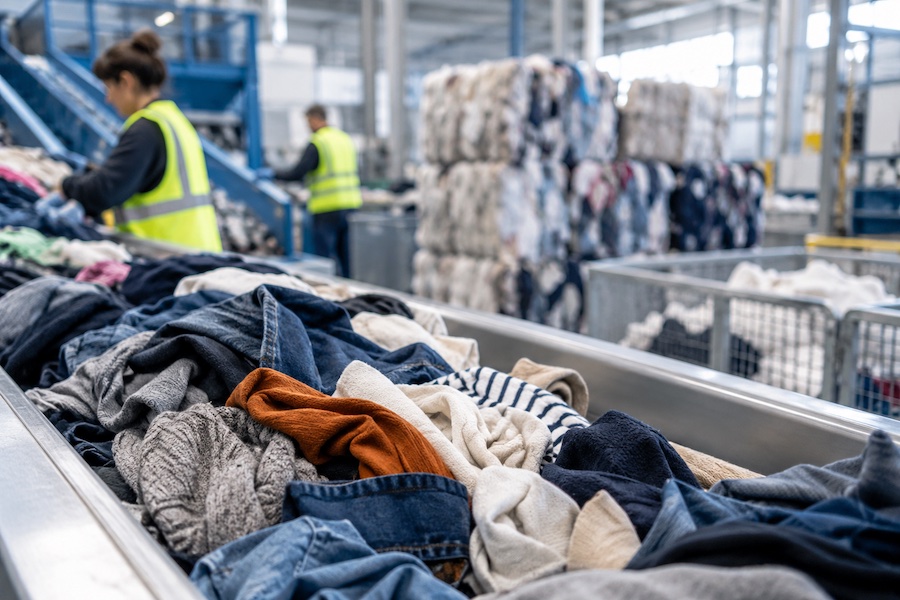
© 2023 STADLER
STADLER, the globally active German company specialized in the planning, production and assembly of turnkey recycling and sorting plants, begins the new year ready to address the fast-growing demands of the recycling industry, which is evolving at an accelerating pace. The company’s strategic objectives for 2023 remain focused on anticipating the changing needs, developing solutions to address new requirements as they arise, consistently delivering added value for its customers.

“In 2022 the sense of urgency in addressing Climate Change and reducing greenhouse gas emissions has intensified to a new level,” explains Willi Stadler, CEO of the STADLER Group. “Greater environmental awareness is generating unprecedented pressure to reduce waste, recycle more, and move towards a closed-loop circular economy. We, at STADLER, believe we have the know-how and experience to support the recycling industry in addressing this challenge change with effective solutions.”

Meeting the changing demands of a growing recycling industry

A variety of factors, from public awareness about environmental issues to legislation such as the EU Green Deal, are driving the changes in the recycling industry. The European Commission has submitted a proposal for new regulations aiming at achieving three key objectives: preventing packaging waste, establishing high-quality recycling loops, and creating a well-functioning market for secondary raw materials through the requirement of a minimum recycled content for some types of plastic packaging. Another factor of change is China’s ban on imports of polluted plastics, which is contributing to the soaring demand for sorting and recycling plants in Europe – in particular plants capable of sorting plastics into the different polymers.
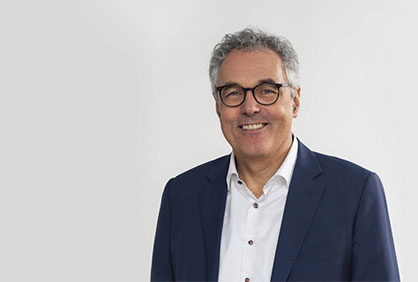
Mr. Willi Stadler, CEO of the STADLER Group © 2023 STADLER


The recycling industry is consequently growing fast and requiring an increasing degree of specialization. STADLER is at the forefront of this evolution, detecting new requirements and providing solutions. Two projects completed in 2022 are a perfect illustration of how the company is constantly breaking new ground: the first and most advanced fully automatic light packaging sorting plant in Eitting, Germany, and Europe’s first fully automatic textile sorting plant in Malmö, Sweden.

The pursuit of minimizing waste by recycling as much as possible has also put the spotlight on chemical recycling. In 2022, it capitalized the attention of the chemical and mineral oil industries looking for effective solutions for plastics that are difficult to recycle. “At STADLER we detected this emerging demand early on, and today we offer upstream equipment that sorts and prepares the plastics for the chemical process,” says Willi Stadler. “This is an important step forward, as chemical recycling companies break down the plastic into gas, convert it into oil, which is then transformed into virgin plastic. This means closing the loop of a circular economy for materials that until recently would have been discarded as waste.”
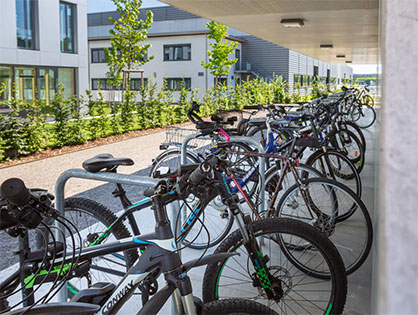
Sustainability in Mind at STADLER Headquarters © 2023 STADLER


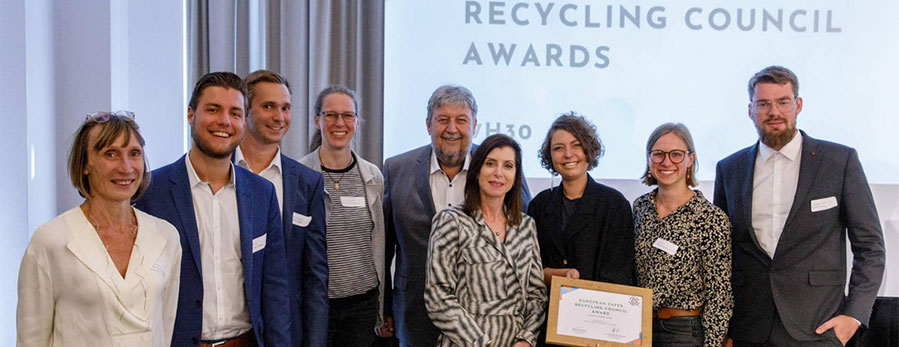
STADLER is constantly searching for new ways of supporting the recycling industry in its evolution. This includes participation in research initiatives such as the EnEWA project, which aims to unlock the untapped potential of obtaining recyclable paper from residual, commercial and plastic waste, for which it received the European Paper Recycling Council Award 2021/22 in the “Innovative Technologies and Research & Development” category.

Digitalization plays an increasingly significant role and STADLER is fully on board, as Willi Stadler explains: “This is a priority for STADLER, in all areas of our business – in our operations and, most importantly, in the sorting plants we design with data collection of incoming and outgoing recyclables and predictive maintenance. We will continue to invest significantly in this area.”

Meet an increasingly global demand for recycling plants

The demand for recycling is spreading across the world, and STADLER has expanded its activities in Latin America and in the United States to meet this need. In 2022 it completed the latest in a series of MSW sorting facilities in Brazil. The company also opened a new sales and service office in Mexico City, where it has already built a number of plants, including two large-scale facilities. Its subsidiary in the United States had a breakthrough in 2022 and is now supplying systems across the country. STADLER is investing in increasing its capacity at its production facilities in Germany and Slovenia in order to meet the growing demands of its historical and new markets.


Sustainability is in STADLER’sDNA

“STADLER is all about sustainability, starting from our very business model: as a specialist in waste sorting systems for the waste disposal and recycling industry, we provide an important infrastructure for the development of a circular economy. Effective waste sorting is the basic prerequisite for efficient recycling,” says Willi Stadler. “What’s more, with every recyclable material sorting plant we build, thousands of tons of CO2 are saved. Just to give an example, a household waste sorting plant that treats 100,000 tons of input material per year saves about 100,000 tons of CO2 equivalents.” In 2022, STADLER’s achievements in sustainability have been recognized with the Sustainability Today Industry Excellence Award.
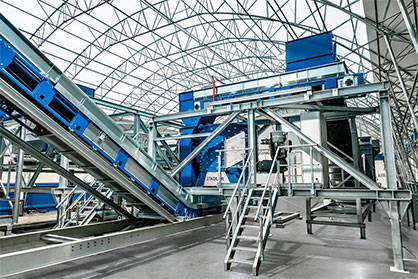
STADLER Test and Innovation Center © 2023 STADLER


STADLER is also focused on sustainability in its operations: “We are a medium-sized family business with 230 years of history, and we have been acting sustainably on our own initiative. As a member of the UN Global Compact, we are committed to sustainability and to the ten principles of sustainable business for the benefit of all people, today and in the future.” The company has adopted a modern energy management concept and is currently focusing on energy saving and self-sufficiency. For example, in 2023 it plans to extend its 88 kWp photovoltaic system with an additional 750 kWp.
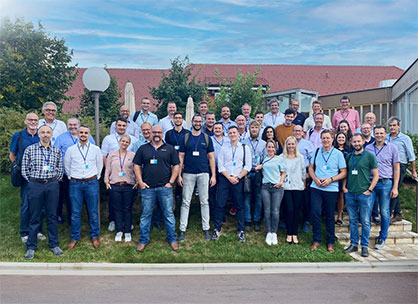
STADLER International Sales Meeting in Slovenia © 2023 STADLER


The company’s sustainability extends to corporate governance and financial sustainability. It reinvests annual surpluses and ensures a high equity ratio, so that it is able to overcome economically unfavorable situations and protect its partnerships with customers, employees, suppliers and the local community. “Through our sustainable approach, we create an environment that fosters a high sense of purpose in our employees, who feel invested in the company,” says Willi Stadler. “At the same time, we are able to support our business partners in difficult times such as we are experiencing.”
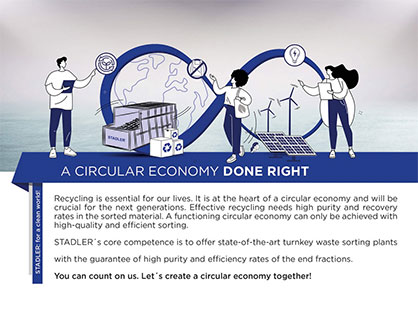

Circular Economy- Let's create a circular economy together © 2023 STADLER


More News from TEXDATA International

#Texprocess 2026

Texprocess 2026: Automation, digitalisation and AI reshape textile processing

Investment decisions in textile processing have become increasingly complex. Rising energy prices, labour shortages and geopolitical uncertainties are forcing companies to prioritise technologies that deliver measurable improvements in efficiency and process stability. This applies not only to apparel production, but also to the processing of technical textiles and high-performance materials. Modernisation projects are therefore being evaluated more selectively – but the pressure to upgrade production systems continues to grow. Texprocess 2026 reflects this tension between cautious investment behaviour and increasing technological demand.

#Techtextil 2026

Textile Chemicals & Dyes: Innovation in Textile Chemistry moves into focus at Techtextil 2026

From PFAS-free finishes and water-saving dyeing technologies to advanced coatings and recycling-compatible formulations, innovation in textile chemistry is accelerating across the industry. Reflecting this development, Techtextil 2026 introduces Textile Chemicals & Dyes as a dedicated product segment, highlighting the growing role of chemical solutions in shaping the next generation of technical textiles.

#Recycling / Circular Economy

textile.4U publishes special edition “Top 100 Textile Recycling Companies 2025”

With a comprehensive 176-page special edition, textile.4U is dedicating its latest issue entirely to one of the most dynamic and influential topics in today’s textile industry: textile recycling. The new issue, published exclusively in high-quality print, presents the Top 100 textile recycling companies researched and selected by TexData – organizations that already play a key role in the transition to circular textiles or are expected to have a significant impact in the near future.

#Recycling / Circular Economy

Responsible Textile Recovery Act of 2024 signed by Governor

Senator Josh Newman (D-Fullerton) is proud to announce that Senate Bill 707 (SB 707), the Responsible Textile Recovery Act of 2024, has been signed into law by the Governor of California, Gavin Newsom. This groundbreaking legislation establishes the country’s first Extended Producer Responsibility (EPR) textile recycling program, marking a significant step forward in the state’s efforts to combat waste and promote sustainability.

More News on Recycling / Circular Economy

#Recycling / Circular Economy

Europe needs tipping point to scale textile-to-textile recycling, BCG and ReHubs say

A new report from Boston Consulting Group (BCG) and ReHubs, titled “Advancing Textile Circularity – Europe’s textile waste challenge: Scaling Textile-to-Textile requires enabling mechanisms”, highlights the urgent need for systemic action to tackle Europe’s growing textile waste and scale a circular textile economy.

#Recycling / Circular Economy

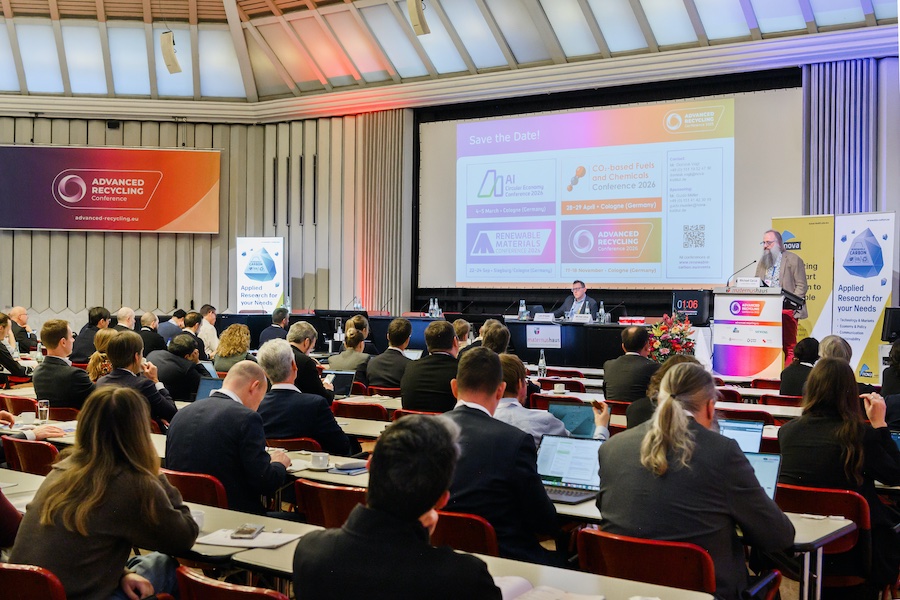
AI Circular Economy Conference 2026 fuels innovation at the intersection of AI and Circular Economy

The AI Circular Economy Conference 2026, organised by nova-Institute, brought together 116 participants from 15 countries in Cologne and online to explore the transformation of the chemical and materials industry supported and accelerated by artificial intelligence. During the two-day event, leading experts from industry, research, start-ups and the investment community discussed how AI can maximise the potential of renewable carbon creating efficient circular value chains. The conference featured 24 presentations and multiple panel discussions, highlighting the growing convergence of digital technologies and circular material systems. It demonstrated how artificial intelligence is progressing from the experimental stage to real industrial implementation within the circular economy.

#Recycled_Fibers

Circ deepens access to recycled fibers with Xinxiang Bailu Chemical Fiber Co., Ltd. partnership agreement

Circ®, a global leader in textile‑to‑textile recycling, today announced a new partnership agreement with Xinxiang Bailu Chemical Fiber Co., a Canopy Dark Green Shirt producer and one of the world’s leading producers of viscose filament. The agreement marks a significant step in Circ’s continued expansion in China and strengthens its position within the country’s rapidly evolving circular textile ecosystem; further supporting Circ’s ability to supply recycled fibers near existing fashion supply chains.

#Recycled_Fibers

Worn Again Technologies unveils the Accelerator

Worn Again Technologies unveils the Accelerator, the next major step towards commercialising its pioneering Textile-to-Fibre recycling process and proving the technical and economic feasibility of polycotton recycling.

Latest News

#Techtextil 2026

Italian textile machinery innovation takes center stage in Frankfurt for Techtextil 2026

The Italian textile machinery industry is gearing up for a key event on the international trade fair calendar: Techtextil 2026, taking place from April 21–24 in Frankfurt, Germany. A prestigious representation of Italian companies will participate in the German exhibition—a global benchmark for technical and innovative textiles—to present cutting-edge technologies dedicated to an ever-expanding market.

#

Between innovation pressure and production readiness: Techtextil 2026 showcases market-ready defence textiles

EU defence spending reached a record level of around €381 billion in 2025. The importance of textile innovation in this context is underscored by the European Defence Fund’s 2026 Work Programme, which identifies “smart and multifunctional textiles” as a dedicated priority area. Techtextil translates this demand into industrial practice. From 21 to 24 April 2026, more than 10 per cent of over 1,500 exhibitors in Frankfurt am Main will present material innovations for protective textiles.

#Yarns

Yarn Expo Spring 2026 concludes, connecting buyers with innovative selection of sustainable yarns and fibres

Yarn Expo Spring 2026 wrapped up successfully on 13 March, as a record-high of over 600 exhibitors from 12 countries and regions welcomed more than 25,000 visitors from 113 countries and regions. Held across 27,000 sqm in Hall 8.2 of the National Exhibition and Convention Center (Shanghai), the fair highlighted the textile industry’s accelerating shift toward a lower-impact, more functional future. Exhibitors presented eco-friendly organic, regenerated and recycled yarns and fibres, alongside innovative options such as sweat-resistant and high-performance materials. A comprehensive fringe programme further enriched the event, offering practical market insights and new networking opportunities.

#Techtextil 2026

ANDRITZ at Techtextil 2026: Sustainability and advanced technologies

International technology Group ANDRITZ will be presenting its innovative nonwovens production and textile solutions at Techtextil in Frankfurt, Germany, from April 21 to 24, 2026 (Hall 12, B95). ANDRITZ will focus on technologies for durable and technical nonwovens, sustainable fiber processes, textile recycling, and life-cycle services.

TOP