[pageLogInLogOut]

#Recycling / Circular Economy

Trützschler and Valérius 360: A breakthrough for recycled yarn
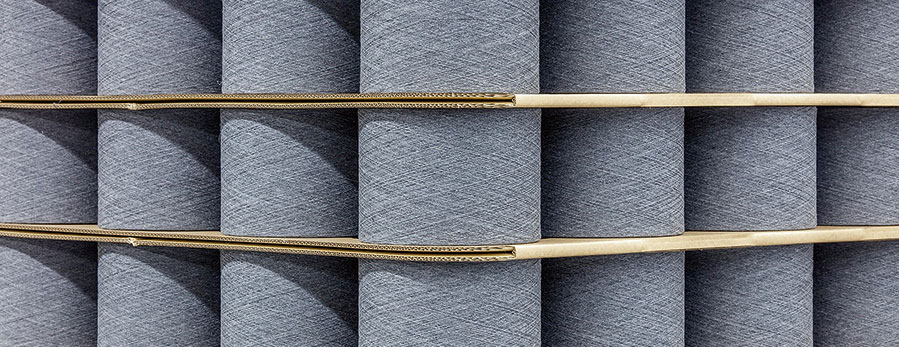
Valérius 360 wanted to make a sustainable, circular approach possible in the fashion industry. But it needed a partner with the power to make this green dream a reality. Working together with Trützschler, a pioneering collaborative project has now achieved high-quality recycled yarn – opening up massive potential to drive measurable progress toward a circular and sustainable textile industry.

Valérius 360 was founded in Portugal in 2017. It produces yarn by recycling waste from its own spinning and knitting processes – which keeps more material in the economic cycle for longer, cutting down waste and making an important contribution to sustainability. Recently, its experts launched a new project with the ambitious aim of increasing the quality of yarn made from recycled waste fiber. But processing recycled fibers is tricky in many ways. Reopening textiles down to the fiber, for example, leads to a reduction in the fiber quality.
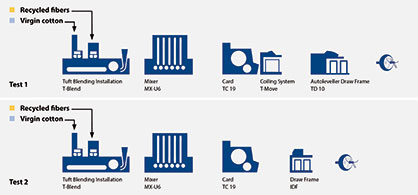
Figure 1: Process steps 1 Passage(Test 1) vs. Direct Spinning (Test 2) © 2022 Trützschler


Trützschler has innovative technologies and significant experience that support spinners with applications that involve recycled waste fibers. Our experts have a deep understanding of the decisive role that fiber and spinning preparation stages play in the quality of the final yarn. In partnership with Valérius 360, we explored the possibilities to make their project a success.

Testing at the Trützschler Technical Center

The team from Valérius 360 wanted to find ways of improving the processes for yarns made from 50 % recycled and 50 % virgin cotton. In particular, it was seeking ways to reduce thick and thin spots, which disturb the appearance of the textile surface.

At the Trützschler Technical Center in Mönchengladbach, we conducted special trials that showed that using a direct spinning process for this application delivers much better results than a process with a draw frame passage for rotor yarns.

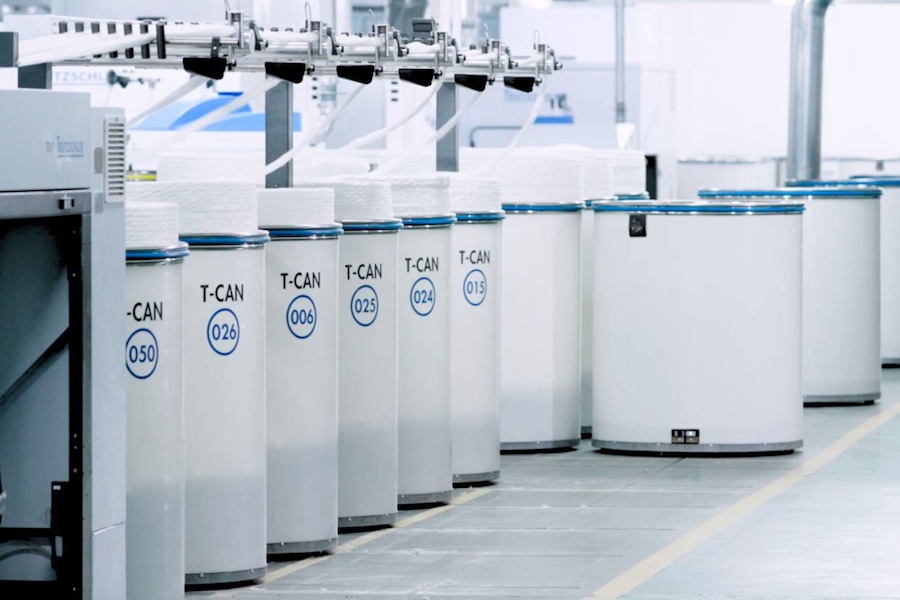
In direct spinning, the sliver from the card is directly drawn in the draw frame which is integrated in the can stock (see figure 1, test 2). This involves one less process step than using an autoleveller draw frame (see figure 1, test 2), while also saving space and giving staff more time for other operations .

Energy efficiency and cost savings

Direct spinning showed a clear capacity to reduce the number of faults in the yarn. As a result, the yarn breaks were 30 % lower and the Total IPI 38 % lower (see figure 2). The direct spinning process also has a positive effect on energy consumption: Compared to the process with a draw frame passage, for a medium plant size, a savings potential of 5 % is achieved with direct spinning. At an energy price of 0.2 €/kW, the savings amount to over 5,000 € per year.

On-site support from Trützschler Customer Service

The team from Valérius 360 also received in-house training from the Trützschler Customer Service department. Together, they analyzed and significantly improved the process at the Valérius 360 production site. This helped to bring yarns made from recycled raw materials up to the required level of the 50% Usterstatistics. This is the reference level for yarns made from virgin raw materials. Accordingly, 50 % of all yarn producers with raw cotton for rotor yarns and comparable yarn counts produce a poorer quality.
Valérius 360 was founded in Portugal in 2017. © 2022 Trützschler


Trützschler is deeply committed to supporting its customers on the journey to a more sustainable textile industry. This case study shows how customers can improve the processing of recycled materials by using preparation systems from Trützschler. This includes plant concepts for fiber preparation, such as T-Blend or the TC 19iR. It also includes concepts for spinning preparation like direct spinning with the unique IDF from Trützschler. These innovative systems help customers to maximize the full potential of the material they are processing – because quality is decided in the preparation stage!
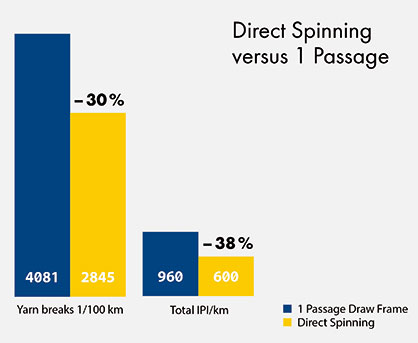
Figure 2: Direct Spinningvs. 1 Passage © 2022 Trützschler


“We believe that right now the fashion industry is in a position to actively play a pioneering role in restoring the environment and thus restoring humanity, and we want to make our contribution to that,” said Patrícia Ferreira, CEO of Valérius Hub. “We are very grateful for the great support that Trützschler has given and continues to give us at all levels – from machine configuration through to product development, assembly and customer service”, adds Miklós Pál Nagy, Manager at Valérius 360.
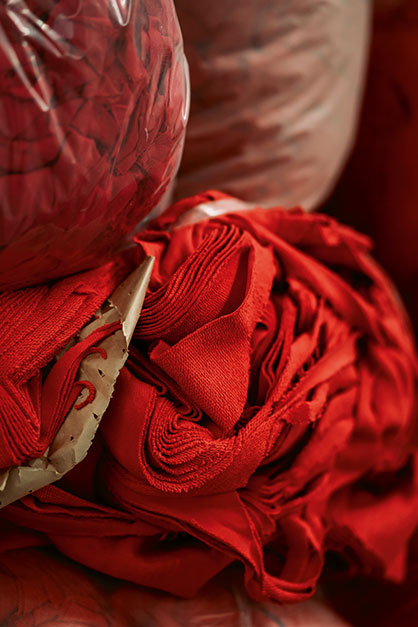
Garmentwastesortedbycolorisreopenedback into single fibers and spun again. © 2022 Trützschler


More News from Truetzschler GmbH & Co. KG

#Spinning

Details matter: How Trützschler cylinder wires boost efficiency in Pakistan’s spinning sector

Pakistan’s textile industry, especially its spinning sector, is the backbone of the national economy and a vibrant hub of innovation. Today’s spinning mills face growing demands for efficiency, quality, and sustainability. From the serene northern valleys to the vibrant port city of Karachi in the south, mills like Suraj Cotton Mills, Liberty, and Nishat Chunian are turning to advanced solutions.

#ITMA Asia + CITME Singapore 2025

T-CAN – Revolutionizing can transport

In virtually all spinning mills, transporting sliver cans is still done manually. Rising labor costs, lack of operators and increasing quality requirements make this a growing challenge. With T-CAN, Trützschler introduces a practical solution: a fully automated can transport system that will be presented live at ITMA ASIA 2025 in Singapore.

#Spinning

Pre-Cleaner CL-X: The future of cotton cleaning

What if the future of cotton cleaning was already here – setting a new standard for cleaning efficiency, productivity and energy savings? That future has a name: CL-X. Since its market launch in 2022, the Pre-Cleaner CL-X has become a true bestseller, proving its value in several hundred customer applications worldwide. Now, new results from Türkiye demonstrate again how the Pre-Cleaner CL-X outperforms the competition.

#ITMA Asia + CITME Singapore 2025

Trützschler invites to discover the future of fiber processing at ITMA Asia Singapore 2025

From October 28 to 31, the Trützschler Group will showcase its latest technologies at ITMA Asia in Singapore. Visit them at Booth D302 in Hall 4 at the Singapore Expo to explore cutting-edge solutions in Spinning, Card Clothing, and Nonwovens. A special highlight: the newest smart automation solution T-CAN, developed in response to growing labor costs and labor shortages in the textile industry. This innovation will be revealed exclusively at the show – don’t miss the opportunity to experience it first-hand.

More News on Recycling / Circular Economy

#Recycling / Circular Economy

Sahil Kaushik appointed CEO of Infinited Fiber as the company advances a phased path to commercial scale

Infinited Fiber has appointed Sahil Kaushik as Chief Executive Officer. Kaushik has served as Acting CEO alongside his role as Chief Operating Officer and will continue to oversee operations until a new COO is appointed.

#Recycling / Circular Economy

trinamiX with new management

BASF is examining strategic options for its subsidiary trinamiX GmbH. trinamiX specializes in biometric imaging and mobile material analysis. These activities are not part of BASF’s core business, on which the company is focusing as part of the implementation of its new strategy.

#Recycling / Circular Economy

Reju announces site selection for first U.S. industrial sized facility regeneration hub in Rochester, New York

Reju, the textile-to-textile regeneration company, today announced it has selected the site for its first U.S.-based industrial facility marking a significant milestone in its efforts to scale globally. This future Regeneration Hub will be in Rochester, New York, reinforcing Reju’s commitment to the adoption of circular textile system across key regions worldwide.

#Business

Canopy introduces a first-of-its-kind $2 billion USD investment blueprint to decarbonize global materials supply chains

Today, the global, solutions-driven not-for-profit Canopy joined partners at Davos to introduce a new finance model designed to accelerate the growth of low-carbon materials and transform the paper, packaging, and textile supply chains. The event was anchored by a keynote speech from Sri A Revanth Reddy, Hon’ble Chief Minister of Telangana, with India set to host the first iteration of the new investment blueprint.

Latest News

#Dyeing, Drying, Finishing

Orthopac RVMC-20 plus: German Engineering for Smarter Weft Straightening

In times of rising cost pressure and growing quality demands, textile producers worldwide are searching for solutions that combine precision, efficiency, and sustainability. With its latest innovation, the Orthopac RVMC-20 plus, Mahlo once again demonstrates the strength of German engineering: improving proven technology to meet today’s challenges.

#Knitting & Hosiery

KARL MAYER and Lenzing partner to advance warp knitting with scalable cellulose fiber solutions

The Lenzing Group, a leading supplier of regenerated cellulosic fibers for the textile and nonwovens industries, together with KARL MAYER, the global market leader in warp knitting machines and warp preparation systems, debut a joint innovation project during Premiere Vision, Paris.

#Textile chemistry

RUDOLF gets the exclusive global distribution rights for Sanitized® textile technologies

With effect from today, RUDOLF officially assumes exclusive global distribution rights for Sanitized® textile technologies from SANITIZED AG. This is the next milestone in the strategic collaboration announced in 2025, with the partnership between the two companies now fully implemented and expanded worldwide.

#Europe

ICAC to support European Commission on pending PEF legislation

The International Cotton Advisory Committee (ICAC) is proud to announce that it has been included as a member of the European Commission’s Technical Advisory Board (TAB) on the Product Environmental Footprint methodology. The Commission developed the Product Environmental Footprint (PEF) to assess and communicate the life cycle environmental performance of products and organizations.

TOP