[pageLogInLogOut]

#Composites

Spinnova enters composite markets with premium alpine skis

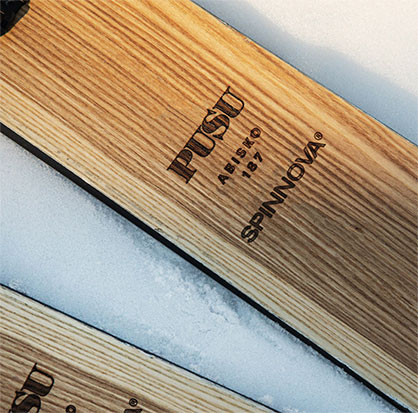
Sustainable material company Spinnova makes its debut in composites in partnership with ski manufacturer Pusu. In Pusu X Spinnova® alpine skis, carbon and glass fibres are replaced with Spinnova®.

Composites is a new application area for Spinnova, as the SPINNOVA® fibre has until now been demonstrated in apparel and interior design applications. Spinnova and Finnish ski maker PUSU today announce their partnership and pre-sales of skis strengthened with SPINNOVA® materials. Consumers can sign up for pre-sales at PUSU’s webshop, and deliveries of the first skis are expected to take place in early 2022.?

The products’ key features are high performance, sustainability and functional design. The sustainable SPINNOVA® material is laminated to the PUSU ski woodcore to replace carbon and glass fibres. Based on vigorous testing, initial results show that SPINNOVA® reinforced skis improves skiing experience and provides long-lasting performance and durability. Moreover, SPINNOVA® materials are safer to process than conventional composite materials.


"It’s been clear to us since the beginning that our fibre can be used in multiple ways. This is a great example of how SPINNOVA® fibres can be used in composites, and there are plenty of other exciting opportunities in the composites area in the future."

Spinnova’s CTO and co-founder Juha Salmela 


– It’s been clear to us since the beginning that our fibre can be used in multiple ways. This is a great example of how SPINNOVA® fibres can be used in composites, and there are plenty of other exciting opportunities in the composites area in the future. We’re happy that PUSU saw the potential in SPINNOVA® fibre as well. We expect to create sustainable skis without compromising excellent performance, says Spinnova’s CTO and co-founder Juha Salmela. ?

PUSU has been making skis and snowboards from sustainably sourced wood since 2016, and their philosophy is to maximize the use of natural materials. Ski manufacturing has traditionally relied on non-renewable materials like plastic, glass fibre, carbon fibre and costly metal blends. Winter-loving alpine skiers are now, however, more and more keen on alternatives that contribute to climate change as little as possible.

– We strongly believe that focusing on quality and natural materials creates the best and the most sustainable products for the environment and the user. Working with the SPINNOVA® fibre seems to prove we’re right – we have received outstanding feedback from professional test skiers using PUSU x SPINNOVA® skis, says PUSU founder and CEO Jani Ahvenainen.

There are some 135 million alpine skiers in the world, served by a 1.3 billion USD equipment market that has not seen much in the way of sustainable innovation yet.


Spinnova’s breakthrough technology makes textile fibre out of wood pulp or waste mechanically, with no harmful chemicals, minimal water usage and CO2 emissions. The 100% circular SPINNOVA® fibre does not shed any microplastics to the environment. The first commercial factory producing SPINNOVA® fibre is expected to begin production by the end of 2022. 
© 2021 SPINNOVA®
© 2021 SPINNOVA®


The ski collaboration is not expected to have a significant impact on Spinnova’s financial performance in 2021-2022.
More News from TEXDATA International

#ITM 2026

ITM 2026: The new geography of textile production

New production hubs are emerging across North Africa and Central Asia, while Türkiye is accelerating its transformation toward higher-value, technology-driven and more sustainable textile manufacturing.

#Research & Development

“Production is a product”

From technical textiles and AI-driven robotics to the limitations of textile circularity: Professor Dr Thomas Gries looks back on more than two decades of development at ITA Aachen. In the interview, he explains why production technology remains a decisive success factor, discusses international collaborations and innovation ecosystems, and shares his views on the transformation of production landscapes and the challenges facing an increasingly regulated industry.

#Knitting & Hosiery

“We need to move away from the price trap and return to a value-driven mindset.”

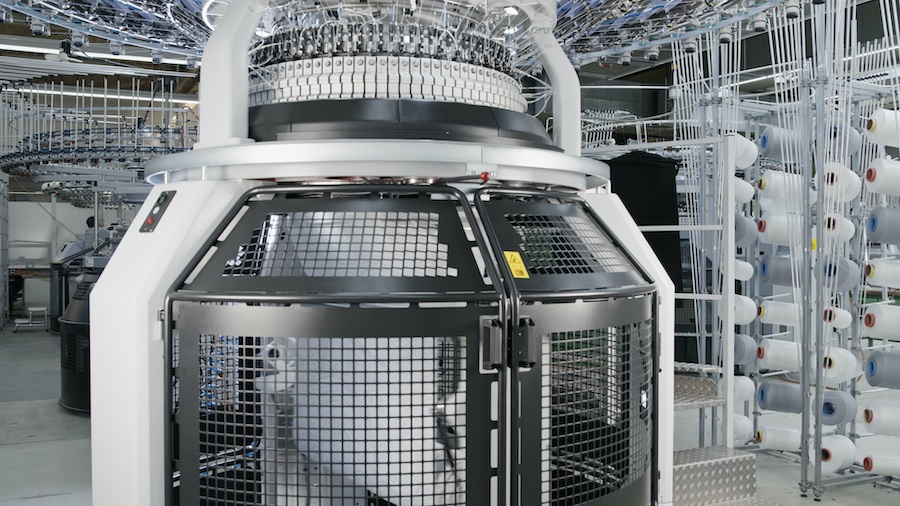
With its new Textile Innovation Center, KARL MAYER is sending a strong signal for innovation, collaboration, and the future of textile applications. In this interview, Karl Josef Mayer discusses new opportunities in warp knitting, the processing of staple fibres, recycling, the changing role of machinery manufacturers, and why the textile industry must once again focus more strongly on the value of textiles. by Oliver Schmidt

#Associations

“Innovation, resilience and international experience remain the great strengths of the Swiss textile machinery industry”

Geopolitical uncertainty, growing competitive pressure from China, new free trade agreements and the shift towards a circular economy are currently reshaping the global textile industry. In this interview, Cornelia Buchwalder discusses the current mood within the Swiss textile machinery sector, the industry’s distinctive innovative strength, new market opportunities in India and Asia, and the technological trends that could shape the upcoming trade fair cycle leading up to ITMA 2027.

More News on Composites

#Research & Development

Novel flame-retardant and recyclable fiber-reinforced composite

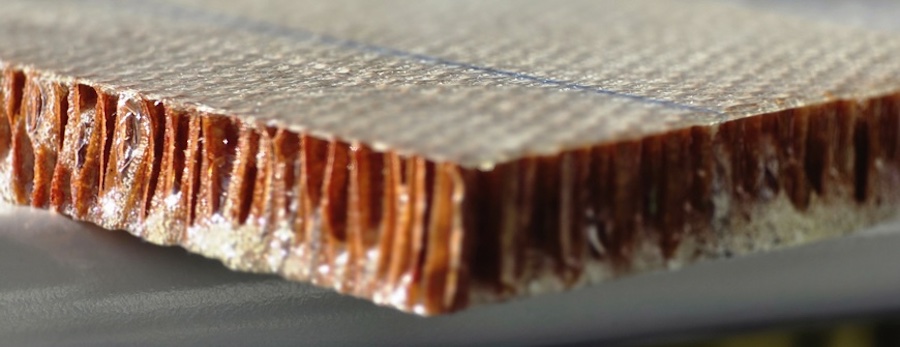
Airplanes and passenger trains must meet strict safety requirements, including fire safety standards. This calls for materials that are flame-retardant, lightweight, robust, and scalable. Empa researchers, in collaboration with their industry partner Elantas, have now succeeded for the first time in making such a material – a composite – fully recyclable.

#Composites

WHILL selects Teijin’s tough, lightweight Carbon Fiber Composite for new last-mile mobility

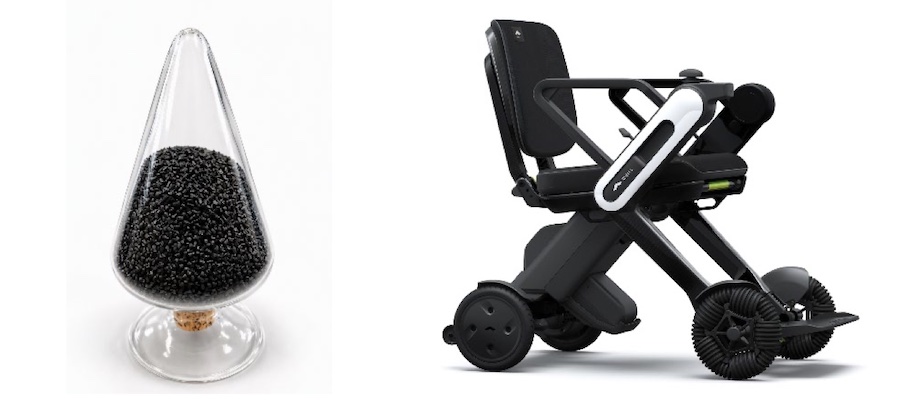
Teijin Limited announced today that WHILL Inc., a global leader in inclusive mobility technology, has selected Sereebo® P CFP series, a carbon fiber-reinforced thermoplastic (CFRTP) material, for key structural components of the upcoming WHILL Model C Lite. Sereebo® P CFP series provides high strength, light weight, design flexibility and system cost advantages to the Model C Lite, which is a battery powered, single-seat, last-mile device. This new model combines maneuverability with light weight and one-handed folding to ensure ease of handling and operation.

#Composites

Fewer pores, greater impact tolerance: Peter Dornier Foundation Prize 2026 honours material research on fibre-reinforced composite components for aerospace industry

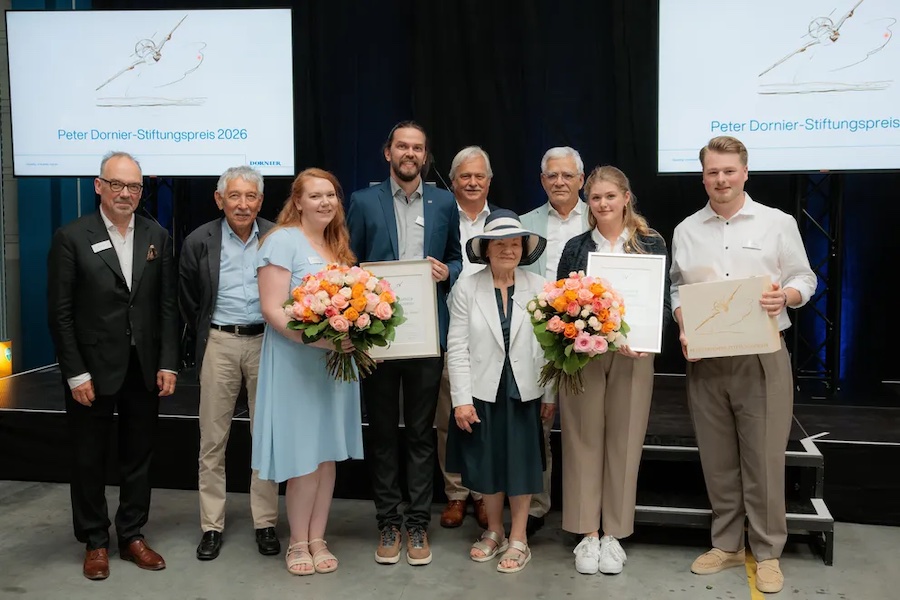
Microscopically small pores that form during manufacture, or barely visible impact damage, can severely impair the load-bearing capacity and service life of fibre-reinforced composite components. Two young researchers have presented groundbreaking work in this field and will both be awarded the 2026 Peter Dornier Foundation Prize: Dr.-Ing. Benedikt Neitzel from the Technical University of Ilmenau for his doctoral thesis on pore minimisation in the RTM process, and Johanna Buschmann, M.Sc., for her master’s thesis, completed at the German Aerospace Centre, on the improved impact tolerance of 3D fabrics compared to 2D laminates.

#Composites

Carbon Revolution wins Composites Australia Engineering Team Excellence Award

Carbon Revolution has won the Engineering Team Excellence Award at the 2026 Composites Australia Annual Industry Awards.

Latest News

#Weaving

Lindauer DORNIER GmbH welcomes new apprentices and dual-study students

For 22 new “DORNIER Talents”, these days mark the beginning of a new chapter at Lindauer DORNIER. For the family-owned company, in-house training is a key pillar in developing skilled professionals and retaining them within the company for the long term.

#Raw Materials

Cotton Brazil Dialogues 2026 concludes with 50 international participants immersed in Brazilian cotton production

The Cotton Brazil Dialogues concludes its 2026 edition after a series of technical visits to farms, cotton gins and reference centers, as well as workshops focused on Brazilian cotton production. A total of 50 participants from 14 countries took part in the field trips. The initiative is led by the Brazilian Association of Cotton Growers (Abrapa) and the National Association of Cotton Exporters (Anea), with support from the Brazilian Trade and Investment Promotion Agency (ApexBrasil).

#Textile chemistry

ZymoChem secures $4 million in renewed federal funding to advance U.S. biomanufacturing of critical materials and their supply chains

ZymoChem, the specialty chemicals company dedicated to bringing decarbonization, sustainability, and supply chain resiliency to the chemical industry through innovative biological manufacturing, today announced the resumption and expansion of its federal research portfolio. The company has been notified that previously paused work under a $5 million U.S. Department of Energy (DOE) program is officially back on, to be joined by continuing collaborations with three of the nation's premier national laboratories.

#Technical Textiles

RDJ 6/2 in E 32: Finesse in Motion

The appearance of sports and casual shoes is as diverse as their applications, ranging from sporty to stylish and from functional to fashionably practical. In particular, spacer fabrics produced on highly flexible KARL MAYER double needle bar raschel machines with Jacquard technology are in high demand for manufacturing these trendy shoes. These efficient production machines enable attractive designs with integrated multifunctional zones on one or both fabric surfaces, such as breathable mesh structures. Flexible in size and positioning, these features enhance both aesthetics and wearing comfort.

TOP