[pageLogInLogOut]

#Recycling / Circular Economy

Cradle to Cradle Products Innovation Institute announces leadership transition

Cradle to Cradle Products Innovation Institute's President and CEO Peter Templeton will step down this autumn to assume the role of interim President and CEO of the US Green Building Council (USGBC) and Green Business Certification Inc. (GBCI). The Board of Directors of the Cradle to Cradle Products Innovation Institute has named Dr. Christina Raab as the Institute’s new President and CEO upon his departure.

Raab joined the Institute in September 2019 as Vice President, Strategy and Development. In this capacity she has been instrumental in strengthening the Institute’s external profile, strategic partnerships, programmatic offerings and internal capabilities. Raab has worked globally to advance responsible consumption and production practices throughout her career, including leadership roles at forefront sustainability consulting firms and organizations focused on driving circular transformation and sustainable development across global value chains. Raab conducted her PhD research in Materials Chemistry at the University of California Santa Barbara and holds a PhD from the Vienna University of Technology. Raab will lead the Institute from its offices in Amsterdam, the Netherlands.

“We are delighted to welcome Dr. Christina Raab as the next president and CEO of the Cradle to Cradle Products Innovation Institute,” said Gerrit Bruggeman, Institute Board Chair. “Christina’s track record of driving transformative sustainability and circularity practices through leading voluntary global standards, market-based innovation, strategic partnerships and collaborations will ensure that the Institute is strongly positioned to continue its current trajectory of growth and success.”

“I am honored to step into the role of Institute President and CEO,” said Raab. “This is a pivotal moment for the global climate and social agenda, and the Institute has a powerful role to play in establishing Cradle to Cradle Certified as a universally enabling solution for a healthy, equitable and sustainable world powered by products and systems that are safe, circular and responsible. I look forward to continue working alongside the Institute’s board, staff and our global stakeholder community towards our shared vision of a positive future for people and our planet.”

The Institute will also continue to draw upon the expertise of its core technical team under the leadership of Dr. Susan Klosterhaus, along with the industry knowledge of the sector leadership team established by Raab to enable and accelerate the innovation and optimization of products in high-impact market sectors, including the built environment, apparel & footwear, cosmetics and personal care, household products, packaging and electronics.

Since joining the Institute as President and CEO in September 2018, Templeton has overseen the creation of the organization’s current strategic plan, and the development and deployment of the Cradle to Cradle Certified Product Standard Version 4.0, released earlier this year. The Institute has also experienced significant growth in the number of Cradle to Cradle Certified products and in its community of certification holders. Templeton will depart and Raab will assume her new role on 15 October 2021.


“We highly value Peter’s leadership of the Institute during the past three years,” Bruggeman said. “As a result of his leadership, the Institute is now strongly positioned to advance the scaling of Cradle to Cradle Certified as the global standard for products that are safe, circular and made for a positive future.”

“It has been an honor to serve as the Institute’s President and CEO, and to work with such a passionate and dedicated team,” said Templeton. “I am grateful for the support, collaboration and partnership of our staff, board and community during my tenure. Christina has earned our deepest respect over the past two years, and she is highly regarded for her technical knowledge, market understanding and utmost commitment to our mission. I look forward to continuing to support the Institute and to witnessing the organization’s further success under Christina’s leadership.”


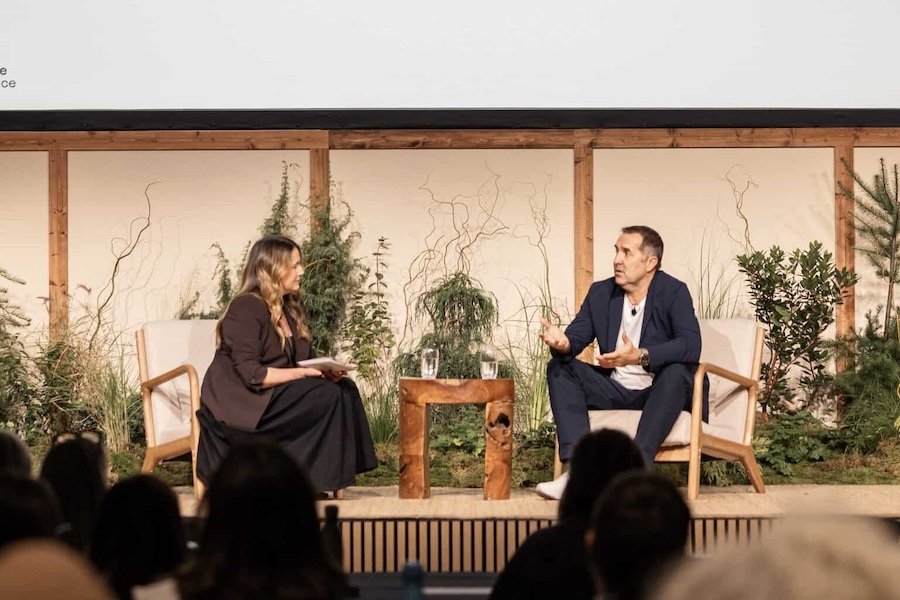
Dr. Christina Raab  © 2021 Cradle to Cradle
Dr. Christina Raab © 2021 Cradle to Cradle


More News from TEXDATA International

#ITM 2026

ITM 2026: The new geography of textile production

New production hubs are emerging across North Africa and Central Asia, while Türkiye is accelerating its transformation toward higher-value, technology-driven and more sustainable textile manufacturing.

#Research & Development

“Production is a product”

From technical textiles and AI-driven robotics to the limitations of textile circularity: Professor Dr Thomas Gries looks back on more than two decades of development at ITA Aachen. In the interview, he explains why production technology remains a decisive success factor, discusses international collaborations and innovation ecosystems, and shares his views on the transformation of production landscapes and the challenges facing an increasingly regulated industry.

#Knitting & Hosiery

“We need to move away from the price trap and return to a value-driven mindset.”

With its new Textile Innovation Center, KARL MAYER is sending a strong signal for innovation, collaboration, and the future of textile applications. In this interview, Karl Josef Mayer discusses new opportunities in warp knitting, the processing of staple fibres, recycling, the changing role of machinery manufacturers, and why the textile industry must once again focus more strongly on the value of textiles. by Oliver Schmidt

#Associations

“Innovation, resilience and international experience remain the great strengths of the Swiss textile machinery industry”

Geopolitical uncertainty, growing competitive pressure from China, new free trade agreements and the shift towards a circular economy are currently reshaping the global textile industry. In this interview, Cornelia Buchwalder discusses the current mood within the Swiss textile machinery sector, the industry’s distinctive innovative strength, new market opportunities in India and Asia, and the technological trends that could shape the upcoming trade fair cycle leading up to ITMA 2027.

More News on Recycling / Circular Economy

#Research & Development

ALADIN paves the way for circular and demand-driven textile production in Europe

Textile production can be organized sustainably by utilizing short supply chains and preventing overproduction. This can already be achieved today by intelligently connecting and efficiently utilizing existing infrastructure. At the same time, production becomes circular when innovative technologies and materials are used that enable high-quality recycling. The ALADIN research project, launched in May 2026 and co-funded with five million euros under the EU Horizon Europe program, is creating the conditions for this.

#Recycling / Circular Economy

Ence and ShareTex begin initial testing of the ATENEA innovation project to promote textile recycling in Spain

Ence and ShareTex are making progress on the Atenea R&D project, which aims to develop a complete value chain for textile recycling in Spain. Specifically, the goal of the ATENEA project—which is funded by the Center for Technological Development and Innovation (CDTI)—is to connect all the necessary stages for the recovery of textile waste, from collection and management, through recycling and transformation into new raw materials, to their incorporation into new textile products.

#Recycling / Circular Economy

DePoly Inaugurates its Showcase Plant in Monthey Switzerland

What if used plastic bottles, PET packaging material and polyester textiles could become raw materials just as high performing as virgin resources? That is the ambition of DePoly, a circular materials company based in Sion, Switzerland which inaugurated its Showcase Plant in Monthey on July 6th & 7th. The first depolymerization facility of its kind and scale in Switzerland, this industrial Showcase Plant represents a major milestone in the company's growth and its journey toward commercialization.

#Recycling / Circular Economy

Commission clarifies rules on plastic bottles recycling

The European Commission today adopted new rules on recycling of single-use plastic beverage bottles made primarily of polyethylene terephthalate (PET bottles). These rules establish, for the first time, a methodology to calculate, verify and report chemically recycled content. This is part of the Commission’s December 2025 plastics package.

Latest News

#Nonwovens

Katharina Obergruber appointed to the Management Board of Sandler AG

The Supervisory Board of Sandler AG has appointed Katharina Obergruber to the company’s Management Board. Effective September 1, 2026, the Board will consist of Philipp Ebbinghaus (CEO), Dr. Ulrich Hornfeck (currently CCO, future COO), and Katharina Obergruber (CCO). Katharina Obergruber, currently Chief Sales Officer Hygiene and member of the Management Team of Sandler AG, will assume responsibility for all sales activities as Chief Commercial Officer. She will assume this role from Dr. Ulrich Hornfeck, who will focus primarily on production and supply chain topics.

#Sustainability

Global Standards establishes new non-profit foundation to strengthen governance

Global Standards gGmbH, the nonprofit organisation behind the globally recognised Global Organic Textile Standard (GOTS), announced a new governance structure designed to support its long-term mission and reinforce organisational autonomy of its Voluntary Sustainability Standards and programmes.

#Textile chemistry

DyStar releases FY2025 sustainability report, marking a new milestone towards its 2030 targets

DyStar, a leading specialty chemicals company with more than a century of expertise in product development and innovation, today announced the release of its FY2025 Sustainability Report, marking a significant milestone in its sustainability journey and reinforcing its commitment to long-term value creation.

#Research & Development

TERIS reaches milestone: Fraunhofer consortium develops new standards for tire analysis

In the “TERIS” project, the Fraunhofer institutes ICT, IGD, and IWM—led by the Fraunhofer Institute for Structural Durability and System Reliability LBF—have reached a decisive milestone. For the first time, the teams aim to generate, analyse, and predict tire wear in the laboratory in a standardized and practical manner. As part of this milestone, results are now available on reference abrasion, particle analysis, tribological models, AI-based surface analysis, a test bench concept, and methods for accelerated aging and VOC detection. The tire industry, testing services, and environmental agencies will in future benefit from reliable, rapid laboratory procedures for emissions assessment.

TOP