[pageLogInLogOut]

#Recycling / Circular Economy

DSM and SABIC combine efforts to create recycled-based Dyneema®
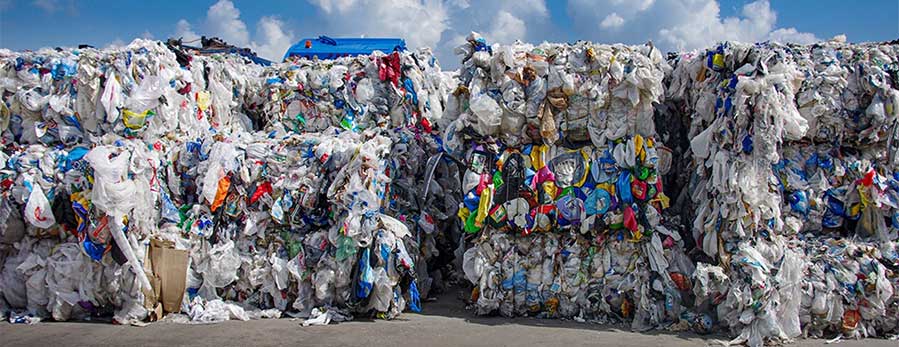
Bales of mixed post-consumer bags and film. (Images courtesy of SABIC)
Royal DSM, a global science-based company in Nutrition, Health and Sustainable Living, and SABIC, a global leader in the chemical industry, today announced a collaboration to create recycled-based Dyneema®. Through a joint pilot with multiple CirculariTeam® members, the manufacturing and usage of Dyneema® using mixed plastic waste as feedstock (via mass balance approach) will be successfully demonstrated. It is an important step toward the future goal of fully closing the loop by delivering Dyneema® made from ultra-high molecular weight polyethylene (UHMwPE) waste. This collaboration underlines DSM’s and SABIC’s efforts to accelerate a circular economy for materials.

By working together with members of CirculariTeam®, DSM will produce recycled-based Dyneema® made using SABIC’s certified circular ethylene as a pilot project in both a sailing rope and a pelagic trawl net application. The circular ethylene, from SABIC’s TRUCIRCLE™ portfolio, uses mixed plastic waste as feedstock (mass balance approach), which not only contributes to preventing valuable plastic from becoming waste and the avoidance of carbon emissions compared to incineration, but it will also help preserve fossil resources. These pilots are an important early-stage milestone in the journey toward making fully circular Dyneema® from HMPE post-production and post-consumer waste.
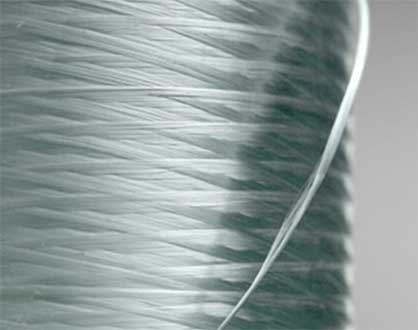
Fiber bobbin. (Photos: DSM Protective Materials: DSMPMPR009)


Jan-Lodewijk Lindemulder, President DSM Protective Materials: “This achievement is a key milestone on the journey toward our goal of delivering a fully circular Dyneema®. By working with partners from across the value chain, we are able to significantly reduce the environmental impact of the world’s strongest fiber – and we will continue to explore ways of reducing and eliminating waste across the entire product lifecycle.”

Mark Vester, Circular Economy Leader at SABIC: “At SABIC, we firmly believe that only through collaboration and innovation can we drive forward and develop solutions that meet the needs of all stakeholders. This is another important step closer to closing the loop on Dyneema®. Moving forward, through our TRUCIRCLE™ solutions and beyond, we will continue to make every effort to deliver a more sustainable value chain and economy.”


Jon Mitchell, Managing Director at Marlow Ropes: “We’re proud to be one of the first manufacturers to integrate recycled-based Dyneema® within our products and demonstrate the material’s feasibility. By collaborating with materials science pioneers such as DSM and SABIC, we are able to create products that not only deliver superlative functional performance but also have a lower environmental impact. Our products are trialed and tested by professional offshore sailing teams including 11th Hour Racing Team, a proud partner of ours at Marlow, with whom we share a progressive approach to seeking sustainable solutions: no more business as usual."

Klaus Walther, Managing Director at Gleistein: “Warm congratulations to DSM and SABIC for pushing the boundaries of science to deliver a truly unique product. We’re proud that our ropes can be produced from what once was typical household plastic waste. This is an important stepping stone towards becoming circular. It will enable our customer Maritiem BV to further develop high-tech fishing gear whilst contributing to the circular economy. Not to forget Cornelis Vrolijk Fishing Company, who again illustrate their commitment to Corporate Social Responsibility by introducing this concept in fishery.”
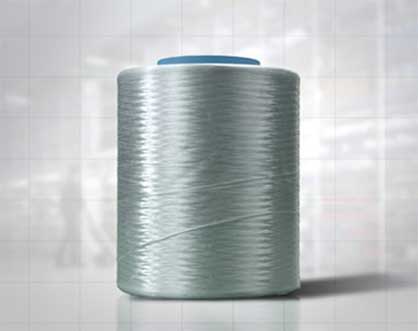

Fiber bobbin. (Photos: DSM Protective Materials: DSMPMPR009)


More News from DSM Dyneema B.V.

More News on Recycling / Circular Economy

Latest News

#Research & Development

More safety and comfort for protective clothing thanks to auxetic fabrics

When everyday materials are pulled, they stretch or elongate in the direction of the pull and become narrower in cross-section. We can also observe this property in two-dimensional textiles. Auxetic structures behave differently here. They have the striking property of not changing under tensile stress or even increasing their width or thickness. These properties are advantageous, for example, in protective textiles or textile filter media. The DITF are researching auxetic fabrics for various applications.

#Spinning

First PA66 spinning plant with EvoQuench successfully commissioned

With the successful commissioning of a multi-digit PA66 spinning line for microfiber yarns, Chinese textile company Shandong Nanshan Fashion Technology Co., Ltd. has added yarn production to its textile value chain.

#Knitting & Hosiery

SHIMA SEIKI returns to ShanghaiTex

Leading flat knitting solutions provider SHIMA SEIKI MFG., LTD. of Wakayama, Japan, together with its Hong Kong and Chinese market subsidiary SHIMA SEIKI (HONG KONG) LTD., will exhibit at the ShanghaiTex 2025 exhibition (Booth No.: Hall N3, Booth A20) held in Shanghai, China this month. This marks the return of SHIMA SEIKI to ShanghaiTex after a 14-year hiatus, its last exhibit at the show having been in 2011.

#Research & Development

Fraunhofer CCPE presents the “Monomaterial Design Set” – Innovative solutions for circular product design

Composite materials made from different types of plastic often extend the lifetime of products but make recycling more difficult in the circular economy. That is why Fraunhofer CCPE has developed the “Monomaterial Design Set”. This new approach helps to reduce the variety of plastics used in durable products and offers circular solutions for designers and product developers.

TOP