#Recycling / Circular Economy
New Look, M&S, Sainsbury's and Oxfam join forces to boost the UK’s circular textile economy
In 2024, approximately 1.4 million tonnes of post-consumer textiles were generated across the UK, reinforcing the need for greater investment in the infrastructure required to recover, reuse and recycle valuable textile resources. It’s estimated nearly half of this is made up of non-reusable textiles[1], highlighting the need for new solutions to recover and recycle textiles at scale. Demand for recycled textile materials is growing, but the systems needed to create them from post-consumer textiles are still emerging. The Circuit has been established to close that gap.
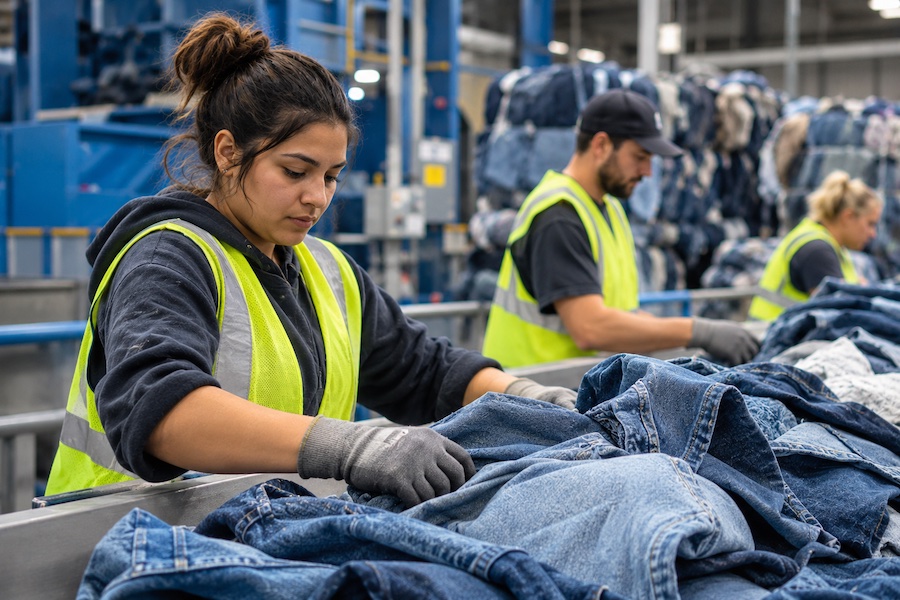
The Circuit is designed to create new pathways through which UK generated non-reusable end-of-use textiles can be recovered, sorted and pre-processed into input materials for the existing and emerging fibre-to-fibre recycling industry. By bringing together organisations from across the value chain, The Circuit aims to create the scale, consistency and commercial conditions needed accelerate future textile to textile recycling viability. The initiative also supports the broader UK economy by enabling job creation and manufacturing. Automated sorting and pre-processing, close to the source of where textiles that have reached end of use are generated and turned into feedstock for regional and global supply chains.
The partnership will work to the development of both mechanical and chemical recycling processes capable of transforming UK generated post-consumer textiles into raw materials for regional and global textile manufacturing. By creating multiple routes to market and products for recovered materials, participating retailers will help shape the value chains that support future circular materials.
Circle-8, the development company behind The Circuit, is developing the infrastructure, partnerships and commercial frameworks required to connect post-consumer textile recovery with future circular material supply. This includes the development of Automated Textile Sorting and Pre-processing facilities, which create feedstock for existing and emerging textile recyclers.
The first phase of The Circuit will begin in January 2027, bringing together retailers and partners at Oxfam’s site in Batley, Yorkshire. The initial phase will focus on automated textile sorting, combined with developing reporting frameworks to improve traceability, identifying circular material opportunities, building relationships with recyclers and exploring operational models that could support further scaling of the initiative. Oxfam will play a crucial role in separating the reusable and non-reusable textiles and operating the automated textile sorting equipment, building on its longstanding expertise in textile recovery and reuse.
Lynda Petherick, Chief Executive Officer at New Look, said: “Building a more circular fashion industry requires collaboration right across the value chain. The Circuit gives retailers an opportunity to play an active role in developing the systems that could turn non-reusable textiles already in circulation into the raw materials of the future. For New Look, this is about looking at how we can help create more resilient, circular supply chains over the longer term. We’re pleased to be part of The Circuit, to help demonstrate what can be achieved at scale.”
Katharine Beacham, Head of Sustainability & Materials in Fashion, Home & Beauty at M&S, said: "At M&S, we believe the most sustainable clothing is clothing that is worn and loved for longer. Through Plan A for Another Life, we have an ambition to give 5 million items Another Life by 2030 through rewear, repair, resale and recycling. However, when textiles reach the end of their usable life, we need better solutions to recover and recycle the materials they contain. The Circuit is an important step forward, bringing together organisations from across the retail industry to help create viable routes for non-reusable textiles and support a more circular future for fashion.”
Ben Smith, Managing Director of Sainsbury's Tu Clothing, said: "Creating a more circular future for textiles will take collaboration and innovation across the whole industry. The Circuit is an exciting opportunity to work alongside partners from across the value chain to explore how post-consumer textiles generated here in the UK can be given a new life as valuable raw materials. For Tu at Sainsbury's, it's about learning, testing practical solutions and helping shape a more circular textiles economy for the future."
Rachel Cosgrove-Pearce, Retail Director at Oxfam, said: “Oxfam has been giving clothes a second life for almost 80 years, and our experience tells us that keeping clothing in use for as long as possible is one of the most effective ways to reduce fashion’s impact on our planet. But we also urgently need better solutions for textiles that can no longer be worn or reused. Developing the infrastructure to recover valuable fibres from end-of-use textiles is an important part of building a fashion system that uses fewer virgin resources and creates less environmental harm, and The Circuit brings together the expertise and investment needed to move this forward at scale. We’re proud to be playing our part, building on Oxfam’s long history of textile recovery and our work at Batley.”
Cyndi Rhoades, CEO and Co-Founder of Circle-8 Textile Ecosystems said: The retailers who help build circular textile value chains today will be best positioned to influence and benefit from them tomorrow. Through The Circuit, we’re powering the relationships, infrastructure and commercial frameworks needed to make that possible. No one organisation can create a circular textile value chain alone, and we look forward to welcoming others to The Circuit.