[pageLogInLogOut]

#Recycling / Circular Economy

IVGT joins EU project Skills4Circularity

The textile industry in transition

New skills for the circular economy and digitalisation
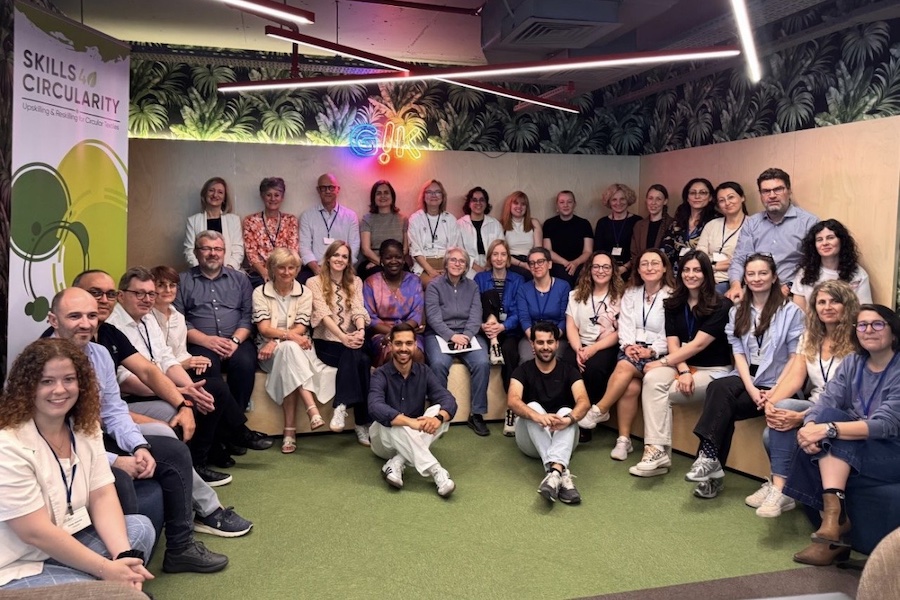
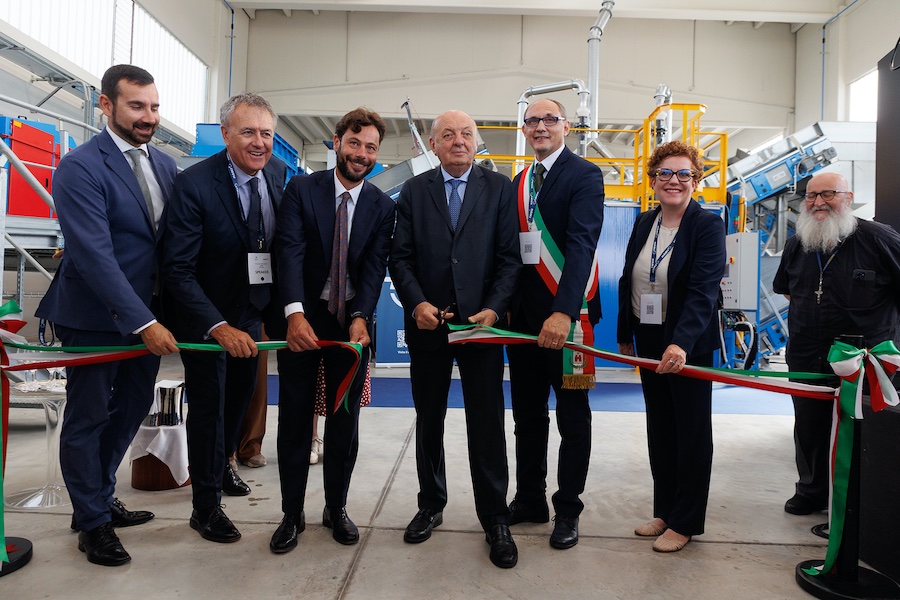
The second in-person meeting of the Skills4Circularity project took place in ind at the end of April. During the meeting, key foundations for the development of future training modules were established © 2026 IVGT
Recycling, traceability, eco-design and digitalisation are among the key future challenges facing the European textile industry. The Erasmus+ project Skills4Circularity, involving 21 partners from twelve countries, is investigating the skills required to address these challenges. As the German industry partner, the Industry Association for Finishing – Yarns – Fabrics – Technical Textiles (IVGT) is bringing the industry’s perspective to the project.

The aim of the project is to identify skills gaps and, building on these, to develop tailor-made training programmes for the circular textile economy. The project is based on a Europe-wide company survey involving 183 participants from twelve countries, 22 expert interviews, and an AI-supported analysis of 313 job advertisements across eleven countries. The results clearly show that the industry’s greatest challenges lie less in a lack of technology and more in a lack of skills. Knowledge of regulatory requirements, the circular economy, life cycle assessments (LCA), data management and process integration is particularly in demand. Traceability, material sorting and sustainable production processes also rank among the industry’s most important areas of expertise.
Sustainability requires systemic thinking

The analysis also highlights that whilst sustainability, the circular economy and technological innovation are recognised as strategic goals regardless of company size, their implementation often takes place incrementally and in isolation. In many cases, measures are not yet viewed as part of a holistic transformation strategy.

There are clear differences between company sizes in this regard. Large companies have extensive technological and organisational resources but face significant regulatory and transformational pressure. Medium-sized companies often drive the functional and sustainable development of textiles but are frequently constrained by economic conditions and customer requirements. Small enterprises score highly on flexibility but have only limited technological capacity. Micro-enterprises often operate as innovative niche providers but are particularly dependent on partnerships and stable market conditions.

A key finding of the research was that the greatest obstacles to implementing circular economy concepts do not stem from a lack of awareness of the issues. Rather, skills gaps, insufficient integration of processes across the entire product life cycle, a lack of data standards, and often inadequate coordination along the value chain are the decisive factors. There is a particularly acute need for specialist knowledge to translate the increasing EU regulations and sustainability requirements into operational practice.

The study also shows that recycling, eco-design and sustainable production are not yet sufficiently integrated within many companies. Furthermore, recycling processes are often outsourced and only considered at the end of the product life cycle. Although eco-design is increasingly being incorporated into product development, it is rarely firmly integrated into standardised development processes. Sustainable production measures often focus on resource efficiency and process optimisation without being systematically linked to circular strategies. As a result, potential for life-cycle-oriented optimisation of materials, products and processes often remains untapped.

Three training modules for the textile transformation

Based on the analysis results, Skills4Circularity is now developing three practice-oriented training modules on the topics of recycling technologies, eco-design for the circular economy and sustainable production.

The ‘Recycling Technologies’ module provides knowledge on legal requirements, material sorting and the processing of textile waste. The aim is to support companies in better structuring recycling processes and improving collaboration along the recycling value chain.

The “Eco-design for the Circular Economy” module focuses on regulatory requirements, life-cycle assessment and traceability systems. Participants will be equipped to systematically integrate circular design principles into product development and to establish the conditions for a functioning circular economy as early as the initial development phases.

The third module is dedicated to sustainable production. The focus is on resource-efficient and low-waste production processes, as well as the organisational embedding of sustainability goals within the company. In particular, the aim is to link production processes more closely with circular strategies and recycling approaches.

With these training programmes, Skills4Circularity aims to support the European textile industry in integrating the circular economy, digitalisation and sustainability more closely into operational practice. Continuing professional development thus becomes a key success factor for the transformation of the sector. www.ivgt.de

About the Skills4Circularity project

Skills4Circularity is an Erasmus+ project involving 21 partners from twelve countries. The aim is to prepare the European textile industry for the challenges of the circular economy, recycling, traceability and digitalisation through new training programmes. The IVGT is participating as the German industry partner. The project runs from November 2025 to October 2029 and is developing, among other things, training modules, MOOCs, masterclasses and a European Textile Skills Observatory.

Skills analysis as a basis

As part of Skills4Circularity, the project partners, led by the IVGT, analysed the skills needs of the European textile industry. This was based on a company survey involving 183 participants from twelve countries, 22 expert interviews, the AI-supported analysis of 313 job advertisements in eleven countries, and an expert workshop.

The results show that the greatest challenges lie not so much in a lack of technology as in skills gaps. Knowledge of regulatory requirements, the circular economy, life cycle assessments (LCA), data management and process integration is particularly in demand. 

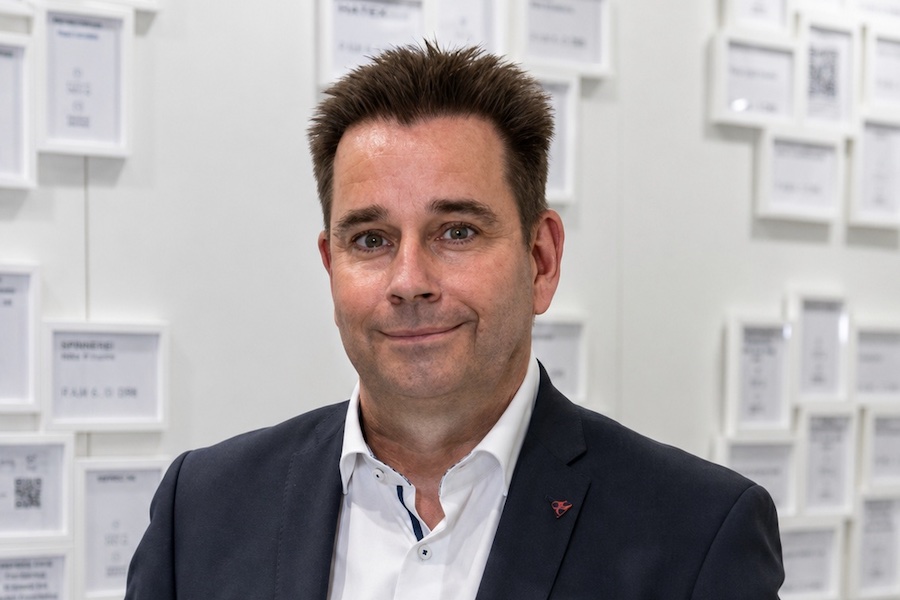
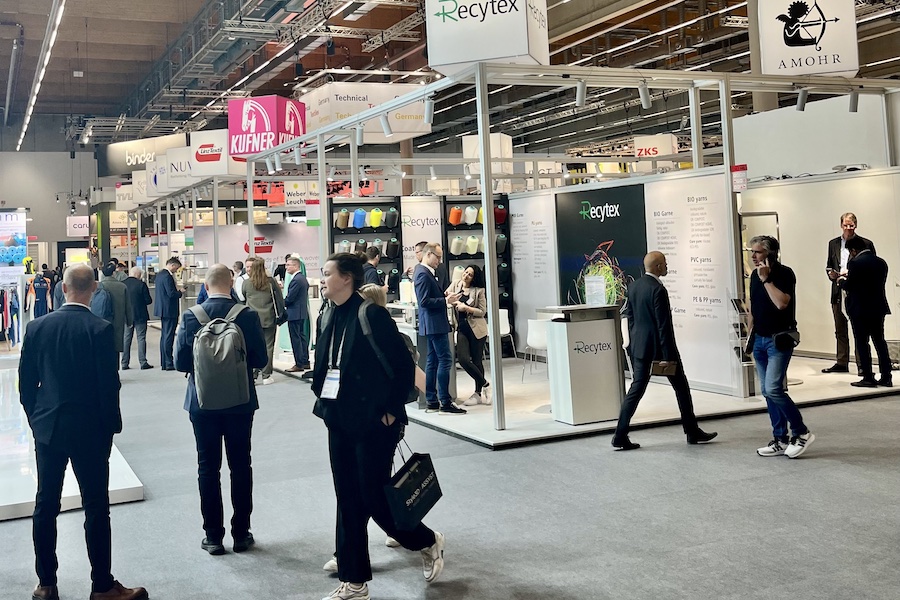
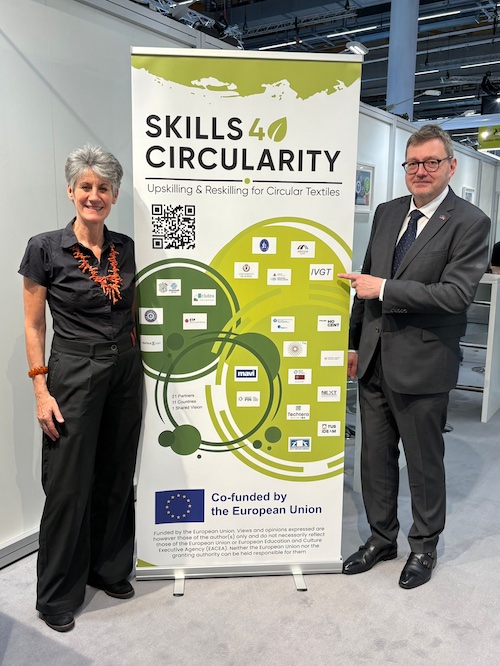
Stefan Schmidt and Iris Schlomski, both from IVGT, presented the Skills4Circularity project at the IVGT stand at Techtextil 2026 © 2026 IVGT


Skills4Circularity 


More News from Industrieverband Veredlung - Garne - Gewebe - Technische Textilien e.V.

#Recycling / Circular Economy

New skills for a circular textile economy

Based on the results of a comprehensive analysis, the Erasmus+ project Skills4Circularity is developing three practical training modules covering recycling technologies, eco-design for the circular economy and sustainable manufacturing. The content of the first module, Recycling Technologies, has now been developed and validated together with industry representatives. The module provides participants with knowledge of regulatory requirements, material sorting and the preparation of textile waste for recycling.

#Techtextil 2026

IVGT joint stand brings innovation and networking to Techtextil 2026

At Techtextil 2026 and the parallel Texprocess 2026, key transformation topics such as artificial intelligence, digitalisation, sustainability, recycling and the circular economy will be reflected across the show. Against this backdrop, the IVGT, together with 16 member companies, will present its joint stand in Hall 12.1 (Stand D62) as a platform for exchange and networking.

#Textiles & Apparel / Garment

IVGT: AddTex final meeting in Terrassa

From 25 to 26 June 2025, the final meeting of the ERASMUS+ project AddTex took place in Terrassa, Spain, which aimed to train workers, pupils and students in the textile industry. Over a period of three years, eleven partners from Greece, Ireland, Italy, Portugal, Romania, Sweden, Slovenia, Spain, the Czech Republic and the IVGT association for Germany were involved in the project.

#Associations

Promoting sustainability, digitalisation and resilience

The EU project ADDTEX has reached an important milestone with the two publications White Book and E-Book. Both publications contain comprehensive guidelines, findings and policy recommendations to support the sustainable, digital and resilient transition of the textile industry. The focus is on technical textiles, whose innovations are considered key to the competitiveness and resilience of the European industry.

More News on Recycling / Circular Economy

#Research & Development

ALADIN paves the way for circular and demand-driven textile production in Europe

Textile production can be organized sustainably by utilizing short supply chains and preventing overproduction. This can already be achieved today by intelligently connecting and efficiently utilizing existing infrastructure. At the same time, production becomes circular when innovative technologies and materials are used that enable high-quality recycling. The ALADIN research project, launched in May 2026 and co-funded with five million euros under the EU Horizon Europe program, is creating the conditions for this.

#Recycling / Circular Economy

Ence and ShareTex begin initial testing of the ATENEA innovation project to promote textile recycling in Spain

Ence and ShareTex are making progress on the Atenea R&D project, which aims to develop a complete value chain for textile recycling in Spain. Specifically, the goal of the ATENEA project—which is funded by the Center for Technological Development and Innovation (CDTI)—is to connect all the necessary stages for the recovery of textile waste, from collection and management, through recycling and transformation into new raw materials, to their incorporation into new textile products.

#Recycling / Circular Economy

DePoly Inaugurates its Showcase Plant in Monthey Switzerland

What if used plastic bottles, PET packaging material and polyester textiles could become raw materials just as high performing as virgin resources? That is the ambition of DePoly, a circular materials company based in Sion, Switzerland which inaugurated its Showcase Plant in Monthey on July 6th & 7th. The first depolymerization facility of its kind and scale in Switzerland, this industrial Showcase Plant represents a major milestone in the company's growth and its journey toward commercialization.

#Recycling / Circular Economy

Commission clarifies rules on plastic bottles recycling

The European Commission today adopted new rules on recycling of single-use plastic beverage bottles made primarily of polyethylene terephthalate (PET bottles). These rules establish, for the first time, a methodology to calculate, verify and report chemically recycled content. This is part of the Commission’s December 2025 plastics package.

Latest News

#Nonwovens

Katharina Obergruber appointed to the Management Board of Sandler AG

The Supervisory Board of Sandler AG has appointed Katharina Obergruber to the company’s Management Board. Effective September 1, 2026, the Board will consist of Philipp Ebbinghaus (CEO), Dr. Ulrich Hornfeck (currently CCO, future COO), and Katharina Obergruber (CCO). Katharina Obergruber, currently Chief Sales Officer Hygiene and member of the Management Team of Sandler AG, will assume responsibility for all sales activities as Chief Commercial Officer. She will assume this role from Dr. Ulrich Hornfeck, who will focus primarily on production and supply chain topics.

#Sustainability

Global Standards establishes new non-profit foundation to strengthen governance

Global Standards gGmbH, the nonprofit organisation behind the globally recognised Global Organic Textile Standard (GOTS), announced a new governance structure designed to support its long-term mission and reinforce organisational autonomy of its Voluntary Sustainability Standards and programmes.

#Textile chemistry

DyStar releases FY2025 sustainability report, marking a new milestone towards its 2030 targets

DyStar, a leading specialty chemicals company with more than a century of expertise in product development and innovation, today announced the release of its FY2025 Sustainability Report, marking a significant milestone in its sustainability journey and reinforcing its commitment to long-term value creation.

#Research & Development

TERIS reaches milestone: Fraunhofer consortium develops new standards for tire analysis

In the “TERIS” project, the Fraunhofer institutes ICT, IGD, and IWM—led by the Fraunhofer Institute for Structural Durability and System Reliability LBF—have reached a decisive milestone. For the first time, the teams aim to generate, analyse, and predict tire wear in the laboratory in a standardized and practical manner. As part of this milestone, results are now available on reference abrasion, particle analysis, tribological models, AI-based surface analysis, a test bench concept, and methods for accelerated aging and VOC detection. The tire industry, testing services, and environmental agencies will in future benefit from reliable, rapid laboratory procedures for emissions assessment.

TOP