[pageLogInLogOut]

#Recycling / Circular Economy

Reju announces the selection of Regeneration Hub One
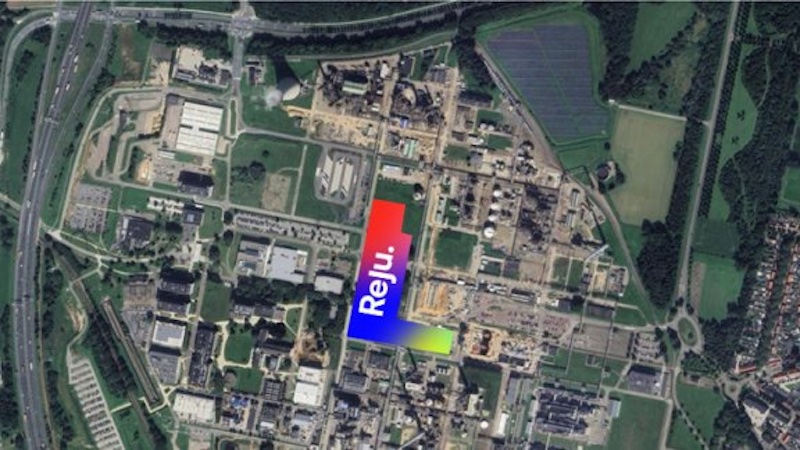
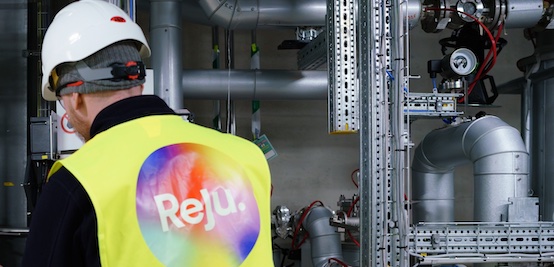
Reju™, the progressive textile-to-textile regeneration company, today announced that it had selected the Chemelot Industrial Park for its first industrial scale regeneration center.? Located in Sittard, Netherlands, Chemelot is a leading European industrial park and innovation hub. This follows the successful opening of Regeneration Hub Zero in Frankfurt in October 2025.
© 2025 Reju
© 2025 Reju


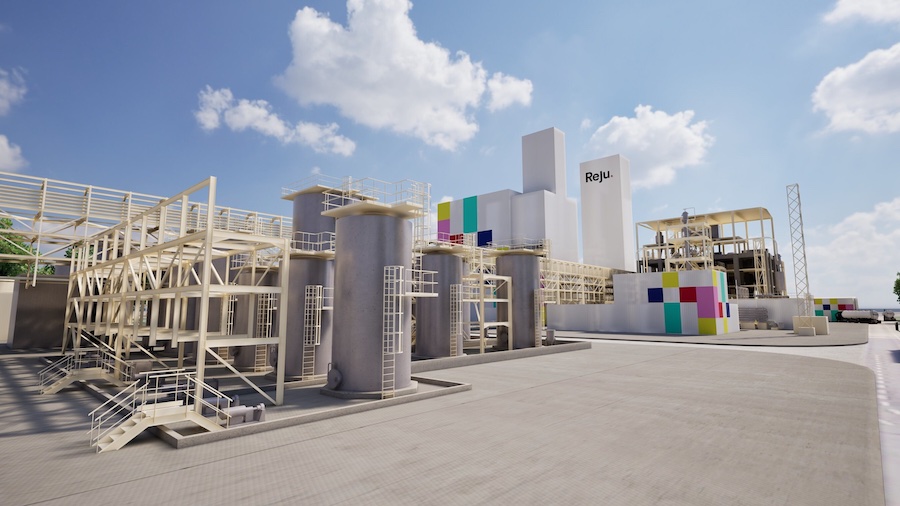
Regeneration Hub One will accelerate Reju’s path to build a circular infrastructure for textile waste regeneration at scale. This strategic location will enable Reju to leverage existing infrastructure and industrial synergies to scale its operations efficiently. The project will be subject to final investment decision by the board of Technip Energies, the parent company of Reju.

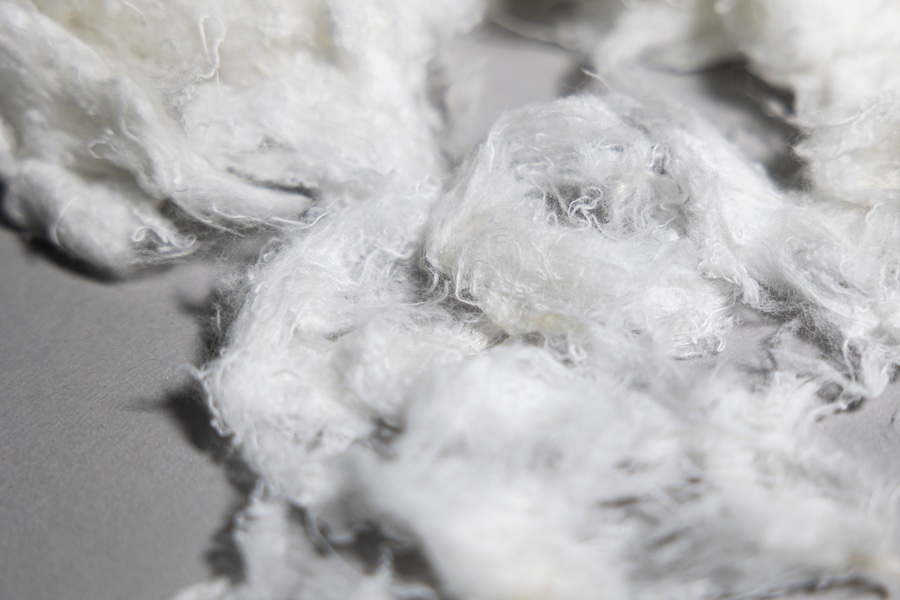
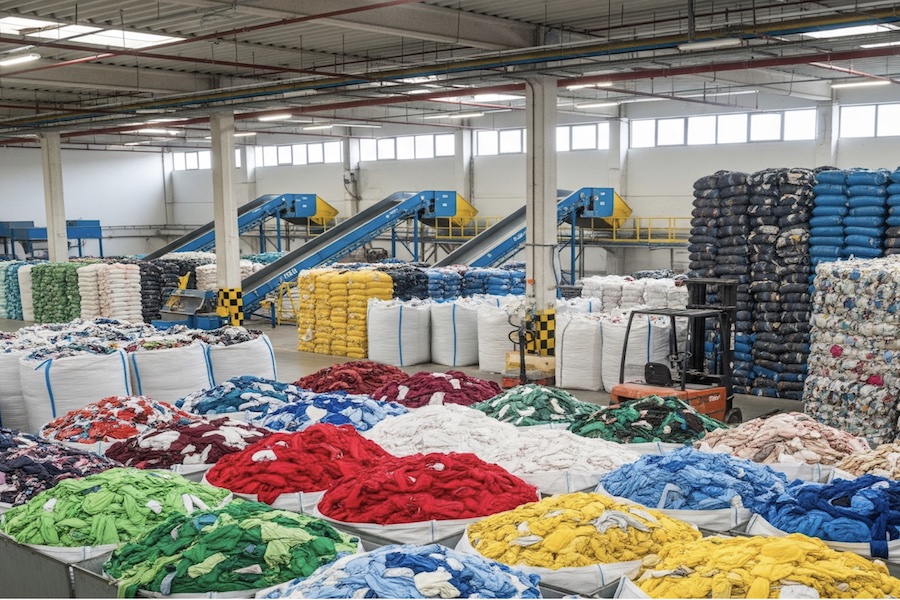
The Hub will regenerate the equivalent of 300 million articles annually that would otherwise end up as textile waste, resulting in a production capacity of 50,000 tonnes of rBHET per year and will then be repolymerized into Reju PET. This output, originating from textile waste, will be transformed into Reju Polyester with 50% lower carbon emissions than virgin polyester. The Reju Polyester will then be reintroduced into the downstream supply chain, where it will be converted into yarns and fabrics ready for consumer use.

Textile consumption in Europe has grown from 17kg per person in 2019 to 19kg per person in 2022 - enough to fill a large suitcase for every person living in Europe. And as a result, so is textile waste, in the EU Member States in 2022 about 94 million tonnes* of textiles were discarded and likely to be burnt or buried. Through collaboration with upstream partners, Reju will be ensuring textile-to-textile traceability. 

“This is a major milestone for Reju. With this announcement of a site for Regeneration Hub One, we are reinforcing our commitment to transforming the textile industry through innovation and collaboration,” said Patrik Frisk, CEO of Reju. “Chemelot is the ideal environment for scaling our technology and integrating into a broader network of industrial power houses which are also focused on circularity. This is where we will prove that textile-to-textile circularity at scale is achievable.” 

Owned by Technip Energies, a leading engineering and technology company, Reju utilizes proprietary technology originally developed by IBM Research. By recovering, regenerating, and recirculating textile waste, starting with polyester, Reju is creating a new, scalable circular system reducing the industry’s reliance on virgin materials. 

“At Chemelot, we are committed to fostering sustainable innovation and enabling circular solutions across industries,” said Koos van Haasteren, CEO of Chemelot. “Reju’s Regeneration Hub One aligns with our mission to drive the transition toward a circular economy. By integrating their advanced textile recycling technology within our industrial ecosystem, we can help accelerate the reduction of textile waste and set new benchmarks for sustainability in the materials sector.” 

Thanks to the efforts of the Netherlands Foreign Investment Agency (NFIA), the Ministry of Infrastructure and Water Management and the Ministry of Climate Policy and Green Growth, the recycling center is to be located on the Chemelot Industrial Park in the Netherlands. Minister Sophie Hermans (Climate Policy and Green Growth) said: ‘With Reju’s decision to locate its innovative recycling plant at Chemelot, the Netherlands is achieving a first: the country’s first large-scale recycling facility where discarded textiles are turned into raw material for new and even better textiles. This is the kind of new industry we are aiming for – sustainable, circular and future-orientated. It contributes to green growth and strengthens our position in circular chemistry. Despite the challenges in the sector, the Netherlands remains attractive for green industrial investments. With this new plant, we are actively building the industry of tomorrow, and I am proud that Reju has chosen the Netherlands.’ 

Through collaboration with upstream partners, Reju will be ensuring textile-to-textile traceability for waste that would otherwise be buried, burnt, or dumped.
More News from Reju

#Recycled_Fibers

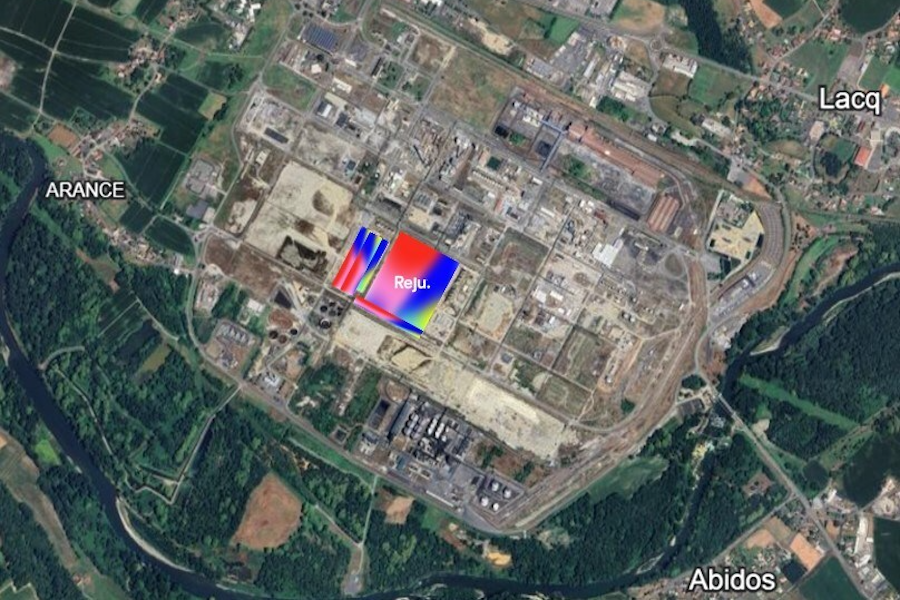
Reju announces site selection for French Regeneration Hub in Lacq advancing Europe’s circular textile infrastructure

Reju, the textile-to-textile regeneration company based in France, announces the site selection for an industrial sized Regeneration Hub, in Lacq, in the Pyrénées-Atlantiques, on the Induslacq platform. Reju, a Technip Energies owned company, is deepening its roots in France through the development of this new Regeneration Hub.

#Recycling / Circular Economy

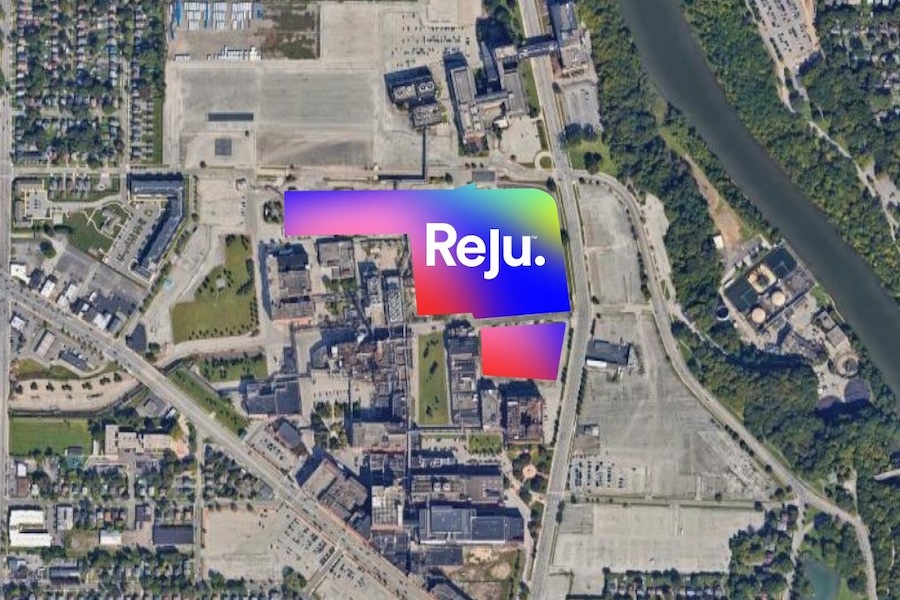
Reju announces site selection for first U.S. industrial sized facility regeneration hub in Rochester, New York

Reju, the textile-to-textile regeneration company, today announced it has selected the site for its first U.S.-based industrial facility marking a significant milestone in its efforts to scale globally. This future Regeneration Hub will be in Rochester, New York, reinforcing Reju’s commitment to the adoption of circular textile system across key regions worldwide.

#Recycling / Circular Economy

Reju and Circle-8 Textile Ecosystems partner to further large-scale textile recycling in the U.K.

Reju™, the progressive textile-to-textile regeneration company, and Circle-8 Textile Ecosystems, a key builder of ecosystems and infrastructures unlocking textile-to-textile recycling, today announced a partnership to further facilitate a circular textiles ecosystem in the U.K.

#Recycling / Circular Economy

Reju COO Alain Poincheval Appointed Chairman of Petcore Europe’s Textile SIG

Reju has announced that Alain Poincheval, the company’s Chief Operations Officer, has been appointed Chairman of the Textile Special Industry Group (SIG) at Petcore Europe, the leading Brussels-based association representing the PET value chain in Europe.

More News on Recycling / Circular Economy

#Recycling / Circular Economy

Europe needs tipping point to scale textile-to-textile recycling, BCG and ReHubs say

A new report from Boston Consulting Group (BCG) and ReHubs, titled “Advancing Textile Circularity – Europe’s textile waste challenge: Scaling Textile-to-Textile requires enabling mechanisms”, highlights the urgent need for systemic action to tackle Europe’s growing textile waste and scale a circular textile economy.

#Recycling / Circular Economy

AI Circular Economy Conference 2026 fuels innovation at the intersection of AI and Circular Economy

The AI Circular Economy Conference 2026, organised by nova-Institute, brought together 116 participants from 15 countries in Cologne and online to explore the transformation of the chemical and materials industry supported and accelerated by artificial intelligence. During the two-day event, leading experts from industry, research, start-ups and the investment community discussed how AI can maximise the potential of renewable carbon creating efficient circular value chains. The conference featured 24 presentations and multiple panel discussions, highlighting the growing convergence of digital technologies and circular material systems. It demonstrated how artificial intelligence is progressing from the experimental stage to real industrial implementation within the circular economy.

#Recycled_Fibers

Circ deepens access to recycled fibers with Xinxiang Bailu Chemical Fiber Co., Ltd. partnership agreement

Circ®, a global leader in textile‑to‑textile recycling, today announced a new partnership agreement with Xinxiang Bailu Chemical Fiber Co., a Canopy Dark Green Shirt producer and one of the world’s leading producers of viscose filament. The agreement marks a significant step in Circ’s continued expansion in China and strengthens its position within the country’s rapidly evolving circular textile ecosystem; further supporting Circ’s ability to supply recycled fibers near existing fashion supply chains.

#Recycled_Fibers

Worn Again Technologies unveils the Accelerator

Worn Again Technologies unveils the Accelerator, the next major step towards commercialising its pioneering Textile-to-Fibre recycling process and proving the technical and economic feasibility of polycotton recycling.

Latest News

#Textile chemistry

A flagship for chemical production: BASF inaugurates world-scale Verbund site in China

BASF today (March 26, 2026) celebrated the official inauguration of its newly built, world-scale Verbund site in Zhanjiang, Guangdong Province in southern China. Covering an area of around four square kilometers, it is more than a major BASF project in the chemical growth market of China. “Zhanjiang shows what the future of chemistry looks like: efficient, digital and sustainable by design. The site showcases a smart integrated Verbund structure on an industrial scale,” said Dr. Markus Kamieth, CEO of BASF, at the ceremony attended by representatives from government, customers, business partners and employees.

#Nonwovens

VEOCEL™ Lyocell production expands to Asia – Launching a new chapter for nonwovens in the region

VEOCEL™, Lenzing's flagship specialty nonwovens brand, expands production at its Thai plant in Prachinburi. This is the first-ever production of its nonwoven-grade lyocell fibers in Asia. Built in 2022 with a 100,000-ton annual production capacity, the facility - previously focused on fibers for textile applications - now can directly meet the demand for VEOCEL™’s biodegradable¹, wood-based lyocell fibers for nonwovens products. These fibers are an essential ingredient for high-quality nonwovens products, ranging from baby wipes to facial sheet masks and everyday personal hygiene items.

#Research & Development

Hof University develops sustainable textile coating for the fashion of tomorrow from mushrooms

Clothing is often treated as disposable: T-shirts for events, general merchandise, or short-term campaigns frequently end up in the trash after only a few uses. This is particularly problematic given that their production still largely relies on fossil-based materials. This is precisely where a new research project at Hof University of Applied Sciences comes in.

#Raw Materials

Fashion for Good mobilises industry to adopt mass balance attribution and accelerate decarbonisation

Fashion for Good launches today the Mass Balance Demonstrator project, a collaborative industry initiative to implement and scale the mass balance attribution (MBA) chain-of-custody model for biomass-attributed PET in textile applications. The project represents a concrete step toward accelerating brand-driven decarbonisation across the apparel value chain.

TOP