[pageLogInLogOut]

#Recycling / Circular Economy

Accelerating Circularity announces global commitment to sustainable textile industry at Clinton Global Initiative Annual Meeting
Accelerating Circularity, a leading nonprofit dedicated to transforming the apparel industry by creating business models and supply chains for manufacturing more sustainable fabrics, this week proudly announced its Commitment to Action at the Clinton Global Initiative (CGI) 2024 Annual Meeting. This commitment, titled "Building Circular Systems," aims to transform the textile industry by building scalable systems where materials are continuously repurposed and reused, rather than just being recycled once or discarded.
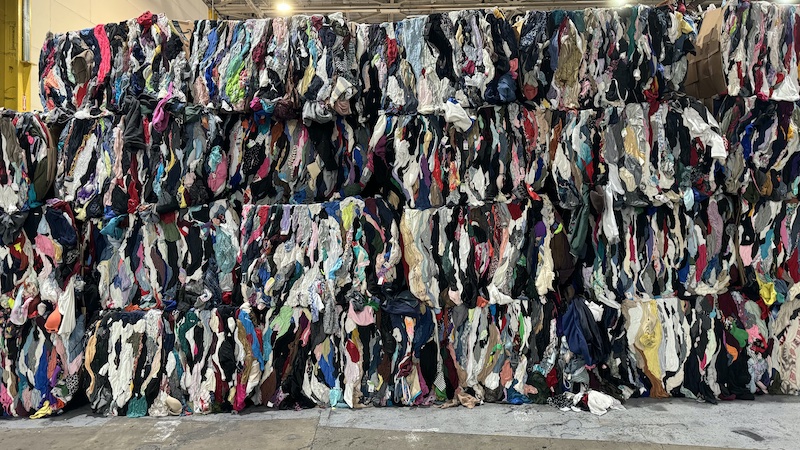
Post-consumer textiles are collected at various locations, including this US charity, and are then sent to sorting centers. (Photo: Business Wire)


This approach, known as circularity, tackles the need to reduce the environmental impact of textiles by keeping materials in use longer, ultimately reducing waste and conserving natural resources.

“Our work, amplified by the Clinton Global Initiative, will help us make a difference by reducing waste and pollution and promoting sustainability worldwide. We invite businesses, organizations, and individuals to join us in this effort and help create a more sustainable future for textiles.”

Currently, 92 million tons of textiles end up in landfills each year, while another 116 million tons of new fibers are produced. This wasteful cycle harms the environment, contributing to pollution and the depletion of natural resources. As discarded textiles decompose in landfills, they release harmful gasses into the environment. Additionally, manufacturing new textiles consumes large amounts of water, energy, and chemicals, further damaging the environment.

Accelerating Circularity's commitment will focus on three key initiatives:

Building a market for recycled textiles: Accelerating Circularity will collaborate with brand, retail and manufacturing partners across the U.S. and Europe to recycle 325 tons of used textiles, including 150 tons of cotton, 100 tons of polyester, and 75 tons of other fibers. The goal is to create a strong market where recycled textiles are used to make new products that people want to buy. 

Creating a used textile mapping tool: A comprehensive map, the platform will outline the entire recycling ecosystem by pinpointing collectors, sorters, processors, recyclers, fiber producers, yarn spinners, fabric mills, and product manufacturers who can repurpose used textiles into new fibers. It will streamline the recycling process for textiles from various sources—including fabric mills, brands, retailers, and consumers—by identifying the most efficient and environmentally sustainable pathways for converting these materials into new products. 

Educational resources: Educational materials will be developed to help brands and consumers understand how to responsibly dispose of and recycle textiles.

Founded in 2019, Accelerating Circularity has proven the power of collaboration through its strategic partnerships. One example is its work with Goodwill Industries, supported by a $1.2 million grant from the Walmart Foundation. This initiative focused on creating new business models for processing the large volumes of donated clothing Goodwill receives each year.

In addition, Accelerating Circularity has brought together key players from across the textile supply chain, including major companies like global textile firm Giotex, Canada-based used clothing collector Bank & Vogue, North Carolina-based yarn manufacturer Parkdale Mills, leading denim innovator Cone Denim, and UNIFI, a global leader in fiber science. Together, they have developed and tested circular textile systems that not only create new materials but have led to finished products currently available at Target (here and here). More products are expected to hit stores in the coming weeks, including Wrangler denim jeans, to be sold at Walmart.

It's important to note that circularity goes beyond traditional recycling. While recycling typically involves reprocessing materials to create the same or similar products, circularity encompasses a broader system where materials are used and re-used for as long as possible, reimagining them into new forms, and only recycling as a last resort. This approach minimizes waste and reduces the need for virgin resources, making it a more sustainable solution.

The commitment launched at CGI on September 23rd and is set to be completed by March 2026. During this time, Accelerating Circularity will leverage their relationships and foster new alliances with major brands, retailers, and recyclers to build the use of circular systems, creating new market opportunities and helping companies reduce their environmental impact.

"I'm honored to lead this important initiative to change the textile industry," said Karla Magruder, President and Founder of Accelerating Circularity. "Our work, amplified by the Clinton Global Initiative, will help us make a difference by reducing waste and pollution and promoting sustainability worldwide. We invite businesses, organizations, and individuals to join us in this effort and help create a more sustainable future for textiles."

More News from Accelerating Circularity

More News on Recycling / Circular Economy

#Recycling / Circular Economy

Textiles Recycling Expo 2026 to spotlight the companies turning textile circularity into industrial reality

As the textile industry faces mounting pressure to scale circular solutions, improve recycling infrastructure, and respond to evolving regulation, Textiles Recycling Expo 2026 will bring together the organisations leading that transformation in practice.

#Europe

Circular economy offers the EU win-win on environment and economy

Stepping up a circular economy offers the European Union the potential for significant positive impacts on Europe’s environment and poses an untapped and strategic economic opportunity in terms of better access to materials and the creation of new businesses. Three new assessments on circularity, published today by the European Environment Agency (EEA), also stress the need to accelerate investment in circularity efforts to meet EU climate and environment policy targets.

#Recycled Fibers

Lindex and BASF partner to bring textile-­to­-textile recycled polyamide to lingerie sector

Lindex has partnered with BASF’s loopamid® to accelerate textile-­to-­textile recycling and advance the shift towards more circular material solutions in the fashion industry. Together they introduce loopamid to the lingerie sector.

#ITM 2026

BB Engineering unveils new, patented “ValuePack” spin pack at ITM

At the upcoming ITM in Istanbul, taking place June 9–13 at the Tüyap Fair Convention and Congress Center in Hall 7, Booth 702B, BB Engineering will once again be represented at a joint booth with its parent company, Barmag, and its representative, Tekstil Servis. The German machine manufacturer will show-case its expertise in man-made fiber and recycling technology, presenting its entire product portfolio, which includes compo-nents such as extruders and filters, as well as complete sys-tems for spinning synthetic fibers, air-texturing, and PET recy-cling.

Latest News

#Technical Textiles

Fifteen years of Autoneum – From spin off to global technology leader

What started as a strategic carve‑out has since become the success story of a global technology leader in acoustic and thermal management solutions for vehicles. Headquartered in Winterthur, Switzerland, Autoneum supplies leading automobile manufacturers worldwide with innovative, lightweight and increasingly sustainable solutions.

#Textile chemistry

The CHT Group GmbH awarded Best Managed Company 2026

The CHT Group GmbH has been honored as Best Managed Company 2026. The seal of approval recognizes excellently managed medium-sized companies and is awarded as part of a program by Deloitte Private, UBS, the Frankfurter Allgemeine Zeitung, and the Federation of German Industries (BDI).

#Nonwoven machines

Kruger, Canada, orders first nonwovens line for sustainable wipes from ANDRITZ

International technology group ANDRITZ has received an order from newly established Kruger Nonwovens to deliver a complete WetlaceTM hybrid line for the Wayagamack mill in Trois-Rivières, Quebec, Canada. With this investment, pulp and paper producer Kruger is preparing to enter the nonwovens market with a new generation of plastic-free, chemical-free materials for sustainable wipes. The line is the first of its kind in Canada and is scheduled to start production in 2028.

#ITM 2026

Picanol to present its leading weaving technology at ITM 2026

Picanol is pleased to announce it will be participating in ITM 2026 in Istanbul. This is a key event for industry professionals to engage with the Turkish textile industry as well as the extensive international audience attending the fair. During the event, Picanol will present its latest innovations to the visitors in Hall 8, booth 802.

TOP