[pageLogInLogOut]

#Recycling / Circular Economy

Borealis drives collaborative project in Sweden to increase supply of chemically recycled feedstock
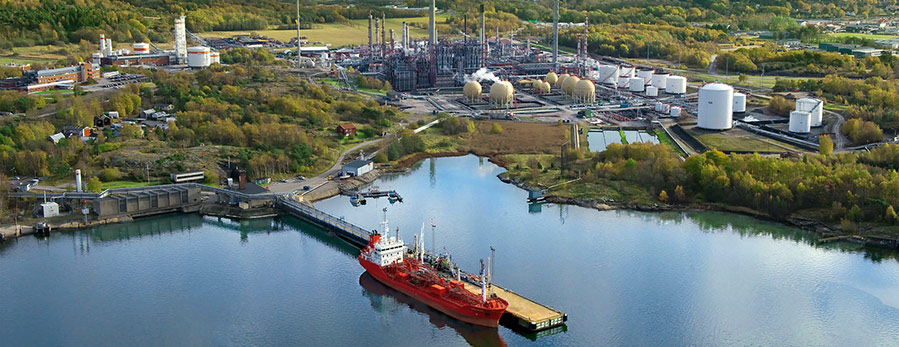
Aerial view of Borealis production location in Stenungsund, Sweden Photo: © Borealis
Borealis has commenced a new project to secure an increased supply of chemically recycled feedstock for the production of more circular base chemicals and polyolefin-based products. A feasibility study for a chemical recycling unit to be established at the Borealis production location in Stenungsund, Sweden is now underway. Funded in part by a grant awarded by the Swedish Energy Agency, the study is being carried out with project partner Stena Recycling.

Provided a successful feasibility study and final investment decision, operations are expected to begin in 2024. The unit will help accelerate the transformation to plastics circularity by enabling the replacement on a larger scale of fossil-based feedstock by integrating more chemically recycled feedstock via the mass balance model. Borealis Stenungsund has been ISCC PLUS certified since February 2021.

Borealis will also co-operate independently with Fortum Recycling and Waste on a project involving the sourcing of plastic waste to the chemical recycling unit; Fortum will apply for public funding for a feasibility study to this end. 

Advancing plastics circularity with chemical recycling

As a complement to mechanical recycling, chemical recycling has an important role to play in closing the material loop on plastics circularity. This is because plastic waste streams of lower quality can be recycled chemically into high-quality base chemicals (including olefins) and polyolefins. In fact, olefins produced from chemically recycled synthetic crude oil offer the same high quality as olefins produced from fossil fuel-based crude oil. This allows for the production of high-end polyolefin-based applications. These include healthcare and food packaging materials subject to stringent quality and safety regulations which cannot always be met by mechanically recycled materials.

Borcycle™ C is the driving force behind Borealis endeavours in chemical recycling. Along with Borcycle™ M – in which “M” stands for mechanical recycling – it forms the of all-round solutions for plastics circularity based on the technology suite Borcycle™ launched in 2019. Borcycle™ is transformational because it gives post-consumer plastics a new life; it continues to evolve thanks to innovation and value chain co-operation. Borcycle also is part of the and its ambition for accelerating action on circularity.

The chemical recycling feasibility study is being carried out with Stena Recycling, the leading recycling company in northern Europe and expert in the development of sustainable circular solutions in all types of operations. A grant has been received from the Swedish Energy Agency to co-fund the study, which will evaluate the optimal technology for the chemical recycling unit and its integration in the Cracker at the existing Borealis production site in Stenungsund. Stena Recycling shall recover plastic waste and, after sorting to remove materials suitable for mechanical recycling, will deliver it to the new chemical recycling unit to be built by Borealis. Stena Recycling plans to invest in their own facilities to enable circular plastic solutions by producing feedstock of plastic waste to Borealis.

Fortum Recycling and Waste, a leading provider of recycling and waste management services in the Nordics, is also applying for public funding to carry out a feasibility study. The study would define the technical requirements for the pre-treatment of plastics, quality control, and the sourcing of suitable materials. It should also determine the necessary requirements for permitting and investments with the aim to produce feedstock from plastic waste to Borealis chemical recycling unit. This integration of waste management and processing directly into a steam cracker would be one of the first of its kind. Once operations commence as expected in 2024, Borealis would operate the unit.


“Borealis has set ambitious circular economy goals as part of our commitment to re-inventing for more sustainable living,” says Martijn van Koten, Borealis Executive Vice President Base Chemicals and Operations. “The integration of Borcycle C into our cracker in Stenungsund, Sweden is a clear example of our circular efforts: built on innovation and collaboration, it enables us to supply sufficient amounts of chemically-recycled base chemicals and polyolefins to the market.”

“In the true spirit of EverMinds we accelerate action to plastics circularity through collaboration,” says Lucrèce Foufopoulos, Borealis Executive Vice President Polyolefins, Innovation & Technology and Circular Economy Solutions. “The cooperation with Stena and Fortum allows us to offer our customers and partners virgin-like polyolefins from chemically recycled post-consumer waste.”

“The project we are carrying out together with Borealis at Sweden's first plastic recycling hub is a very exciting and important step in increasing the proportion of recycled plastic,” says Martin Leander, Head of Commodities, Stena Recycling. “Through this co-operation we can contribute to increased material recycling and reduced climate impact by chemically recycling plastic waste that is currently incinerated. Plastic is an important material, and we now have additional opportunities to help our customers find circular solutions.”

“Fortum is driving the transformation to a low-emissions energy system and optimal resource efficiency. Key parts of that development is creation of CO2 neutral feedstock where harmful substances are removed. Cooperation with industrial partners is core in Fortum´s working model,” says Christian Helgesson, CEO, Fortum Recycling and Waste. “Working with like-minded partners such as Borealis is the best way to accelerate the change. We are convinced that smart and collaborative solutions will improve resource efficiency.”



More News from TEXDATA International

#ITM 2026

ITM 2026: The new geography of textile production

New production hubs are emerging across North Africa and Central Asia, while Türkiye is accelerating its transformation toward higher-value, technology-driven and more sustainable textile manufacturing.

#Research & Development

“Production is a product”

From technical textiles and AI-driven robotics to the limitations of textile circularity: Professor Dr Thomas Gries looks back on more than two decades of development at ITA Aachen. In the interview, he explains why production technology remains a decisive success factor, discusses international collaborations and innovation ecosystems, and shares his views on the transformation of production landscapes and the challenges facing an increasingly regulated industry.

#Knitting & Hosiery

“We need to move away from the price trap and return to a value-driven mindset.”

With its new Textile Innovation Center, KARL MAYER is sending a strong signal for innovation, collaboration, and the future of textile applications. In this interview, Karl Josef Mayer discusses new opportunities in warp knitting, the processing of staple fibres, recycling, the changing role of machinery manufacturers, and why the textile industry must once again focus more strongly on the value of textiles. by Oliver Schmidt

#Associations

“Innovation, resilience and international experience remain the great strengths of the Swiss textile machinery industry”

Geopolitical uncertainty, growing competitive pressure from China, new free trade agreements and the shift towards a circular economy are currently reshaping the global textile industry. In this interview, Cornelia Buchwalder discusses the current mood within the Swiss textile machinery sector, the industry’s distinctive innovative strength, new market opportunities in India and Asia, and the technological trends that could shape the upcoming trade fair cycle leading up to ITMA 2027.

More News on Recycling / Circular Economy

#Spinning

"We will become a recycling powerhouse"

The textile industry is now in its fourth consecutive year of crisis, while automation, artificial intelligence and recycling are reshaping the rules of the game. In this interview, Rieter CEO Thomas Oetterli discusses the first signs of a market recovery, reflects on his first three years at the helm of the company, explains the integration of Barmag, outlines Rieter’s vision of the fully automated spinning mill and highlights the strategic importance of recycling. In doing so, he explains why the new Rieter Group aims to play a leading role in transforming the textile value chain into a circular economy.

#Recycling / Circular Economy

Countdown to Textiles Recycling Expo 2026: Brussels prepares for Europe’s textile recycling gathering

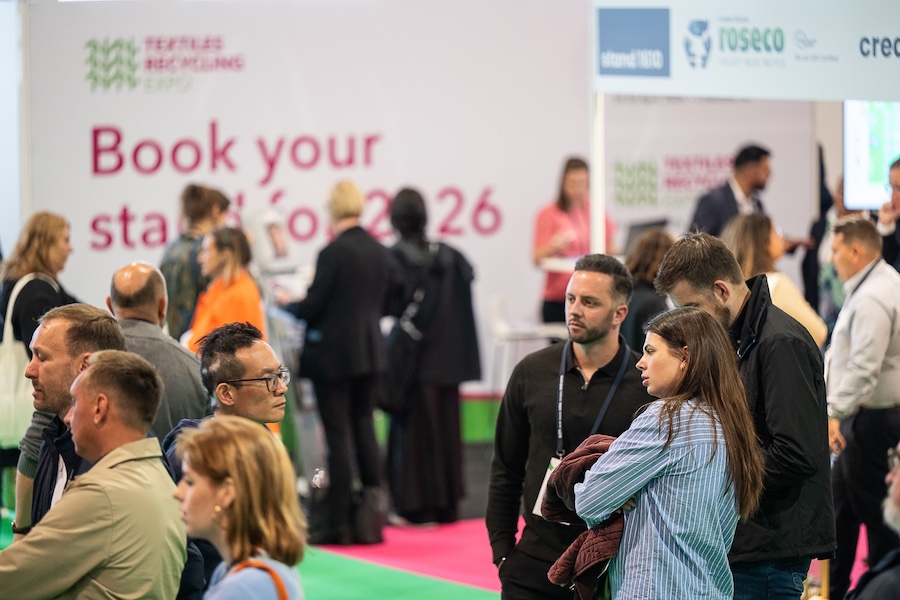
With only two weeks remaining until the start of the second edition of the Textiles Recycling Expo 2026, preparations are entering the final phase. The exhibition and conference, dedicated exclusively to textile recycling and circularity, will take place on 24–25 June 2026 at Brussels Expo and is expected to attract stakeholders from across the textile recycling value chain.

#Recycled Fibers

Indorama Ventures enables brands to scale circular textiles through proven, traceable supply chains

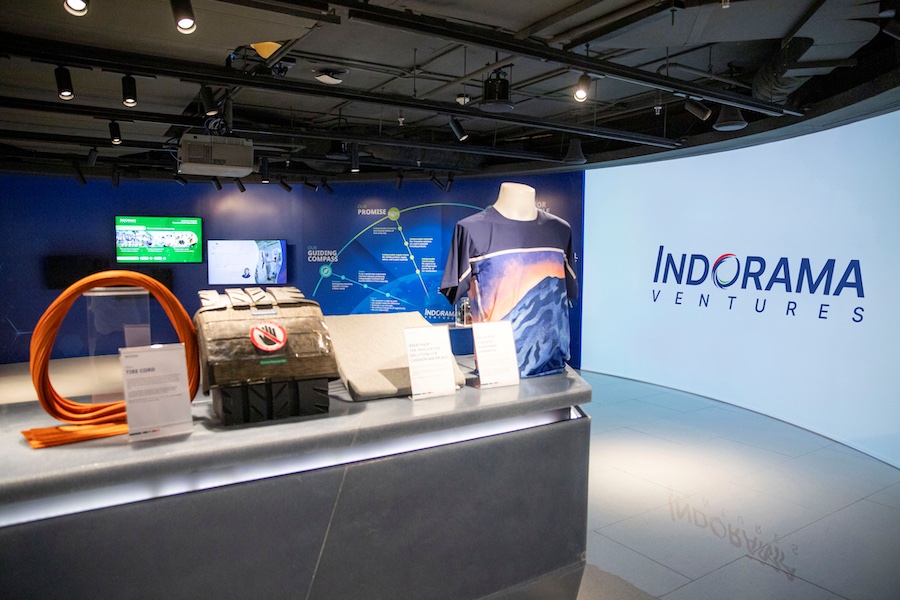
Indorama Ventures, a global leader in recycled polyester staple fibers and filament yarns, will exhibit at Textiles Recycling Expo in Brussels on June 24–25. At the event, the company will show how brands and textile manufacturers can build traceable, circular textile supply chains by working with proven partners who deliver recycled materials on an industrial scale.

#Recycled Fibers

RECOVER™ launches Recover™ Yarns to accelerate recycled cotton uptake

Recover™, a leading materials science company and one of the world’s largest producers of recycled cotton fiber, today announces the launch of Recover™ Yarns, a curated portfolio of ready-to-use yarn solutions designed to accelerate the adoption of recycled cotton across the apparel supply chain.

Latest News

#Research & Development

GenuTrace client advisory: Is your cotton supply chain UFLPA ready?

U.S. Customs and Border Protection has released updated operational guidance (CBP Publication No. 5560-0526) expanding its forced labor enforcement framework. The guidance supersedes the original 2022 UFLPA Operational Guidance and now covers all forced labor enforcement authorities — UFLPA, CAATSA, and WROs/Findings — in a single unified document. For cotton importers, the enforcement posture has not softened. It has become more structured, more documented, and more demanding. Learn more about UFLPA.

#Carpets

DOMOTEX Hannover 2028 off to a strong start with expanded portfolio

Preparations for DOMOTEX 2028 are already gaining strong momentum. Following its successful repositioning as the Home of Flooring & Interior Finishing, around 100 international manufacturers have already secured their place during the initial registration phase.

#Knitting & Hosiery

STOLL: Agreement signed for the divestiture of selected assets

In early 2025, KARL MAYER announced its strategic decision to focus on its core business areas of WARP KNITTING, WARP PREPARATION, and TECHNICAL TEXTILES. As part of this move, the flat knitting machine business under the STOLL brand was discontinued and the production site in Reutlingen was closed in October 2025.

#Research & Development

TERNAfil wins first place at PitchMiUp Night 2026 in Minden

The RWTH spin-off TERNAfil has developed MAXCarbon, a new high-performance hybrid fibre that combines the mechanical performance of carbon with the temperature and corrosion resistance of ceramic materials. For this development, TERNAfil was awarded first prize at the PitchMiUp Night in Minden on 21 May 2026.

TOP